

An entertainment sourcing process is the repeatable set of steps a procurement or events team uses to identify, evaluate, contract, and manage performers, vendors, and production services for events and media projects. When it runs correctly, it connects your creative vision to the right talent and suppliers, on budget and on schedule.
Here are the core stages at a glance:
- Requirements definition — clarify objectives, audience, budget, and technical needs
- Market discovery — map available suppliers and talent against your brief
- Shortlisting — narrow the field using consistent criteria
- Solicitation — send an RFP or creative brief to shortlisted candidates
- Evaluation and selection — score responses against a rubric
- Contracting — negotiate and sign agreements covering scope, payment, and rights
- Onboarding and logistics — confirm technical riders, travel, and compliance docs
- Delivery and execution — day-of coordination and performance management
- Post-event evaluation — vendor scorecards and feedback for future sourcing
Each stage has a clear owner, a deliverable, and an acceptance check. Together they protect your budget, your schedule, and the audience experience.
Key Takeaways
A well-run entertainment sourcing process protects your budget, your schedule, and your audience experience by treating talent as creative partners from the brief stage onward.
| Point | Details |
|---|---|
| Start early, brief clearly | Begin sourcing 10–12 weeks out for corporate events; 16–20 weeks for productions with rights clearances. |
| Always request a COI | Require a certificate of insurance naming your organization as additional insured before confirming any booking. |
| Use a 1–5 scoring rubric | Score all candidates on creative fit, technical capability, capacity, compliance, references, and price to keep selection objective. |
| Budget a 10–15% contingency | Reserve at least 10–15% of total entertainment spend for last-minute changes, overruns, or replacements. |
| Sitarrajib for specialist music | Rajib Karmakar offers live sitar performance, studio recording, film scoring, and workshops for events and productions across the U.S. |
Table of Contents
- Why does a formal entertainment sourcing process matter?
- What are the steps in the entertainment sourcing process?
- How do you evaluate entertainment suppliers and talent?
- What does entertainment sourcing actually cost, and how long does it take?
- What legal and compliance steps do you need before signing?
- Which tools help you manage entertainment sourcing end to end?
- Sourcing a specialist performer: a live sitar case example
- How do you know if your sourcing process worked?
- Treating talent as partners, not line items
- Sitarrajib: live sitar for events, productions, and recordings
- Sources
Why does a formal entertainment sourcing process matter?
Treating entertainment as an afterthought, something you book two weeks out with a quick Google search, creates real production risk. Contracts get signed without cancellation clauses. Technical riders arrive the morning of the event. Rights for streaming are never cleared. The result is cost overruns, day-of chaos, or a performance that has nothing to do with your event’s theme.
A repeatable entertainment procurement process fixes all of that. According to Graphite Connect, balancing cost, quality, and compliance requires automating supplier onboarding and compliance tracking, which speeds vendor onboarding and cuts administrative risk. That is not a nice-to-have for large productions; it is the difference between a smooth show and a liability.
The benefits of a structured approach include:
- Budget control — staged payments and a contingency reserve prevent surprise invoices.
- Creative alignment — a written brief forces clarity on theme, tone, and audience before you shortlist anyone
- Compliance — insurance certificates, union checks, and rights clearances happen before signing, not after
- Vendor relationships — a fair, transparent process attracts better talent and builds a preferred vendor list over time
When sourced and briefed correctly, entertainment becomes part of your event architecture. It reinforces themes, energizes the room at the right moment, and creates lasting attendee memory.
Pro Tip: When pitching stakeholders on proper lead time and sourcing budget, frame entertainment as a production line item, not a decoration. Show them the cost of a last-minute replacement or a streaming rights dispute, and the case for a 12-week lead time writes itself.
What are the steps in the entertainment sourcing process?
A mature entertainment procurement strategy spans four categories: content, production vendors, talent, and technology. The steps below apply across all four.
Step-by-step process
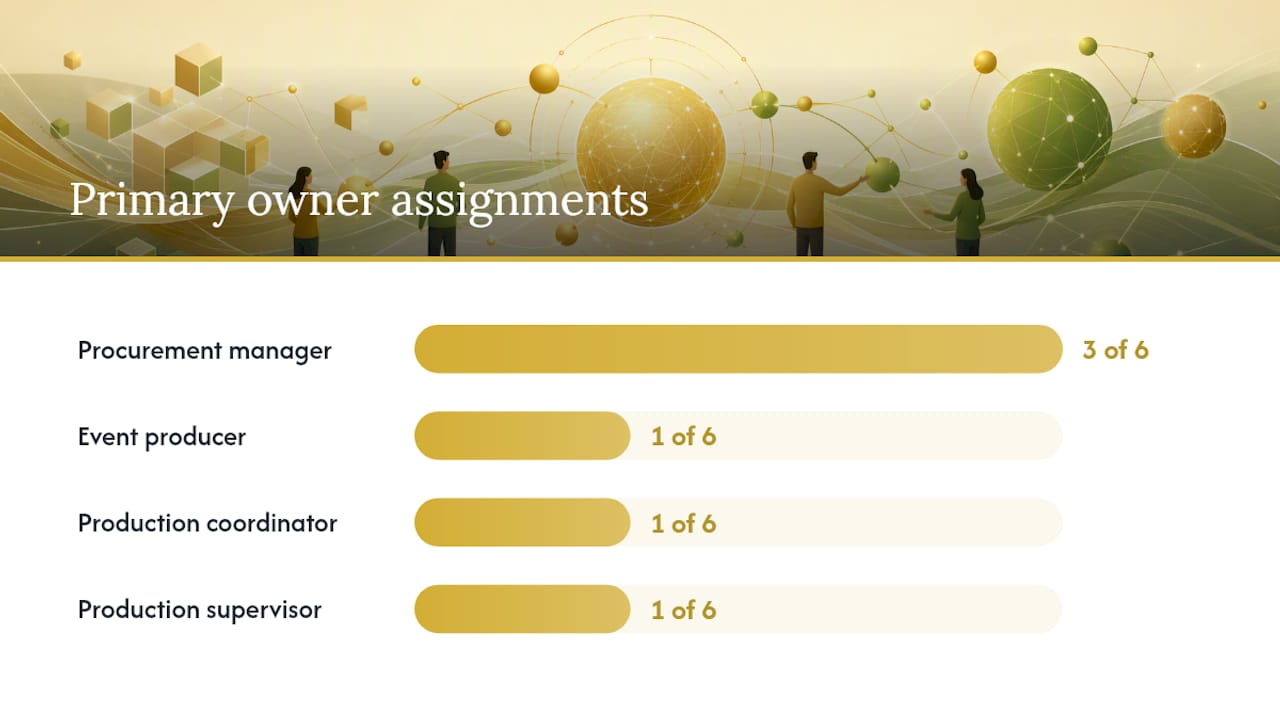
- Requirements definition — Write a one-page brief covering event objectives, audience profile, date, venue, budget range, and technical constraints. Owner: event producer. Lead time: several weeks to a few months out.
- Market discovery — Map available suppliers by category. Use vendor databases, agency rosters, and referrals. Owner: procurement manager. Lead time: around two months out.
- Shortlisting — Score candidates against your criteria (see Section 4) and reduce to 3–5 finalists. Owner: procurement manager + creative lead. Lead time: about two months before the event.
- Solicitation (RFP/brief) — Send an identical bid package to all shortlisted candidates. Owner: procurement manager. Lead time: several weeks before the event.
- Evaluation and selection — Score responses using a rubric; schedule a direct creative call with finalists. Owner: procurement manager + event producer. Lead time: roughly one to two months before the event.
- Negotiation and contracting — Agree on scope, fee, payment schedule, cancellation terms, and rights. Owner: procurement manager + legal. Lead time: around one month before the event.
- Onboarding and logistics — Collect certificates of insurance (COI), technical riders, travel details, and hospitality requirements. Owner: production coordinator. Lead time: a few weeks before the event.
- Delivery and day-of execution — Run the production schedule, manage check-in, soundcheck, and performance. Owner: production supervisor. Lead time: event week.
- Post-event evaluation — Complete vendor scorecards, collect audience data, and update your preferred vendor list. Owner: procurement manager. Lead time: within 2 weeks post-event.
Roles and responsibilities matrix
| Milestone | Primary Owner | Approver | Support |
|---|---|---|---|
| Brief sign-off | Event producer | Stakeholder/client | Creative lead |
| Shortlist approval | Procurement manager | Event producer | Legal |
| Contract execution | Procurement manager | Legal/finance | Event producer |
| Technical rider sign-off | Production coordinator | Event producer | Vendor |
| Day-of execution | Production supervisor | Event producer | All vendors |
| Post-event scorecard | Procurement manager | Event producer | Finance |
Sample RFP/brief fields
Use these fields every time you solicit entertainment suppliers:
- Event objectives — what the entertainment must achieve (theme reinforcement, audience energy, cultural moment)
- Audience profile — size, demographics, familiarity with the genre
- Exact timing — date, call time, soundcheck window, performance duration, load-out
- Technical specifications — stage dimensions, power supply, PA system, lighting rig
- Deliverables — number of sets, set length, meet-and-greet, content for pre-event promotion
- Legal and rights — recording, streaming, photography permissions; exclusivity window
- Cancellation and rescheduling terms — deposit structure, force majeure, replacement clause
- Budget range — total fee ceiling including travel and accommodation
For a typical corporate event, start this process 10–12 weeks out. For a media production or film score, allow 16–20 weeks to accommodate rights clearances and studio scheduling.
How do you evaluate entertainment suppliers and talent?
Consistent evaluation prevents gut-feel decisions and protects you when a stakeholder asks why you chose one act over another. Use a 1–5 scoring scale across six criteria.
Supplier scoring rubric
Multiply each score by its weight and sum the results. A candidate scoring below 3.0 weighted average rarely improves under production pressure.
Red flags that justify removing a candidate
- No certificate of insurance or refusal to provide one
- Vague or missing technical rider (often signals inexperience or hidden costs)
- Unwillingness to sign a basic cancellation or rescheduling clause
- Credits that cannot be verified through a third party
- Communication delays longer than 48 hours during the solicitation phase
According to the film and TV vendor sourcing framework from Vitrina AI, effective vendor sourcing follows a map, vet, and select pattern, with an identical bid package sent to all shortlisted candidates and an evaluation matrix covering creative fit, technical capability, capacity, and price. That structure keeps your process defensible and your comparisons clean.
What does entertainment sourcing actually cost, and how long does it take?
Budget surprises in entertainment sourcing almost always trace back to two causes: underestimating the full cost stack and starting too late.
Primary cost drivers
- Talent fees — the base performance fee, which varies widely by genre, profile, and market
- Travel and accommodation — flights, ground transport, hotel; often 15–25% of talent fee for out-of-market acts
- Technical rider and AV — backline, PA, lighting, and any specialist equipment the performer requires
- Production labor — stage manager, sound engineer, lighting operator, stagehands
- Licensing and rights — synchronization licenses, master use licenses, streaming rights; costs vary by territory and usage
- Agency commissions — typically 10–20% of the talent fee when booking through a bureau
- Contingency reserve — budget a minimum of 10–15% of total entertainment spend for last-minute changes, overruns, or replacements
Global content spend runs at $247 billion annually, which reflects how seriously the industry treats supply chain management at scale. For individual events, the same discipline applies: map every cost line before you sign anything.
Typical booking lead times by category
- Headline or touring talent — 16–24 weeks minimum
- Specialist or cultural performers — 8–12 weeks
- Technical vendors (AV, staging, lighting) — 6–10 weeks
- Venue — 12–52 weeks depending on size and market
- Licensing and rights clearance — 4–12 weeks depending on rights holders
Staged payments protect both sides. Tie each payment to a deliverable or milestone, not just a calendar date.
What legal and compliance steps do you need before signing?
Skipping contract and compliance checks is the fastest way to turn a good event into a legal problem. Run through this list before you confirm any entertainment booking.
- Performance specifications — define the exact scope in writing: set length, content restrictions, technical requirements, and any exclusivity window
- Payment schedule and invoicing — specify currency, payment method, and due dates tied to milestones
- Cancellation and rescheduling — define deposit forfeiture tiers, force majeure triggers, and the buyer’s right to substitute talent
- Travel and logistics — confirm who books and pays for travel, accommodation, and ground transport
- IP, recording, and streaming rights — specify whether the performance may be recorded, broadcast, or streamed, and who owns the resulting content
- Insurance and liability — require a COI naming your organization as an additional insured; confirm coverage limits match your event liability policy
- Union and guild status — check whether the performer or crew is affiliated with SAG-AFTRA, IATSE, AFM, or another guild, and confirm your production complies with applicable agreements
When booking through a bureau, the bureau typically handles contracting and logistics. Direct booking reduces commission but transfers those responsibilities to you, as Conference Innovations notes. Know which model you are using before you start negotiating.
Pro Tip: Negotiate recording and streaming rights before you discuss fee. Once a performer knows you want to record, the price often rises. Raise it early as a standard clause, not a special request, and you will usually get it included at no extra cost.
Which tools help you manage entertainment sourcing end to end?
Manual spreadsheets work for a single booking. For a recurring program or a production with multiple vendor categories, you need purpose-built tools.
Tool categories to consider
- Vendor discovery and marketplaces — platforms that surface performers, production companies, and technical vendors by category, territory, and availability
- Vendor intelligence tools — systems that track financial health, capacity, rate benchmarks, and compliance status across your supplier base
- Contract and SOW templates — standardized agreement libraries that reduce legal review time and ensure key clauses are never missed
- Onboarding and compliance automation — tools that collect COIs, W-9s, and rider documents automatically and flag missing items before the event date
- Project tracking and day-of coordination — shared run-of-show tools, production schedules, and communication platforms that keep all stakeholders aligned
Vendor intelligence platforms and AI-powered sourcing tools can compress months of market research into structured queries, surfacing vendor capacity, financial health, and rate benchmarks across territories. That speed matters most when you are sourcing specialist talent in an unfamiliar market.
When evaluating any tool, check for: data coverage in your target market, integration with your existing procurement or event management system, built-in contract templates, and a clear audit trail for compliance documentation.
For corporate event entertainment planning, a checklist-driven tool that tracks both creative and logistical milestones in one place tends to outperform a general project manager.
Pro Tip: Before committing to a vendor management platform, run a 30-day proof-of-concept on one active sourcing project. Test the onboarding workflow, the contract template library, and the compliance tracking against a real deadline. You will know within two weeks whether it fits your team’s process.
Sourcing a specialist performer: a live sitar case example
Specialist performers, like a live sitarist, illustrate the entertainment sourcing process better than a generic band booking because every step requires more precision. There is no off-the-shelf rider, no standard set list, and the cultural context matters to the audience.
Here is how the process plays out:
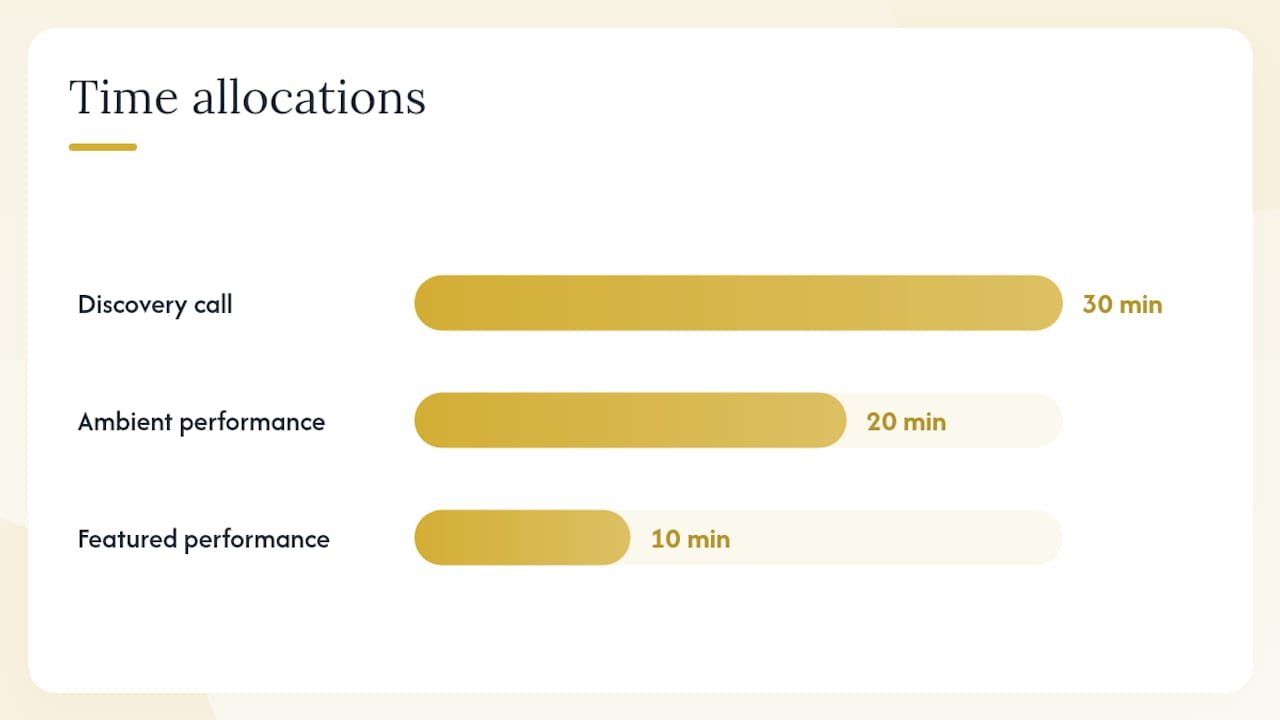
- Brief creation — the event producer writes a brief specifying the event theme (a global product launch with an Indian cultural thread), audience size (300 guests), performance duration (20 minutes ambient, 10 minutes featured), and the need for a performer who can blend classical Indian music with contemporary production
- Discovery — the procurement manager searches specialist music agencies, cultural arts organizations, and direct artist websites; world music trends in media are a useful reference for understanding the current landscape of culturally specific acts
- Direct creative call — rather than relying on a highlight reel, the team schedules a 30-minute call with the performer to assess flexibility, rapport, and customization possibilities; this step, recommended by Conference Innovations, consistently surfaces details an agent call never would
- Negotiated scope — the team agrees on two sets, a soundcheck window, and the right to record for internal use only
- Technical rider — the performer provides stage dimensions (minimum 8 x 8 feet), a direct input (DI) box requirement, a condenser microphone for the instrument, and hospitality needs; the sitar performance logistics guide covers these requirements in detail
- Day-of logistics — load-in confirmed 3 hours before doors, soundcheck 90 minutes before guests arrive, a dedicated backstage area confirmed with venue
- Contingency planning — a backup audio track and a secondary performer contact are confirmed in writing before the event date
For recording or streaming a live sitar performance, confirm synchronization rights, master rights, and any restrictions on commercial use in the contract. If the performance incorporates original compositions, clarify ownership of those works before the event date. Licensing Indian classical music for film follows a similar rights framework and is worth reviewing if your production has a media component.
How do you know if your sourcing process worked?
Post-event evaluation closes the loop and makes your next sourcing cycle faster and cheaper. Run a vendor scorecard within two weeks of the event, while details are still fresh.
Suggested KPIs
- On-time delivery — did the performer and all technical vendors arrive, set up, and perform within the agreed schedule?
- Technical compliance — were all rider requirements met, and did the performance meet the specified technical standards?
- Audience satisfaction — collect post-event survey data; a simple 1–5 rating on entertainment quality is enough for most events
- Budget variance — final cost versus approved budget, broken down by category
- Rehire potential — would you book this vendor again? A binary yes/no with a short note is sufficient
Vendor scorecard fields
Include these fields in every post-event scorecard:
- Vendor name and category
- Event date and role
- On-time delivery score (1–5)
- Technical compliance score (1–5)
- Communication quality score (1–5)
- Overall satisfaction score (1–5)
- Rehire recommendation (yes/no)
- Notes for next booking (rider changes, lead time adjustments, pricing notes)
Review scorecards quarterly if you run a recurring events program, or after every major production. Feed results directly into your preferred vendor list so the next sourcing cycle starts with pre-vetted candidates rather than a blank search.
Treating talent as partners, not line items
The sourcing process described here is a framework, but the mindset behind it matters just as much as the steps.
Most procurement problems in entertainment trace back to a simple error: treating performers as interchangeable vendors rather than creative collaborators. A performer who understands your event’s narrative brings something to the stage that no amount of technical specification can produce. A performer who received a two-line brief and a deposit invoice brings exactly what you asked for, which is usually not enough.
The single behavior change that makes the biggest difference is scheduling a direct creative call with the performer before you finalize the contract. Not with their agent. With them. Thirty minutes is enough to assess whether they can adapt their set to your event’s arc, whether they are genuinely interested in the project, and whether the collaboration will be easy or difficult to manage. That call also surfaces technical and logistical details that a standard rider form never captures.
The sourcing process gives you cost control and compliance. The creative call gives you a partner.
Sitarrajib: live sitar for events, productions, and recordings
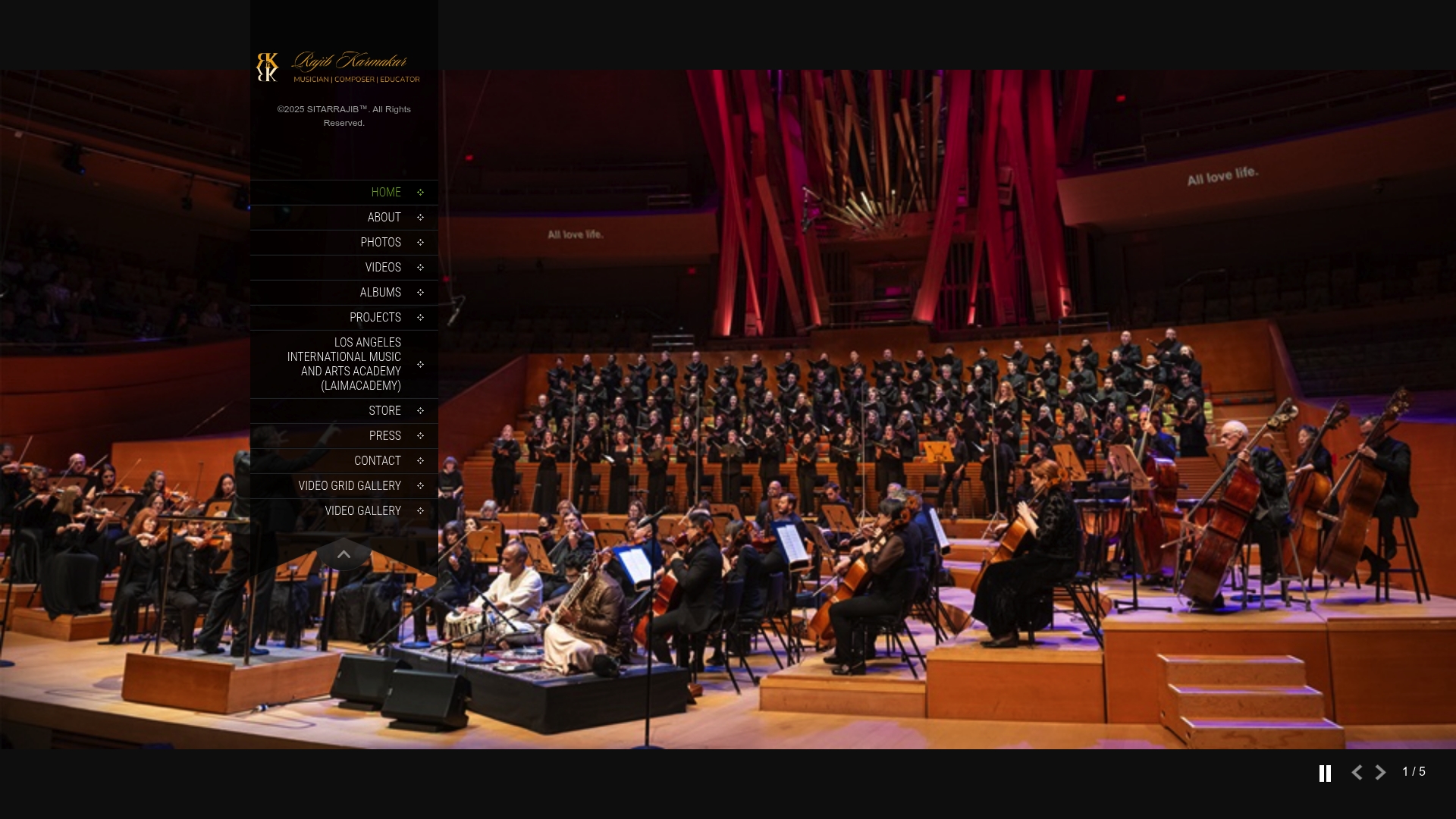
If your sourcing brief calls for a specialist music act that works across corporate events, festivals, film scores, and studio sessions, Sitarrajib offers exactly that. Rajib Karmakar is an internationally recognized sitarist and composer based in Los Angeles, with a track record across live performance, media production, and education.
Services available for event and production buyers:
- Live sitar performance — corporate events, festivals, weddings, and cultural programs; technical rider and logistics details here
- Studio recording — session sitar recording for producers, composers, and media buyers
- Film and media music — original composition and scoring for film, TV, and digital content
- Workshops and private lessons — educational programs for corporate groups, institutions, and individuals
Lead time for live performance bookings is typically 6–10 weeks. A technical rider is available on request. To check availability or discuss your brief, visit Sitarrajib.
Sources
- Entertainment Partners: How to Source and Brief Performers Who Elevate Your Event | Conference Innovations
- Entertainment Procurement Strategy: A Complete Guide (2026)
- Entertainment Procurement Strategy: Balancing Cost, Quality, and Compliance