
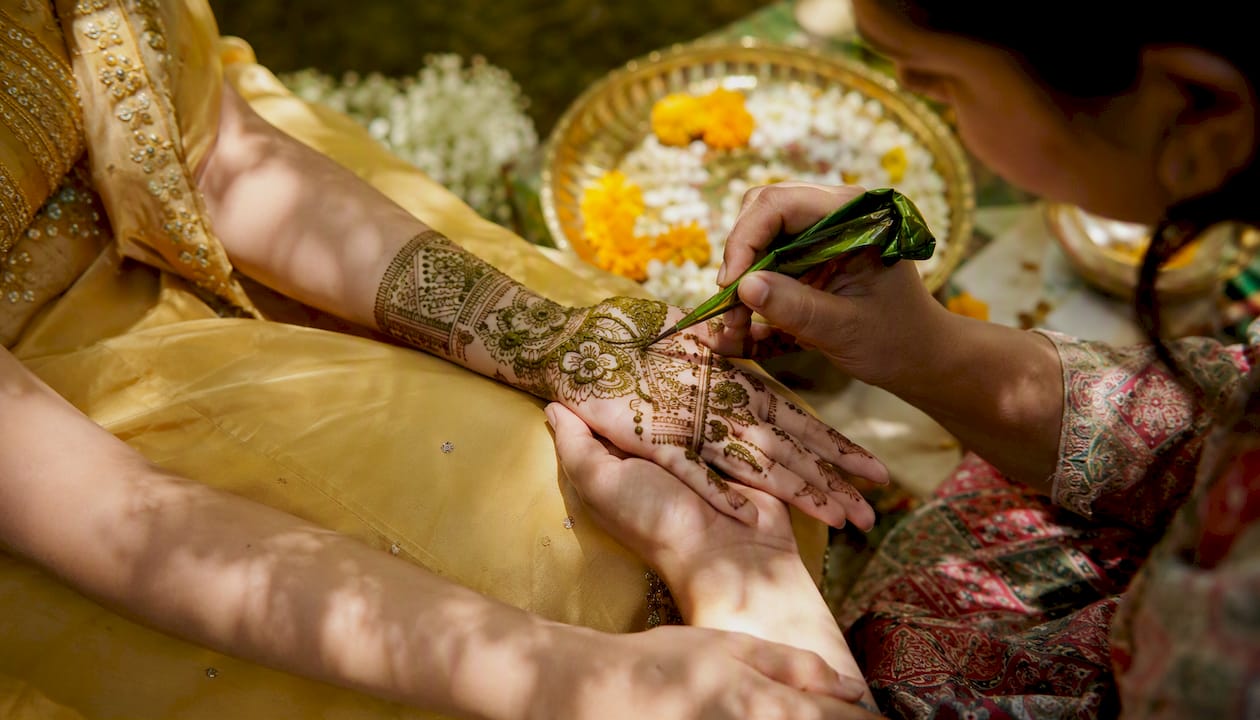
South Asian wedding traditions are the set of regional, religious, and family rituals that mark a marriage across South Asia — from pre-wedding rites like mehndi and haldi to the core marriage ceremony (pherā, laavaan, nikah, or anand karaj) and post-wedding rituals like vidaai. As Anvaya notes, there is no single “South Asian wedding”; customs are highly localized by region, religion, and family. Here is a quick look at the ceremonies you are most likely to encounter:
- Mehndi — henna application for the bride and guests
- Sangeet — a music and dance celebration, usually the night before the wedding
- Haldi/Pithi — turmeric paste applied by close family as a purification rite
- Baraat — the groom’s procession to the wedding venue
- Jaimala/Varmala — the exchange of flower garlands between bride and groom
- Pherā/Laavaan/Saptapadi — the core marriage rite (varies by religion)
- Nikah — the Islamic marriage contract
- Anand Karaj — the Sikh marriage ceremony
- Vidaai — the bride’s farewell from her family home
- Reception — a post-wedding celebration for family and friends
Practices vary widely by religion and region. This guide unpacks the common meanings behind each ceremony and gives you practical guidance for attending or planning one in the U.S.
Key Takeaways
South Asian wedding traditions are multi-day, religion-specific, and highly regional — the ceremonies that matter most are the ones the couple and family choose to prioritize.
| Point | Details |
|---|---|
| Multi-ceremony structure | Most South Asian weddings include pre-wedding, wedding-day, and post-wedding events spanning one to three days. |
| Religion and region shape everything | Hindu, Sikh, Muslim, and Christian traditions each center on different core rites; regional customs (Punjabi, Bengali, Tamil, etc.) add further variation. |
| U.S. adaptations are common | Venue rules around open flames and weekend scheduling often require compressing or combining events; working with culturally knowledgeable vendors reduces stress. |
| Guest etiquette matters | Wear bright colors, remove shoes at the mandap, bring a cash gift in an envelope, and ask before photographing rituals. |
| Sitarrajib for live music | Sitarrajib (Rajib Karmakar) offers live sitar performances for U.S. wedding ceremonies, cocktail hours, and receptions, with experience in ritual timing. |
Table of Contents
- What is a South Asian wedding tradition, and what does each ceremony mean?
- How do wedding practices differ by religion and region?
- How long does a South Asian wedding typically last?
- What should guests wear and bring to a South Asian wedding?
- How does music fit into a South Asian wedding, and how do you hire the right performer?
- Practical planning tips for South Asian weddings in the U.S.
- Why authenticity and adaptation can coexist
- Live sitar for your South Asian wedding in the U.S.
- Sources
What is a South Asian wedding tradition, and what does each ceremony mean?
South Asian wedding traditions span several days and carry deep symbolic weight. Each event has a specific purpose — purification, celebration, legal or religious union, or farewell — and the order generally follows a pre-wedding, wedding-day, and post-wedding arc.
Pre-wedding ceremonies
Roka/Sagai is the formal engagement or acceptance ceremony. Families meet, exchange gifts, and publicly acknowledge the match. It is often low-key compared to what follows.
Mehndi is the henna night. A mehndi artist applies intricate henna designs to the bride’s hands and feet, and often to female guests as well. The event is social and can run 2–4 hours or longer. Symbolically, the depth of the henna color is said to reflect the strength of the couple’s bond — a detail guests love to check the morning after.
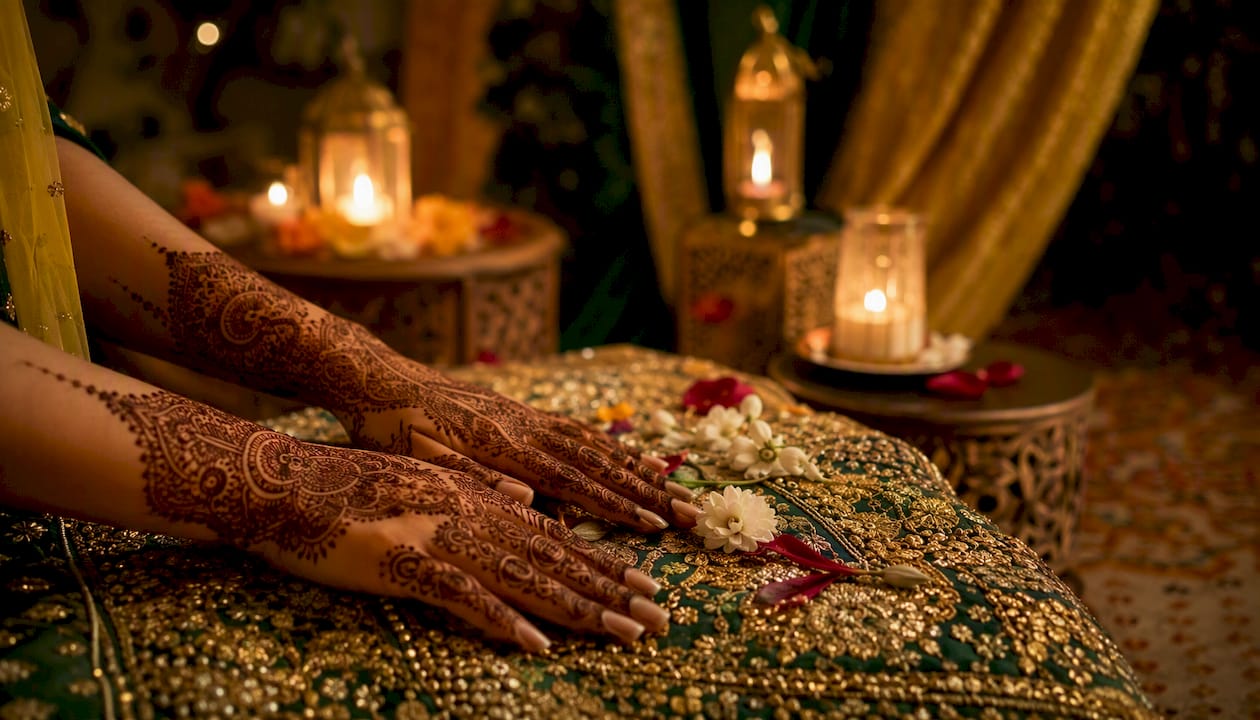
Sangeet translates roughly to “music together.” Families from both sides perform choreographed dances, sing songs, and celebrate. It functions as a family icebreaker, and the energy is usually the highest of any pre-wedding event. Scale ranges from an intimate living-room gathering to a full production with a DJ and stage.
Haldi/Pithi is a turmeric purification ritual. Close family members apply a paste of turmeric, sandalwood, and rosewater to the bride and groom separately. The yellow color is associated with auspiciousness and cleansing before the sacred ceremony. Anvaya describes it as symbolic purification — and a genuinely messy event. Guests who attend should wear clothes they do not mind staining.
Wedding-day ceremonies
Baraat is the groom’s procession. The groom arrives at the venue on horseback or in a decorated car, surrounded by dancing family and friends, often accompanied by a dhol drummer. It is loud, joyful, and one of the most photographed moments of the day.
Jaimala/Varmala is the garland exchange. Bride and groom place flower garlands around each other’s necks, symbolizing mutual acceptance. In many ceremonies, the groom’s side tries to lift him out of the bride’s reach — a playful tradition that always draws laughter.
Mandap is the ceremonial canopy under which the core marriage rites take place. The rituals performed there depend on religion:
- Pherā (Hindu): the couple circles a sacred fire seven times, each round representing a vow. The Sanskrit term for these rounds is saptapadi, meaning “seven steps.”
- Kanyadaan: the bride’s father formally gives his daughter to the groom — one of the most emotionally significant moments for families.
- Laavaan (Sikh): the couple walks around the Guru Granth Sahib four times while hymns are recited.
- Nikah (Muslim): a verbal contract in which both parties consent, witnessed by family. A mahr (a gift from groom to bride) is agreed upon as part of the contract.
- Anand Karaj (Sikh): the full Sikh ceremony, conducted in a Gurdwara, centered on the four laavaan.
Glossary of key terms:
- Pherā — the sacred fire circumambulation in Hindu ceremonies
- Kanyadaan — the ritual gifting of the bride by her father
- Laavaan — the four rounds around the Guru Granth Sahib in Sikh ceremonies
- Mangalsutra — a sacred necklace the groom ties around the bride’s neck, signifying marriage
- Sindoor — red vermillion powder applied by the groom to the bride’s hair parting
- Mahr — the mandatory gift from groom to bride in Islamic marriages
Post-wedding ceremonies
Vidaai is the bride’s farewell from her family home. She throws handfuls of rice or flower petals over her shoulder as she leaves, symbolizing prosperity for the family she is leaving behind. It is often the most emotional moment of the entire celebration.
Reception follows — usually an evening event where the couple is formally introduced as married, and guests celebrate with food, music, and dancing.
How do wedding practices differ by religion and region?
According to Wikipedia’s overview of weddings in India, India conducts a very large number of weddings annually, with a significant majority being Hindu ceremonies. But South Asian weddings span four major religious traditions and dozens of regional cultures, each with distinct customs.
Religion-by-religion overview
- Hindu: centers on the mandap, sacred fire (pherā/saptapadi), kanyadaan, panigrahana (hand-holding rite), and sindoor application. Ceremonies can last from under an hour (modern, condensed) to several hours in traditional settings.
- Sikh: the anand karaj is conducted in a Gurdwara, centered on four laavaan around the Guru Granth Sahib. No fire rite; the holy scripture is the focal point.
- Muslim: the nikah is the legal and religious contract, often brief. A qazi (officiant) presides, witnesses sign, and the mahr is formalized. Pre-wedding events like mehndi are common but separate from the nikah itself.
- Christian (South Asian): follows a church ceremony structure with vows and rings, often blended with South Asian pre-wedding customs like mehndi and sangeet.
Regional highlights
- Punjabi: high-energy bhangra dancing, dhol drumming, and a large baraat are hallmarks. Garba/Raas is more Gujarati but sometimes appears at Punjabi receptions.
- Gujarati: Garba and Raas are central — circular folk dances performed with sticks (dandiya) during the sangeet or a dedicated garba night.
- Bengali: the shubho drishti (first sacred glance between bride and groom) and the sindoor daan are distinctive. The bride is often carried in on a wooden seat by her brothers.
- South Indian/Tamil: priest-led rites often begin early in the morning. The tying of the thali (sacred thread/necklace) replaces the mangalsutra in some traditions. Ceremonies tend to be more compact.
- Bangladeshi: mehndi, gaye holud (similar to haldi), and a post-wedding bou bhat reception are common. The bou bhat is the groom’s family’s formal welcome of the bride.
- Sri Lankan: the Poruwa ceremony is unique — a decorated wooden platform on which the couple stands while vows and blessings are exchanged.
Core ritual presence by religion
| Ritual category | Hindu | Sikh | Muslim | South Asian Christian |
|---|---|---|---|---|
| Core marriage rite | Pherā/Saptapadi (fire) | Laavaan (scripture) | Nikah (contract) | Church vows |
| Pre-wedding music event | Sangeet | Sangeet | Mehndi night | Sangeet/party |
| Purification rite | Haldi | Haldi (optional) | Mehndi | Mehndi (optional) |
| Bride/groom symbolic mark | Sindoor, mangalsutra | Kara (steel bracelet) | Mahr (gift) | Rings |
| Groom’s procession | Baraat | Baraat | Baraat | Baraat (optional) |
| Bride’s farewell | Vidaai | Vidaai | Rukhsati | Vidaai (optional) |
Interfaith couples often combine elements — a nikah followed by pherā, or an anand karaj with a sangeet night. The most common hybrid approach is keeping the legal/religious ceremony intact and blending pre-wedding customs freely.
How long does a South Asian wedding typically last?
South Asian weddings are multi-day events by tradition, though U.S. couples often compress the schedule to fit weekend venue availability. Brides notes that venue rules around open flames and weekend scheduling commonly force adaptation of multi-day rituals.
Traditional multi-day schedule
- Day 1 (Thursday/Friday): Mehndi — 2–4 hours, afternoon or evening
- Day 1 evening: Sangeet — 3–5 hours, evening into night
- Day 2 (Saturday morning): Haldi — 1–2 hours, intimate family gathering
- Day 2 (Saturday afternoon/evening): Main ceremony (baraat, jaimala, mandap rites, vidaai) — 3–6 hours total
- Day 3 (Sunday): Reception or bou bhat — 3–5 hours, evening
Condensed single-day schedule (common in the U.S.)
- Morning: Haldi (1 hour, family only)
- Midday: Baraat and jaimala (30–45 minutes)
- Afternoon: Ceremony/mandap rites (45 minutes to 2 hours)
- Evening: Reception and dinner (3–4 hours)
Many couples combine the mehndi and sangeet into one evening event the night before, cutting a full day from the schedule without losing either tradition.
Event duration reference
| Event | Typical duration | Best time of day |
|---|---|---|
| Mehndi | 2–4 hours | Afternoon or evening |
| Sangeet | 3–5 hours | Evening |
| Haldi | 1–2 hours | Morning |
| Baraat | 30 minutes | Late morning or early afternoon |
| Ceremony (mandap) | 45 min–3 hours | Afternoon |
| Reception | 3–5 hours | Evening |
A note on fire rituals: pherā requires an open flame. Many U.S. venues restrict open flames indoors. Confirm fire safety permits with your venue early — some couples use a small, contained havan kund (fire vessel) that meets local fire codes, while others move the ceremony outdoors.
What should guests wear and bring to a South Asian wedding?
Junebug Weddings advises that guests should expect multi-day celebrations with distinct dress and etiquette norms for each event. Getting this right shows respect and makes you feel more comfortable.
Attire quick reference
Bride: typically a red or jewel-toned lehenga choli or sari for the ceremony, often with gold embroidery. South Indian brides may wear a silk Kanjivaram sari. Sikh brides often wear pink or red salwar kameez.
Groom: a sherwani (long embroidered coat) with churidar pants, or a dhoti kurta. Turbans (safa or pagri) are common, especially in Punjabi and Rajasthani traditions.
Guests: wear bright, festive colors. Avoid white (associated with mourning in many South Asian cultures) and black (sometimes considered inauspicious, though this is relaxing in modern weddings). Salwar kameez, lehengas, or sarees are appropriate for women; kurta pajama or a suit works for men. For Sikh ceremonies, cover your head with a dupatta or scarf.
Gifting norms
Cash gifts are the norm at most South Asian weddings in the U.S. Typical ranges vary by your relationship to the couple:
- Close friend or colleague: $100–$150
- Family friend or distant relative: $150–$250
- Close family: $250 and up, depending on family expectations
Present cash in a card or a decorated envelope — not loose. Some families have a gift table; others prefer you hand the envelope directly to a family member. If you are unsure, ask the host in advance. As East Meets Dress notes for similar gift cultures, cash-gift norms vary by community, so confirming with the host is always the right move.
Guest do’s and don’ts
- Do remove your shoes before entering the mandap area or a Gurdwara.
- Do arrive on time for the baraat — it sets the energy for the whole day.
- Do participate in dancing at the sangeet and reception. Sitting out is fine, but joining in is welcomed.
- Don’t photograph the ceremony without checking first. Many couples designate a professional photographer and ask guests to put phones away during rituals.
- Don’t wear white or all-black to the ceremony unless the couple has specified otherwise.
- Don’t leave during the vidaai — it is one of the most meaningful moments and your presence matters to the family.
Pro Tip: If you are attending a Sikh ceremony at a Gurdwara, bring a scarf or small cloth to cover your head. The Gurdwara will often have extras at the entrance, but bringing your own is a thoughtful gesture.
For inspiration on complementary event ideas that pair well with South Asian celebrations, Proposal Italy’s wedding planning resource offers creative ideas worth browsing.
How does music fit into a South Asian wedding, and how do you hire the right performer?
Music is not background at a South Asian wedding — it is structural. The dhol drives the baraat. Devotional hymns anchor the pherā or laavaan. The sangeet is built entirely around performance. And the reception lives or dies by the energy of the music. Live Indian classical music, particularly sitar, adds a layer of ritual gravity to ceremony moments that recorded tracks rarely replicate.
The sitar is especially effective during the mandap rites, the processional entrance, and cocktail hour transitions. Its tone is meditative and warm, which suits the solemnity of pherā without overpowering the officiant. Sitar music at cocktail hours also creates a natural cultural atmosphere for guests who are arriving and mingling before the ceremony begins.
Vendor checklist for hiring a live music performer
- Repertoire familiarity: does the performer know traditional ragas appropriate for ceremony moments (morning ragas for haldi, evening ragas for the reception)?
- Experience with Indian ceremonies: have they performed at South Asian weddings before and do they understand ritual timing?
- Timing coordination: can they start and stop on cue around the officiant’s instructions during pherā or laavaan?
- Amplification and stage needs: what equipment do they bring, and what does the venue need to provide?
- Liability and insurance: do they carry performer liability insurance, which many U.S. venues require?
- Open-flame coordination: if the mandap has a live fire, the performer needs to be positioned safely and aware of ventilation.
Pro Tip: When booking a live performer for an outdoor ceremony, ask specifically about wind and ambient noise. Sitar strings are sensitive to temperature and humidity changes, and a good performer will arrive early to tune and acclimate. Confirm this in your contract.
Sitarrajib as a live performance option
Sitarrajib, the artist brand of Los Angeles-based sitarist Rajib Karmakar, is one option for couples seeking live sitar at U.S. weddings. Rajib performs at ceremonies, cocktail hours, and receptions, and brings experience with the ritual timing that South Asian wedding ceremonies require. You can view performance examples and inquire about availability directly through the Sitarrajib website. For couples who want to understand sitar performance logistics before reaching out, that resource covers staging, amplification, and scheduling in detail.
Practical planning tips for South Asian weddings in the U.S.
Holding a South Asian wedding in the U.S. means working within American venue rules while preserving the rituals that matter most. Brides confirms that working with culturally knowledgeable vendors is one of the biggest factors in reducing planning stress.
Step-by-step venue and logistics checklist
- Book early and ask specific questions: confirm whether the venue allows open flames, outdoor ceremonies, dhol drumming, and extended hours for multi-event days.
- Get fire permits in writing: if you plan pherā with a live fire, contact your local fire marshal and the venue coordinator together. Some venues require a fire safety officer on site.
- Plan for multiple outfit changes: brides often change outfits between the ceremony and reception. Make sure the venue has a private room available.
- Coordinate vendor arrival times: caterers, decorators, the mandap setup crew, and musicians may all need access hours before guests arrive. Build a detailed vendor timeline.
- Hire a cultural consultant or a South Asian wedding planner: someone who has done this before will anticipate problems you have not thought of yet.
Budget and cost considerations
- Venue and catering typically represent the largest share of the budget, especially for multi-day events.
- Multiple outfit changes add cost through rental or purchase, alterations, and hair/makeup for each look.
- Extended vendor hours for a two- or three-day celebration add up quickly. Get itemized quotes.
- Cost-saving move: combining the mehndi and sangeet into one evening event cuts a full venue rental day without losing either tradition.
Tips for interfaith and mixed-audience weddings
- Sequence ceremonies clearly in the program so guests know what is happening and why.
- Assign a family member or emcee to briefly explain each ritual as it begins. Guests who understand what they are watching are more engaged and respectful.
- For accessibility, provide seating near the mandap for elderly guests — traditional ceremonies often involve standing or sitting on the floor for extended periods.
- If you are combining two religious ceremonies, consult both officiants early to agree on sequencing and timing.
Choosing vendors who already understand South Asian rituals — caterers who know the menu, decorators who can build a mandap, musicians who know when to play and when to stop — removes a significant layer of coordination stress.
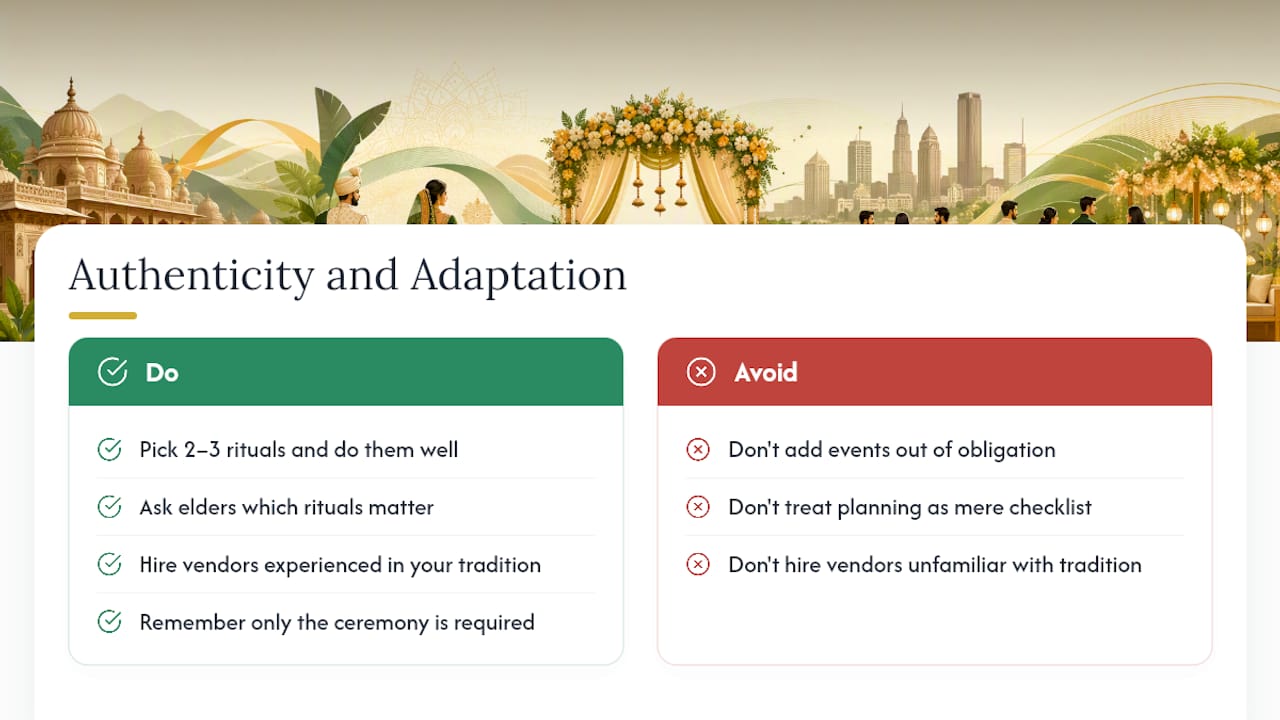
Why authenticity and adaptation can coexist
The pressure to do everything — mehndi, sangeet, haldi, baraat, full pherā, vidaai, reception — can make planning feel like a checklist rather than a celebration. The reality is that the only required element is the legal or religious ceremony itself. Everything else is a cultural and familial choice.
What I have seen, working in Indian classical music in the U.S., is that the couples who feel most satisfied with their weddings are the ones who chose two or three rituals that genuinely meant something to them and did those well. A beautifully performed pherā with live sitar, a heartfelt sangeet with family performances, and a warm reception — that is a complete wedding. Adding five more events out of obligation rarely adds meaning.
Consult your family elders. They will tell you which rituals carry the most weight in your specific community and which ones are more flexible. And when you hire vendors — musicians, decorators, caterers — look for people who have worked within your tradition before. They will ask the right questions and catch the details you might miss.
For a fuller biography and credentials, please see the Rajib Karmakar artist profile on the Sitarrajib website.
Live sitar for your South Asian wedding in the U.S.
Sitarrajib brings live sitar performance to South Asian weddings across the U.S., led by Los Angeles-based sitarist Rajib Karmakar. Whether you need music for the ceremony processional, the mandap rites, a cocktail hour, or the reception, Rajib performs with an understanding of ritual timing that makes coordination straightforward for couples and planners alike.
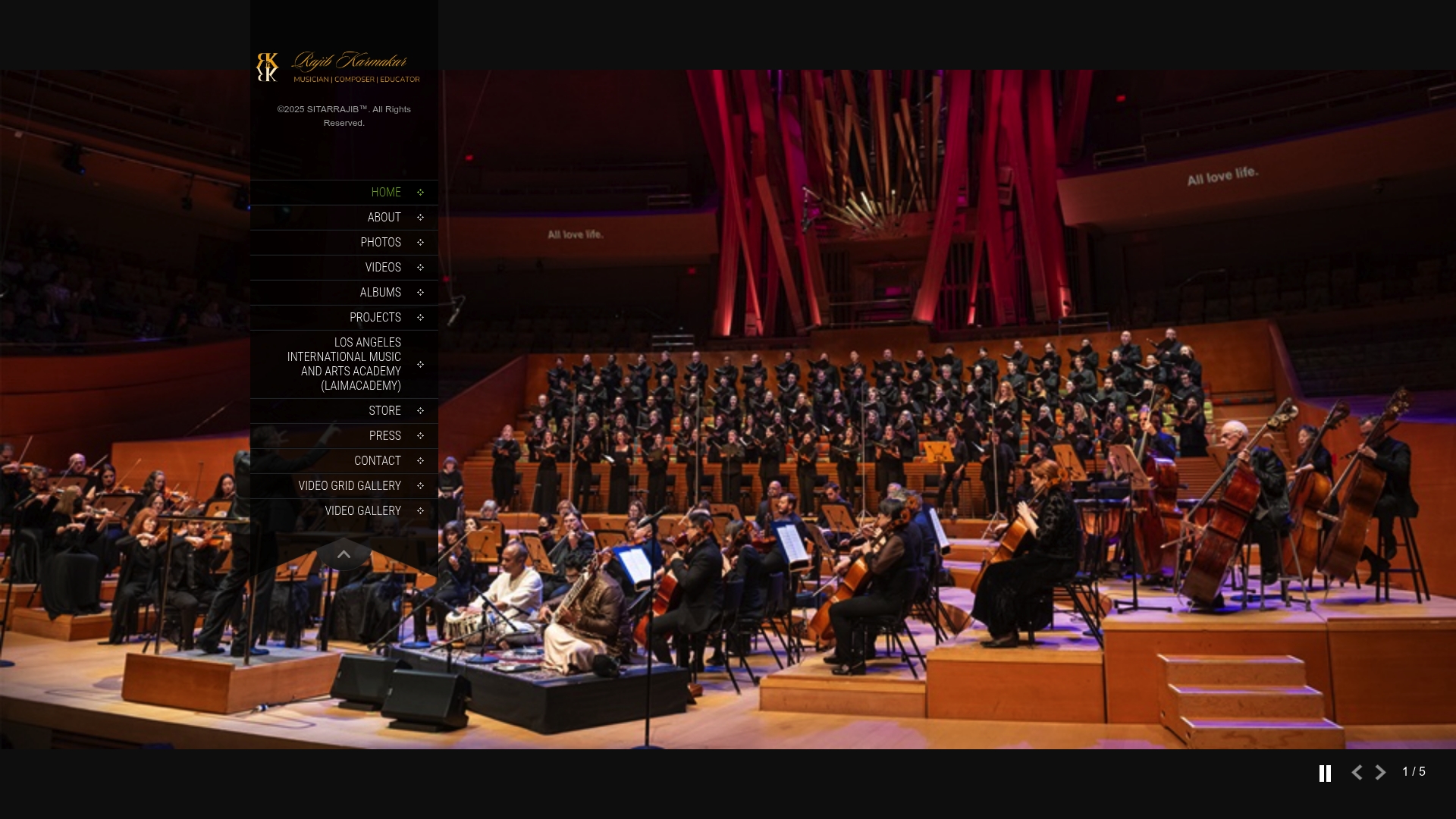
Sitarrajib is one option among many for live wedding music, and the right fit depends on your ceremony’s specific needs. If you are considering live sitar, the sitar performance guide for event planners covers logistics, staging, and what to expect. To check availability for your wedding date or request a sample recording, reach out through the Sitarrajib website directly.
Sources
These sources informed this guide and are worth bookmarking if you want to go deeper on any specific tradition or planning question:
- A Complete Guide to South Asian Wedding Events: From Mehndi to Reception | Anvaya
- Indian Wedding Rituals And Ceremonies: A Guide For South … | Brides
- Weddings in India
- What to Expect When Attending an Indian Wedding | JB Weddings