
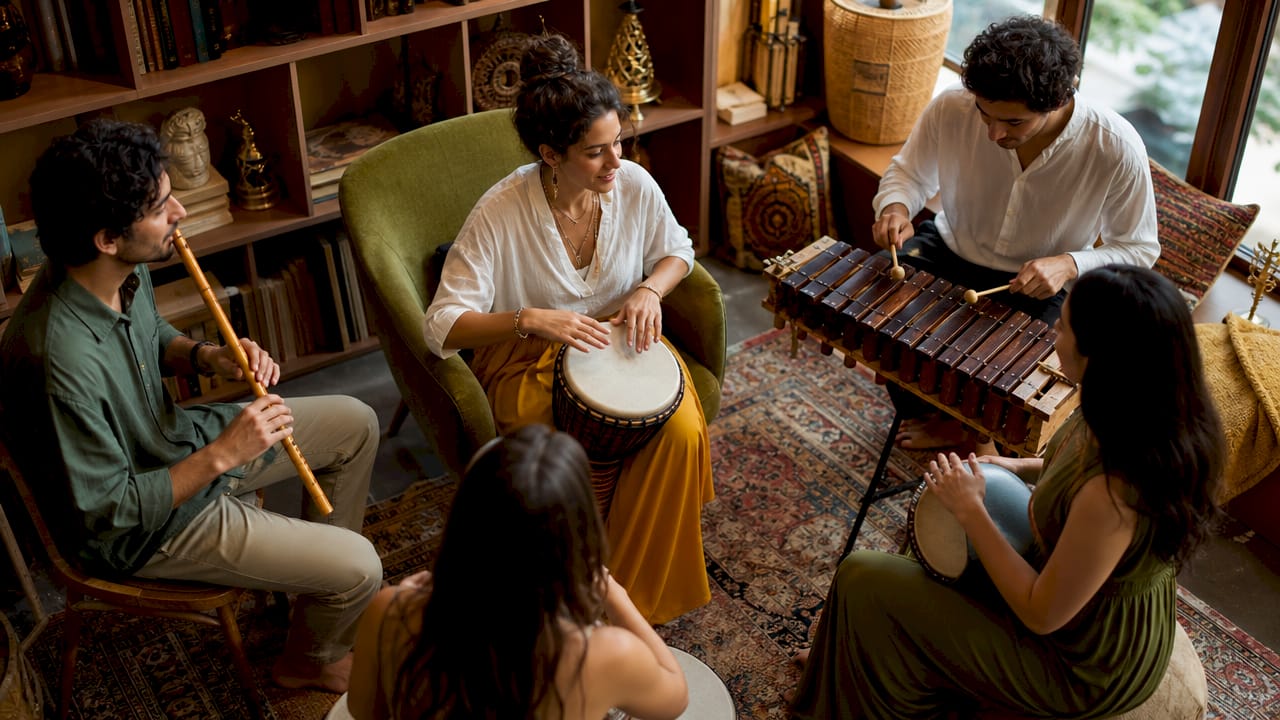
A cultural music experience is defined as an immersive engagement with music that embodies a community’s history, identity, and shared traditions, typically through authentic performances, participatory workshops, and culturally grounded settings. This goes well beyond attending a standard concert. The experience connects you to the social and emotional fabric of a living culture. Scholars and practitioners use the term “intangible cultural heritage” to describe this kind of music, recognizing it as a carrier of memory, values, and communal identity. Sitarrajib, the artist brand of Los Angeles-based sitarist Rajib Karmakar, is built entirely around this principle: music as a direct expression of cultural life.
What is a cultural music experience, and how is it defined?
A cultural music experience is the active, context-aware engagement with music that reflects the traditions and identity of a specific community. The key word is “active.” You are not simply a passive audience member. You are a participant in a living cultural moment, whether you are attending a performance of Indian classical music, joining a West African drumming circle, or watching Gnaoua masters pass their art to younger musicians.
The concept of Cultural Congruence is central here. Research shows that music in its native setting provides deeper narrative immersion and emotional authenticity than the same music performed in a generic venue. Hearing Gnaoua music inside a Moroccan medina, for example, produces a fundamentally different experience than hearing it in a hotel ballroom. The setting, the community, and the ritual context all shape what you feel and understand.
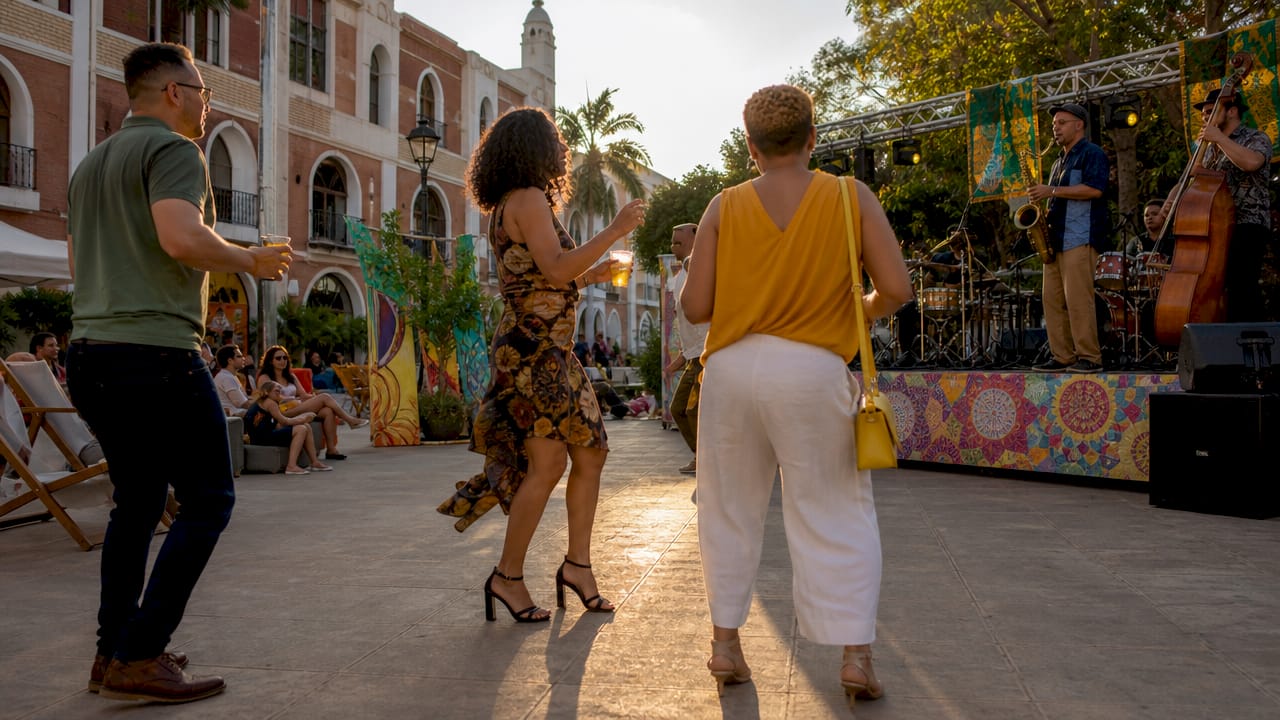
Cultural music, as an industry term, refers to music that carries the social codes, histories, and aesthetic values of a specific group. The definition of cultural music is not limited to folk or traditional genres. It includes any music that functions as a living symbol of a community’s identity, from Indian classical ragas to Tejano conjunto, from Estonian folk to Afrobeat.
How do cultural music experiences differ from standard musical events?
Standard concerts deliver music as a product. Cultural music experiences deliver music as a context. That distinction changes everything about how you engage.
The differences show up in several concrete ways:
- Setting and authenticity. A cultural experience places music in its heritage environment or recreates that environment with care. The venue, the decor, the food, and the community present all reinforce the music’s meaning.
- Participant role. Attendees at cultural events are often invited to clap, dance, sing, or ask questions. Passive listening is not the default.
- Artist-audience relationship. Cultural music events frequently feature direct interaction between performers and audiences, including storytelling, explanation of traditions, and shared ritual.
- Community ownership. The music belongs to the community presenting it. Artists are not just entertainers; they are cultural representatives.
Music experienced in authentic settings consistently produces stronger emotional resonance than the same music in a neutral space. That is Cultural Congruence in practice.
Pro Tip: When attending a cultural music event, arrive early and talk to the people around you. Community members at these events are often the best guides to what you are hearing and why it matters.
Community-focused festivals illustrate this contrast well. The Rancho Alegre Conjunto Music Festival in Austin is free, all-ages, and has historically featured over 100 groups. That model prioritizes access and community over commercial scale. The experience feels intimate because it is built for the community first.
What types of events make up cultural music experiences?
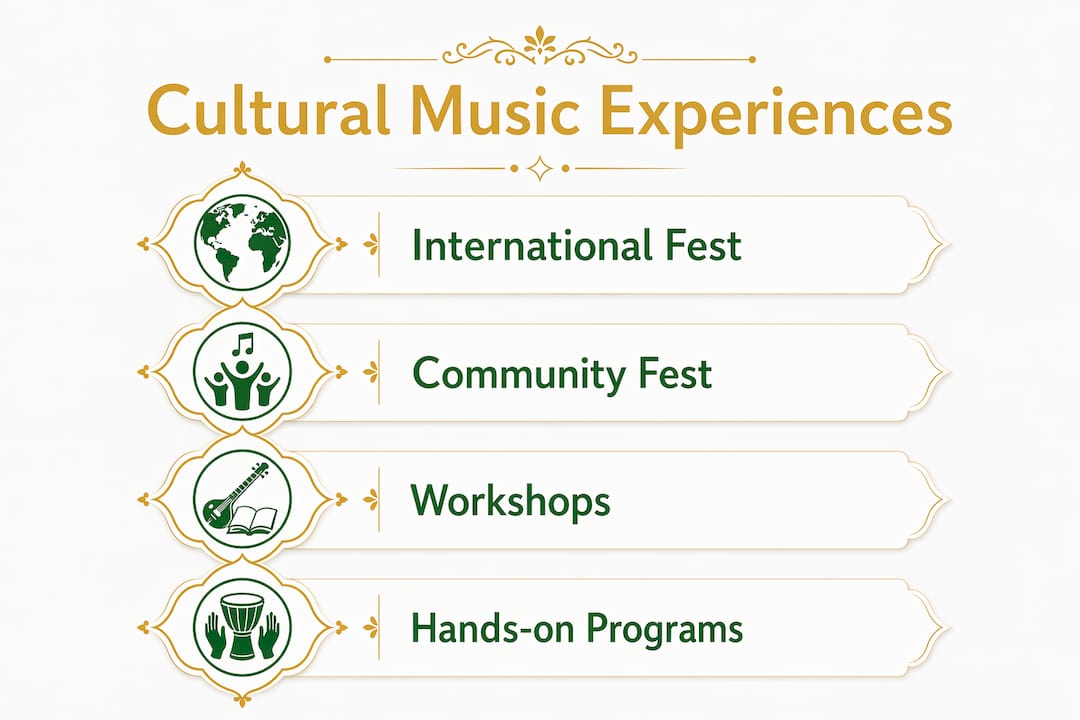
Cultural music events range from massive international festivals to small neighborhood gatherings. Each type serves a different function, but all share the goal of connecting people to living musical traditions.
Large-scale international festivals
These events bring together artists and traditions from across the world in one concentrated program. Nuits d’Afrique in Montreal features over 700 artists from 30 countries, with 130 or more activities including concerts, workshops, markets, and culinary experiences. The Viljandi Folk Festival in Estonia presents 60 artists and more than 150 shows. That scale creates total immersion. You can move from a Malian kora performance to a Baltic folk dance workshop within the same afternoon.
Community and regional festivals
Smaller festivals serve a different but equally important purpose. They preserve specific local traditions and create space for intergenerational transmission. The Rancho Alegre Conjunto Music Festival in Austin centers Tejano conjunto music, a genre rooted in the Mexican American experience of South Texas. Events like this one are where grandparents and grandchildren share the same dance floor.
Workshops and hands-on programs
Workshops are where cultural music experiences become most personal. Active participation, such as learning rhythms on a tabla, a djembe, or a sitar, creates a visceral connection that passive listening cannot replicate. Music performance programs typically run 3–6 hours and work especially well for people who learn through physical engagement.
| Event type | Scale | Primary function |
|---|---|---|
| International festival | Hundreds of artists | Multi-cultural immersion |
| Regional community festival | Dozens of groups | Heritage preservation |
| Workshop or masterclass | Small group | Hands-on skill and connection |
| Intimate concert or recital | Single artist | Deep focus on one tradition |
Why do cultural music experiences matter for identity and understanding?
Music is the most direct carrier of cultural memory. It transmits values, histories, and emotional truths across generations without requiring a shared language. That is why cultural music festivals function as heritage celebrations, not just entertainment events.
The importance of cultural music shows up in four specific ways:
- Identity affirmation. For members of a cultural community, hearing their traditional music performed with skill and respect is an act of recognition. It says: your history matters, your art is worth preserving.
- Intergenerational dialogue. Festivals like Morocco’s Gnaoua and World Music Festival explicitly connect master practitioners with emerging artists. The music becomes a living conversation between past and present.
- Cross-cultural empathy. Experiencing music from an unfamiliar tradition builds genuine curiosity and respect. You cannot sit through a skilled performance of a tradition you know nothing about and leave unchanged.
- Emotional bonding across language barriers. Music communicates feeling directly. Two people who share no common language can share a profound moment through rhythm and melody.
“Cultural music events are more than concerts. They serve as heritage celebrations that encourage dialogue between generations and sustain traditions that might otherwise disappear.”
Morocco’s Gnaoua festival
The role of music in culture is also psychological. Research on music cognition shows that the brain treats unfamiliar musical scales and rhythms as complex new information, activating increased frontal gyrus activity. That cognitive effort is not a barrier. It is a sign that new neural pathways are forming, which is what learning feels like.
How can you deepen your cultural music experience?
Getting more from a cultural music experience requires intention. Showing up is the first step. Engaging actively is what makes it meaningful.
Here are the most effective approaches:
- Attend a workshop before or after a performance. Context changes everything. Knowing the history of a raga before you hear it performed makes the performance three times more meaningful.
- Learn one basic rhythm or phrase on a traditional instrument. Hands-on engagement produces deeper personal immersion than any amount of passive listening.
- Read about the cultural narrative behind the music. Every tradition has a story. Understanding that story gives you a frame for what you hear.
- Accept the novelty effect. Your brain will work harder when processing unfamiliar music. That mental effort is normal and temporary. Push through it.
- Ask respectful questions. Artists and community members at cultural events generally welcome genuine curiosity. A simple “can you tell me what this song is about?” opens real conversations.
Pro Tip: If you find unfamiliar music hard to follow, focus on one element at a time, such as the rhythm, the call-and-response pattern, or the lead instrument. Your ear will adjust faster than you expect.
Music as a vehicle for identity works both ways. When you engage with another culture’s music with genuine attention, you also learn something about your own cultural assumptions and listening habits. That self-awareness is one of the most underrated benefits of experiencing music culturally.
Key Takeaways
A cultural music experience is defined by active participation, authentic setting, and connection to living cultural heritage, not by the size of the stage or the fame of the performer.
| Point | Details |
|---|---|
| Cultural Congruence matters | Music heard in its native or heritage-appropriate setting produces stronger emotional and narrative impact. |
| Active participation deepens connection | Workshops and hands-on learning create more personal immersion than passive concert attendance. |
| Festivals serve heritage, not just entertainment | Large and small festivals both function as platforms for intergenerational transmission of traditions. |
| The novelty effect is normal | Unfamiliar music requires extra cognitive effort; that effort signals genuine cross-cultural learning. |
| Music transcends language | Shared musical experience builds empathy and emotional bonds across cultural and linguistic differences. |
Why I think most people underestimate what cultural music can do
I have performed Indian classical music on the sitar across dozens of settings, from concert halls in Los Angeles to intimate workshops where the audience sat three feet away. The difference in what people take away from those two settings is striking.
In a formal concert hall, people listen respectfully and applaud at the right moments. In a workshop or a smaller, community-centered setting, something different happens. People lean in. They ask what the notes mean. They want to try the instrument. A woman in one of my workshops told me afterward that she finally understood what her grandmother had been humming her whole life. That is what a genuine cultural music experience does. It closes a gap that words cannot close.
The mistake most people make is treating cultural music as background. They attend a festival, enjoy the atmosphere, and leave without really engaging. The music becomes wallpaper. The way to avoid that is simple: ask one question, try one thing, and stay for the conversation after the performance. The cross-cultural projects I care most about are the ones where the audience leaves knowing something they did not know before, not just feeling something pleasant.
Cultural music is not a niche interest. It is one of the most direct ways to understand another human being’s inner world. You do not need to be a musician to benefit from it. You just need to show up with your attention.
— Rajib
Authentic cultural music with Sitarrajib
Rajib Karmakar brings the depth of Indian classical music to audiences across Los Angeles and beyond, through live sitar performances, private lessons, and cultural workshops designed for real engagement.
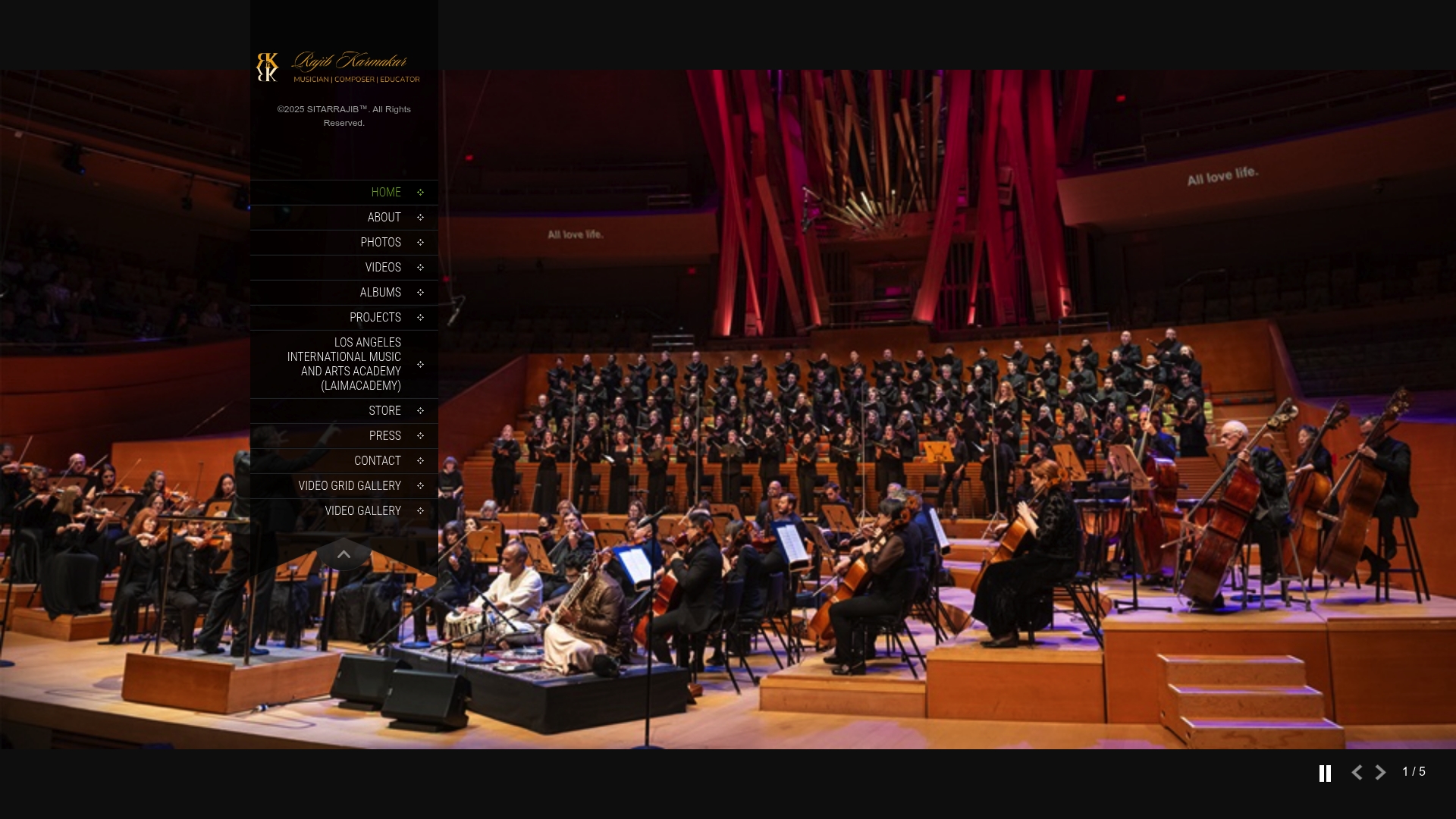
Whether you are new to Indian classical music or already familiar with its traditions, Sitarrajib offers a direct path to experiencing it authentically. You can explore Rajib’s work across concerts, studio recordings, and educational programs. Watch live performance moments to get a feel for the experience before you attend. For a closer look at the music itself, listen to Rajib’s albums, which reflect decades of study and cross-cultural collaboration.
FAQ
What is the definition of a cultural music experience?
A cultural music experience is an immersive engagement with music that reflects the traditions, identity, and social context of a specific community, typically involving authentic settings, active participation, and direct connection to cultural heritage.
How does Cultural Congruence affect a music experience?
Cultural Congruence means experiencing music in its native or heritage-appropriate environment. Research shows this setting produces stronger emotional resonance and narrative authenticity than a neutral venue.
What are examples of cultural music events?
Examples include large international festivals like Nuits d’Afrique, which features over 700 artists from 30 countries, community events like the Rancho Alegre Conjunto Music Festival, and intimate workshops where participants learn traditional instruments directly from cultural practitioners.
Why does unfamiliar cultural music feel difficult to follow at first?
The brain treats unfamiliar musical scales and rhythms as complex new information, requiring increased cognitive effort to process. This is a normal part of cross-cultural musical learning and eases with repeated exposure.
How can I get more out of a cultural music experience?
Attend a workshop alongside any performance, ask questions about the cultural context, and try a hands-on activity like learning a basic rhythm. Active engagement consistently produces deeper personal connection than passive listening alone.