
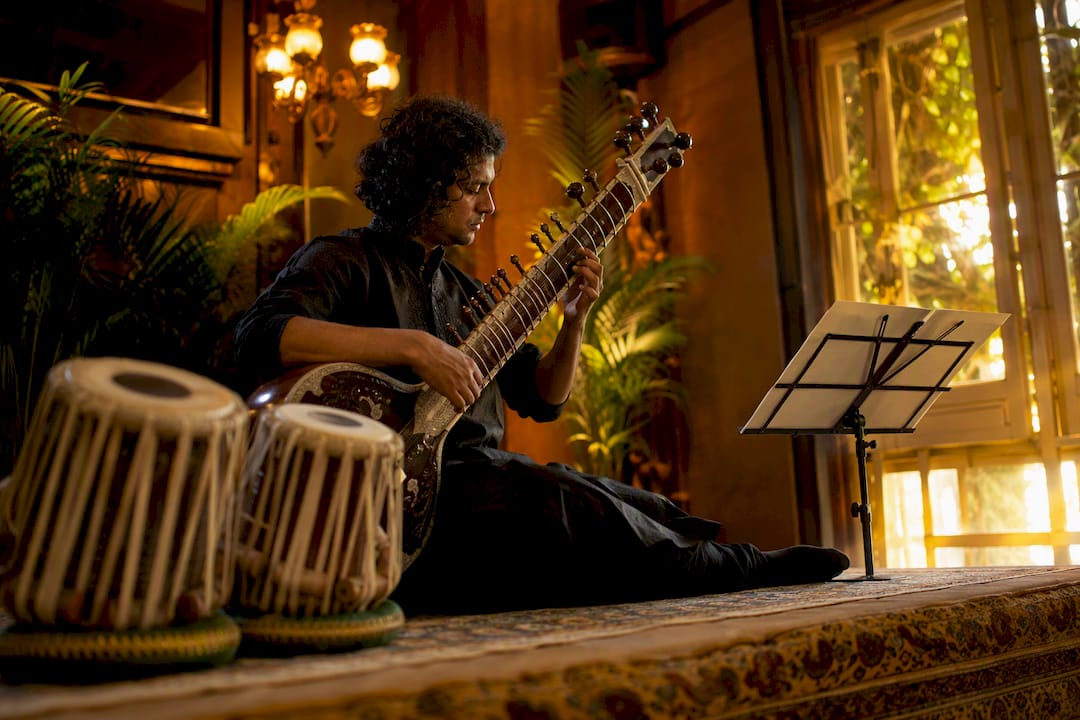
The main types of live music acts for cultural events fall into ten categories: solo/recital, chamber ensemble, band, orchestra, DJ/electronic performer, folk or traditional ensemble, choral group, fusion/cross-cultural act, roving/street performer, and full festival lineup. Each fits a different room, budget, and program goal. Groups like the National Arts Centre (NAC) and cultural bodies aligned with UNESCO programming standards treat this variety as the baseline for good cultural programming, and Los Angeles sitarist collective Sitarrajib works across several of these categories directly.
Here’s the shortlist to start from:
- Solo/recital — one performer, deep focus, best for intimate ceremonies
- Chamber ensemble — 2 to 8 musicians, acoustic, works for receptions and galas
- Band — amplified, 3 to 8 members, built for dancing and energy
- Orchestra — 20+ musicians, formal, needs a real stage and budget
- DJ/electronic — one or two performers, high volume, late-night slots
- Folk/traditional ensemble — regional instruments, cultural anchoring
- Choral group — voices only or with light accompaniment, ceremonial
- Fusion/cross-cultural act — blended instrumentation, festival draw
- Roving/street performer — mobile, used for arrivals and transitions
- Festival lineup — multiple acts, multi-stage logistics
The one-line rule: match the act type to what your audience expects, how big your venue is, and whether the music is background texture, the main event, or something the crowd participates in.
Key Takeaways
Choosing the right live music act for a cultural event depends on matching the act’s format, scale, and cultural context to your audience and venue rather than defaulting to the most popular option.
| Point | Details |
|---|---|
| Ten core act types | Solo, chamber, band, orchestra, DJ, folk ensemble, choral, fusion, roving performer, and festival lineup cover nearly every cultural event need. |
| Confirm technical needs early | Lock in PA, DI, power, and mic count before signing, since staging errors cause most day-of problems. |
| Budget for hidden costs | Travel, per diems, insurance, and licensing fees often add more than the base fee itself. |
| Add context for living traditions | Pre-show talks and program notes make heritage acts land better with unfamiliar audiences. |
| Sitar performances anchor cultural sets | Sitarrajib offers solo, fusion, and workshop formats scaled to ceremony, festival, or corporate programming needs. |
Table of Contents
- What Are the Main Types of Live Music Acts for Cultural Events?
- How Do You Choose the Right Live Music Act for Your Event?
- What Technical and Staging Details Should You Confirm First?
- What Do Live Music Acts Typically Cost, and What’s Hidden?
- What Program Templates Work for Common Set Lengths?
- Case Study: How a Sitar Performance Can Anchor a Cultural Event
- How Do You Match Acts to Cultural Themes and Audience Demographics?
- What Should You Know About Contracts and Cancellation Terms?
- How Do You Handle Artist Hospitality and Backstage Logistics?
- Planner Perspective: Lessons Learned From Programming Cultural Acts
- Booking Sitarrajib for Cultural Events and Workshops
- Sources
What Are the Main Types of Live Music Acts for Cultural Events?
Live performances generally break into three broad containers: recitals, formal concerts, and multi-day festivals that mix traditional and contemporary programming under one roof. Inside those containers, the specific act types below cover almost every cultural event a planner will book.
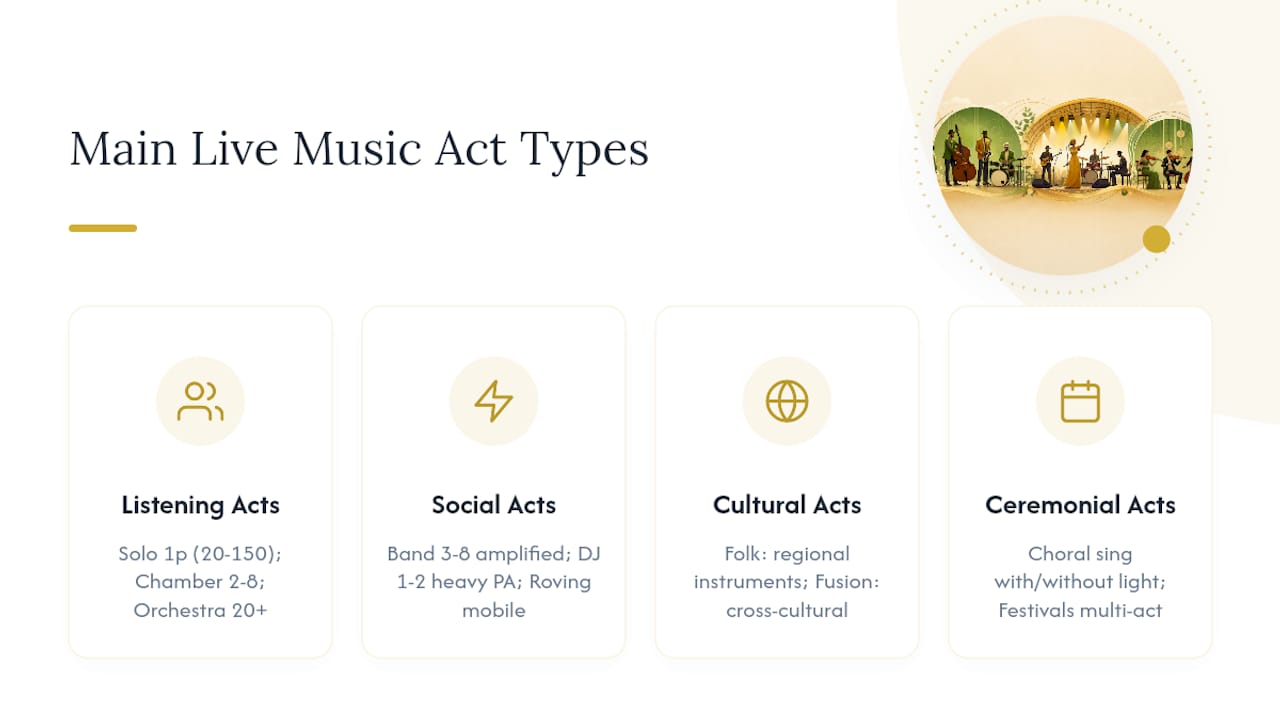
Solo/recital acts feature one performer, often on a single instrument or voice. Audiences sit and listen. This format suits intimate ceremonies, cocktail hours, and gallery openings where the room seats 20 to 150 people. A solo sitar recital, for instance, works beautifully as a ceremony prelude or a quiet corporate reception opener.
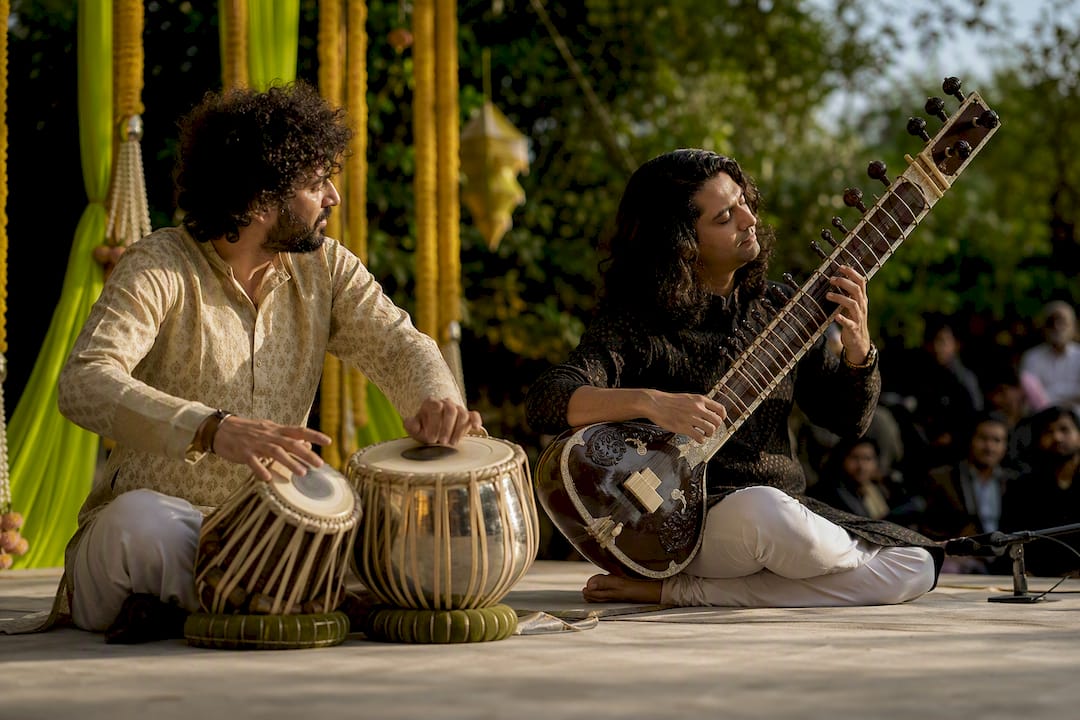
Chamber ensembles run 2 to 8 musicians playing acoustic or lightly amplified repertoire. Expect string quartets, small jazz combos, or a sitar-and-tabla duo. These groups fit receptions, award dinners, and mid-size cultural showcases where conversation and music need to coexist without a PA system fighting for space.
Bands are amplified acts of 3 to 8 members built for movement, not stillness. Weddings, block parties, and outdoor fairs lean on bands because the audience expects rhythm they can dance to.
Orchestras bring 20 or more musicians and require a real stage, risers, and a bigger budget than almost any other act type. They anchor formal galas, symphonic tributes, and large civic celebrations.
DJ/electronic performers need one or two people and minimal stage footprint but heavy sound reinforcement. Best for late-night festival slots or after-parties.
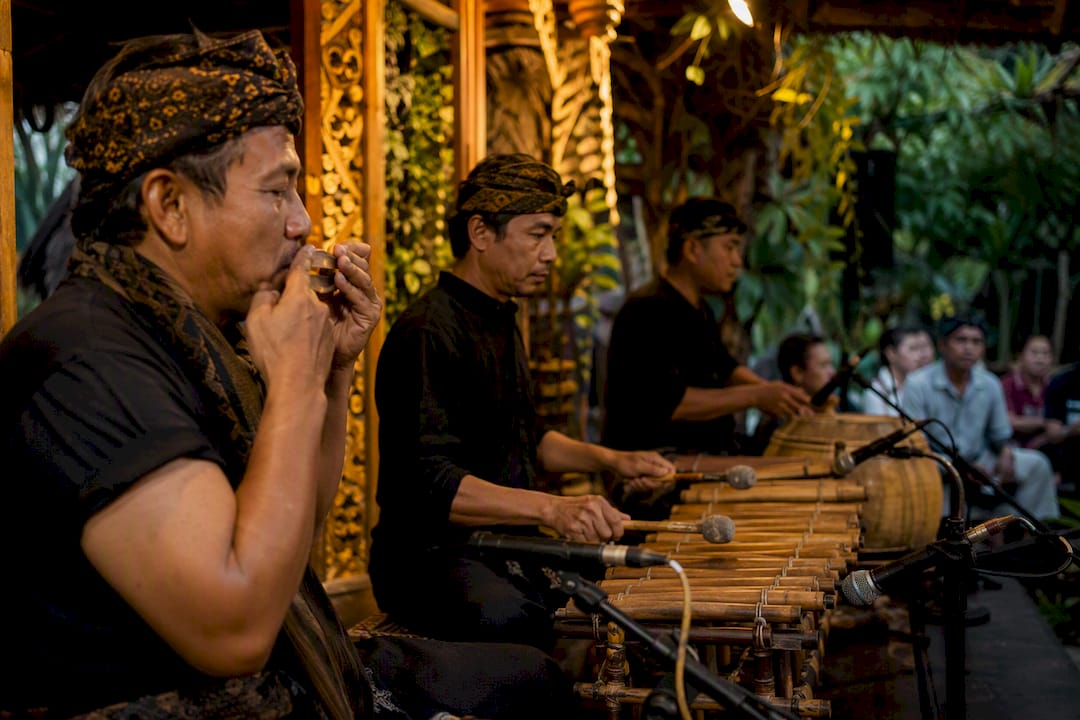
Folk and traditional ensembles use regional instruments and repertoire tied to a specific heritage. A Taiwanese Aboriginal dance and music troupe recently used mouth harp, bamboo xylophone, and organic acoustic textures to anchor a festival debut, proof that living-tradition acts can carry a whole program slot on authenticity alone.
Choral groups sing with or without light accompaniment and suit religious ceremonies, civic commemorations, and holiday programs.
Fusion and cross-cultural acts blend instruments and repertoires from different regions. Projects tied to the Aga Khan Music Programme show how these collaborations expand audience reach, though they need more rehearsal time than a standard set.
Roving and street performers move through crowds and work arrivals, cocktail hours, or transitions between program segments.
Festival lineups stack multiple acts across one or more stages, which is its own logistical animal covered later in this guide.
When to choose which: if your audience will sit quietly and listen, go solo, chamber, or orchestral. If they’ll move and mingle, go band, DJ, or roving performer. If cultural authenticity is the entire point of the event, a folk ensemble or fusion act should headline, not fill a gap.
How Do You Choose the Right Live Music Act for Your Event?
Start with the answer: run a three-step decision flow. First, define what the music needs to do in your program (background texture, the focal performance, or a participatory moment). Second, pick the act type that matches that role. Third, confirm logistics and budget before you sign anything.
Once you’ve narrowed the act type, work through this checklist with any artist or agent before you commit:
- What’s included in your technical rider, and what falls on us to provide?
- How many performers, and what’s your total stage footprint?
- Do you require a specific input count for the PA system?
- What’s your standard set length, and can it flex up or down?
- Do you offer audience interaction or is this a listening-only format?
- What’s your cancellation and rescheduling policy?
- Can you provide references from a comparable cultural event?
- Are there any licensing or union requirements we should know about?
- What’s your load-in and soundcheck window?
- Do you travel with your own instruments, or do we need to source backline?
Watch for red flags: a rider that’s vague about power and inputs, an agent who can’t produce a single reference, or a booking that won’t commit to a firm arrival window. Any of those should slow you down.
Pro Tip: When booking a folk, traditional, or living-heritage act, pair the performance with a short pre-show talk or program note. It’s the single easiest way to add context without slowing down the show, and it keeps the presentation from feeling extractive rather than collaborative.
What Technical and Staging Details Should You Confirm First?
Confirm PA capacity, monitor needs, direct inputs (DI), power drops, and microphone count before you finalize any contract. These five items cause more day-of scrambling than anything else on a live-music rider.
Stage footprint scales with ensemble size:
- Solo act: 8×8 feet, one or two mic inputs
- Trio: 12×12 feet, four to six inputs
- 5 to 8 piece band: 20×16 feet minimum, full monitor mix
- Small orchestra (20+ musicians): 30×24 feet or larger, tiered risers
| Act Size | Typical Inputs Needed | Load-In Window | Soundcheck Length |
|---|---|---|---|
| Solo/duo | 2 to 4 | 60 minutes | 20 minutes |
| Trio/quartet | 4 to 8 | 90 minutes | 30 minutes |
| Band (5 to 8) | 12 to 20 | 2 hours | 45 minutes |
| Small orchestra | 30+ | 3+ hours | 60+ minutes |
Standard rider items include backline (amps, drum kit, keyboard stands), a dressing room, basic hospitality, and sometimes security for larger festival slots. If multiple acts share one stage, build in staggered changeover windows. A 15-minute transition between a chamber ensemble and a full band almost never works. Budget 30 minutes minimum.
What Do Live Music Acts Typically Cost, and What’s Hidden?
Fees vary widely by act type, travel distance, technical needs, and local market, so treat any number here as a planning estimate rather than a quote. A solo recitalist typically costs less than a full band, and a band costs meaningfully less than an orchestra once you add rehearsal time and personnel.
Hidden costs that catch first-time planners off guard:
- Travel and accommodation for out-of-town artists
- Per diems for multi-day festival bookings
- Extra technical riders (specialty microphones, in-ear monitors)
- Liability insurance riders some venues require
- Music licensing fees for recorded or broadcast events
Get the cancellation window in writing. Some artists refund deposits with 30+ days’ notice; others don’t refund at all inside two weeks of the event.
Cost-saving levers that actually work: book local talent to cut travel costs, trim the technical package to what the venue already has, and consider an act that can double as both performer and emcee for smaller events.
What Program Templates Work for Common Set Lengths?
Choose your template based on the role the music plays: background ambiance, a focal performance, or something participatory.
60-minute solo recital: opening piece, 2 to 3 mid-set pieces building in intensity, one closing showcase piece. Good for ceremony preludes or gallery events.
90-minute band set: 8 to 10 songs, one instrumental breakdown mid-set, a planned encore slot if the crowd is engaged.
120-minute mixed festival slot: two acts back-to-back, 45 minutes each, with a 15 to 30 minute changeover for gear swap and a brief MC introduction.
- Confirm who introduces each act and how much time the MC gets
- Build in a two-minute buffer before any speech or ceremony segment
- Never schedule a hard cutoff time without warning the artist 10 minutes ahead
Case Study: How a Sitar Performance Can Anchor a Cultural Event
A sitar performance can function as a focal concert, a ceremony opener, or the centerpiece of a workshop, depending on how you structure the slot. Sitarrajib, led by Los Angeles-based sitarist Rajib Karmakar, has built its programming around exactly that flexibility.
A typical booking brief runs like this: the planner defines the program role (say, a ceremony opener), Sitarrajib recommends a format (a 20-minute solo raga instead of a full concert set), and the logistics get confirmed early: one condenser mic or DI for the sitar, a small stage area of roughly 8×8 feet, and a quiet room nearby for pre-show tuning.
Sample formats include:
- Solo 60-minute raga performance for an intimate cultural showcase
- Sitar plus strings 90-minute fusion set for a festival mainstage
- 60-minute sitar workshop combining short performance with audience Q&A
A living-tradition instrument like the sitar carries more weight when the audience understands what they’re hearing, not just that they’re hearing something unfamiliar.
Planners can review performance footage and program styles before booking, and why Indian classical music suits ceremonies breaks down the acoustic reasoning further.
How Do You Match Acts to Cultural Themes and Audience Demographics?
Genre functions as a cultural ecosystem, complete with its own rituals and expectations. Jazz suits an intimate club setting; techno suits an open dance floor. Booking against that grain, putting a techno act in a seated theater or a chamber quartet in a warehouse rave, produces a mismatch the audience feels immediately, according to the Vibepedia field guide to live music genres.
Start by mapping your audience’s cultural background and age range against the act’s core repertoire. A multigenerational cultural festival often benefits from a multicultural act that can shift between traditional and contemporary material within one set, rather than forcing attendees to sit through material that only speaks to one segment of the room.
When the event’s entire purpose is cultural representation, such as a heritage festival or diaspora celebration, prioritize authenticity over crossover appeal. Booking an ensemble that performs its tradition with integrity, even if the material is less immediately accessible to outsiders, tends to land better than a watered-down version aimed at broad approachability. Community liaisons can help here: they flag whether a performance risks flattening a tradition into entertainment without context.
For demographic-specific events, think beyond genre alone. A corporate audience expecting background music during a reception needs a different volume and repertoire than a festival crowd there specifically to see a headliner. Cultural acts diversify event lineups most effectively when the planner treats representation as a programming goal from the start, not an afterthought bolted onto a lineup built around mainstream acts.
What Should You Know About Contracts and Cancellation Terms?
Negotiate the rider and the cancellation clause before you negotiate the fee. Most disputes between planners and performers trace back to unclear terms in one of those two areas, not the price itself.
Ask for a written rider that spells out technical needs, arrival windows, and meal or hospitality provisions, then confirm which items the venue already covers versus what the artist expects you to source. A contract that leaves this ambiguous invites last-minute costs.
Cancellation terms vary by artist and agency, but a few patterns are common: many professional acts require 30 or more days’ notice for a full deposit refund, with reduced or no refund inside two weeks of the event date. Weather-dependent outdoor bookings should include a specific rain or postponement clause, not a generic “act of God” line that leaves both parties guessing.
Build in a force majeure clause covering illness, travel disruption, and venue-side cancellations, and make sure it specifies who absorbs which costs. If you’re booking multiple acts for a festival lineup, stagger your contract signings so a single cancellation doesn’t force you to renegotiate your entire program at once.
Get everything in writing, including verbal promises made during the booking call. A phone conversation about “flexible timing” means nothing during a dispute unless it’s in the signed agreement.
How Do You Handle Artist Hospitality and Backstage Logistics?
Hospitality needs scale with ensemble size, but a few basics apply across every act type. Provide a private space to warm up, tune, or rest before the performance, water and light refreshments, and clear signage so artists and their gear don’t get lost trying to find load-in.
For solo and small acts, a modest green room with a mirror, seating, and a door that closes is usually enough. Larger bands and orchestras need more: separate dressing areas, a clear path from parking to stage, and enough time between load-in and doors to avoid rushing setup.
Confirm meal timing in advance. Artists performing evening sets often need food before soundcheck, not after, since a full stomach right before a performance isn’t ideal for most musicians. If your event runs long or includes multiple acts, stagger meal service so no one’s hospitality window overlaps with their own soundcheck slot.
Security matters more than most planners initially budget for, especially at larger cultural festivals where instruments (a sitar, a full drum kit, orchestral strings) represent real financial value and require supervised storage between sets. A festival programming guide for sitar covers instrument handling specifics worth reviewing if you’re booking acoustic acts unfamiliar to your production team. And if your event runs outdoors with a family audience present, basic protections like hearing and sun safety guidance for concerts are worth building into your attendee communications, not just your artist logistics.
Planner Perspective: Lessons Learned From Programming Cultural Acts
The top lessons: plan early, expect rider negotiation, and never book a living-tradition act without adding context through a talk, workshop, or program note. Audiences connect faster when they understand what they’re watching, not just that it’s unfamiliar. Authenticity outperforms polish almost every time when the goal is genuine cultural representation. Always build a contingency plan for weather, power failure, or a last-minute artist substitution; the show that survives a curveball is the one that planned for it.
Booking Sitarrajib for Cultural Events and Workshops
Sitarrajib offers live sitar performances, concert collaborations, cultural workshops, and festival programming packages built for planners who want authentic acoustic sound rather than a generic world-music placeholder on the lineup. Unlike a standard band booking, a sitar performance from Sitarrajib comes with programming guidance already built in: what format suits your event role, what the rider actually requires, and how to frame the performance for an audience that may be encountering the instrument for the first time.
Before reaching out for a quote, have these ready: your event date, expected audience size, available technical specs (or venue name so specs can be checked), the program role you need filled (opener, focal set, workshop), and a rough budget range. Lead times run longer for festival season bookings, so reach out as early as possible once your date is set. Start with the sitar performance logistics guide to see technical requirements, or head straight to the corporate event booking page if you’re planning a gala or reception.
Sources
- Concert
- Anónimas & Resilientes | Experience Voces del Bullerengue | Thu, Aug 20, 2026, 7:30 pm | Babs Asper Theatre | National Arts Centre
- The Aga Khan Music Programme goes Beyond Tradition – Hyphen
- Live Music Genres: A Vibepedia Field Guide | Vibepedia