
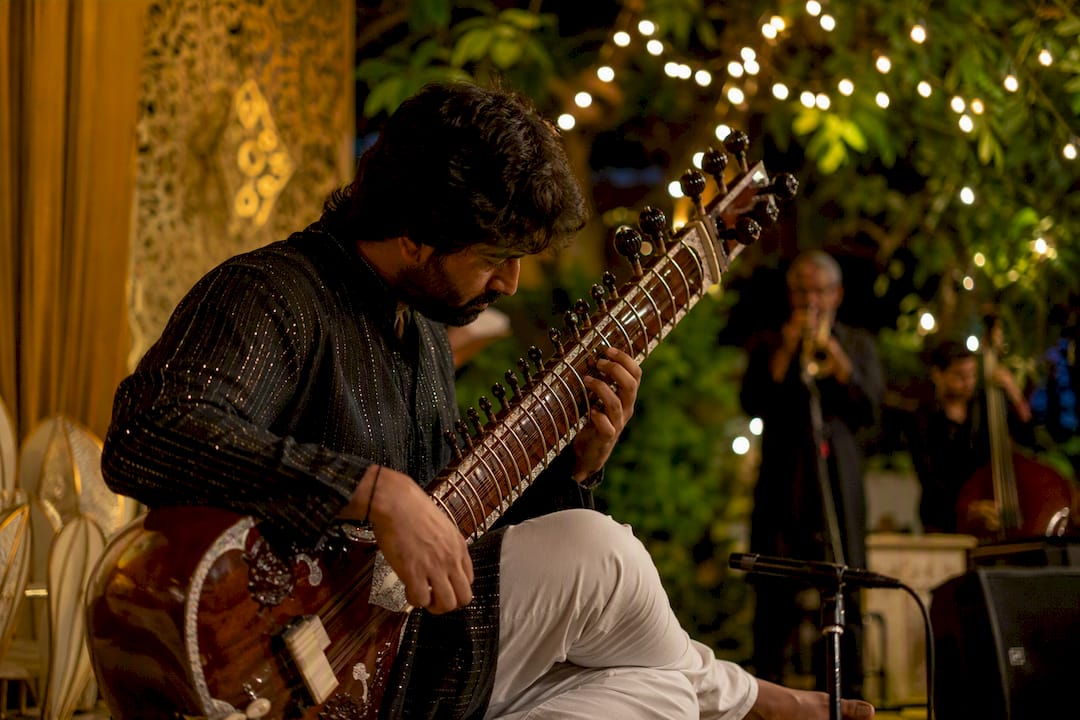
Sitar jazz fusion blends the sitar’s raga-based melodic system and drone with jazz harmony, swing, and improvisation. If you want the fast path in, start here: Ravi Shankar and Bud Shank’s “Improvisations” (1961), the Joe Harriott/John Mayer “Indo-Jazz Suite” (1967), Shakti’s self-titled debut (1976), and Anoushka Shankar’s “Traveller” (2011).
- Ravi Shankar & Bud Shank, “Improvisations” (1961)
- Joe Harriott/John Mayer, “Indo-Jazz Suite” (1967)
- Shakti, “Shakti” (1976)
- Anoushka Shankar, “Traveller” (2011)
On your first listen, track three things: the mode the piece sits in, the drone underneath everything, and how the rhythm section answers the sitar’s phrasing.
Key Takeaways
Sitar jazz fusion works because it treats raga modalism and jazz improvisation as equal, compatible systems rather than as one decorating the other.
| Point | Details |
|---|---|
| Origin dates to 1961 | Ravi Shankar and Bud Shank’s “Improvisations” marks the first recorded Indian classical and jazz collaboration. |
| 1967 landmark | Joe Harriott and John Mayer’s “Indo-Jazz Suite” fused raga structure with a full Western jazz ensemble. |
| Modal jazz connection is structural | Miles Davis and Alice Coltrane drew directly on raga scale and drone concepts, not just surface exoticism. |
| Tabla pairs naturally with sitar | Both share cyclical timing systems, unlike a standard drum kit’s backbeat feel. |
| Sitarrajib offers hands-on access | Rajib Karmakar provides live performances, studio recording, and private lessons for musicians and organizers pursuing this sound. |
Table of Contents
- How Sitar Jazz Fusion Began in the Late 1950s and 1960s
- Essential Sitar Jazz Fusion Recordings to Study
- Sitar Players and Collaborators Every Fusion Listener Should Know
- Sitar’s Role in a Jazz Ensemble
- Where Sitar Jazz Fusion Is Heading Now
- Playlists and Streaming Sources for Sitar Jazz Fusion
- Why Sitar Jazz Fusion Still Matters to Me
- Bring This Sound Into Your Own Project
- Frequently Asked Questions
- Sources
How Sitar Jazz Fusion Began in the Late 1950s and 1960s
Sitar entered jazz through a handful of deliberate, well-documented sessions rather than a slow drift. The earliest and most cited encounters run through a tight window between 1961 and 1967.
- 1961: Ravi Shankar records “Improvisations” with West Coast saxophonist Bud Shank, widely regarded as the first recorded collaboration between an Indian classical musician and a jazz player.
- Mid-1960s: Modal jazz players, most notably Miles Davis and Alice Coltrane, start pulling raga-derived scales and drone concepts into their own writing, part of a broader exchange between sitar traditions and modal jazz.
- 1967: Alto saxophonist Joe Harriott and composer John Mayer release the Indo-Jazz Suite, pairing sitar, tabla, and tamboura with a Western jazz ensemble in a fully notated hybrid form.
The exchange between raga modalism and Western modal jazz wasn’t a passing 1960s novelty. It restructured how improvisers thought about scale, drone, and open form well into post-bop.
That structural shift matters more than the novelty factor most retrospectives lead with. Once Coltrane and Davis started building solos over static harmony instead of fast chord changes, the sitar’s drone-and-mode logic stopped sounding exotic and started sounding useful.
Essential Sitar Jazz Fusion Recordings to Study
Work through these in rough chronological order and you’ll hear the genre’s vocabulary build in real time.
- “Improvisations” — Ravi Shankar & Bud Shank (1961). Key track: “Improvisations.” Listen for the sitar stating a raga phrase while Shank’s flute answers in a jazz idiom rather than mimicking the raga outright.
- “Indo-Jazz Suite” — Joe Harriott/John Mayer (1967). Key track: “Raga Megha.” Notice how the ensemble alternates strict raga sections with swung jazz passages instead of blending them constantly.
- “Shakti” — Shakti (1976). Key track: “Joy.” John McLaughlin’s acoustic guitar trades unison lines with L. Shankar’s violin and Zakir Hussain’s tabla at speeds that rival any bebop head.
- “Traveller” — Anoushka Shankar (2011). Key track: “Traveller.” A flamenco-jazz hybrid where sitar and cajon share rhythmic authority.
- Debashish Bhattacharya’s slide-guitar/sitar hybrid recordings. Listen for how his Chaturangui reworks sitar-style meend (pitch bends) on a resonator instrument, a useful comparison point for studying meend technique itself.
- Purbayan Chatterjee’s collaborative catalog, including his classical-to-fusion crossovers, shows a player equally fluent in strict raga form and modern studio production.
- Vijay Iyer and Rudresh Mahanthappa’s collaborative work applies South Indian rhythmic cycles to a piano-sax-drums format, an instructive non-sitar parallel for hearing how Carnatic ideas reshape jazz phrasing.
- Miles Davis’s modal-period recordings reward a relisten once you know the raga connection; the drone-and-mode approach owes a real debt to Indian classical structure.
- Alice Coltrane’s harp and organ recordings carry the same drone logic into a completely different timbral world.
- “Charm” — Naya Baaz (2023). Key track: title cut. A current-generation example of jazz-fusion guitar and Hindustani sitar sharing equal billing, as AllMusic documents.
Most of these are streaming on major platforms; a few of the 1960s and 1970s titles are easier to find as full albums than as isolated tracks.
Sitar Players and Collaborators Every Fusion Listener Should Know
Each of these musicians approaches fusion from a different angle, so picking two or three to study side by side teaches you more than binging one artist’s catalog.
- Ravi Shankar — the foundational figure whose 1960s collaborations opened the door; sample “Improvisations” for his restraint alongside a jazz horn.
- Anoushka Shankar — composer and bandleader who folds flamenco, electronica, and jazz rhythm into raga structure; start with “Traveller.”
- Purbayan Chatterjee — a classically trained soloist who moves fluidly into studio-driven fusion; his catalog rewards close listening for phrasing discipline.
- Debashish Bhattacharya — reinvents slide guitar with sitar-derived ornamentation; a strong study case for meend and glissando technique.
- Members of Shakti (John McLaughlin, Zakir Hussain, L. Shankar) — the clearest model for rhythmic cycle exchange between Carnatic tradition and jazz guitar.
- Vijay Iyer and Rudresh Mahanthappa — not sitarists themselves, but essential for hearing Carnatic rhythmic thinking translated into a modern jazz quartet format.
Sitar’s Role in a Jazz Ensemble
Inside a fusion group, the sitar usually fills one of four roles: melodic leader, contrapuntal voice trading lines with a horn or guitar, drone source underpinning the harmony, or textural color layered behind a soloist. Which role it plays shapes everything else in the arrangement.
Tabla tends to partner naturally with sitar because both instruments share a raga-based sense of cyclical timing, while a standard drum kit pushes the same music toward a backbeat feel. Saxophone and trumpet lines often shadow the sitar’s phrasing rather than compete with it, and guitar or keyboard comping usually simplifies to hold space for the drone.
Try this three-step listening exercise on any track from the list above:
- Identify the tonic and mode within the first thirty seconds, usually signaled by the drone.
- Trace how the sitar phrases against that mode: where it bends notes, where it holds silence.
- Map how the rhythm section answers each phrase, then note whether that answer is metric (in strict time) or free.
Studying improvisation technique on sitar directly makes this exercise far more concrete the second time through.
Where Sitar Jazz Fusion Is Heading Now
Two recent releases show where the genre is pushing next. Naya Baaz’s “Charm” keeps the ensemble kinetic, with sitar and jazz-fusion guitar treated as equal voices rather than one instrument decorating the other. Purbayan Chatterjee’s “Feathered Creatures” goes further still, folding electronic beats, guitars from collaborator Mark Lettieri, and progressive rock elements around a sitar core.
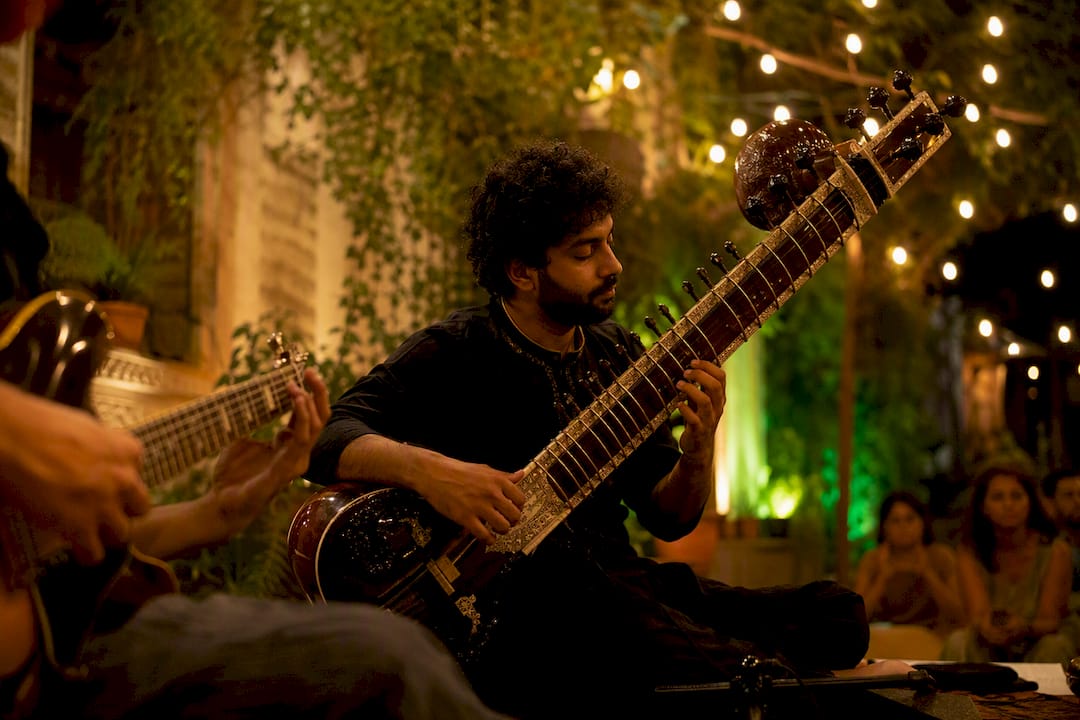
Working in these denser, amplified settings creates real technical problems. Sitar tuning drifts more under stage volume and heat, and the instrument’s natural projection struggles against drums and electric guitar. Players in high-volume fusion ensembles often turn to custom-built instruments or luthier modifications to hold tuning and cut through the mix, alongside careful amplification choices.
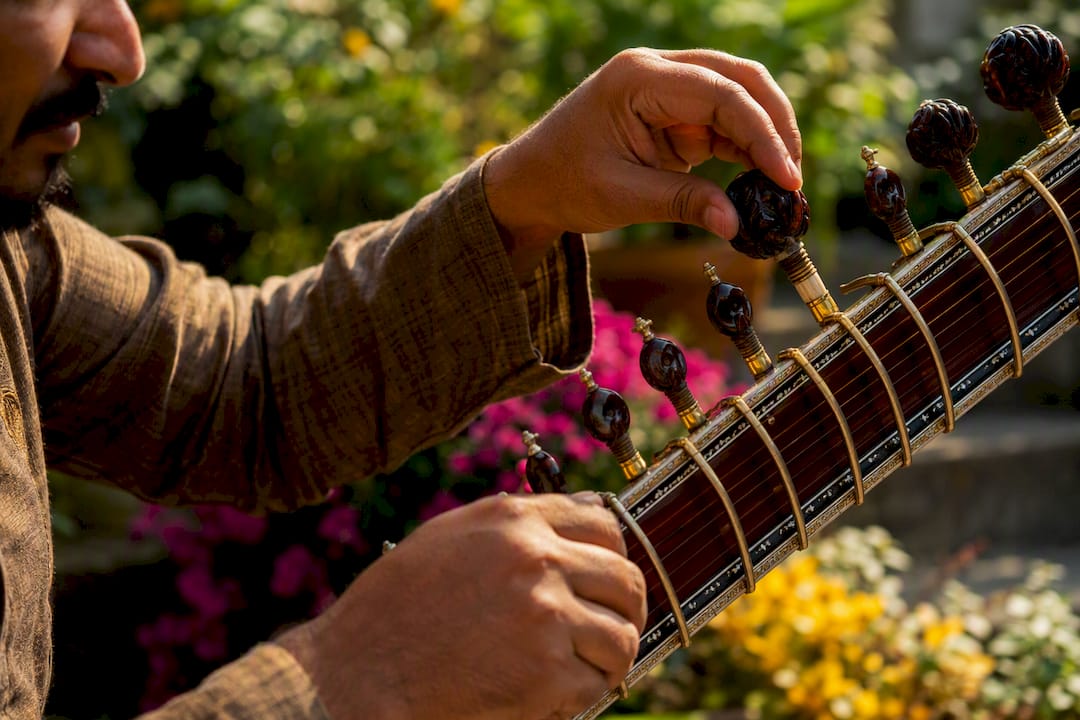
Pro Tip: Before any cross-genre session, agree on a shared rhythmic vocabulary with your collaborators first. Sitar’s cyclical taal system and a jazz drummer’s swing feel don’t automatically line up, and sorting that out in rehearsal saves the take.
Guitarists entering this space benefit from understanding how their own instrument evolved technically, since the electric guitar’s development shaped the tone and sustain choices that now sit next to sitar in fusion mixes.
Playlists and Streaming Sources for Sitar Jazz Fusion
Editorial jazz-history lists, including The 10 Best Indo Jazz Albums, are a fast way to build a study queue. On streaming, compilations like the Sitar Fusion album gather multiple artists in one place, though some 1960s recordings appear as full albums only, not individual tracks.
Why Sitar Jazz Fusion Still Matters to Me
I came up through Indian classical training, and cross-genre work only makes sense to me when the sitar stays a full musical partner rather than a decorative texture. That’s the standard I hold every collaboration to, and it’s the same standard behind the recordings I’ve pointed you toward here.
Bring This Sound Into Your Own Project
If you’re a producer, event organizer, or musician who wants this kind of fusion in your own work rather than just your playlist, Sitarrajib offers a direct path: live sitar performance, studio recording, and private lessons, all led by Rajib Karmakar.
For albums, film scores, or media projects, a live session sitar recording gives you a fully mic’d, performance-ready track rather than a sample library approximation. Corporate and festival organizers looking to add cultural depth to a lineup can review how sitar performances suit corporate events. If you play another instrument and want to build fusion vocabulary yourself, private lessons are the fastest route in. Reach out through Sitarrajib to check dates and discuss your project.
Frequently Asked Questions
What is sitar jazz fusion?
It’s a style that combines the sitar’s raga-based melody, drone, and ornamentation with jazz harmony, swing, and improvisation, usually within a mixed ensemble of Indian and Western instruments.
Where should a beginner start listening?
Start with Ravi Shankar and Bud Shank’s “Improvisations” (1961), then move to the “Indo-Jazz Suite” (1967) and Shakti’s debut album for a sense of how the sound developed over fifteen years.
Does sitar improvisation in jazz follow the same rules as jazz soloing?
No. Sitar improvisation stays within a raga’s fixed set of notes and phrases, while jazz improvisation typically follows a chord progression. Fusion recordings usually blend both logics rather than replacing one with the other.
Is sitar still being used in contemporary jazz and fusion?
Yes. Recent projects like Naya Baaz’s “Charm” and Purbayan Chatterjee’s “Feathered Creatures” show sitar moving into electronic production and progressive rock textures alongside traditional jazz instrumentation.
Sources
- Sitar in jazz – Wikipedia
- Improvisations (Ravi Shankar album) – Wikipedia
- Indo-Jazz Suite – AllMusic
- Naya Baaz — Biography, Discography, Albums & Expert Reviews | AllMusic
- Purbayan Chatterjee on Reimagining Sitar Music With Electronic Fusion on ‘Feathered Creatures’ – Rolling Stone India