
If your top priority is a big, emotional showpiece moment, book a live band. If you care most about nonstop dancing and budget flexibility, book a DJ. If you want both, a hybrid setup with a band for dinner and a DJ for late-night dancing solves the problem for a lot of couples, and it’s more common than you’d think.
Here’s why those two picks win most of the time:
- Bands create energy you can see. A saxophone player working the crowd or a drummer building into your entrance creates a moment guests remember, and it comes with visible showmanship a speaker never will.
- DJs deliver variety and value. One person can move from cocktail jazz to hip-hop to your grandmother’s favorite waltz in the space of a song, and they typically cost less to book.
The rest of this guide walks through the exceptions: venue rules that limit your options, budget math that might change your mind, and the logistics questions that trip up couples who booked too fast.
Key Takeaways
Couples get the best results by matching live bands to showpiece moments and DJs to continuous, flexible dance energy, then layering in a solo act like sitar for cultural or transitional highlights.
| Point | Details |
|---|---|
| Match format to goal | Choose a band for showmanship, a DJ for variety and budget, or both for a full night of coverage. |
| Budget realistically | Plan for roughly 5% of your budget on a DJ or up to 15% on a band, per wedding industry guidance. |
| Confirm venue logistics early | Check stage size, power capacity, load-in access, and noise curfews before you book either option. |
| Coordinate MC duties in writing | Decide who handles announcements and transitions well before the wedding day. |
| Consider a solo highlight | A solo sitar performance from Sitarrajib fits ceremonies, cocktail hours, and set transitions without competing with your band or DJ’s role. |
Table of Contents
- Live Band vs DJ: The Core Trade-Offs
- How Much Do Live Bands and DJs Actually Cost?
- Does Your Venue Even Support a Band or DJ?
- Who Handles the First Dance, Requests, and MC Duties?
- Which Wedding Scenarios Favor a Band, a DJ, or Both?
- What Should You Ask Before You Book?
- When Does a Solo Sitar or Classical Instrumentalist Make Sense?
- Bring a Live, Signature Moment to Your Wedding
- Sources
Live Band vs DJ: The Core Trade-Offs
A live band is a group of musicians performing songs in real time, often reworking a track’s arrangement to fit their instrumentation. A DJ plays curated recorded tracks, blending and mixing them through a sound system, usually solo or with one assistant.
That single difference drives almost every other trade-off in this decision. A band gives you a live performance with visible energy but can’t replicate a studio track note for note. A DJ gives you the exact version of a song you fell in love with, plus the ability to shift genres instantly, but no one is dancing on stage during your reception.
Here’s how the two stack up across the factors that actually affect your wedding day:
| Factor | Live Band | DJ |
|---|---|---|
| Best for | Couples who want a showpiece, formal or high-energy vibe | Couples who want variety, flexibility, and continuous dancing |
| Cost/budget impact | Higher, due to more performers and equipment | Lower, typically fewer people and less gear |
| Variety/song availability | Limited to their rehearsed repertoire | Nearly unlimited, any recorded track |
| Fidelity to recorded tracks | Reinterpreted, won’t sound identical to the original | Exact studio version, every time |
| Space & power needs | Larger stage footprint, higher power draw | Compact booth setup, modest power needs |
| Setup & strike time | Longer, more gear to load in and out | Shorter, faster turnaround |
| Interaction/showmanship | High, visible performers engage the crowd | Moderate, depends on the DJ’s personality and mic presence |
| Consistency over a long night | Can tire during long sets, needs breaks | Steady output across 4 hours |
The gap shows up clearest during a first dance. A band might play a lovingly arranged acoustic version of “Perfect” that sounds warm but different from the Ed Sheeran recording you picked it for. A DJ plays the exact track, down to the same fade-out you’ve heard a hundred times. Neither is wrong. It depends on whether you want the moment reinvented or reproduced.
Bands also typically work in sets, playing for 45 minutes to an hour before taking a break, while a DJ plays continuously for the length of the booking. That set-and-break rhythm is one reason Connactz notes bands generally cost several hundred to several thousand euros and DJs cost less for comparable events. More people on stage means more equipment, more breaks to plan around, and a bigger bill.
How Much Do Live Bands and DJs Actually Cost?
Bands cost more because you’re paying for more people, more gear, and more time on the clock. A five-piece band means five fees, a sound engineer, backline equipment like amps and a drum kit, and often a rented staging platform. A DJ’s overhead is a booth, a laptop, speakers, and lighting, run by one or two people.
Wedding professionals interviewed by Brides report that bands often cost more than DJs in comparable markets, and that gap widens with band size. A three-piece acoustic trio costs far less than a ten-piece with horns and background vocalists.
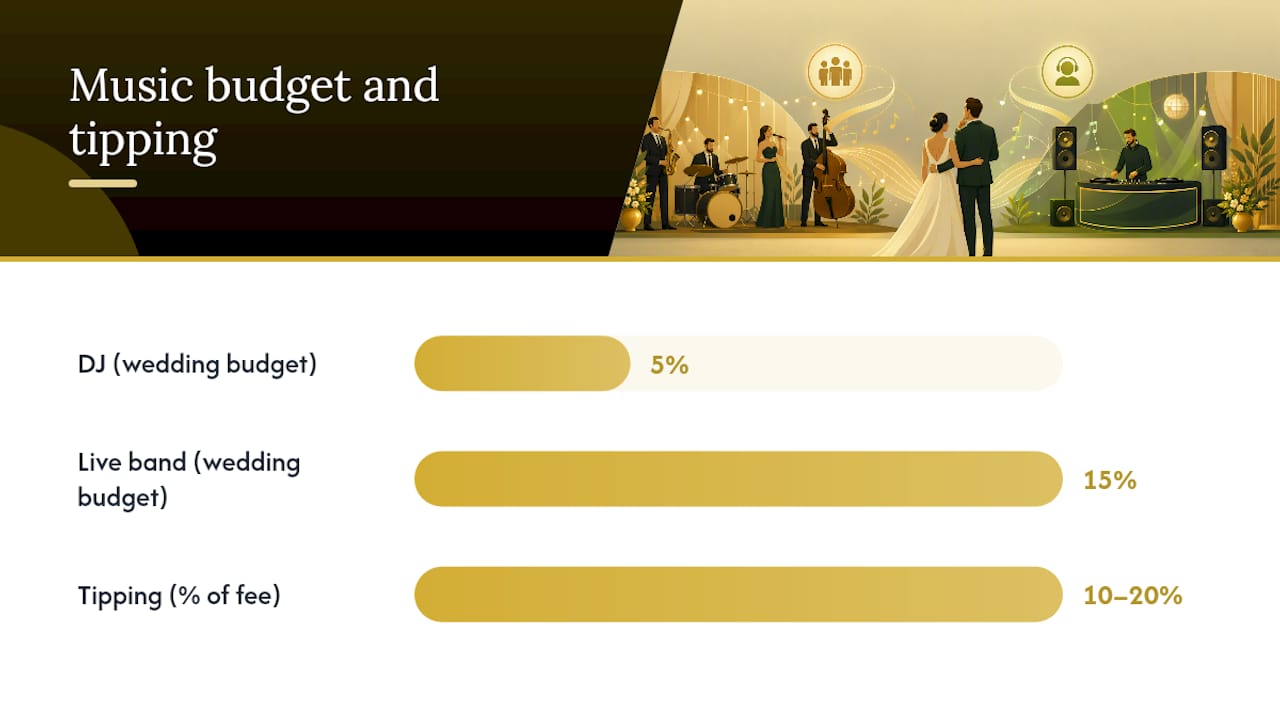
Budget guidance from event professionals gives you a starting point. Brides suggests setting aside roughly 5% of your total wedding budget for a DJ, and closer to 15% if you want a full live band. Those percentages assume music is a priority, not an afterthought, so adjust up or down based on how central entertainment is to your vision.
Pro Tip: If a full band is outside your budget, a high-quality DJ is usually a smarter trade-off than a cut-rate band. A skilled DJ with good equipment beats a struggling five-piece playing off-key covers every time.
Several costs catch couples off guard because they don’t show up on the initial quote:
- Stage or platform rental, especially at venues without a built-in performance area.
- Sound engineer fees, often billed separately from the band’s performance fee.
- Backline equipment, including amps, a drum kit, and keyboards if the band doesn’t own or travel with their own.
- Travel and hotel costs for bands or DJs coming from outside your local area.
- Extra power drops if your venue’s existing outlets can’t handle a full band’s rig.
- Break coverage, meaning a playlist or secondary DJ to fill silence while the band rests.
Tipping is another line item people forget. Gigsalad notes that DJs tend to run more budget-friendly overall since fewer people are involved, and recommends tipping performers somewhere between 10 to 20% of the total fee, or a flat $15 to $35 per performer when a percentage feels awkward to calculate.
Does Your Venue Even Support a Band or DJ?
Before you book anything, walk your venue with a checklist in hand. The wrong venue can turn a great band into a logistical nightmare or force a DJ into a corner with no sightline to the dance floor.
Ask your venue coordinator these questions directly:
- How large is the stage area, and does it accommodate a full band’s footprint or just a DJ booth?
- Is there dedicated load-in access, or will performers carry gear through a guest entrance?
- What’s the maximum power draw available near the performance area, and are there enough circuits?
- Does the venue enforce a noise ordinance or curfew, and at what time does amplified sound have to stop?
- Is there a green room or storage space for instrument cases, extra equipment, or a quick outfit change?
Acoustics matter more than most couples realize. A ballroom with hardwood floors, high ceilings, and bare walls bounces sound around, which can make a full band sound muddy or overly loud. A tented outdoor space or a room full of soft furnishings absorbs sound, which sometimes calls for a stronger PA system to compensate. Brides’ advice on this point is blunt: acoustics should factor into your decision as much as budget does, because the wrong room can undercut even a great performer.
Timing differs sharply between the two options. A full band typically needs one and a half to three hours for load-in, setup, and soundcheck, depending on group size. A DJ usually needs 60 to 90 minutes. That difference matters on a wedding day with a tight vendor schedule, especially if your ceremony and reception share the same space and require a fast changeover. For deeper technical planning, a sitar performance logistics guide breaks down rider requirements that apply to solo and small-ensemble live acts as well.
If your reception is outdoors or in a nontraditional venue, sound system placement becomes its own project. A practical guide to outdoor stage and sound setup covers the kind of staging and power planning that larger bands especially depend on.
Who Handles the First Dance, Requests, and MC Duties?
Bands rehearse arrangements ahead of time, which means your first dance song gets performed, not played back. If you want a band to cover a song, send them the exact recording and any specific requests, like a particular guitar riff or a tempo change, at least four to six weeks out so they have time to rehearse it properly.
DJs work differently. They pull the exact studio recording, so your first dance sounds identical to the version you picked. Guest requests are easier to accommodate on the fly too, since a DJ can queue up nearly any track mid-set without rehearsal.
MC duties split along similar lines. Some bands include a dedicated emcee or have their lead singer handle announcements between sets, but many expect the couple to hire a separate emcee or lean on the DJ for transitions. Most DJs are built for this role: they’re used to announcing the wedding party, calling the cake cutting, and managing the timeline from the booth. If you’re booking a band without a built-in MC, confirm early who’s making announcements, because a silent gap during the bouquet toss is an avoidable mistake.
A few coordination rules keep the night running smoothly regardless of which you book:
- Share your full timeline with the band or DJ at least two weeks before the wedding, including ceremony start, dinner service, toasts, and dance floor opening.
- Confirm who calls out the wedding party introductions and cake cutting in writing.
- Give your band a “do not play” list as clearly as your “must play” list.
- If you’re using both a band and a DJ, assign one point of contact between them so transitions don’t overlap or leave dead air.
Which Wedding Scenarios Favor a Band, a DJ, or Both?
Not every wedding needs the same solution. Match your entertainment to your actual guest list and venue rather than what looks good on Pinterest.
- Small, intimate dinner (under 50 guests): A trio or solo musician fits the scale better than a full band, and keeps sound levels comfortable for conversation.
- Large, multicultural crowd: A DJ with a deep, varied library handles shifting musical tastes across generations and backgrounds more easily than a band limited to its rehearsed set.
- Multi-generation guest list: A hybrid works well here. Live music during dinner appeals to older relatives who want to talk, while a DJ later brings younger guests to the floor.
- Outdoor, festival-style wedding: A band adds to the atmosphere if your venue supports the power and staging needs, but confirm curfews since outdoor noise ordinances tend to be stricter.
- Strict, tight budget: A DJ is almost always the more efficient choice, and The Knot points out that combining a band and DJ is really only worth exploring once your core budget is covered.
Apply this simple decision rule if you’re still stuck: if budget is your top constraint, default to a DJ. If a visual, high-energy show is your top priority, default to a band. If your guest list spans wildly different ages or music tastes, lean toward a hybrid or a DJ with a genuinely broad catalog.
The hybrid model works especially well when you want a band for dinner and early dancing, then a DJ to carry the night into late-night territory without needing the band to play a fourth set. It costs more than choosing just one, but it solves the two biggest complaints couples have: bands running out of gas by 10 p.m. and DJs lacking a visible performance element during dinner.
What Should You Ask Before You Book?
Treat every band or DJ meeting like a job interview, because that’s essentially what it is. Come with a list, and don’t skip questions just because the vendor seems friendly.
- Confirm the exact hours of performance, including start time, end time, and any built-in breaks.
- Ask whether the lineup you’re auditioning is the exact lineup performing at your wedding, or if substitutions are possible.
- Get their setup and strike times in writing so your venue timeline stays accurate.
- Ask what power specifications they need, and confirm your venue can meet them.
- Request proof of liability insurance, which most reputable venues require anyway.
- Clarify travel and accommodation expectations if the vendor is coming from outside your area.
When you’re ready to sign, request these items in the contract itself:
- A performance rider listing exact sound and staging requirements.
- A clear cancellation and refund policy, including what happens if the vendor cancels versus if you do.
- Overtime rates in case your reception runs long.
- Confirmed venue access times for load-in and load-out.
Watch for red flags when a quote looks too good to be true. A price dramatically below market average often means unlicensed equipment, no backup plan if a musician gets sick, or a lineup that changes without notice. Ask directly how they handle a last-minute illness or equipment failure. A vendor without a clear answer is a vendor you should think twice about.
When Does a Solo Sitar or Classical Instrumentalist Make Sense?
A solo sitar performance solves a different problem than either a band or a DJ. It’s not trying to fill your dance floor. It’s built for the moments where a full band would overwhelm the room and a DJ would feel out of place: ceremony processionals, cocktail hour, cultural rituals, or a quiet interlude between your DJ’s sets.
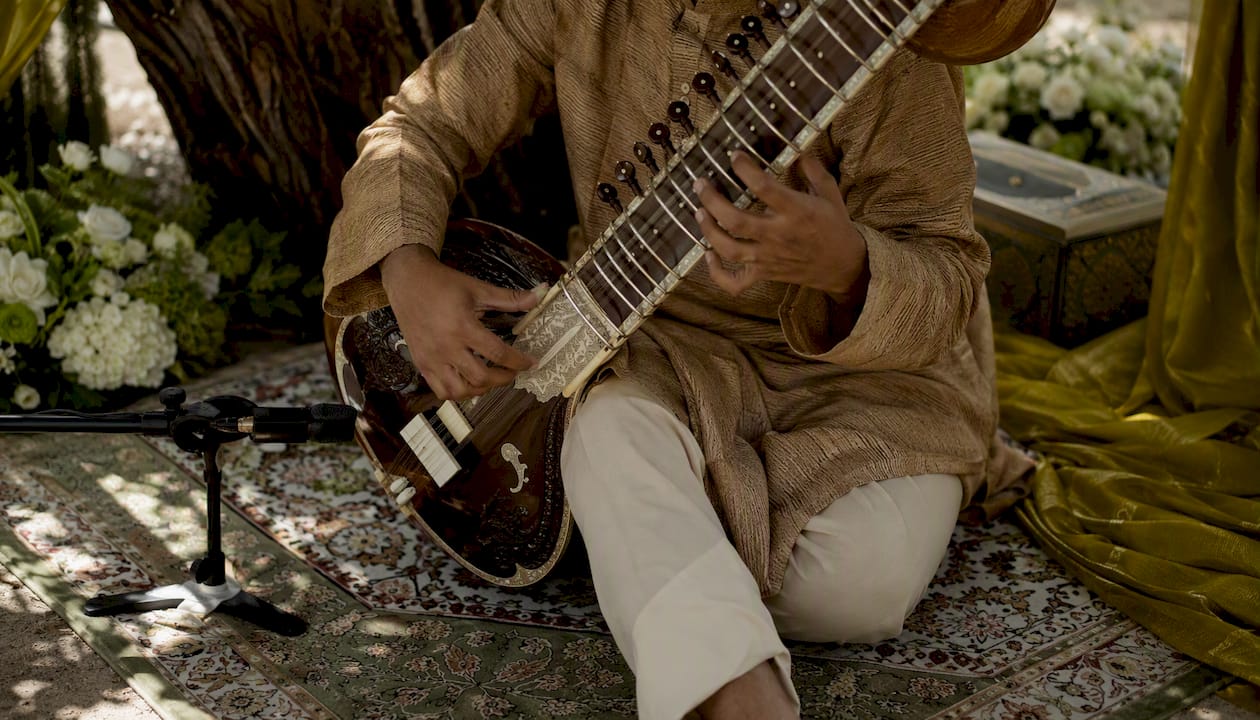
Placed during a ceremony or recessional, a sitar brings a texture no Western band or DJ setup replicates, and it works particularly well for couples blending cultural traditions into their wedding program. During cocktail hour, a solo sitarist creates ambient, conversational background music that doesn’t compete with guests catching up. Solo and roaming performers scheduled during cocktail hour tend to land better than during the main reception, when guests want dance energy instead.
Technically, a sitar rider is far lighter than a full band’s. You’re generally looking at a single high-quality condenser microphone or a dedicated pickup and DI box, a monitor wedge so the performer can hear themselves clearly, and a seating area roughly six by six feet, since sitar is traditionally performed seated on the floor or on a small platform. Full specifications, including cable runs and stage height preferences, are covered in a detailed sitar technical requirements guide.
Pro Tip: A sitar blends surprisingly well as a transition piece between a DJ’s sets. Ask your DJ to fade into a live sitar interlude during a lull, like right after dinner service, before building back into dance music. It gives guests a breather and a genuinely unique moment they’ll talk about.
Author’s Take on Booking Live Music for Your Wedding
I’ve spent years performing sitar at weddings and cultural events, and the couples who end up happiest aren’t the ones who chased the biggest, loudest option. They’re the ones who matched their music to the actual shape of their day: a live moment where it counts, and reliable, flexible sound where continuity matters more than spectacle. My honest booking tip is simple. Always ask for a recent, unedited live recording, not a polished studio demo, and if you can, watch the performer live at another event before you sign anything. A demo tells you what a musician sounds like in a controlled studio. A live set tells you what they sound like in the room that matters, which is yours.
Bring a Live, Signature Moment to Your Wedding
A band gives you a full evening of live energy. A DJ gives you variety and continuous flow. Sitarrajib gives you something neither typically offers on its own: a distinctive, culturally rich live moment that doesn’t compete for your dance floor time or your budget the way a full band does.
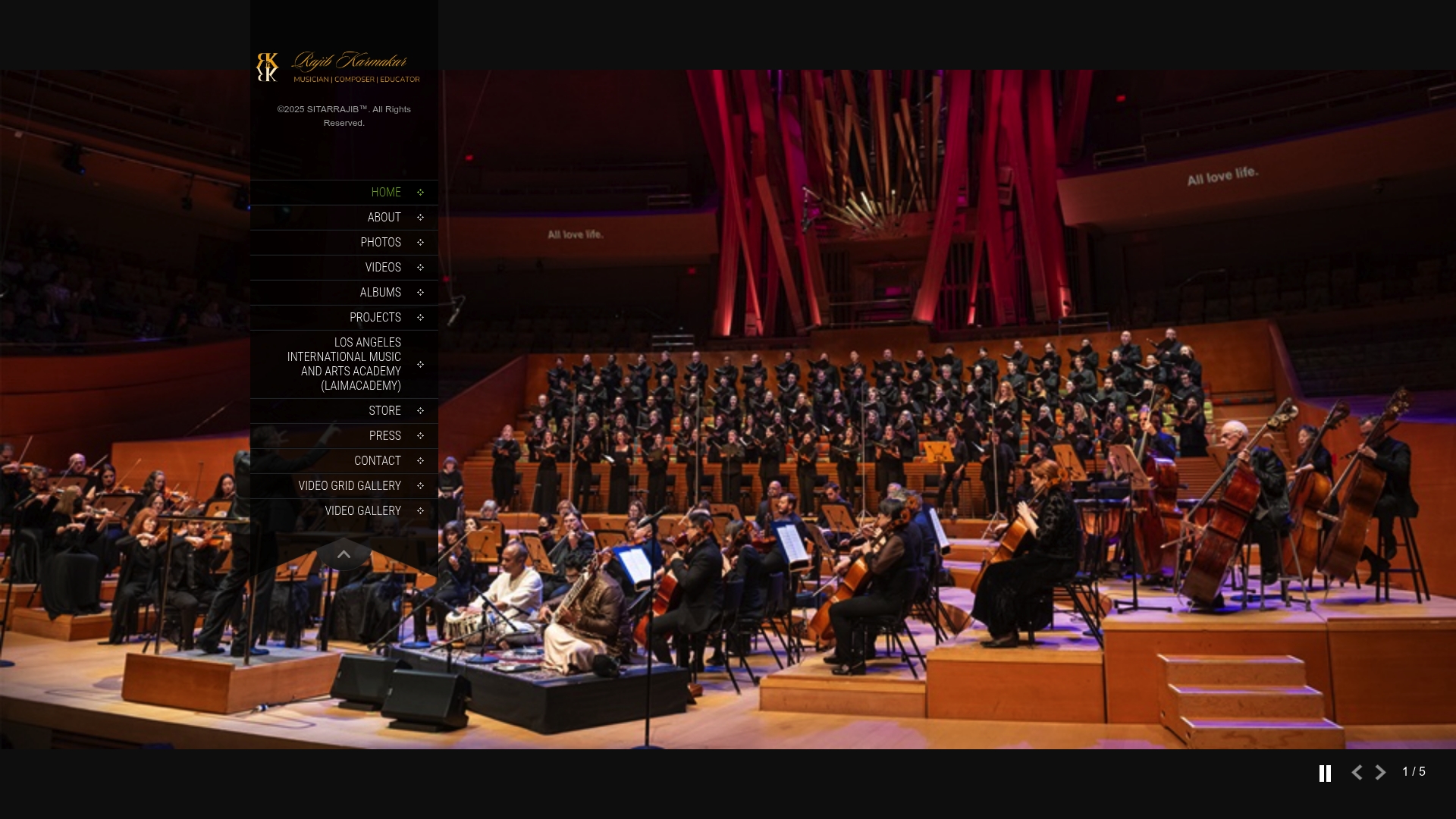
Rajib Karmakar performs solo sitar for ceremonies, cocktail hours, and reception highlights, and arranges fusion pieces that blend classical ragas with contemporary sounds your guests will actually recognize. It’s a light logistical lift, too. The rider is compact, setup takes a fraction of what a full band needs, and it slots neatly around a DJ or band you’ve already booked. If you’re planning cultural elements into your ceremony or want a cocktail hour that feels genuinely memorable instead of generic background noise, start by checking live sitar performance options for your wedding date and get a sense of what fits your program.
Sources
- Live Band vs. DJ in 2026: Which is Right for Your Wedding or Event?
- The Great Debate: Should You Hire a Band or a DJ for Your Wedding?
- Wedding performers for any budget