

Planning a music experience is the deliberate process of designing an event that combines audience targeting, logistical coordination, and creative musical curation. The industry term for this is “event programming,” and it covers everything from setlist design to venue acoustics. Done well, it produces events that audiences remember long after the last note fades. This guide walks you through how to plan a music experience from the ground up, covering budgets, timelines, thematic curation, and post-event measurement. Whether you are organizing a corporate gathering, a festival stage, or an intimate cultural concert, the same core principles apply.
What are the essential initial steps in organizing a music event?
The first step in organizing a music event is defining your audience and your goal. Are you building community around a genre? Celebrating a cultural moment? Generating revenue through ticket sales? Your answer shapes every decision that follows, from venue size to artist selection.
Once you know your goal, set your budget early. Small event budgets typically range from £500 to £1,500, covering venue hire, artist fees, and public liability insurance. That insurance alone usually runs £50 to £150. Knowing these numbers upfront prevents the most common planning mistake: committing to costs before confirming revenue.
- Define your audience and goal. Write one sentence describing who attends and what they leave feeling.
- Set a realistic budget. List every cost category: venue, artist fees, insurance, promotion, and production.
- Choose your venue size carefully. A room filled to 60–70% of capacity feels lively. The same crowd in a room twice the size feels thin and kills energy.
- Lock in your lead time. Industry best practices call for a minimum 6–8 weeks of planning time. Rushing an event with less than two weeks is the single most common reason first events underperform.
- Research any legal requirements. Larger events with more than 1,500 attendees may require official declaration up to 13 months in advance in some jurisdictions.
Pro Tip: Book your venue before you announce your artist. Venue availability is the constraint that most often forces date changes, and date changes kill early ticket momentum.
How to curate the musical and thematic content for a cohesive experience
Thematic curation is the practice of selecting and sequencing music so that the event tells a story. Music events that curate emotional journeys achieve deeper audience engagement than those that simply book acts and fill time slots. The difference is intentional programming.

Think of your setlist the way a film composer thinks about a score. The best soundtracks use motifs and transitions to maintain pacing and create memorable moments. You can apply the same logic to a live event by identifying two or three recurring musical themes and returning to them at key points in the night.
Here is what strong thematic curation looks like in practice:
- Define the emotional arc. Decide what you want the audience to feel at arrival, at the peak of the event, and at the close. Write it down before you book a single act.
- Use dynamic contrast. Alternate between high-energy and quieter moments. Contrast makes peaks feel earned.
- Bridge genre gaps deliberately. If your lineup moves from ambient to uptempo, use a transitional act or a curated playlist segment to smooth the shift.
- Integrate visuals. Lighting design, projection, and stage layout all reinforce the musical mood. A mismatch between sound and visuals breaks immersion.
- Create a soundtrack blueprint. Map each segment of your event timeline to a target emotional state, then select music that delivers it.
For events featuring Indian classical music, Sitarrajib offers cultural music experience programming that blends raga structures with contemporary and cinematic sounds. This approach gives planners a ready-made thematic arc rooted in centuries of musical tradition.
Pro Tip: Record a rough audio walkthrough of your event from door open to close. Play it back and notice where energy drops. Those gaps are where you need stronger transitions or a different act order.
What logistical considerations ensure smooth execution of a music event?
Logistics are where creative vision meets reality. The most common execution failures come from skipping written agreements, underestimating technical needs, and starting promotion too late.
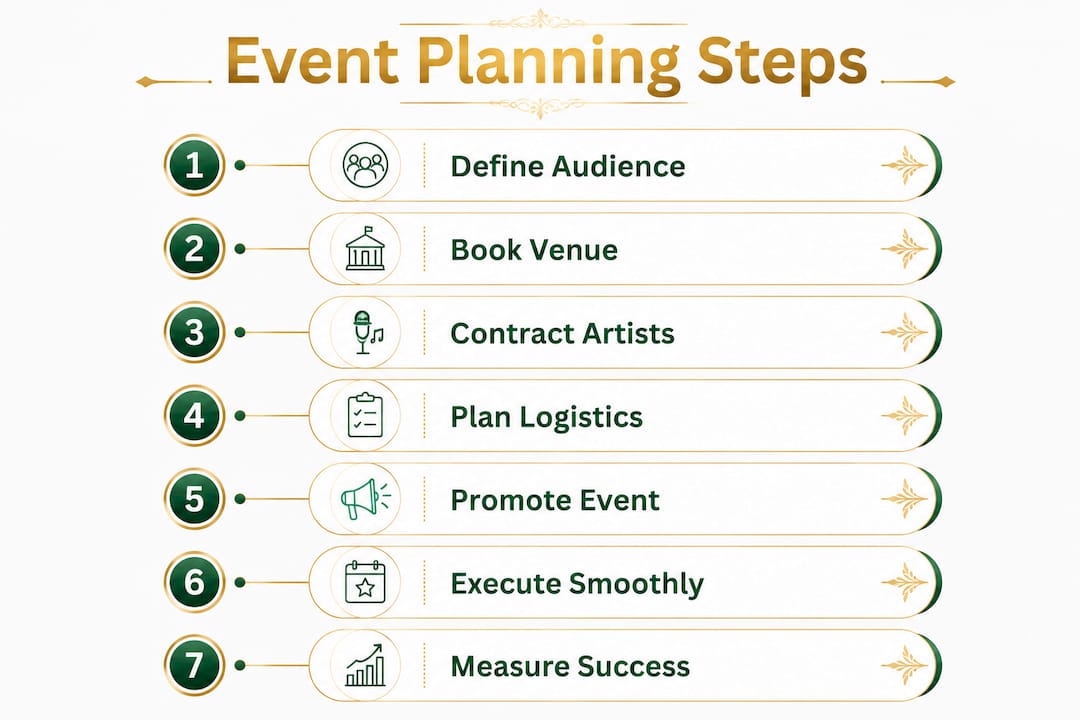
Contracts and artist agreements are non-negotiable. Written artist contracts must specify the fee, set length, cancellation terms, and promotional responsibilities. A verbal agreement leaves both parties exposed when a conflict arises on event day.
Technical production deserves its own budget line. Venues with in-house PA systems and sound engineers save organizers £150 to £400 compared to hiring external technicians and equipment. That saving is real money that can go toward better promotion or a stronger artist fee.
Promotion timing is critical. Multi-channel promotion starting 6–8 weeks out builds the audience momentum that drives ticket sales. Starting late and relying on a single channel is the primary cause of first-event promotion failure. Use a combination of social media, email lists, local press, and partner channels. Music premieres and pre-event buzz campaigns consistently outperform last-minute announcements in driving early ticket purchases.
Day-of coordination requires a production bible. A production bible with cue sheets, contact lists, and contingency triggers is the single most effective tool for keeping a live event on track. It tells every team member exactly what happens, when, and who to call if something goes wrong.
| Logistics area | Key action | Common mistake |
|---|---|---|
| Artist booking | Sign written contracts before announcing | Relying on verbal agreements |
| Technical production | Prioritize venues with in-house PA | Hiring external gear without a tech rider |
| Promotion | Launch across multiple channels at 6–8 weeks | Starting 1–2 weeks out on one platform |
| Day-of operations | Distribute production bible to all staff | Assuming everyone knows the plan |
Pro Tip: Build a 15-minute buffer into every set change. Audiences forgive a short wait. They do not forgive a chaotic transition that breaks the mood you spent weeks building.
How do you measure success and refine future music experiences?
Post-event measurement turns a one-time event into a repeatable program. The goal is to know exactly what worked, what did not, and why, so the next event is better.
- Track quantitative metrics. Ticket sales, attendance rate, merchandise revenue, and sponsor returns all tell you whether the event delivered financial value. Compare actuals against your pre-event projections.
- Gather qualitative feedback. Send a short survey within 48 hours of the event while impressions are fresh. Ask three questions: What did you enjoy most? What would you change? Would you attend again?
- Analyze social sentiment. Monitor mentions, shares, and comments in the days following the event. Audience-generated content is a reliable signal of emotional impact.
- Run a production debrief. Sit down with your team within one week. Review the cue sheet against what actually happened. Note every deviation and its cause.
- Apply a 90-day review cycle. Long-term impact, such as new followers, press coverage, and repeat ticket buyers, often surfaces weeks after the event. A structured review at 90 days captures data that a 48-hour debrief misses.
Measurement is not just about proving success. It is about building institutional knowledge so that each event in your series is more effective than the last.
Key Takeaways
Planning a music experience requires defining your audience first, then aligning every logistical and creative decision to serve that audience’s emotional expectations.
| Point | Details |
|---|---|
| Start with audience and goal | Define who attends and what they feel before booking any act or venue. |
| Plan at least 6–8 weeks out | Rushing with less than two weeks is the top cause of underperforming events. |
| Match venue size to attendance | A room filled to 60–70% capacity delivers better energy than a half-empty large space. |
| Curate an emotional arc | Map music selections to emotional states across the full event timeline. |
| Measure and review systematically | Use a 90-day review cycle to capture long-term impact and improve future events. |
What I have learned from years of planning music experiences
The biggest mistake I see event planners make is booking the largest venue they can afford and hoping the crowd fills it. It never works the way they expect. A smaller, packed room creates a shared energy that no amount of production budget can replicate in a half-empty hall. I have performed in both, and the difference is immediate. You feel it as a performer, and the audience feels it too.
The second thing I have learned is that understanding your audience emotionally matters more than booking a recognizable name. I have seen events with well-known headliners fall flat because the programming did not connect with the specific crowd in the room. And I have seen intimate events with lesser-known artists become the most talked-about nights of the year because the curation was precise and the emotional arc was clear.
Get involved in your local music scene before you plan your first event. Attend shows. Talk to audiences. Know what moves them. That knowledge is worth more than any booking budget. When you finally put your event together, you will know exactly what to program and why. That confidence shows up in every detail, from the setlist order to the lighting cues, and audiences respond to it.
— Rajib
Live sitar for your next music event
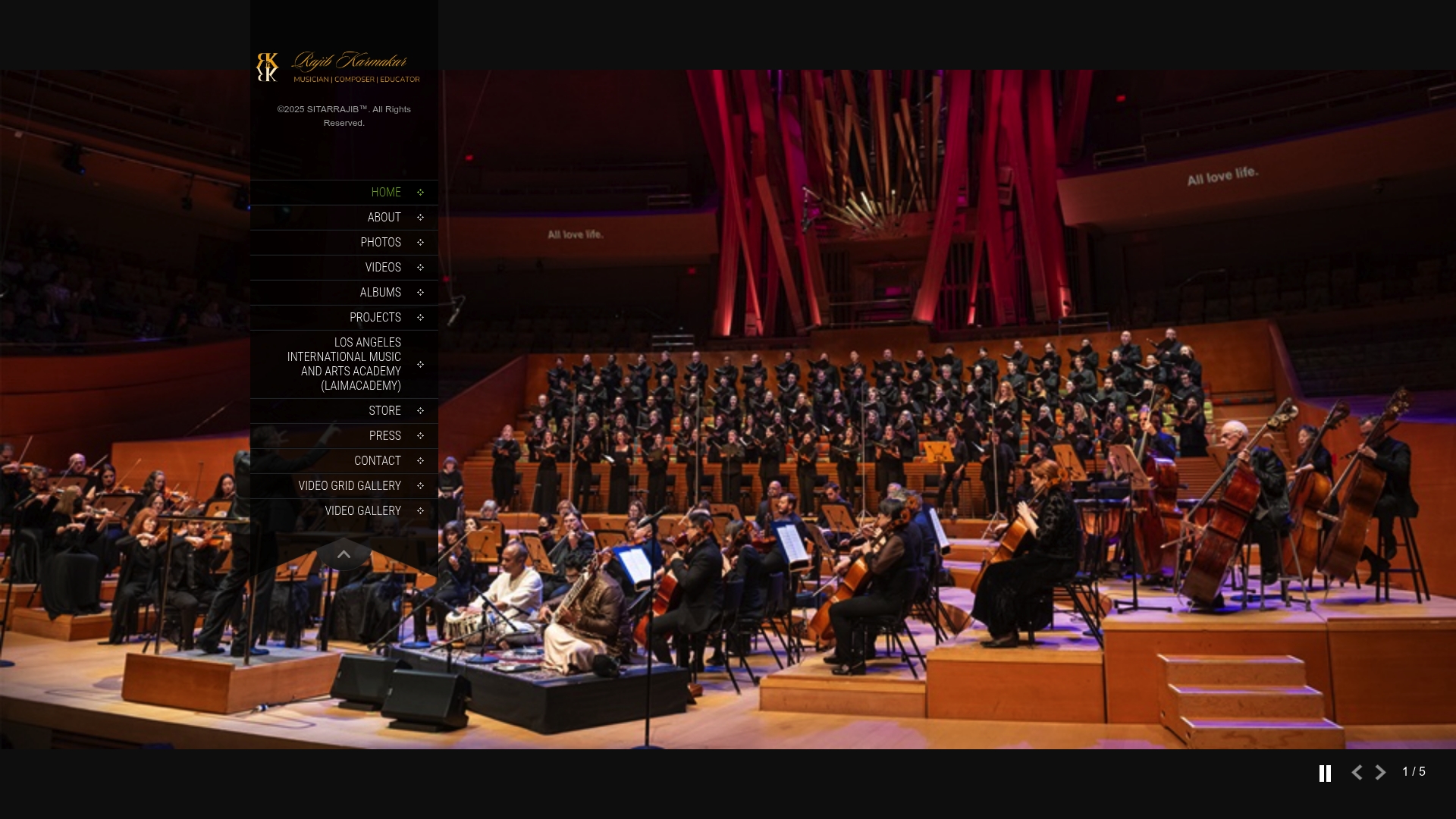
Sitarrajib brings live sitar performance to corporate events, festivals, weddings, and cultural programs across the United States. Rajib Karmakar’s performances blend Indian classical music with cinematic and contemporary sounds, giving event planners a distinctive musical anchor for any thematic program. If you are building a festival lineup or looking for a way to make a corporate event genuinely memorable, live sitar delivers an experience that standard entertainment options simply do not. You can also explore how sitar enhances corporate events with specific programming and collaboration options tailored to your event goals.
FAQ
What is the minimum lead time for planning a music event?
Industry best practices recommend a minimum of 6–8 weeks. Events planned with less than two weeks of lead time are the most likely to underperform in both attendance and execution.
How do I choose the right venue size for my event?
Select a venue where your expected attendance fills 60–70% of capacity. A room that feels full creates better energy than a larger space with the same crowd spread thin.
What should a written artist contract include?
A written contract should specify the artist fee, set length, cancellation terms, and each party’s promotional responsibilities. Clear agreements prevent misunderstandings on event day.
How do I curate a setlist that keeps audiences engaged?
Build your setlist around an emotional arc with a clear opening, a peak, and a resolution. Use dynamic contrast between high-energy and quieter segments, and plan transitions deliberately to maintain momentum.
What metrics should I track after a music event?
Track ticket sales, attendance rate, merchandise revenue, and audience survey responses. Run a 90-day review to capture long-term impact such as new followers, press coverage, and repeat ticket buyers.