
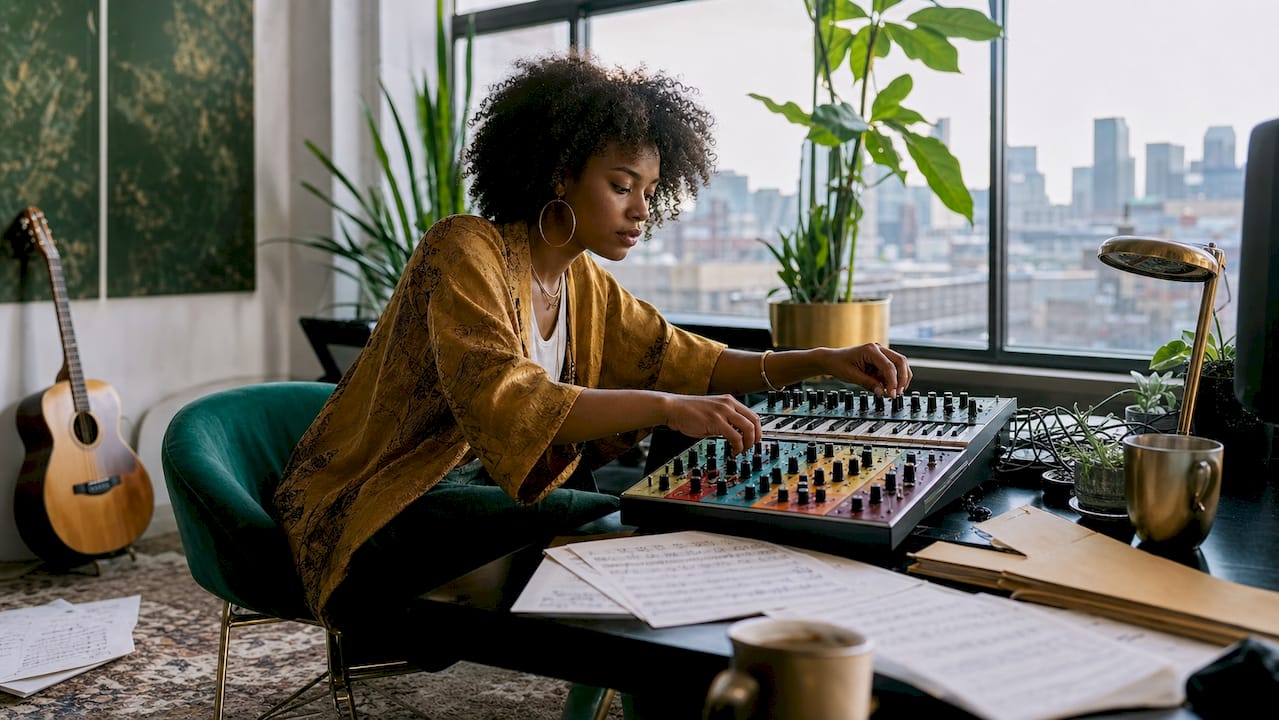
Cross-genre music fusion is defined as the deliberate combination of elements from two or more distinct musical styles to create a new, coherent sound that goes beyond simple juxtaposition. This practice, also called genre blending, has driven some of the most significant shifts in music history, from jazz fusion in the 1970s to Reggaeton’s rise in the early 2000s. Understanding what is cross-genre music fusion matters today because streaming platforms and social media now accelerate how quickly these hybrid sounds reach global audiences. Whether you are a music enthusiast or an aspiring artist, knowing how fusion works gives you a sharper ear and a stronger creative foundation.
What is cross-genre music fusion, and how does it work?
Cross-genre music fusion is the deliberate combination of elements from distinct musical styles to create a unique, coherent sound beyond simple juxtaposition. That definition separates true fusion from a mashup or a playlist. A mashup layers two songs on top of each other. Fusion builds something genuinely new from the inside out, integrating rhythm, harmony, timbre, and cultural context into a single musical identity.
The industry term for this practice is “genre blending,” though musicians and scholars also use “hybrid music” and “cross-cultural syncretism” when the fusion crosses geographic or cultural lines. Historical examples like rock and roll, jazz fusion, and Reggaeton show that fusion has always been the engine of mainstream innovation. Each of those genres began as a collision between existing traditions and eventually became a category of its own.
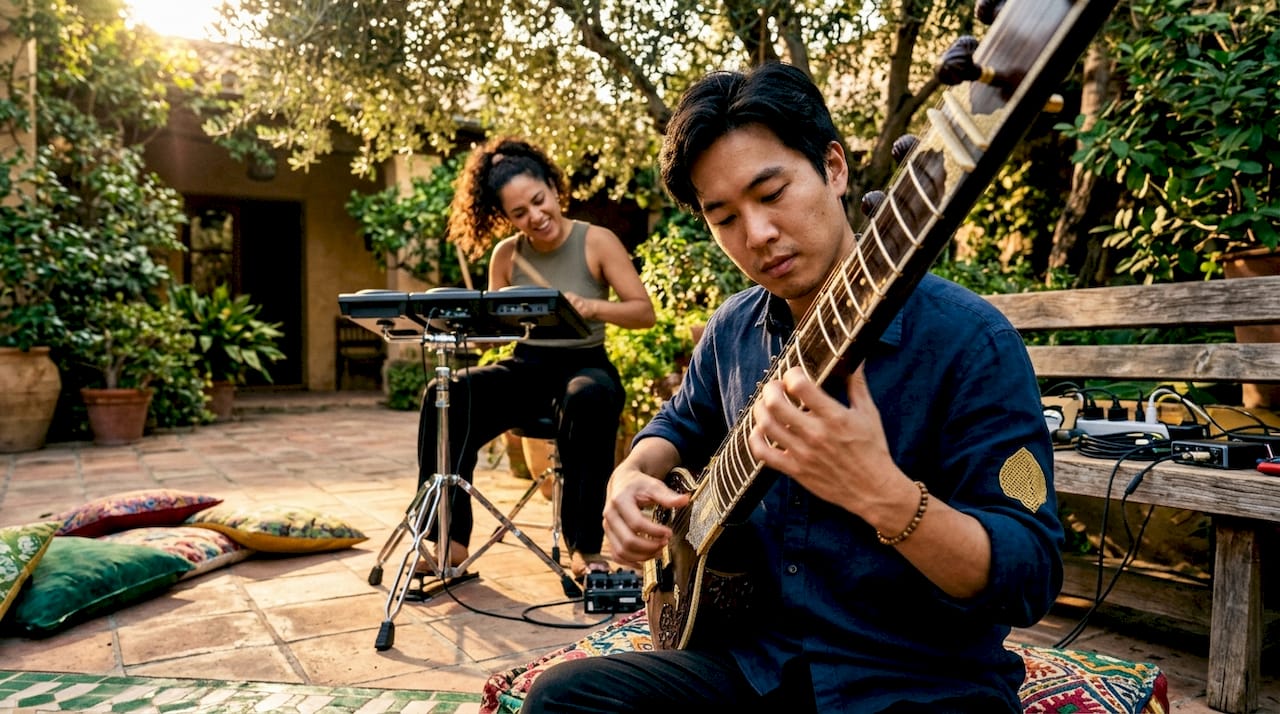
Streaming platforms and social media now accelerate this process significantly. A producer in Lagos can collaborate with a beatmaker in Seoul and release a track globally within days. That speed changes how genres evolve and how quickly audiences accept new sounds.
What are the main types of cross-genre music fusion?
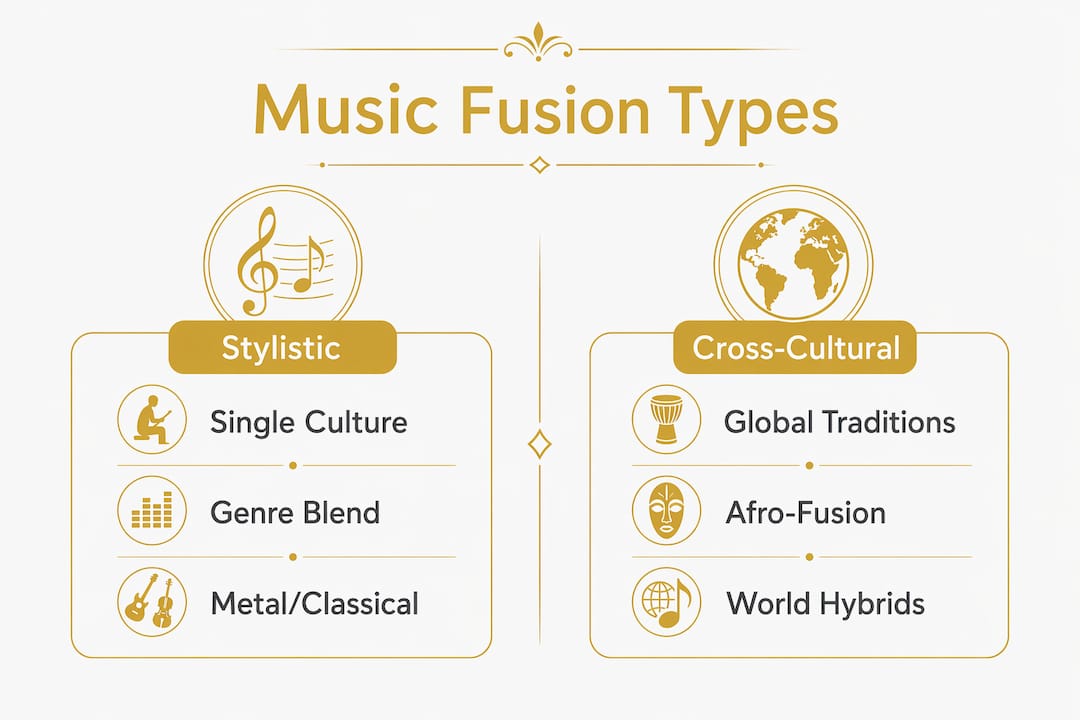
Contemporary fusion commonly falls into two broad categories: stylistic intersections and cross-cultural syncretism. These categories often overlap in modern compositions, but understanding them separately helps you recognize what is happening in a given piece of music.
Stylistic intersections blend genres from within a single cultural tradition. Think classical music fused with heavy metal, or jazz layered with hip-hop. The instruments and production methods may differ sharply, but the cultural roots share common ground. Jazz fusion, pioneered by artists like Miles Davis and Herbie Hancock, is the clearest example. It merged jazz improvisation with rock’s electric instrumentation and funk’s rhythmic drive.
Cross-cultural syncretism goes further by merging musical traditions from different parts of the world. Afro-fusion combines West African rhythms with contemporary R&B and electronic production. K-Pop draws from American pop songwriting, hip-hop, and East Asian melodic sensibilities. Reggaeton blends Jamaican dancehall with Latin rhythms and urban American production styles.
| Type | Fusion method | Example |
|---|---|---|
| Stylistic intersection | Merges genres within one cultural tradition | Jazz fusion, classical metal |
| Cross-cultural syncretism | Merges traditions from different world regions | Afro-fusion, K-Pop, Reggaeton |
| Electronic hybrid | Combines acoustic genres with digital production | Lo-fi hip-hop, ambient folk |
| Cinematic fusion | Blends orchestral scoring with world music elements | Indian classical with film scores |
The cinematic and electronic hybrid categories are growing fastest right now. Producers working in DAWs (digital audio workstations) like Ableton Live or Logic Pro can layer a sitar raga with a trap beat in the same session, then apply spectral processing to make the two elements feel like they belong together.
How do artists and producers create successful cross-genre fusions?
Successful fusion builds bridges between musical languages by engaging with cultural practices, not merely mixing melodies. That distinction is the most important creative principle in genre blending. Superficial mixing produces music that sounds forced. Deep engagement produces music that feels inevitable.
The technical process involves three core elements.
- Harmonic compatibility: Different genres use different scales and chord systems. Indian classical music uses ragas, which are melodic frameworks with specific ascending and descending note patterns. Western pop uses major and minor keys. Finding the overlap, or deliberately playing with the tension between them, is where fusion begins.
- Rhythmic synchronization: Genres like jazz and Afrobeat use polyrhythm, meaning multiple rhythmic layers running simultaneously. Electronic genres often use a rigid four-on-the-floor kick pattern. Spectral analysis and audio morphing help producers align these different rhythmic structures without flattening either one.
- Timbral blending: Timbre is the tone color of an instrument. A sitar and an electric guitar both play notes, but they sound completely different. Producers use EQ, reverb, and convolution processing to help instruments from different traditions occupy the same sonic space without clashing.
Pro Tip: Study the cultural context of a genre before you borrow from it. Listen to primary sources, not just popular derivatives. This gives you indirect techniques to evoke a genre’s essence rather than copying its surface features, which produces more authentic and respectful fusion.
Ignoring instrumental and production method affordances is the most common mistake in fusion work. Audio morphing tools help reinterpret genres authentically rather than forcing incompatible sounds together. The goal is a unified musical dialect, not a collision.
What cultural and technological trends shape cross-genre fusion today?
The democratization of music production tools empowers artists to blend diverse traditions, challenge norms, and promote inclusivity. Affordable DAWs, free sample libraries, and cloud-based collaboration platforms have removed the financial barriers that once kept genre experimentation inside major recording studios. An artist in Nairobi or Mumbai now has access to the same production tools as a producer in Los Angeles.
Globalization and multicultural societies also drive fusion forward. Cities like London, Toronto, and Los Angeles are home to communities from dozens of musical traditions. Artists raised in these environments absorb multiple musical languages naturally. Beyoncé’s “Lemonade” drew from blues, country, hip-hop, and R&B simultaneously. K-Pop groups routinely incorporate Latin percussion, American trap production, and traditional Korean melodic elements into single albums.
Short-form video platforms accelerate the popularity and reach of genre-blending projects, enabling faster genre evolution. A 15-second clip on TikTok can introduce a fusion sound to millions of listeners who would never have found it through traditional radio. That reach changes what artists are willing to experiment with, because the feedback loop from audience to artist is now almost instant.
The top trends shaping fusion music right now are:
- Affordable production software making cross-genre experimentation accessible to independent artists
- Short-form video platforms amplifying hybrid sounds to global audiences within days of release
- Multicultural urban communities producing artists fluent in multiple musical traditions from childhood
- Streaming algorithm personalization exposing listeners to genre combinations they would not seek out independently
- Global collaboration tools allowing real-time co-production across continents and time zones
Fusion music challenges fixed genre labels, reflecting a globalized generation’s preference for eclectic expression. That preference is not a trend. It is a structural shift in how audiences relate to music.
What are the benefits and challenges of genre blending for artists?
Genre blending delivers real creative and commercial benefits, but it also comes with specific challenges that artists need to plan for.
Benefits of cross-genre fusion:
- Expands your potential audience by appealing to fans of multiple genres simultaneously
- Pushes creative boundaries and prevents artistic stagnation
- Creates a distinctive sound identity that is harder to copy than a single-genre approach
- Builds cultural music experiences that resonate across communities
- Opens doors to film scoring, advertising, and live event markets that value unique sonic identities
Challenges of cross-genre fusion:
- Maintaining authenticity when working outside your own cultural tradition
- Balancing improvisational styles with structured electronic elements without losing the feel of either
- Managing listener expectations when your sound does not fit a familiar category
- Navigating copyright when using pre-existing recordings as source material
Copyright challenges exist specifically when using pre-existing recordings for mashups. Creating original compositions with genre-specific elements avoids demonetization. That is a practical and legal distinction every producer needs to understand before releasing fusion work commercially.
Pro Tip: Compose original fusion music using royalty-free stems or your own recordings rather than unauthorized samples. This protects your revenue and gives you full creative control over the final sound.
The sitar crossover collaboration process is a useful model here. It shows how an instrument from one tradition can be integrated into contemporary production contexts through careful arrangement and mutual respect between collaborators.
Key Takeaways
Cross-genre music fusion creates genuinely new sounds by integrating rhythm, harmony, timbre, and cultural context from two or more distinct musical traditions.
| Point | Details |
|---|---|
| Core definition | Fusion is deliberate genre integration, not surface-level mixing or simple mashups. |
| Two main types | Stylistic intersections blend within one culture; cross-cultural syncretism merges world traditions. |
| Technical foundation | Harmonic compatibility, rhythmic synchronization, and timbral blending are the three core production skills. |
| Technology’s role | Affordable DAWs and short-form video platforms have made fusion faster to create and easier to distribute. |
| Copyright awareness | Original compositions using royalty-free or self-recorded elements protect artists from demonetization. |
Why deep cultural respect is the real skill in fusion music
I have spent years working at the intersection of Indian classical music and contemporary global sounds. The technical side of fusion, the DAW sessions, the spectral processing, the harmonic mapping, is learnable. What takes much longer to develop is genuine cultural fluency.
The artists I have seen struggle most with fusion are the ones who treat a foreign musical tradition as a texture or a sound effect. They grab a sitar sample, drop it over a trap beat, and call it fusion. The result sounds hollow because it is hollow. The sitar has a grammar, a vocabulary, and a centuries-old performance practice behind it. When you ignore that, the audience can feel it, even if they cannot name what is wrong.
The artists who get fusion right spend time with the source material. They listen to primary recordings, study the theory, and often collaborate directly with practitioners from the tradition they are drawing from. That process takes longer, but the music it produces has a quality that no amount of production polish can fake.
Modern tools do open real possibilities that did not exist before. I can now record a live sitar raga in Los Angeles and send stems to a producer in Berlin the same afternoon. The collaboration happens faster, and the production quality is higher than anything I could have achieved in a home studio ten years ago. But the tools only amplify what you bring to them. If you bring genuine understanding, the tools help you express it more clearly. If you bring a shortcut mentality, the tools just make the shortcut sound more expensive.
My advice to aspiring artists is this: pick one tradition outside your own and study it seriously for at least a year before you try to fuse it with your primary genre. You will make better music, and you will make it with integrity.
— Rajib
Sitar fusion sounds for producers and live events
Sitarrajib brings Indian classical music into contemporary fusion contexts for producers, event organizers, and brands looking for a distinctive sonic identity.
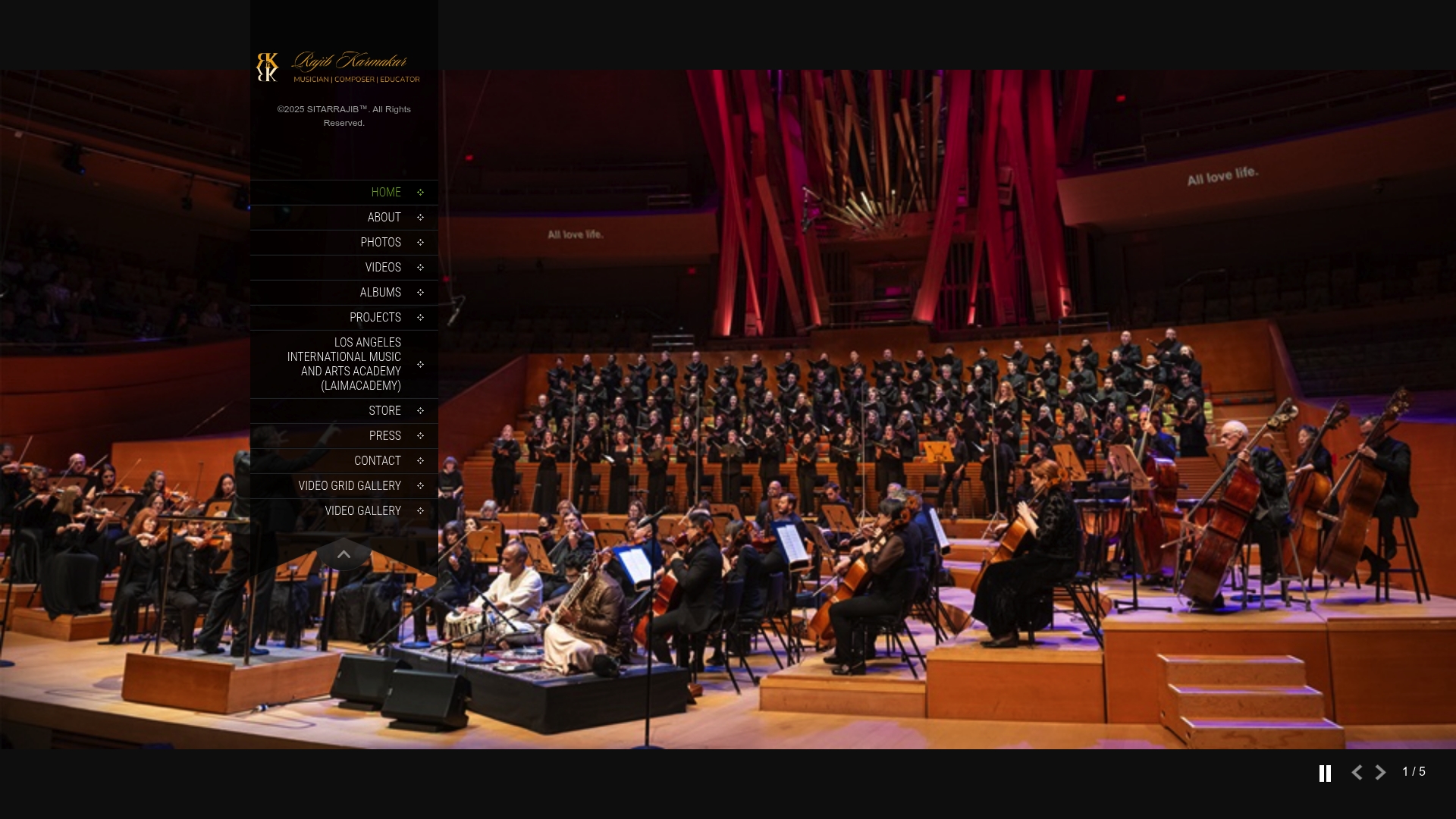
Rajib Karmakar’s live sitar recording sessions give producers access to authentic, high-quality sitar stems that integrate cleanly into modern production workflows. For event organizers, sitar at corporate events creates an atmosphere that stands apart from standard entertainment options. Every performance draws from the same principle that makes great fusion work: deep cultural knowledge expressed through a contemporary lens. You can hear that approach directly in Rajib’s recorded work and live concert footage at Sitarrajib.com.
FAQ
What is the cross-genre music definition in simple terms?
Cross-genre music fusion is the deliberate blending of elements from two or more distinct musical styles to create a new, coherent sound. It differs from a mashup because it integrates musical elements at the structural level rather than layering existing recordings.
What are the most common types of music fusion?
The two primary types are stylistic intersections, which blend genres within one cultural tradition, and cross-cultural syncretism, which merges musical traditions from different world regions. Jazz fusion, Afro-fusion, and K-Pop are widely recognized examples of each.
How do producers blend music from different genres technically?
Producers use harmonic mapping, rhythmic synchronization, and timbral blending to integrate different genres. Advanced techniques like spectral analysis and audio morphing help align sounds from genres with incompatible structures.
What are the main benefits of music fusion for artists?
Fusion expands audience reach, creates a distinctive sound identity, and opens access to markets like film scoring and live events. It also pushes creative development in ways that staying within a single genre cannot.
How do artists avoid copyright problems in genre-blending music?
Artists avoid copyright issues by composing original music using genre-specific elements rather than sampling pre-existing recordings without authorization. Using royalty-free stems or self-recorded material gives full commercial control over the final release.