
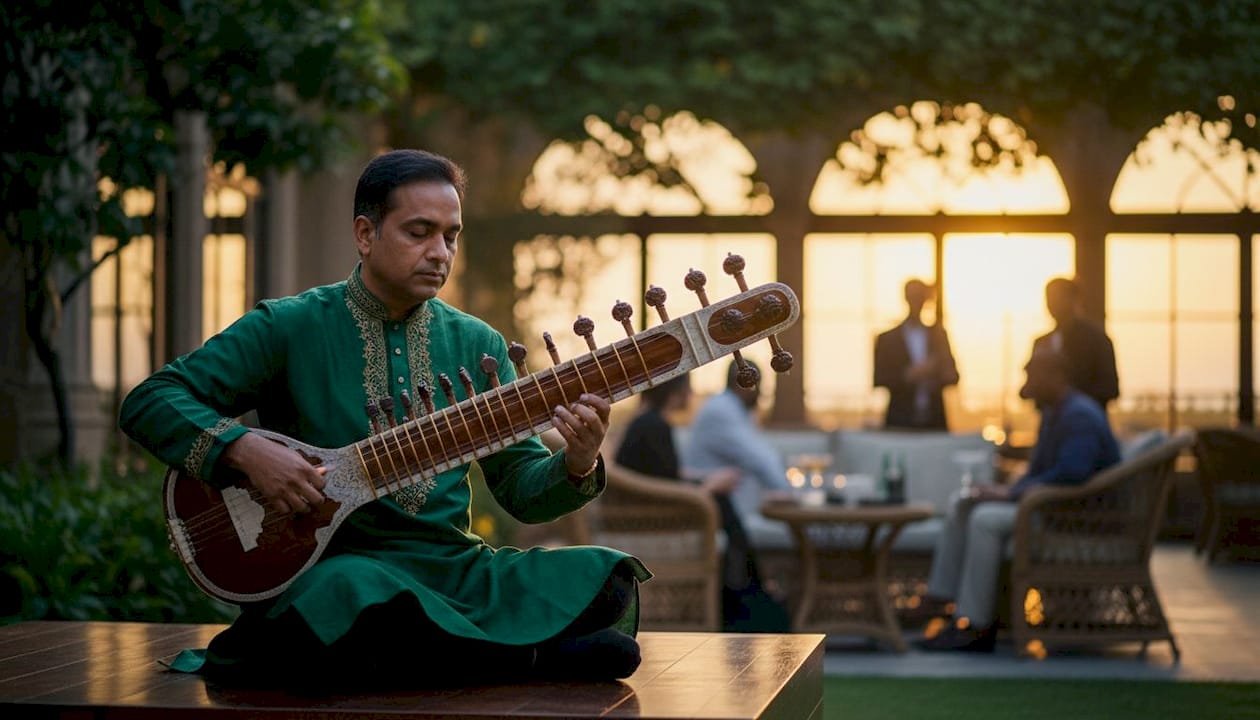
Sitar music is defined as a form of Indian classical performance built on raga scales, sustained tonal resonance, and melodic improvisation. The benefits of sitar music at cocktail hours are well documented: it reduces sensory overload, promotes calm conversation, and gives any event a culturally distinct identity. Raga-based music induces theta-wave brain states near 4Hz, which support relaxed, regulated thinking in high-stimulation social settings. Event planners who want something beyond a generic playlist are choosing live sitar because it works on both a neurological and experiential level.
1. Benefits of sitar music at cocktail hours: relaxation and cognitive calm
Sitar music slows the brain down in a measurable way. Slow, repetitive raga patterns promote theta-wave states around 4Hz, which reduce the mental load guests carry when they walk into a crowded, noisy room. That matters at cocktail hours, where sensory stimulation peaks early and guests need a few minutes to settle.
Studies on raga-based listening show significant reductions in anxiety and stress after even short sessions. Ragas like Desi-Todi have been linked to lower blood pressure and improved mood. For event planners, that translates directly into guests who feel at ease faster, talk more freely, and stay longer.
The sitar’s tonal character also plays a role. Its long sustain and warm overtones fill a room without demanding attention. Guests absorb the sound without consciously processing it, which keeps their focus on conversation rather than the music itself.
“The most successful cocktail hour music choices carry emotional weight and integrate so naturally that conversations flow without interruption.” — Sahil Baweja, as cited in coverage of the Pendulo Mother’s Day event
Pro Tip: Set sitar volume at roughly 60–65 decibels during the first 20 minutes of a cocktail hour. That range supports conversation without the music fading into inaudibility.
2. Creating a sophisticated atmosphere with live sitar
Live sitar performances signal quality. A live sitar and tabla duo creates an atmosphere that generic background playlists simply cannot replicate. Guests notice the difference between recorded music and a human performer in the room, and that presence raises the perceived value of the entire event.
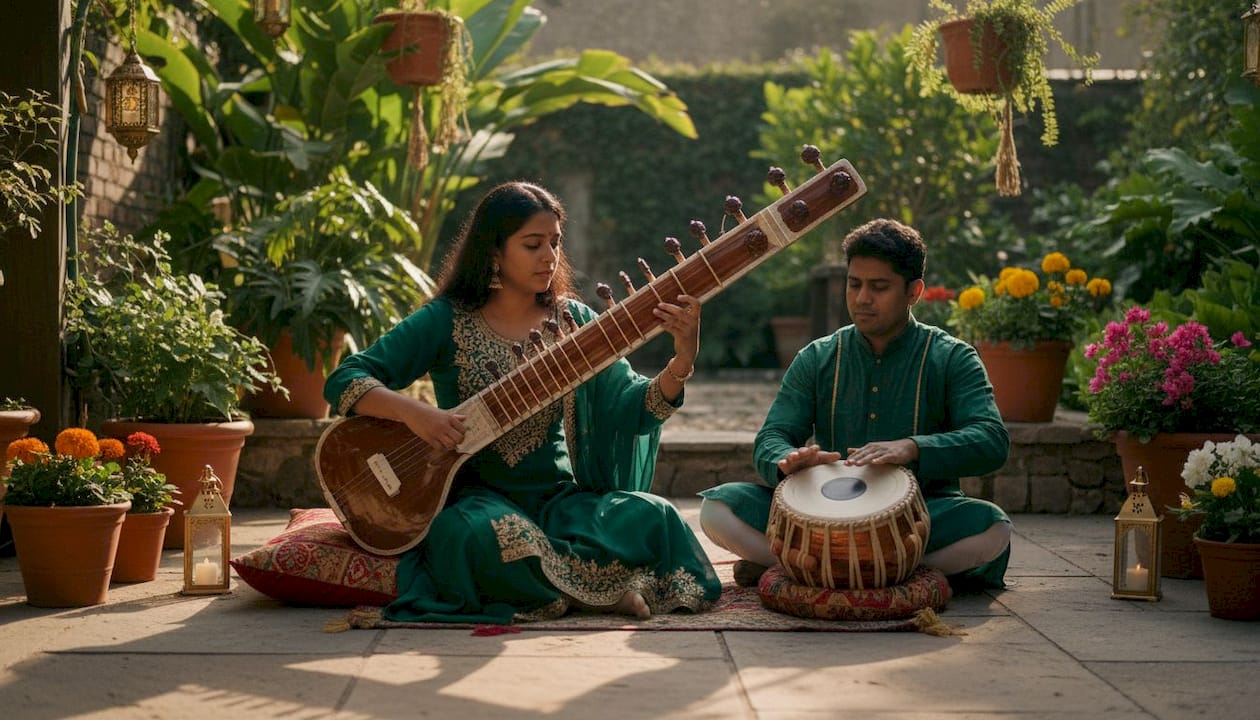
The sitar’s harmonic richness also shapes the room’s emotional tone. Its layered overtones create depth without loudness. That quality makes it ideal for upscale cocktail settings where the goal is refinement, not spectacle.
Sahil Baweja, who curated the Pendulo dining experience, describes the ideal as music that is “felt, not announced.” That phrase captures exactly what live sitar does well. It supports presence and emotional engagement without pulling focus from the social experience.
Here is what live sitar adds to event quality that recorded music does not:
- Cultural authenticity: Guests experience a living art form, not a curated playlist.
- Emotional texture: The performer responds to the room, adjusting tempo and mood in real time.
- Conversation starter: Guests naturally ask about the instrument, creating organic social interaction.
- Perceived event value: Live performance signals that the host invested in a genuine experience.
- Memorability: Guests remember events anchored by something they have never seen or heard before.
Pro Tip: Position the sitar performer in a corner or alcove rather than center stage. That placement keeps the music ambient and social rather than performative.
3. Sitar music’s versatility across generations and cultures
Sitar music solves one of the hardest problems in event planning: keeping every age group comfortable with a single musical choice. Sitar works as an intergenerational bridge because it carries cultural significance for older guests while appealing to younger guests through its association with sophisticated, curated sound.
That dual appeal removes the need for multiple playlists or awkward genre transitions. You do not have to choose between what a 65-year-old and a 28-year-old will enjoy. The sitar handles both without compromise.
Here is how sitar music addresses different guest demographics at a cocktail hour:
- Older guests with South Asian heritage recognize raga structures and feel culturally honored by the choice.
- Older guests from Western backgrounds associate the sitar with prestige and world music appreciation.
- Younger guests respond to the instrument’s presence on global playlists and its reputation for calm, focused listening.
- Corporate event attendees appreciate the neutral, professional tone that avoids divisive genre choices.
- Wedding guests experience the music as meaningful rather than generic, which fits the emotional weight of the occasion.
The intergenerational appeal of Indian classical music also means you spend less time managing music logistics. One performer, one instrument, and one consistent sound covers the full guest list. That simplicity is a practical benefit event planners rarely discuss but consistently appreciate.
4. Integrating sitar with modern event soundscapes
Solo traditional sitar can be too demanding for a casual cocktail setting. Layering sitar with light percussion or ambient textures prevents the music from requiring too much attention and keeps the atmosphere relaxed. The goal is a sound that guests feel rather than consciously follow.
The Pendulo Mother’s Day event demonstrated this approach well. The sitar was paired with subtle modern influences, which kept the music accessible to guests unfamiliar with Indian classical traditions. That blend prevented the music from feeling like a cultural lecture and let it function as pure ambiance.
| Approach | Guest experience | Best for |
|---|---|---|
| Solo traditional sitar | Immersive, culturally rich, demands some attention | Intimate dinners, cultural events |
| Sitar with light tabla | Rhythmic warmth, relaxed energy, easy to ignore | Cocktail hours, receptions |
| Sitar with ambient backing | Smooth, modern, fully background | Corporate events, brand activations |
Customization is the key variable. A performer who understands the event context will adjust the raga selection, tempo, and volume to match the room. That flexibility is one reason live sitar at social gatherings consistently outperforms pre-recorded ambient tracks.
Pro Tip: Brief your sitar performer on the event timeline before the cocktail hour starts. Knowing when dinner service begins lets the performer build naturally toward a closing phrase rather than stopping abruptly.
5. Sitar music supports wellness trends guests already value
Recorded sitar music is rising sharply on digital platforms as listeners seek an antidote to overstimulation. YouTube channels dedicated to sitar meditation tracks attract hundreds of thousands of views. That cultural momentum means many of your guests already associate the sitar with calm, focus, and mental wellness.
Bringing that sound into a live event context meets guests where their habits already are. You are not introducing something unfamiliar. You are giving them a live version of something they already seek out on their own time.
Indian classical instruments like the sitar and bansuri create immersive soundscapes that influence mood and emotional state positively during social gatherings. That effect is not incidental. It is the reason wellness-focused event planners are adding live sitar to their standard toolkit for upscale cocktail programs. For a deeper look at how authentic music builds event momentum, the connection between live performance and guest engagement is well established.
6. Why sitar music gives your event a distinct identity
Generic background music is forgettable by design. Sitar music is not. Guests who attend a cocktail hour with live sitar remember it as a specific, intentional experience rather than a pleasant but undifferentiated evening.
That memorability has real value for event planners. It means guests talk about the event afterward, associate the host with good taste, and return for future occasions. The music becomes part of the event’s identity rather than its wallpaper.
The cultural depth of Indian classical music also signals that the host thought carefully about the guest experience. That signal matters at weddings, corporate events, and private gatherings where the host’s reputation is on the line. Choosing sitar is a statement that you prioritized quality over convenience.
Event photography also benefits. A live sitar performer creates natural visual interest that dynamic event photography can capture in ways that a DJ booth or speaker system simply cannot. The instrument itself is visually striking, and guests naturally gather around it, creating candid moments that document the event’s character.
Key takeaways
Sitar music at cocktail hours reduces guest stress, raises event quality, and appeals to every age group with a single, consistent sound.
| Point | Details |
|---|---|
| Neurological calm | Raga-based sitar induces theta-wave states that reduce sensory overload in social settings. |
| Live performance value | A live sitar performer raises perceived event quality in ways recorded music cannot match. |
| Intergenerational appeal | Sitar satisfies older guests culturally and younger guests aesthetically with one sound. |
| Modern integration | Pairing sitar with light percussion or ambient backing keeps the music accessible and unobtrusive. |
| Distinct event identity | Live sitar makes events memorable and gives hosts a reputation for thoughtful, quality experiences. |
What I have learned from playing sitar at cocktail hours
Every time I perform at a cocktail hour, I watch the same thing happen. Guests walk in carrying the tension of their day. Within ten minutes of the sitar starting, shoulders drop, voices soften, and the room finds its rhythm. That shift is not accidental. It is what raga-based music does when it is played at the right volume and tempo for the space.
What surprises most event planners is how little the guests consciously notice the music. That is actually the goal. When sitar works well at a cocktail hour, people feel better without knowing why. They attribute it to the food, the company, or the venue. The music did its job invisibly.
The one mistake I see planners make is booking a sitar performance and then placing the performer on a stage. That turns ambient music into a concert, which changes the social dynamic entirely. Keep the performer at floor level, in a corner, and let the sound travel naturally through the room.
The other thing I tell planners: do not worry that your guests will not “get” Indian classical music. The sitar communicates directly through tone and feeling. You do not need cultural context to feel calm when you hear it. That accessibility is exactly why it works so well for mixed-demographic cocktail hours.
— Rajib
Sitarrajib brings live sitar to your cocktail hour
Rajib Karmakar performs live sitar for cocktail hours, weddings, corporate events, and private gatherings across Los Angeles and beyond. His performances are calibrated for social settings: the right raga, the right volume, and the right energy for the room.
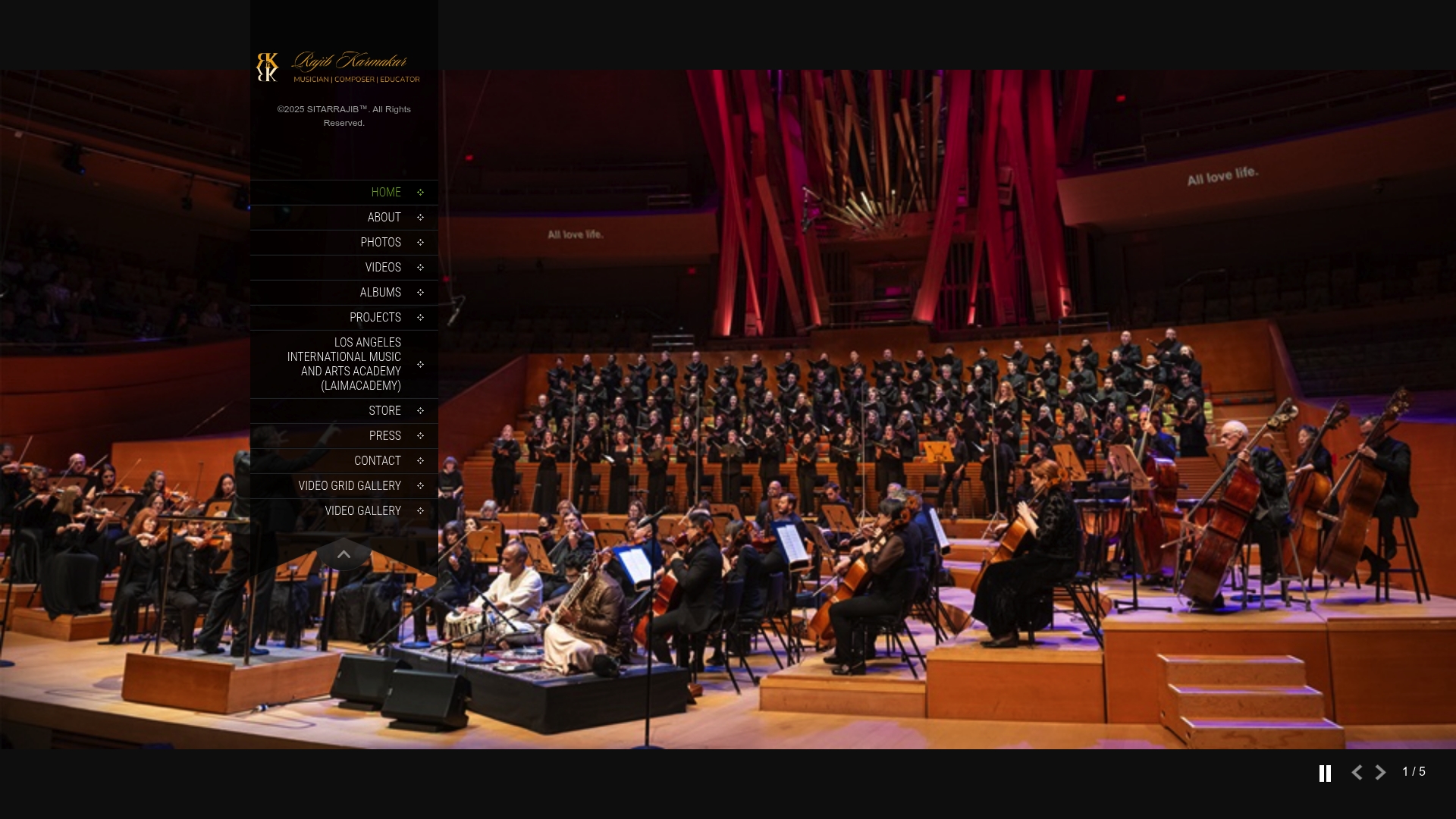
Sitarrajib offers live sitar for corporate events and social gatherings, with full customization for event format, guest demographics, and venue size. Whether you need a solo performance or a sitar and tabla duo, Sitarrajib works with you to match the music to your event’s tone. Visit sitarrajib.com to check availability and discuss your cocktail hour needs directly.
FAQ
What makes sitar music good for cocktail hours?
Sitar music promotes theta-wave brain states that reduce stress and sensory overload, making guests feel calm and comfortable faster. Its sustained tonal quality fills a room without demanding attention, which keeps conversations flowing naturally.
How loud should sitar music be at a cocktail hour?
A volume of roughly 60–65 decibels works well for most cocktail settings. That level supports ambient listening without competing with conversation.
Does sitar music work for guests unfamiliar with Indian classical music?
Sitar music communicates through tone and feeling rather than cultural knowledge. Guests do not need familiarity with raga structures to respond positively to the calming sound.
Is live sitar better than a recorded sitar playlist for events?
Live sitar outperforms recorded playlists because a performer adjusts in real time to the room’s energy, tempo, and mood. That responsiveness creates an experience that pre-recorded music cannot replicate.
Can sitar music work for both weddings and corporate cocktail hours?
Sitar music suits both settings because its intergenerational and cross-cultural appeal covers diverse guest lists. Pairing sitar with light percussion or ambient backing adapts the sound to formal or casual event formats equally well.