
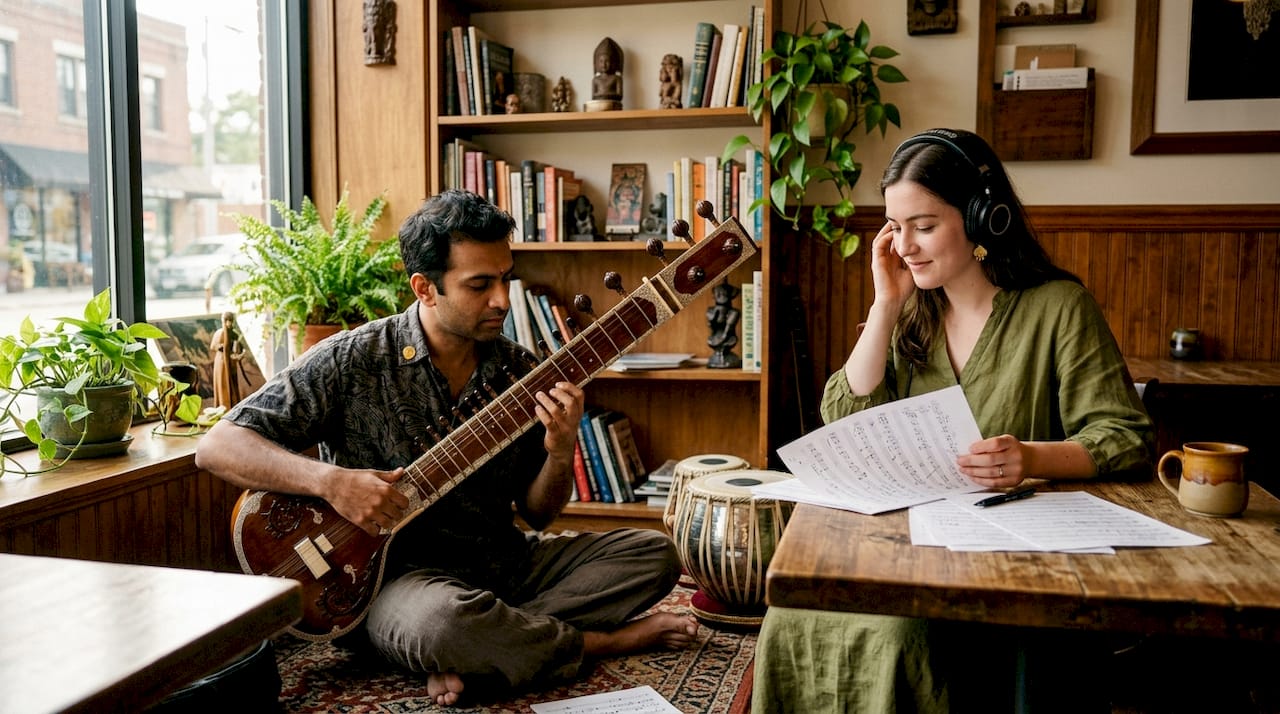
Collaborating with a sitar artist means blending Indian classical music’s melodic depth with your own musical style through shared curiosity, cultural respect, and open creative conversation. The sitar is a lead melodic instrument in Indian classical music, built around raga, a structured melodic framework that guides improvisation and emotional expression. Working with sitar players requires more than booking a session. It demands preparation, mutual trust, and a willingness to let the instrument lead. This guide gives musicians, event organizers, and production teams a clear, practical path to making that partnership work.
How to collaborate with a sitar artist: what you need to know first
The sitar functions as a lead voice in any ensemble, not a background texture. Sitarists work in professional ensembles for concerts and festivals that blend Indian classical and contemporary styles. That role shapes every decision you make, from how you structure a set list to how you balance sound in a live mix. Treating the sitar as a sonic garnish is the fastest way to produce a flat, inauthentic result.
Successful sitar artist partnerships are built on three foundations: cultural awareness, improvisational openness, and clear communication. Emotional storytelling and groove matter more than rigid genre adherence. That means you bring your musical identity fully to the table, and you let the sitar artist bring theirs. The goal is a conversation, not a compromise.
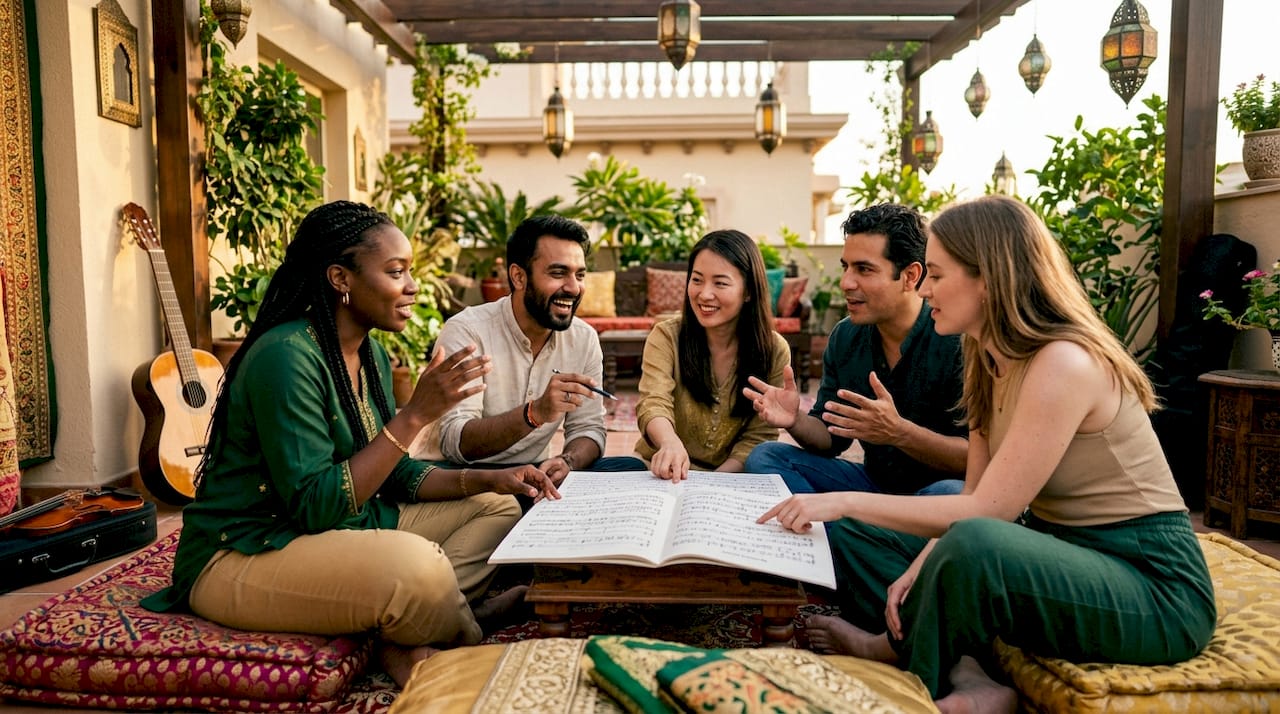
Music itself can function as a vehicle for identity, and sitar collaborations carry that weight in a specific, culturally loaded way. Knowing that going in changes how you approach every stage of the process.
What are the main types of sitar collaboration styles?
Different contexts call for different approaches. The four most common types of sitar collaboration styles are live concert performance, studio recording, fusion projects, and multimedia or film work. Each one has distinct requirements for the sitar artist and for you.
| Collaboration type | Setting | Key requirement | Typical timeline |
|---|---|---|---|
| Live concert | Stage or festival | Sound engineer familiar with Indian instruments | 4–12 weeks prep |
| Studio recording | Recording studio | High-quality condenser mic, isolated booth | 1–6 months |
| Fusion project | Studio and live | Shared improvisational language | 3–12 months |
| Film or multimedia | Studio or on location | Sync licensing, click track compatibility | Project dependent |
Live concert work demands the most logistical coordination. You need a sound engineer who understands how to mic a sitar, which has a wide frequency range and responds poorly to standard guitar mic placement. Studio recordings give you more control but require more time to develop shared musical vocabulary. Fusion projects are the most creatively demanding because they require both parties to build something genuinely new.
Key factors that shape which style fits your project:
- Budget and timeline. Studio fusion projects can run 12–24 months from first session to release.
- Audience context. A corporate event needs a different energy than a jazz festival.
- Your own musical flexibility. The more open you are to raga phrasing, the richer the result.
- The sitar artist’s experience. Not every sitarist works comfortably in electronic or pop contexts.
How do you find and select the best sitar musicians for collaborations?
Start with live performance footage. A sitarist’s stage presence and improvisational instincts show up clearly in video. Sitarrajib’s concert videos offer a direct example of how a professional sitarist handles both classical and cross-genre settings. Look for artists who adapt their phrasing to the room rather than playing the same set regardless of context.
The qualities that separate a good collaboration partner from a great one:
- Musical flexibility. Can they shift between a classical raga and a jazz-influenced groove without losing authenticity?
- Cultural openness. Do they talk about their work in terms of conversation rather than performance?
- Prior cross-genre experience. Have they worked with Western instruments, electronic producers, or film composers before?
- Communication style. Are they clear about their needs, boundaries, and creative preferences?
Industry networks, music festivals, and cultural organizations are reliable places to find sitar artists. Reach out through a short, specific message that references their actual work. Vague inquiries get ignored. A message that says “I heard your set at the LA World Festival and I’m working on a jazz fusion project” opens a real conversation.
Pro Tip: Before you commit to a formal collaboration, ask for a 30-minute informal session. Informal jam sessions build personal rapport faster than any contract negotiation.
What preparation does a sitar collaboration require?
Preparation separates a productive session from a wasted one. Share musical references before you meet. Send recordings, playlists, or even written descriptions of the emotional tone you want. The sitar artist needs context to bring the right approach to the first session.
- Define your musical goals. Are you aiming for a specific raga mood, a fusion sound, or a cinematic texture? Write it down.
- Sort out technical requirements. The sitar needs a clean, quiet recording environment. Standard guitar DI boxes do not work. Plan for a large-diaphragm condenser microphone and acoustic treatment.
- Discuss tuning and key. The sitar is typically tuned to C# or D. Confirm this with your artist and adjust your arrangements accordingly.
- Plan for accompaniment. Sitar artists typically require accompaniment, such as tabla, and lead melodic roles. Budget and schedule for that from the start.
- Set a realistic timeline. Cross-border collaborations add scheduling complexity. Build in buffer time for time zone differences and shipping of physical materials.
| Preparation area | What to confirm | Who is responsible |
|---|---|---|
| Musical references | Shared playlist or reference tracks | Both parties |
| Technical setup | Mic type, room treatment, tuning | Production team |
| Accompaniment | Tabla or other support instruments | Sitar artist |
| Schedule | Session dates, time zones, deadlines | Event organizer |
Pro Tip: Create a shared document with your musical goals, reference tracks, and technical specs. Send it at least two weeks before the first session. This one step cuts confusion and saves hours.
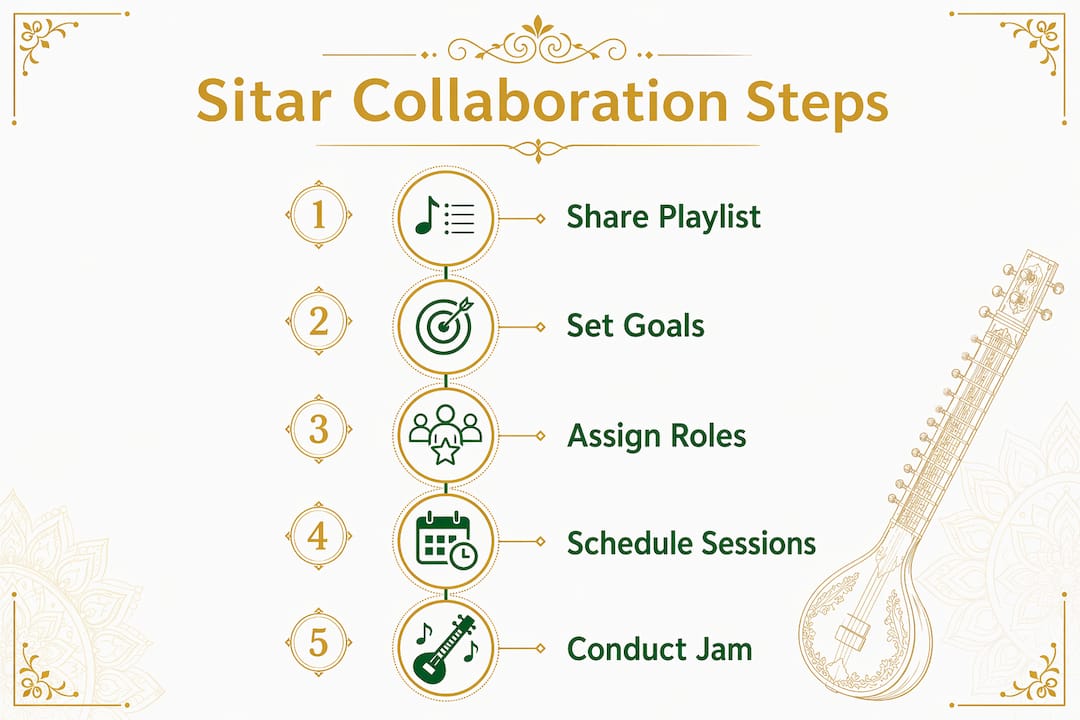
What is the step-by-step process for working with sitar players?
The most effective sitar collaborations follow a clear arc from first contact to final product. Collaborations between sitarists and contemporary musicians evolve through stages, from initial jam sessions to co-composing full arrangements, often over 12–24 months for major projects.
- Start with an informal jam. No agenda, no recording pressure. Play together and listen. This session reveals musical chemistry faster than any conversation.
- Exchange musical ideas. Share melodic motifs, rhythmic patterns, and harmonic ideas. Let the sitar artist respond in their own language. Sharing melodies and groove freely builds the shared improvisational language you need.
- Develop a shared framework. Agree on a raga or scale, a tempo range, and a general emotional arc. This is your creative contract.
- Record rough sketches. Capture ideas early, even on a phone. Great moments happen in informal sessions and disappear if you don’t document them.
- Refine and arrange. Take the best ideas from your sketches and build them into a structured piece. Define roles clearly: who leads, who supports, and when.
- Address creative conflicts directly. Disagreements happen. Resolve them by returning to the shared framework you agreed on, not by asserting personal preference.
The mindset that makes this process work is zero ego. Curiosity and zero ego foster a shared musical language that enables organic arrangement development. That applies to both parties equally.
Key behaviors that protect the creative process:
- Listen more than you play in early sessions.
- Avoid forcing raga phrasing into pop song structures. Let sitar’s characteristic bends and phrasing lead the melody.
- Credit the sitar artist fully and specifically in all promotional materials.
- Keep session notes so you can revisit decisions later.
How do you troubleshoot common sitar collaboration challenges?
Most problems in sitar collaborations fall into four categories: cultural misunderstandings, musical clashes, technical issues, and scheduling breakdowns. Each one has a clear fix.
- Cultural misunderstandings. Learn the basics of raga before your first session. You don’t need to master Indian classical theory, but knowing that a raga carries a specific emotional and time-of-day association helps you communicate better. Anoushka Shankar highlights the importance of centering and crediting sitarists appropriately rather than treating their contribution as exotic flavor.
- Musical clashes. The most common mistake is treating the collaboration as a collision of sounds rather than a conversation. If your arrangement is forcing the sitar into a role it doesn’t fit, pull back and listen to what the instrument naturally wants to do.
- Technical issues. Sitar tuning drifts in temperature changes. Plan for tuning checks between takes in studio sessions and between sets at live events. Balance the sitar in the mix before adding effects.
- Scheduling breakdowns. Use shared calendar tools and confirm sessions 48 hours in advance. For cross-border projects, assign one person to manage all scheduling communication.
“Fusion is a musical conversation, not a collision. Musical identity and integrity must be preserved in collaborations.” — Purbayan Chatterjee
That principle applies whether you are producing a studio album or organizing a one-night festival set.
What I’ve learned from years of sitar collaboration
The thing most people get wrong is treating a sitar collaboration like a feature. They book a sitarist, hand over a track, and ask for “some Indian flavor.” That approach produces forgettable music. The collaborations that actually work start with genuine curiosity about what the other person hears.
I’ve found that the first informal session tells you everything. If the other musician listens as much as they play, you have something real to build on. If they’re waiting for their turn to perform, the project will stay shallow. Patience is not optional in this work. Raga phrasing operates on a different time scale than Western pop or jazz. You have to slow down and let the music breathe.
The most rewarding projects I’ve been part of came from partners who asked questions. Not “can you play something Indian over this?” but “what does this chord progression feel like to you?” That shift in framing changes everything. Authenticity in music, as in songwriting for any genre, comes from honesty about what you actually hear and feel. Bring that to every session, and the sitar will meet you there.
— Rajib
Sitarrajib: sitar collaboration and performance
Rajib Karmakar, the artist behind Sitarrajib, has performed and collaborated across concerts, festivals, film projects, and cultural events worldwide. His work spans Indian classical performance, cross-cultural fusion, studio recording, and educational programs based in Los Angeles.
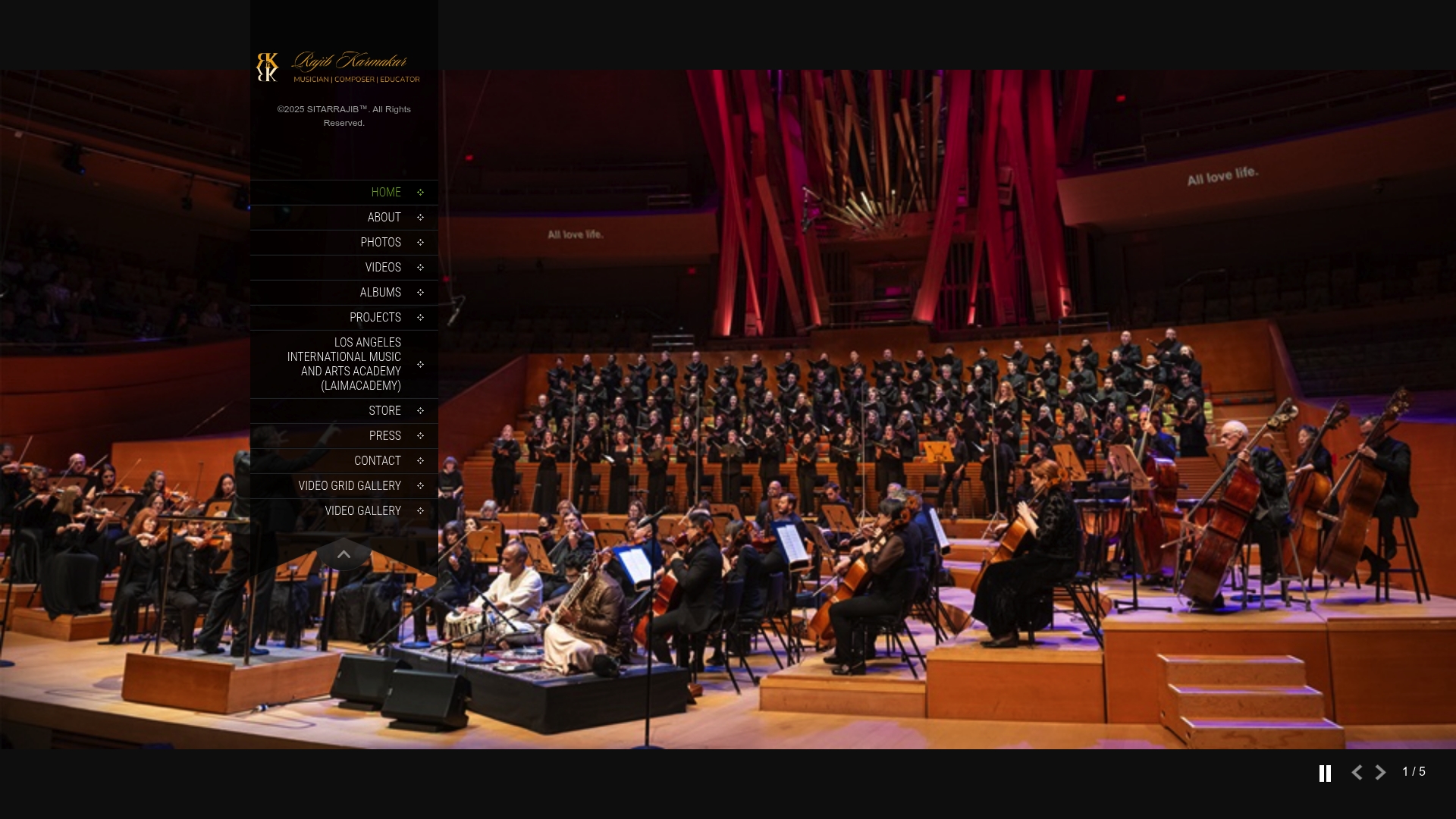
You can hear the range of his collaborative work through his audio recordings and review his cross-cultural projects for examples of how sitar integrates with contemporary and global music styles. Whether you are planning a concert, a studio session, or a cultural event, Sitarrajib offers professional sitar performance, collaboration, and educational services built on years of real-world experience.
Key takeaways
Successful sitar collaborations require cultural respect, a clear lead role for the sitar, and a shared improvisational framework built through informal sessions before formal recording begins.
| Point | Details |
|---|---|
| Sitar is a lead voice | Plan arrangements so the sitar carries melody, not background texture. |
| Start with informal jams | Build rapport through low-pressure sessions before committing to formal projects. |
| Prepare technically | Confirm tuning, mic setup, and accompaniment needs at least two weeks in advance. |
| Credit fully and specifically | Name the sitar artist’s contribution clearly in all promotional and release materials. |
| Treat it as a conversation | Let raga phrasing guide the music rather than forcing it into existing song structures. |
FAQ
What does it mean to collaborate with a sitar artist?
It means co-creating music where the sitar functions as a lead melodic voice, not a background effect. The process involves shared improvisation, cultural respect, and clear communication about musical goals.
How long does a sitar collaboration typically take?
Formal projects, from first session to final release, often run 12–24 months. Shorter engagements like a single live performance can be prepared in 4–12 weeks with proper planning.
What technical setup does a sitar collaboration need?
A large-diaphragm condenser microphone, an acoustically treated recording space, and a sound engineer familiar with Indian instruments are the core requirements for studio work.
How do you find a sitar artist for a project?
Search live performance footage, attend Indian classical music festivals, and reach out through cultural music networks. Reference the artist’s specific work in your first message to get a real response.
What is the biggest mistake in sitar collaborations?
Treating the sitar as an exotic texture rather than a lead instrument. Successful partnerships center the sitar artist’s contribution and build the arrangement around the instrument’s natural phrasing and emotional range.