
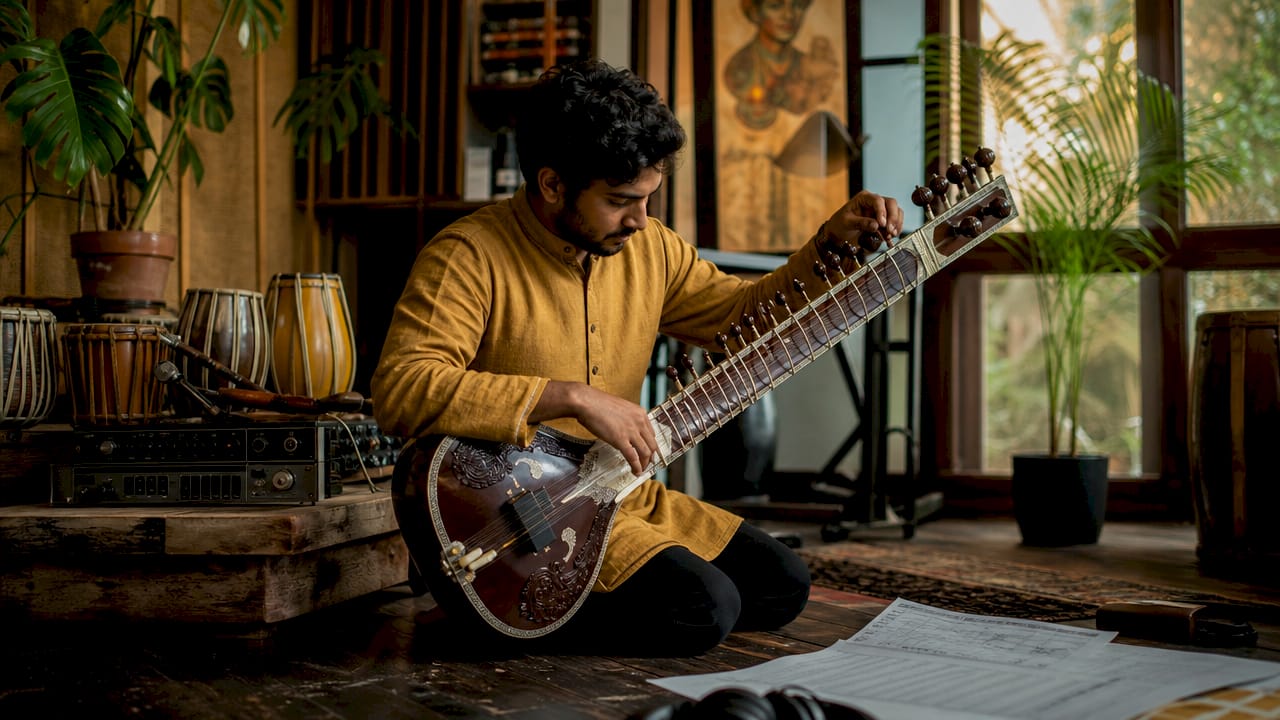
The sitar is defined as a long-necked Indian classical string instrument that produces its signature sound through two distinct string layers: 6–7 main playing strings and 11–13 sympathetic strings called tarab. Understanding how sitar works in game soundtracks starts with those tarab strings. They vibrate automatically when the main strings are played, creating a natural shimmering echo that no digital reverb fully replicates. That organic resonance is exactly what game sound designers are chasing when they reach for the sitar. It adds cultural depth, emotional texture, and an unmistakable atmospheric quality that synthetic instruments simply cannot match.
How does the sitar produce its unique sound in game soundtracks?
The sitar’s sound begins with its physical construction. The curved bridge surface, called jawari, shapes the tone by allowing the string to graze the bridge slightly as it vibrates. That contact produces the buzzing, warm quality you hear in recordings. It is not a flaw. It is the instrument’s voice.
The 11–13 sympathetic strings run beneath the main strings and resonate automatically in response to whatever note is played. This creates a built-in reverb effect that feels alive and three-dimensional. No plugin replicates this accurately because the resonance shifts with every note, every room, and every player.
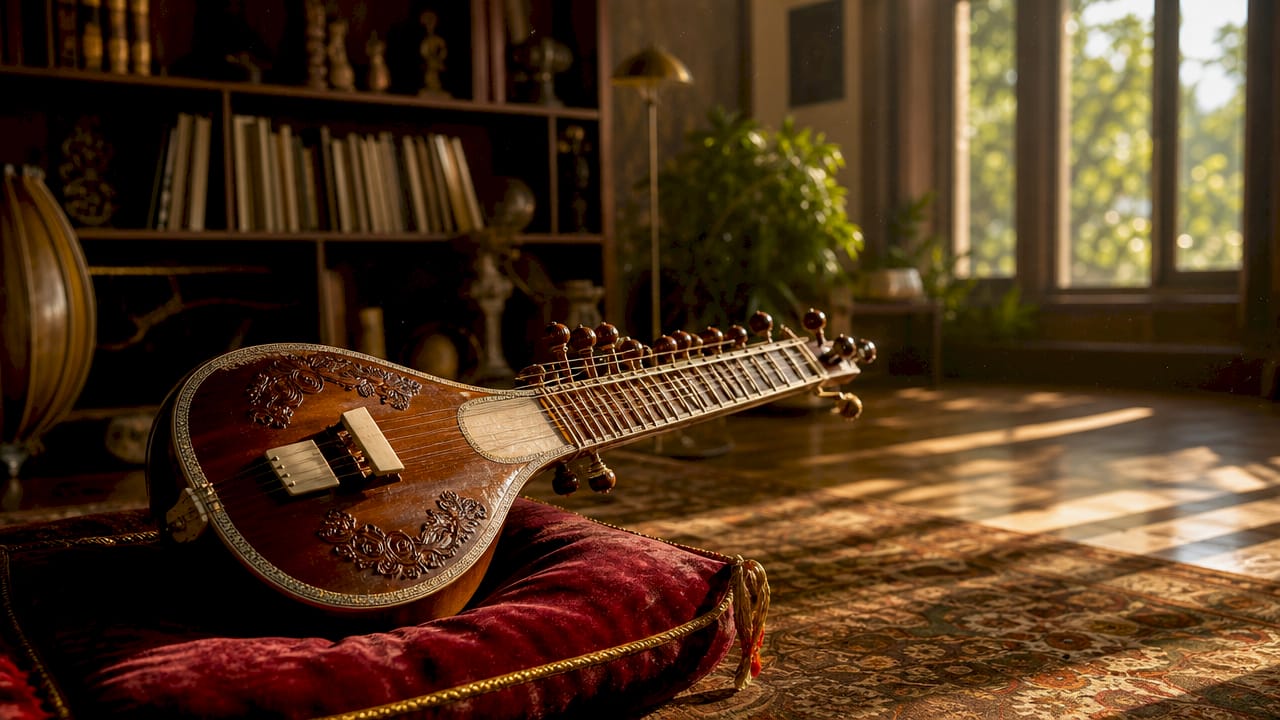
The technique called meend is the sitar’s most expressive tool. Meend involves pulling the string sideways across the fret to bend the pitch continuously. A skilled player can bend pitch across 5–6 notes from a single fret position. That range of expression mimics the human voice in a way that static samples and basic synthesizers cannot.
Here is what this means for game sound designers:
- Natural sustain and decay give the sitar a long, breathing quality that fills ambient game environments without crowding the mix.
- Meend pitch bends create emotional slides between notes, useful for tension-building moments or culturally specific melodic phrases.
- Sympathetic resonance adds depth to sparse arrangements, so even a solo sitar line sounds full and layered.
- Jawari tone color gives the instrument a distinctive edge that cuts through orchestral textures without needing heavy EQ.
Pro Tip: Record the sitar in a room with some natural reverb rather than a dead booth. The sympathetic strings respond to room acoustics, and that interaction adds realism that post-processing cannot recreate.
How is sitar integrated into video game music composition?
Live recording is the standard for serious sitar integration. Some game productions now aim for 90% live instrumentation to preserve authentic texture. That commitment reflects a broader shift in game audio toward organic, emotionally grounded sound design. Sampled sitar libraries have improved, but they still miss the micro-variations that make a live performance feel real.
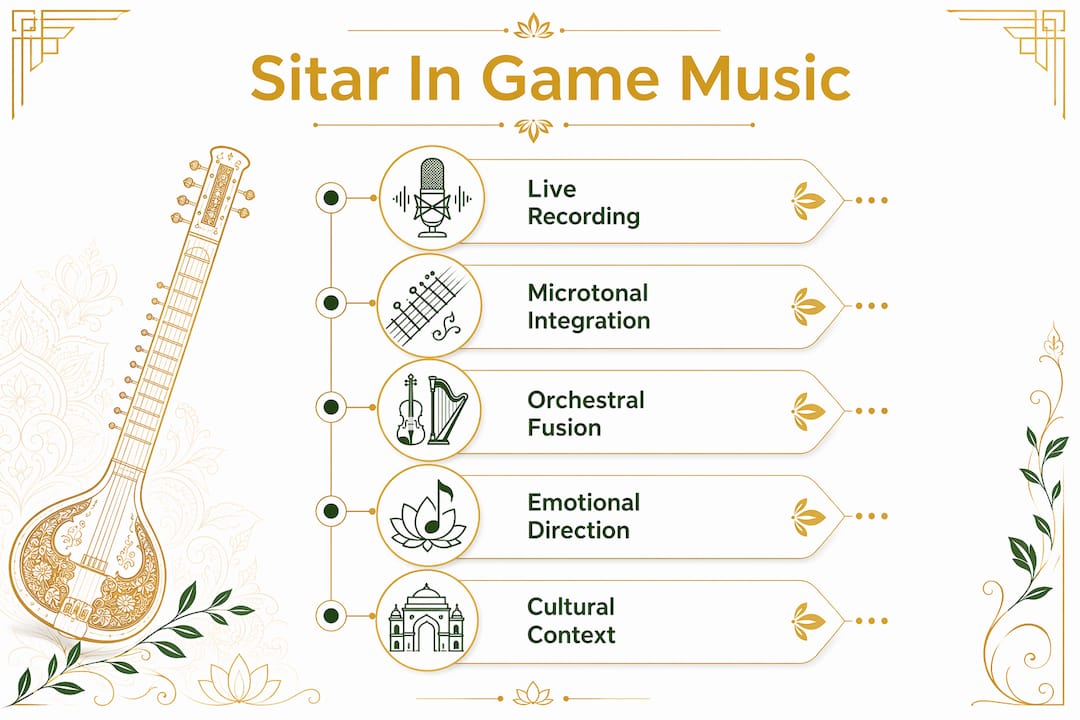
The compositional challenge is balancing the sitar’s improvisational nature with game music’s structural demands. Game audio is interactive. Tracks loop, layer, and branch based on player actions. The sitar’s musical language, built on ragas, microtones, and spontaneous ornamentation, does not naturally fit a four-bar loop. Composers solve this by recording multiple short phrases in the same raga and building a library of stems that the game engine can trigger contextually.
Here is a practical workflow for integrating sitar into a game score:
- Choose a raga that matches the scene’s emotional tone. Ragas carry specific emotional associations in Indian classical music. Raga Bhairavi, for example, conveys longing and farewell. Matching raga to scene intent gives the music cultural and emotional coherence.
- Record melodic phrases in multiple lengths. Capture 2-bar, 4-bar, and 8-bar phrases. This gives the audio engine flexibility to assemble music dynamically without audible seams.
- Record ambient drone layers separately. The sitar’s sympathetic strings can be lightly strummed to create drone textures. These work well as background layers under dialogue or exploration sequences.
- Use a remote recording workflow when working with a sitarist in a different city. Modern remote collaboration tools allow real-time direction and high-quality audio capture across locations.
- Mix the sitar stem with minimal processing. Preserve the natural dynamics and resonance. Over-compression kills the instrument’s expressiveness.
The sitar also integrates with orchestra when composers respect its microtonal structure. Western orchestration uses equal temperament. The sitar uses scales that include microtones absent from that system. Composers who write sitar parts in standard Western notation often lose the nuance. Working directly with a trained sitarist who can interpret and improvise within the intended mood produces far better results.
What challenges do game sound designers face when using sitar?
The biggest mistake is treating the sitar as decoration. Cultural context matters as much as the sound itself. Dropping a sitar riff over a generic action sequence without understanding its musical meaning produces something that feels hollow to informed listeners and culturally disrespectful to others. The instrument carries centuries of tradition. Using it well requires at least a basic understanding of that tradition.
Tuning is a practical challenge that surprises many designers. The sympathetic strings require individual tuning to match the raga being played. Adjusting sympathetic strings for each recording session takes time. Budget for it. Rushing this step produces a muddy, unfocused resonance that undermines the whole recording.
Common pitfalls and how to avoid them:
- Over-processing the signal. Heavy reverb, chorus, or pitch correction strips the sitar of its organic character. Use minimal EQ and let the instrument’s natural tone carry the mix.
- Using samples for melodic leads. Sitar sample libraries work for ambient textures and drones. For expressive melodic lines, live performance is the only option that captures meend and ornamentation accurately.
- Writing parts in equal temperament. Sitar music uses microtones that fall between standard Western pitches. Forcing the instrument into equal temperament removes its most distinctive quality.
- Ignoring dynamic range. The sitar’s volume shifts dramatically between a soft pluck and a full stroke. Compressing that range too aggressively makes the performance sound mechanical.
Pro Tip: When directing a sitar recording session, describe the emotional intent of each scene rather than specifying exact notes. A skilled sitarist will find the right phrase within the raga. That approach produces more authentic results than prescriptive notation.
How does sitar contribute to cultural storytelling in games?
The sitar functions as a cultural signifier in visual media, instantly anchoring a scene or setting to the Indian subcontinent. That power is real, but it cuts both ways. Used thoughtfully, the sitar tells players exactly where they are and how they should feel. Used carelessly, it reduces a rich musical tradition to a cliché.
By 2024, the sitar’s presence had expanded well beyond traditional settings. Sitar contributions in web series and international films showed the instrument functioning not just as cultural flavor but as a narrative voice. Game composers are following that same path. The sitar now appears in fantasy, adventure, and even science fiction game scores where the goal is emotional depth rather than geographic specificity.
The instrument’s musical language, built on ragas, microtonal ornamentation, and improvisation, carries emotional associations that cross cultural boundaries when handled with care. Raga Yaman sounds expansive and hopeful. Raga Bhairav sounds ancient and contemplative. These associations give composers a precise emotional vocabulary that Western scales alone cannot provide.
Filmmakers like Satyajit Ray demonstrated the right approach decades ago. Ray composed his own scores to ensure emotional fit rather than rely on generic tropes. That same discipline applies to game scoring. The sitar works best when the composer understands the scene’s emotional need and selects the raga and technique accordingly, not when it is added as an afterthought.
| Sitar element | Narrative function in games |
|---|---|
| Raga selection | Sets emotional tone and cultural context for specific scenes |
| Meend pitch bends | Conveys longing, tension, or spiritual weight in key moments |
| Sympathetic resonance | Creates ambient depth in exploration and open-world environments |
| Drone layers | Builds sustained atmosphere under dialogue and cutscenes |
| Microtonal ornamentation | Signals cultural authenticity and adds emotional complexity |
Key Takeaways
The sitar delivers authentic cultural atmosphere and organic resonance in game soundtracks through its sympathetic string physics, expressive meend technique, and raga-based musical language.
| Point | Details |
|---|---|
| Sympathetic strings create natural reverb | The 11–13 tarab strings produce built-in echo that no digital plugin accurately replicates. |
| Live recording outperforms samples | Meend bends and microtonal ornamentation require a live sitarist for expressive melodic lines. |
| Raga choice shapes emotional tone | Matching the raga to scene intent gives game music cultural coherence and emotional precision. |
| Cultural respect prevents cliché | Understanding the sitar’s musical tradition produces authentic results and avoids hollow decoration. |
| Minimal processing preserves character | Over-compression and heavy reverb strip the sitar of its organic dynamics and natural resonance. |
What I have learned from scoring with the sitar in cross-cultural projects
Working with the sitar across film, media, and concert projects has taught me one thing above everything else: the instrument rewards patience and punishes shortcuts. Sound designers who approach it as a texture to be sampled and dropped into a mix almost always end up with something that sounds thin. The sitar’s power comes from its relationship with the player, the room, and the raga. That relationship takes time to build in a session.
The most effective cross-cultural collaborations I have been part of happened when the composer came to the session with emotional intent, not a rigid score. When a director tells me a scene needs to feel like grief mixed with acceptance, I can find that in a raga. When they hand me a MIDI mockup and ask me to play it exactly, the result is always less than what the instrument is capable of.
Game audio is moving in a good direction. The push toward live instrumentation shows that designers understand what authenticity sounds like. The next step is deeper engagement with the musical traditions behind the instruments. Learning even the basics of raga structure changes how you write for the sitar. You stop thinking in chord progressions and start thinking in emotional arcs. That shift produces music that players feel, not just hear. The sitar’s role in gaming will keep growing as more designers make that shift.
— Rajib
Sitarrajib: sitar composition and collaboration for game projects
Rajib Karmakar, the sitarist and composer behind Sitarrajib, works with game composers, film directors, and media producers to bring authentic sitar performance and composition to their projects. Based in Los Angeles, Rajib brings deep training in Indian classical music alongside experience in cross-cultural and cinematic scoring.
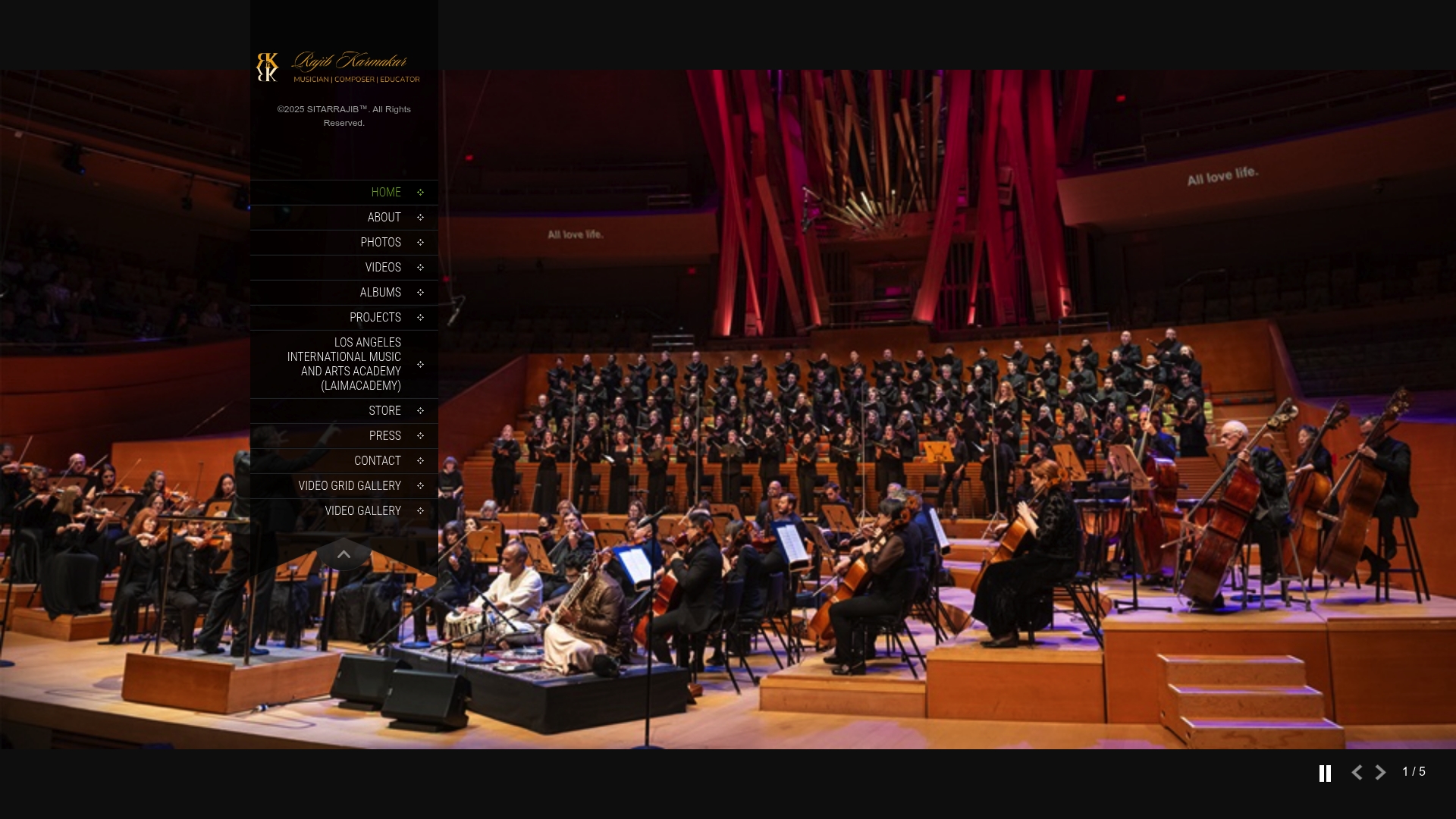
You can hear the range of Rajib’s work across his recorded compositions and explore his full background at sitarrajib.com. Whether you need studio recording, compositional consultation, or a live sitar performance for your project, Rajib is available for collaboration. Reach out directly through the website to discuss your game audio needs and find the right approach for your score.
FAQ
What makes the sitar’s sound unique compared to other string instruments?
The sitar produces a natural shimmering reverb through 11–13 sympathetic strings that vibrate automatically when the main strings are played. The curved jawari bridge adds a distinctive buzzing warmth that no other string instrument replicates.
Can sitar samples replace live recording in a game soundtrack?
Sitar samples work for ambient drones and background textures, but they cannot capture meend pitch bends or microtonal ornamentation. Live recording with a trained sitarist is the only way to get expressive melodic lines that sound authentic.
How does the sitar work with a full orchestra in a game score?
The sitar integrates with orchestra when composers account for its microtonal scale structure, which differs from Western equal temperament. Working directly with a sitarist who can improvise within the intended emotional mood produces the most natural blend.
What is the role of ragas in sitar-based game music?
Ragas are melodic frameworks in Indian classical music, each carrying specific emotional associations. Selecting the right raga for a scene gives the sitar part cultural coherence and emotional precision that Western scales alone cannot provide.
How do you avoid cultural clichés when using sitar in games?
Avoiding cliché requires understanding the sitar’s musical tradition, not just its sound. Matching raga to scene intent, working with a trained sitarist, and treating the instrument as a narrative voice rather than decoration produces authentic results.