

Yes, culturally specific music gets placed on TV, and it happens more often than most composers realize. The fastest routes in are sync briefs that specifically request your sound, sync libraries with open submission queues, and direct outreach to supervisors building a show around a particular community or region. None of this requires a hit song. It requires readiness.
Here’s what to do this week:
- Match a brief. Find one open sync request that names your genre, mood, or instrumentation, not a generic “world music” tag.
- Prep your deliverables. Have a full mix, an instrumental, and basic stems ready before you pitch anything, as practical advice in Tellingbeatzz | Content Creation Archives shows.
- Submit with a rights summary. Attach a one-page note showing who owns the master and publishing, so a supervisor can move fast.
Pro Tip: Always have an instrumental version and a two-line rights summary saved and ready to attach. Supervisors move quickly, and the artist who can respond in an hour beats the artist who needs three days to find their own paperwork.
Key Takeaways
Cultural music tv show placement succeeds when composers pair authentic, well-documented material with sync-ready deliverables and direct, well-timed pitches to the right channel.
| Point | Details |
|---|---|
| Deliverables come first | Have a full mix, instrumental, stems, and timed edits ready before you pitch anywhere. |
| Metadata builds trust | Translate lyrics, name instrument origins, and credit performers clearly in every submission. |
| Choose the right channel | Use sync platforms for speed, libraries for volume, and direct outreach for lasting relationships. |
| Clear both rights first | Master and publishing splits both need documentation before a supervisor will move forward. |
| Track every submission | Log pitches, responses, and placements so you know which channels actually convert for you. |
| Get specialist support | Sitarrajib helps musicians prepare culturally authentic, media-ready recordings and clearance documentation for TV pitches. |
Table of Contents
- Preparing Sync-Ready Cultural Tracks for TV Show Music Integration
- Where Should You Pitch Culturally Specific Music for TV?
- What Do TV Music Supervisors Actually Look for in Cultural Music?
- Legal and Clearance Checklist for TV Music Placements
- Turning One TV Placement Into Recurring Work
- Finding and Responding to Active Sync Briefs
- Working With Media Producers on Culturally Specific Cues
- How Sitarrajib Helps You Prepare Music That Supervisors Actually Clear
- Frequently Asked Questions
- Sources
Preparing Sync-Ready Cultural Tracks for TV Show Music Integration
A supervisor doesn’t fall in love with your song and then figure out the technical side later. The technical side determines whether your song ever gets heard by an editor at all. Cultural music tv show placement lives or dies on deliverables, because editors work against tight deadlines and can’t wait on you to bounce a new stem at 11 p.m.
Here’s what actually needs to be in your folder before you pitch anyone:
- Full mix — your finished, mastered track.
- Instrumental version — no vocals, same arrangement, same length.
- Stems — separate lead melody, rhythm/percussion, and ambience or drone layers.
- Timed edits — 30, 60, and 90 second versions with clean edit points, not just fades.
- WAV files — 24-bit, properly labeled, no compressed formats.
Metadata matters just as much as the audio itself, and this is where a lot of culturally rooted material gets passed over. If your lyrics are in Bengali, Punjabi, Yoruba, or any non-English language, include a plain-English translation and a short note on what the lyrics actually mean emotionally, not just literally. Supervisors working on a scene about grief or celebration need to know if your lyrics support that tone before they’ll take the risk of subtitling something they can’t read. Coverage of the Netflix comedy North of North shows how supervisors on culturally specific shows sought out translated lyrics and outreach directly with artists rather than treating the music as background noise.
Include these in your metadata file:
- Composer and performer credit, spelled exactly as it should appear on screen.
- ISRC codes for every version you’re submitting.
- A named contact for licensing questions, not a generic email alias.
- Instrument names and cultural origin (a sitar is not “guitar, other”).
On the arrangement side, keep tempos consistent across your stems so an editor can cut between the full mix and the instrumental without a tempo jump. Leave a few bars of instrumental breathing room at the top and tail of the track so an editor has room to fade in dialogue. A detailed guide to sitar composition for commercial use walks through arrangement choices that keep raga-based material both authentic and edit-friendly, which is the balance every cultural composer is chasing.
Pro Tip: Bar-mark your instrumental version at 8, 16, and 32 bars in the file notes. Editors love a track that tells them exactly where a clean cut lives, and it’s the small detail that gets your file reused on a second episode.
Where Should You Pitch Culturally Specific Music for TV?
You have three real channels, and they behave differently enough that treating them the same wastes your time.
Sync brief platforms are the most direct. On SYCE, briefs list mood, genre, and instrumentation up front, so you can filter for requests that actually fit what you make instead of guessing. The process runs in a straight line: browse open briefs, pitch your track, wait for supervisor review, then move to negotiation if it fits. Distributor-backed services like Ditto Sync work similarly, letting artists on paid plans pitch directly into active TV and film opportunities without an agent standing between you and the request.
Opportunity libraries take a different approach. Services like Broadjam and TAXI post large numbers of specific requests, and Broadjam’s opportunity board alone has historically driven thousands of placements by matching artists to detailed briefs rather than general catalog browsing. TAXI runs similarly, and its submission guidance is blunt about what gets rejected: no references to specific names or brands, no profanity, and no material that sounds like a cover rather than a broadcast-ready original.
Direct outreach is slower but builds the strongest relationships. Research a supervisor’s recent work, confirm they’ve used culturally specific music before, and send a short pitch: one sentence on the track, a link to stream it, and your instrumental attached. Don’t attach a full press kit. Supervisors are busy, and a five-line email with the right track wins over a ten-attachment folder every time.
Each channel trades off differently:
- Sync platforms — fast turnaround, but you compete with everyone else who saw the same brief.
- Libraries — high volume of opportunities, less personal, but a proven path to your first placements.
- Direct outreach — slowest to convert, but the relationships compound over time.
What Do TV Music Supervisors Actually Look for in Cultural Music?
Supervisors aren’t hunting for the next chart hit. They’re hunting for a piece of music that does something a script line can’t. Tunefind’s coverage of Gentefied describes music functioning as a narrative character on that show, expanding the emotional world of a scene rather than sitting behind it as filler. That’s the standard your cultural music tv show placement pitch needs to meet: does this track deepen a specific moment, or could it be swapped for any generic “ethnic” cue without anyone noticing?
Authenticity beats polish here. A supervisor working on a scene rooted in a specific community will choose the composer who can explain their instrument’s origin over the composer with the cleaner mix but no cultural grounding.
Package your cultural context clearly:
- Name the instrument and its tradition (a sitar isn’t “an Indian guitar”).
- Translate any lyrics and explain what they mean emotionally, not just word for word.
- Note recommended scene types, like a homecoming, a mourning ritual, or a celebration.
- Include a permission statement if any part of the track uses traditional or field-recorded material that isn’t fully your own composition.
Music supervisors balance creative judgment with legal exposure on every track they clear, and the pieces that move fastest through that process are the ones arriving with rights already documented and context already explained, not the ones a supervisor has to chase down for answers.
That framing comes directly from how supervisors describe their own process: creative fit gets a track shortlisted, but legal clarity is what actually gets it cleared. Offer at least two edit-friendly stems and a short note describing where in a scene the cue could sit, along with tempo and bar markers. A resource like Sitarrajib’s guide to world music sounds in media production breaks down how authentic instrumentation reads on screen, which is worth reviewing before you write your own context notes.
Pro Tip: If your track uses a folk melody passed down through your family or community, say so in one sentence in your pitch. That single line of provenance often does more to build supervisor trust than any amount of production polish.
Legal and Clearance Checklist for TV Music Placements
Two separate rights need clearing before your music can air, and confusing them is the single most common reason placements stall. The master is the specific recording. The publishing covers the underlying composition, the melody and lyrics themselves. A TV production needs both cleared, and if you don’t own 100% of either, every co-owner needs to sign off.
Have this ready before you pitch, not after someone asks:
- Ownership and splits statement — who owns what percentage of master and publishing.
- ISRC codes — for every mix and edit you’re offering.
- Cue sheet-ready credits — full legal names, PRO affiliations if registered.
- One-page licensing summary — fee expectations, term length, territory, and a direct contact.
Common blockers that kill deals before they start:
- Uncleared samples buried in your track, even a two-second drum loop.
- Field recordings without a signed release from the performer or community source.
- Missing consent from a session musician who played on the track.
- Ambiguous ownership, where a track lists three writers and only one responds to emails.
Documented provenance matters especially for traditional or field-sourced elements. Supervisors generally won’t clear music built on material with unclear origins, no matter how strong the track sounds, because the legal exposure sits with the production.
On negotiation, most TV placements pay a flat sync fee tied to usage type (background versus featured), episode count, and territory, with terms typically running from a single season to several years. Fees vary enormously by show budget and usage, so treat any number you hear from another composer as one data point, not a benchmark. Bring in a music lawyer or your publisher once a deal moves past a first offer. A step-by-step guide to licensing Indian classical music for film walks through the paperwork side in more depth if you’re new to clearance work specifically for classical or raga-based material.
Turning One TV Placement Into Recurring Work
A single sync placement is worth more than the fee attached to it. It’s a credit, a proof point, and a reason for the next supervisor to answer your email.
Start by watching which shows license culturally specific music regularly. Billboard’s list of the most valuable TV shows for music syncs is a useful starting filter, and cross-checking a show on Tunefind tells you whether it favors original scoring or licensed needle-drops, so you know which pitch angle to use.
After a placement airs:
- Send the supervisor a short thank-you and ask for the correct on-screen credit.
- Update your press kit with the show name, episode, and air date immediately.
- Pitch two or three new, relevant tracks within a month, while your name is still fresh.
- Log every submission, response, and placement in a simple spreadsheet, including cue sheet royalties owed.
Composers who track this consistently pitch smarter over time, because they know exactly which shows respond and which channels waste their effort.
Finding and Responding to Active Sync Briefs
Most missed placements aren’t a talent problem. They’re a timing problem. Sync briefs close fast, often within days, and composers who check platforms weekly instead of daily lose opportunities to people who respond within hours.
Set a routine: check your sync platform dashboards every morning, filter for briefs matching your genre and instrumentation specifically, and skip anything vague like “world music, any style.” Vague briefs draw hundreds of submissions and rarely convert. Specific briefs, ones naming a mood, scene type, or instrument, draw far fewer competing pitches.
When you find a match, respond the same day if possible. Attach your instrumental and full mix, a one-line pitch explaining why the track fits the brief’s description, and your rights summary. Don’t wait to “polish” your submission email. Supervisors read fast and move fast, and a clean, on-time submission beats a perfect one that arrives after the brief has closed.
Working With Media Producers on Culturally Specific Cues
Delivering music for a scene rooted in a specific tradition means the producer is trusting you to get details right that they can’t verify themselves. That responsibility shapes how I package every cue I send: instrumental version, provenance note, and a short explanation of what the piece is actually saying culturally, not just musically.

If you want hands-on help preparing material like this for your own pitches, the next section covers how that works.
How Sitarrajib Helps You Prepare Music That Supervisors Actually Clear
Most composers lose placements not because their music is wrong, but because their deliverables and paperwork slow a supervisor down. Sitarrajib works directly with musicians and production teams to close that gap: studio recording sessions built for media use, composition support for film and TV cues, and hands-on help drafting the rights documentation supervisors ask for before they’ll move forward.
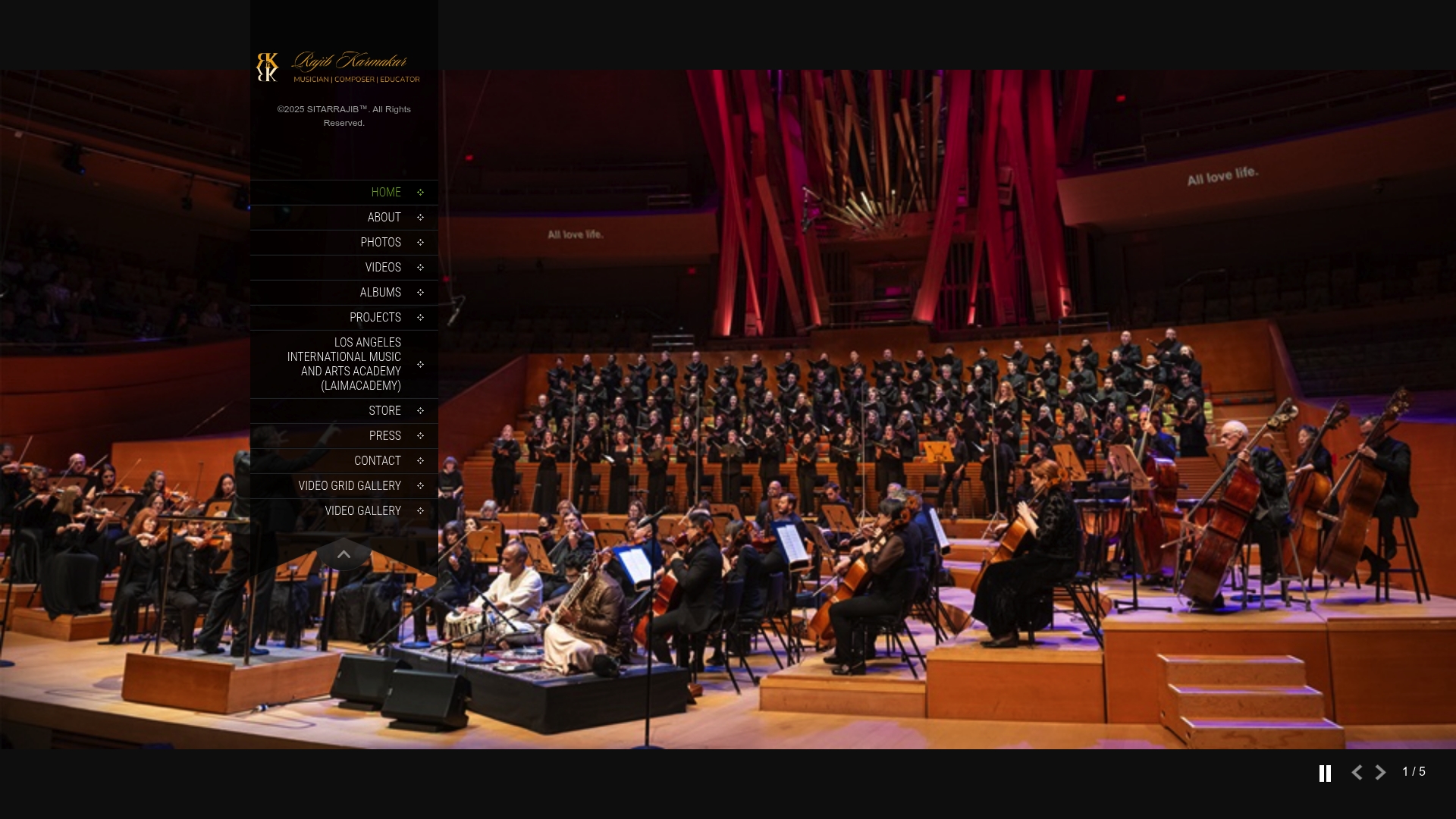
Rajib Karmakar brings direct experience translating raga-based and cross-cultural material into cues that read clearly on screen, including instrument origin notes, lyric translations, and cultural context statements that speed up a supervisor’s clearance decision instead of stalling it. That specialist packaging is often the difference between a track that sits in a queue and one that gets a callback.
If you’re preparing your own cultural music for a TV pitch and want a second set of ears on your deliverables or composition, start with Sitarrajib’s guide to licensing Indian classical music for film and reach out from there to discuss a studio session or composition project.
Frequently Asked Questions
Do I need a publisher to get cultural music placed on TV?
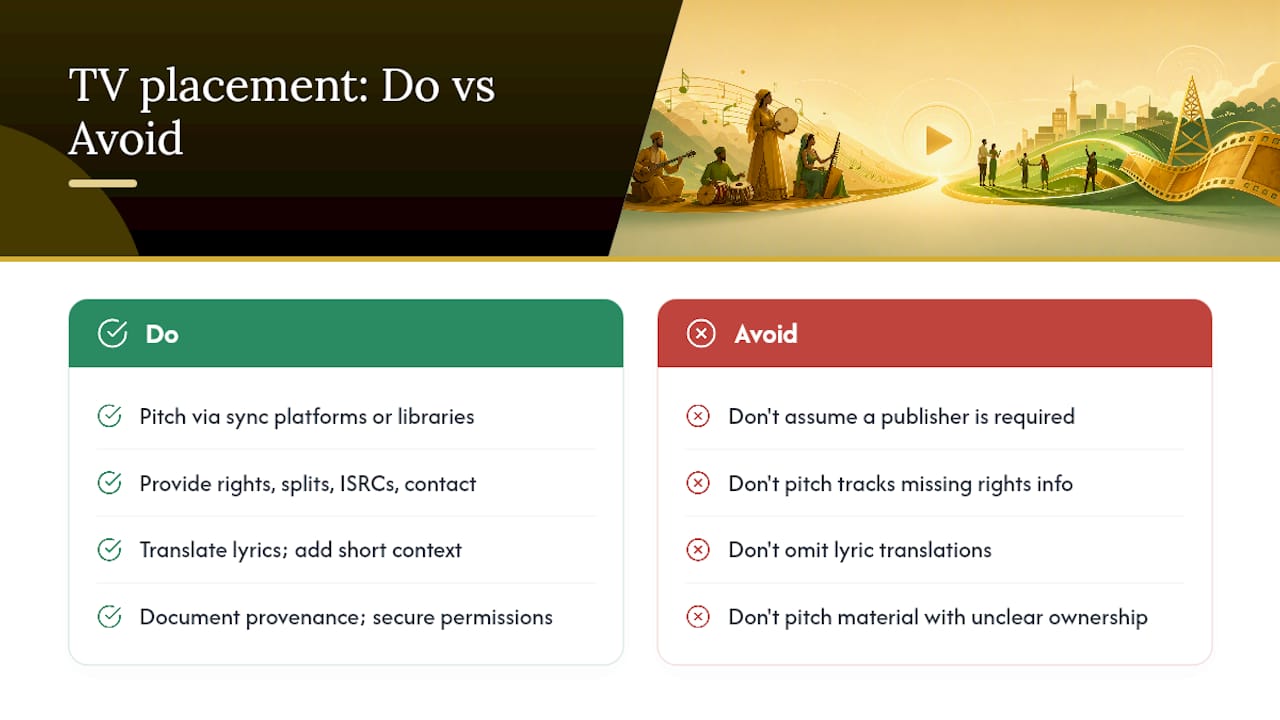
No. Many composers pitch directly through sync platforms or libraries without a publisher, though a publisher can help once you’re negotiating multiple deals at once.
How long does clearance typically take once a supervisor picks my track?
It varies by production timeline, but tracks with rights already documented, splits, ISRCs, and a clear contact, tend to clear noticeably faster than tracks requiring back-and-forth paperwork.
Should I translate my lyrics even if the show is in English?
Yes. A supervisor can’t judge emotional fit from lyrics they can’t read, and a short translation with context often makes the difference in whether they consider the track at all.
What if my track uses a traditional melody I don’t personally own?
Document the provenance clearly and secure any necessary permissions before pitching. Supervisors generally won’t clear material with unclear ownership, regardless of how well it fits the scene.
Is TV placement realistic for niche or regional cultural music specifically?
Yes, especially now that culturally specific shows actively seek music that reflects a particular community rather than generic “world music” sounds, which is exactly the audience these opportunities target.
Sources
- SYCE – Sync licensing (sync briefs)
- Scholarly article on music supervision and rights (Project MUSE)
- Broadjam delivery/opportunities
- TAXI industry opportunities and submission guidance