
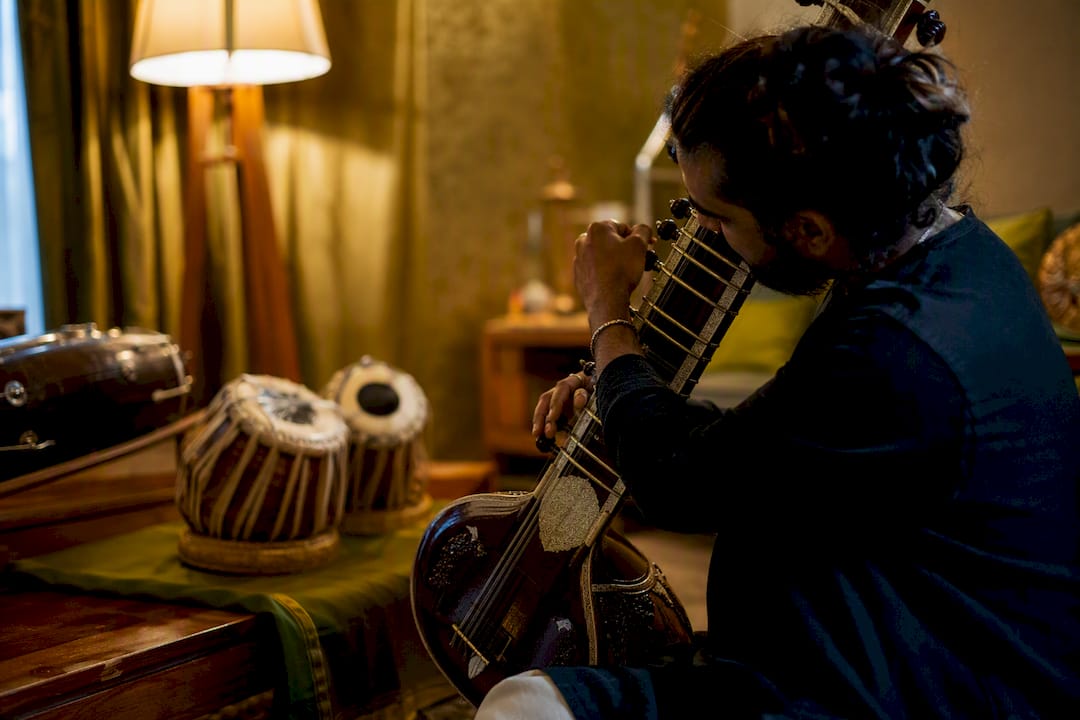
The single biggest mistake in world music film production is treating traditional instruments as exotic wallpaper instead of a story choice. Avoid it by grounding every musical decision in narrative purpose, bringing in cultural voices early, and clearing rights before you record a single take. Three pillars hold this together: ethical sourcing, complete rights clearance, and technical integrity that respects the instrument’s own musical language. Rajib Karmakar, the sitarist and film composer behind Sitarrajib, has built this checklist from years of scoring work and licensing conversations that too many productions have late.
- Ethical sourcing: consult culture-holders before you compose, not after a rough cut is locked.
- Rights clearance: map sync, master, and composition licenses before the session, not during mastering.
- Technical integrity: arrange around the instrument’s tuning and idiom instead of correcting it into submission.
Key Takeaways
Avoiding common mistakes in world music film production comes down to narrative purpose, early cultural consultation, and rights clearance handled before the session starts.
| Point | Details |
|---|---|
| Assign instruments by function | Tie every world instrument choice to a scene’s story function, not a generic mood of “otherness.” |
| Consult before you compose | Bring in performers or cultural consultants during preproduction, not after the score is drafted. |
| Map all three rights layers | Clear sync, master, and composition rights separately before recording begins. |
| Mix on the instrument’s terms | Preserve transient detail and natural dynamics before building the orchestral bed around it. |
| Work with a specialist performer | Sitarrajib offers sitar recording and composition collaboration built specifically for film production timelines. |
Table of Contents
- Common Mistakes World Music in Film Production Teams Make
- Technical Pitfalls and Practical Fixes
- Rights and Licensing Mistakes That Sink Productions
- Collaboration and Crediting Mistakes to Avoid
- A Production Checklist for Every Stage
- Why This Advice Comes From Practical Experience
- Understanding and Avoiding Stereotypes in World Music Portrayal
- How Misrepresenting Cultural Context Changes What Audiences Hear
- Ethical Considerations When Adapting Traditional Forms for Film
- Common Pitfalls Mixing World Instruments With Western Orchestration
- Work With a Specialist Instead of Guessing
- A Note on Craft and Collaboration
- Sources
Common Mistakes World Music in Film Production Teams Make
Most world music problems in film scoring trace back to one of seven repeatable errors. Here they are, ranked by how often they surface and how much damage they do.
- Using cultural sound as shorthand. A duduk cue for grief, a sitar riff for “exotic,” a taiko hit for danger. Guides on scoring with indigenous instruments recommend starting from scene function first, then choosing whether the instrument plays a color, character, or structural role.
- Skipping cultural consultation. Productions that never talk to a performer, ethnomusicologist, or community advisor before scoring routinely misjudge context. Early consultation is the single factor experts point to most often when separating appreciation from appropriation.
- Ignoring licensing until post. Sync, master, and composition rights all need separate clearance, and discovering that mid-mix creates budget chaos.
- Forcing Western tuning on non-Western instruments. Auto-tuning a sarangi or sitar into equal temperament flattens the exact expressiveness you hired the performer for.
- Burying the instrument under production. Heavy compression, dense layering, and aggressive reverb can erase the transient detail that makes a bansuri or oud recognizable.
- Using unvetted samples. Archival or stock recordings without documented provenance create legal exposure and, often, real cultural harm.
- Undervaluing performers. Paying scale rates for a session while the performer’s melodic idea becomes a recurring theme, then leaving them off the credits.
Pro Tip: Draft your cultural research brief in preproduction, alongside your shot list and locations, not after the composer has already sketched themes.
Technical Pitfalls and Practical Fixes
Non-Western instruments often carry pitch systems that simply don’t map onto Western equal temperament. A sitar’s meend, a qanun’s quarter tones, a erhu’s slides. These are not tuning errors to fix. They are the instrument’s vocabulary, and ethnomusicology practitioner notes recommend arranging around that pitch language rather than correcting it electronically.
Practical fixes that hold up in real sessions:
- Leave harmonic space with drones, pedal points, or open fifths instead of dense functional harmony that fights the instrument’s modal logic.
- Choose field recording when room tone and cultural context matter to the story; choose studio recording when isolation and control matter more for the mix.
- Mic placement should protect formants and transient detail. A close mic that flatters a violin can smear a sitar’s buzzing jawari.
- Preserve microtonal ornamentation in the mix rather than quantizing pitch correction over it.
A structured approach to hybridity, documented in academic scoring frameworks, shows that fusion works best when compositional choices deliberately highlight the source instrument’s character rather than smoothing it into a generic orchestral bed. Our guide on sitar recording techniques for film scoring breaks down mic choice and room treatment in more depth.
Rights and Licensing Mistakes That Sink Productions
Three separate rights sit underneath any world music cue: the sync license (right to pair music with picture), the master license (right to use a specific recording), and the composition clearance (right to use the underlying song itself). Licensing guides for world music point out a mistake productions make constantly: replaying a traditional melody with new musicians can dodge the master license, but it rarely removes the composition clearance requirement if the melody itself is protected or tied to a living tradition bearer.
A rights brief drafted before recording should include:
- Term and territory the license covers, including any streaming or festival extensions.
- Media scope: theatrical, broadcast, trailer, social cutdowns, and whether each needs separate clearance.
- Exclusivity terms and whether the performer can license the same recording elsewhere.
- Derivative permissions covering remixes, score albums, or promotional reuse.
| License Type | Covers | Common Mistake |
|---|---|---|
| Sync license | Pairing the music with picture | Assuming one sync deal covers trailers and social cuts |
| Master license | The specific recording used | Skipping it when licensing archival or field recordings |
| Composition clearance | The underlying melody or song | Believing a re-record removes this requirement |
Metadata discipline prevents most of this pain. Ethical sampling guidance recommends capturing performer names, instrument specifics, and regional provenance at the moment of recording, not months later during cue sheet prep. Our internal guide on licensing Indian classical music for film walks through publisher and PRO timelines in detail.
Collaboration and Crediting Mistakes to Avoid
When a performer contributes a melodic idea that becomes a recurring theme, that’s composition, not session work. Pay session rate plus a royalty or formal credit when a contributor shapes structure rather than just executing a part you wrote. A flat session fee for what amounts to co-writing is one of the fastest ways to damage trust and reputation in this field.
- Use release forms that describe exactly how the recording will be used, with approval checkpoints at rough cut and final mix.
- Keep the cultural consultant on retainer through marketing and release, not just through the score session.
- Credit performers by name in the same place you credit the composer, not buried in a general “additional musicians” line.
Pro Tip: Build a milestone approval clause into every contract. It costs nothing upfront and prevents the worst disputes after release.
A Production Checklist for Every Stage
Copy this into your production bible:
- Preproduction: Write a scene brief tying the cue to story function. Draft a cultural research brief. Budget consultation fees and rights clearance as line items, not afterthoughts.
- Tracking: Collect signed performer releases before the session ends. Capture high-quality stems. Log recording notes and full metadata, including ISRC and ISWC placeholders.
- Post: Get written clearance sign-off before locking picture. Register the cue sheet. Confirm publisher contact details are current.
- Release: Verify every credit against the contract. Publish public attribution where the tradition or region matters to the story. Consider a revenue-share arrangement with the source community when appropriate.
Why This Advice Comes From Practical Experience
Rajib Karmakar performs and records as Sitarrajib, working across concert sitar performance, film scoring, and studio sessions for productions that need authentic non-Western instrumentation.
- Guides drawn from real production workflows, including sitar recording techniques for film and the role of leitmotif in film scoring.
- Direct services covering sitar recording sessions, composition collaboration, and cultural consultation for productions building world music into a score.
- Ongoing work with music supervisors on licensing questions specific to Indian classical instrumentation.
Understanding and Avoiding Stereotypes in World Music Portrayal
Stereotypes creep into scores quietly. A tabla loop under a “foreign marketplace” scene. A sitar bend under a villain’s entrance. These choices repeat because they’re familiar, not because they’re accurate, and audiences from the represented culture notice immediately.
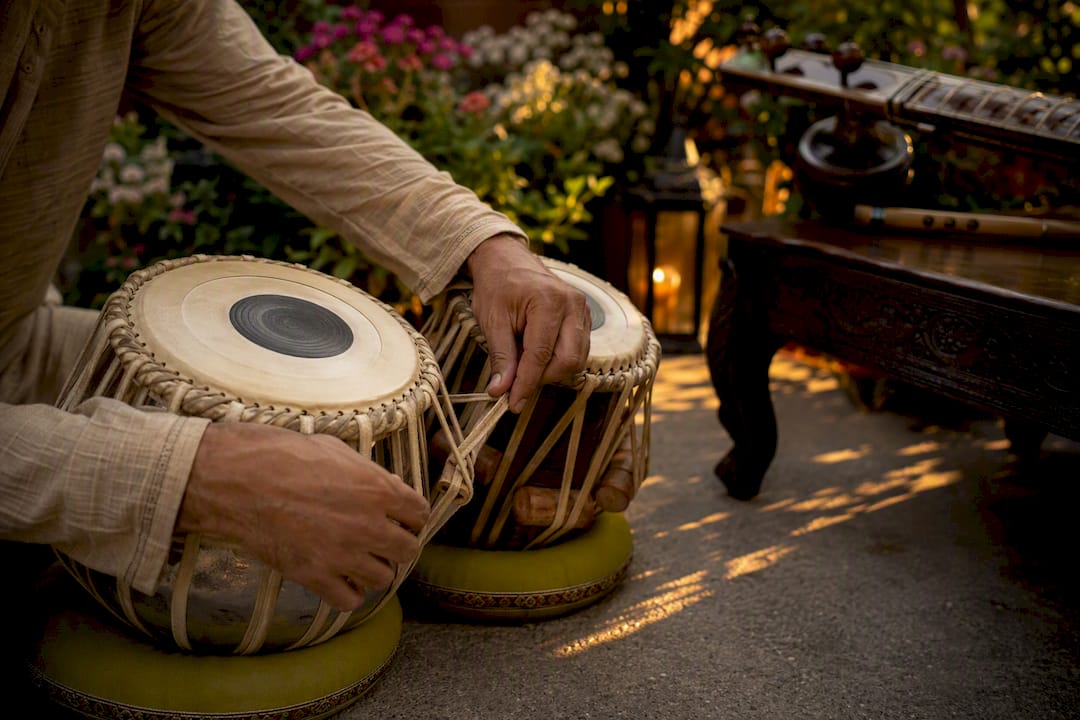
The fix starts with a simple question: would this cue work if the character or setting were swapped for something Western? If a tabla pattern only exists to signal “otherness” rather than to serve a specific character or place, it’s a cliché standing in for research. Practical scoring guides recommend assigning instruments to dramatic function, color, character, or structure, rather than to generic foreignness. A bansuri assigned to a specific character’s emotional arc reads as intentional. The same bansuri used any time the film needs “somewhere far away” reads as lazy shorthand.
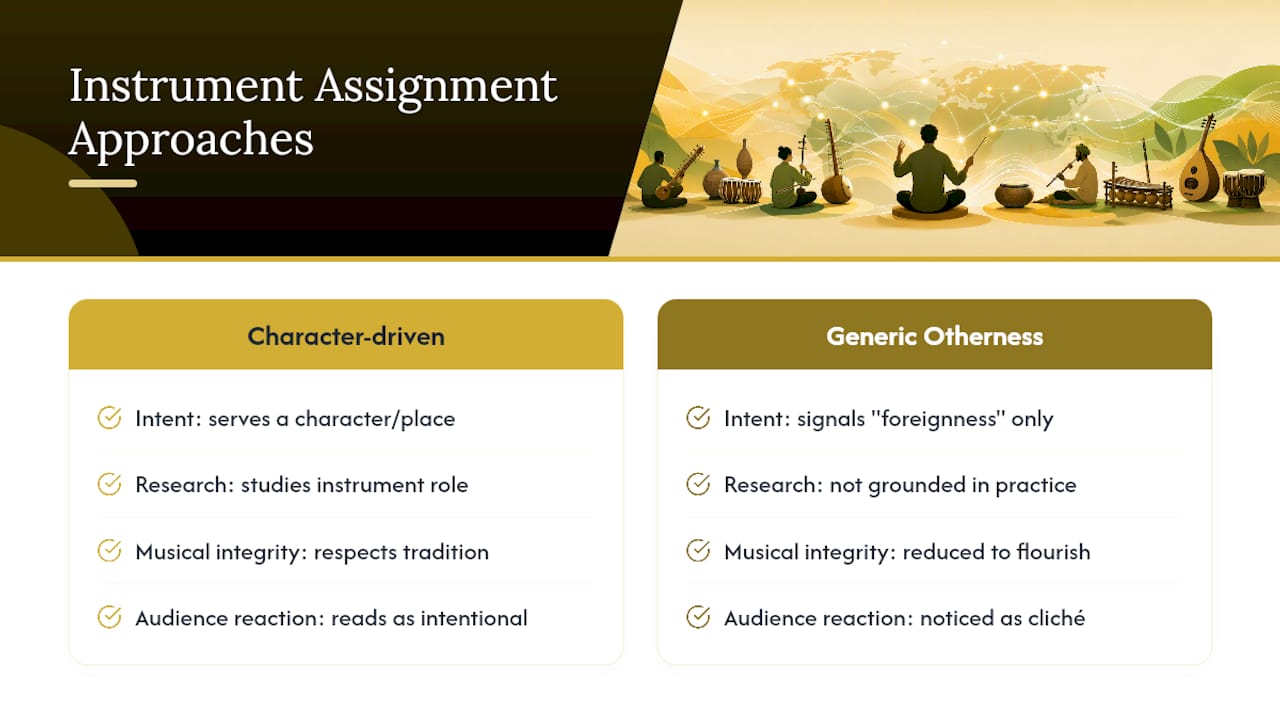
Composers who avoid this trap usually do one thing differently: they research the instrument’s actual role in its own musical tradition before deciding its role in the score. A sitar in Hindustani classical music carries formal structure, raga discipline, and improvisational logic. Reducing it to a two-second flourish ignores everything that makes it distinctive, and audiences familiar with the tradition will hear that gap immediately.
How Misrepresenting Cultural Context Changes What Audiences Hear
A film’s music tells audiences how to feel about what they’re seeing, and when the music misrepresents the culture on screen, it distorts how viewers read the entire scene. Pair a solemn devotional melody with a comic scene, or attach a specific regional instrument to a vaguely defined “Middle Eastern” setting, and audiences from that culture register the mismatch instantly, even if general audiences don’t.
This isn’t just an accuracy problem. It shapes perception at scale. When the same handful of instruments get recycled across decades of film to signal the same narrow set of emotions, they harden into audience expectations that are hard to undo. Viewers start associating an entire musical tradition with danger, mysticism, or otherness, regardless of what that tradition actually represents in its own context.
Productions that get this right tend to work backward from specificity. Instead of “world music” as a catch-all mood, they name the actual tradition, region, and instrument, then build the cue around what that music does in its own context. That specificity does double duty: it respects the source culture and it gives the score more genuine emotional range than a generic exotic palette ever could.
Ethical Considerations When Adapting Traditional Forms for Film
Adapting a devotional, ceremonial, or regionally sacred musical form for a film score raises different questions than adapting a secular folk tune. Some traditional forms carry specific ritual context that doesn’t transfer cleanly to a dramatic scene, and using them without that context can read as extraction rather than adaptation.
The clearest ethical marker is whether the tradition’s own practitioners were part of the adaptation decision. A composer working alone from field recordings makes different assumptions than a composer working alongside a performer trained in that tradition. The latter catches misuses the former simply can’t see, because the knowledge of what’s appropriate to adapt and what isn’t often lives in oral tradition, not in any reference a composer can look up.
Payment and consultation practices matter here as much as the music itself. Research on cultural appropriation in music points to intent and transparency as the factors that most reliably separate respectful adaptation from extraction. A production that pays a fair rate, credits the tradition by name, and keeps the consultant involved through release is making a different ethical choice than one that treats a field recording as free raw material.
Common Pitfalls Mixing World Instruments With Western Orchestration
The mix is where a lot of careful cultural and technical work gets undone in twenty minutes. World instruments carry complex overtone structures and transient information that standard orchestral mixing chains weren’t built to preserve.
The most common pitfall is EQ carving that treats a non-Western instrument like a Western one with a different timbre. A sitar’s buzzing jawari resonance, for instance, lives partly in frequency ranges that engineers instinctively scoop out when cleaning up a string section. Do that to a sitar and you remove the exact quality that makes it a sitar rather than a generic plucked string.
Heavy compression is the second pitfall. Instruments built around dynamic ornamentation, bent notes, ghost tones, sudden accents, lose their character when squeezed into a flat dynamic range designed for steady orchestral beds. The third is reverb mismatch: pairing a dry, intimate field recording with a lush orchestral hall reverb can make the instrument sound pasted on rather than integrated.
The fix is mixing world instruments on their own terms first, preserving their natural dynamics and transient detail, then building the orchestral bed around that character rather than forcing the instrument to match an orchestral template. Coordinating that process across a distributed team is easier with a clear workflow in place, and practical guidance on audio collaboration covers how professional teams keep stems, notes, and revisions organized across remote sessions.
Work With a Specialist Instead of Guessing
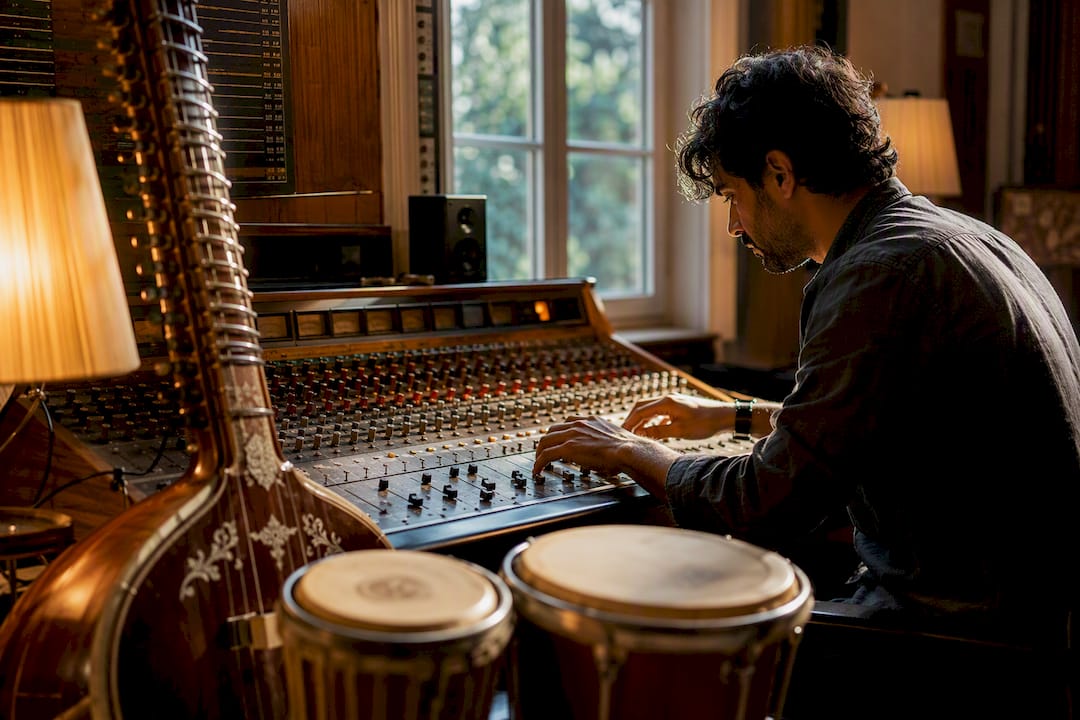
Every mistake above gets easier to avoid with one decision: work directly with a performer who understands both the tradition and the film production process. Sitarrajib offers exactly that combination, sitar recording sessions built for film timelines, composition collaboration that respects raga structure instead of flattening it, and direct guidance on the licensing questions that trip up productions using Indian classical elements.
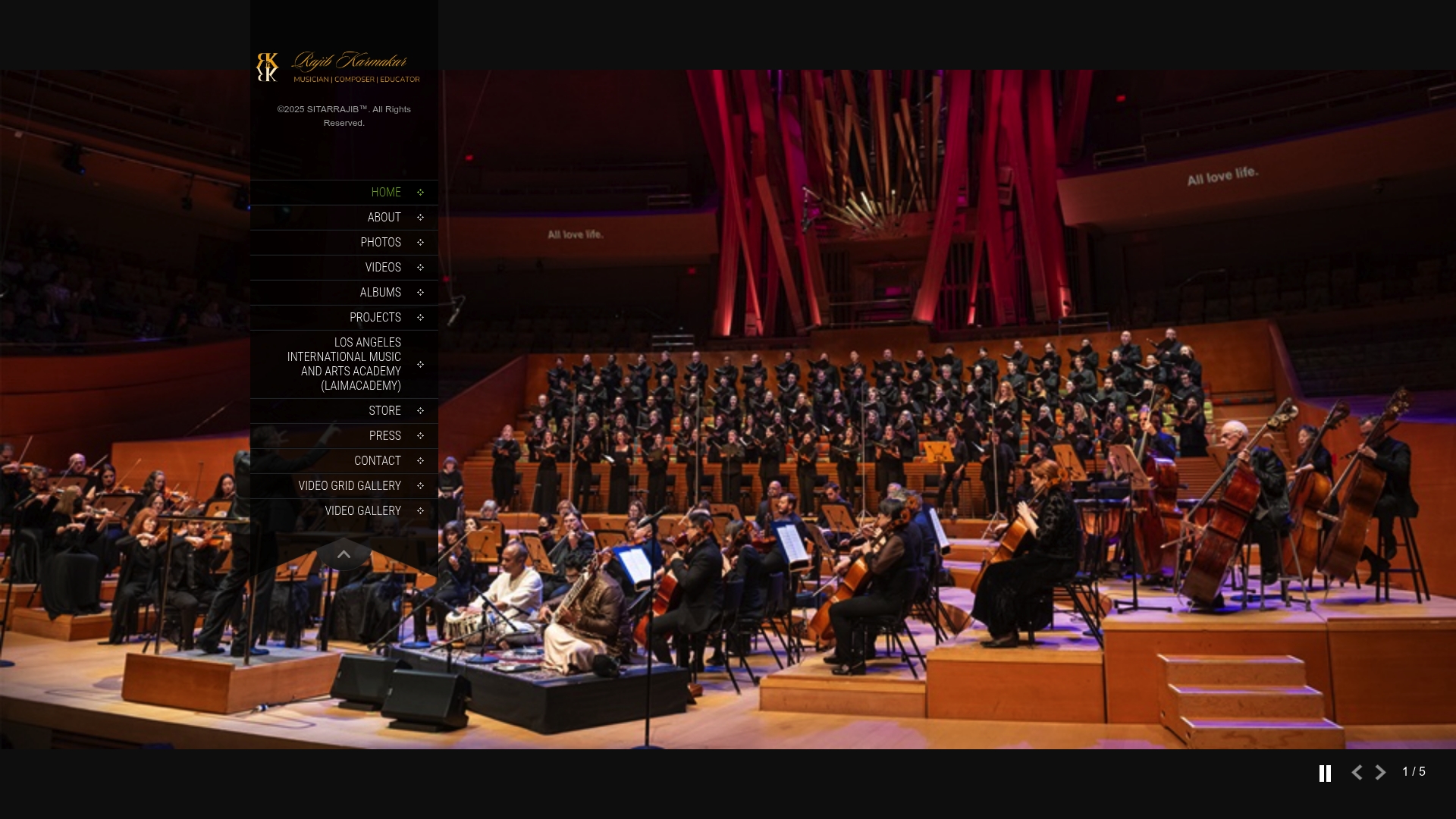
Rajib Karmakar has scored and recorded sitar parts for media productions that needed the instrument’s actual character, not a generic approximation of it. That means sessions where tuning, ornamentation, and pitch language are protected rather than corrected, and where metadata and rights questions get answered before they become a post-production emergency. If your production needs a sitar part that serves the story rather than decorates it, start with our page on live session sitar recording for producers and reach out for a brief consultation on your project’s timeline and scope.
A Note on Craft and Collaboration
I approach every world music score the same way I’d want my own tradition treated: with curiosity first, correction last. The instruments carry centuries of musical logic, and the goal is never to smooth that logic into something more familiar. It’s to let the story and the instrument meet honestly. If you’re weighing how to bring authentic sitar or world music elements into your next project, I welcome a direct conversation about your scene, your timeline, and what the music actually needs to do.
— Rajib
Sources
- MDPI — article on cultural appropriation/appreciation in music
- Ethnomusicology Review — practitioner notes on pitch and tuning
- Sampling with respect: licensing world music
- Respectful sampling: ethically incorporating indigenous instruments