
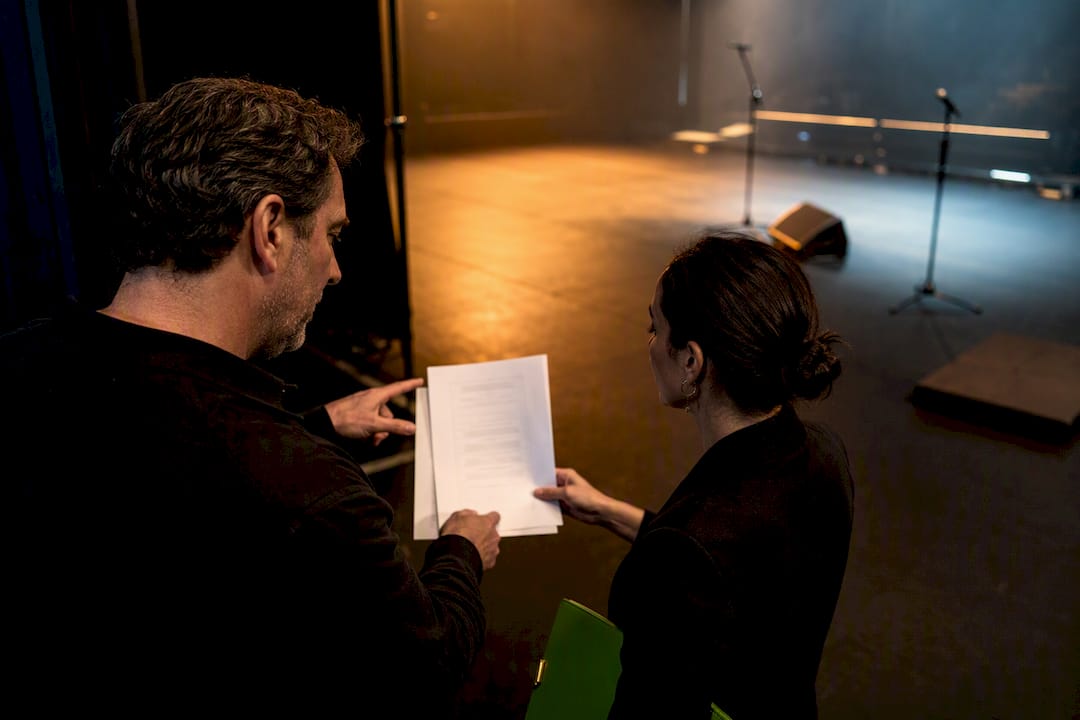
A performance rider is a contract addendum listing the technical and hospitality items a venue must provide when it books an act. Below you’ll find a sample you can copy today, plus a checklist covering stage plot, input list, monitors, backline, power, and dressing room needs. It’s split into two parts: a technical rider for your production crew and a hospitality rider for whoever handles your comfort on show day.
TL;DR:
- Properly formatted stage plots and input lists, clearly labeled and attached as separate PDFs, help ensure venue staff understand technical requirements and avoid last-minute uncertainties.
- Riders must specify exact power, monitor, and backline needs with precise numbers and acceptable substitutions to prevent unforeseen rental charges or technical issues.
- Hospitality riders should plainly state dressing room, catering, and transportation details, with reasonable phrasing to avoid conflicts and facilitate prompt approval.
- Riders are only enforceable if explicitly referenced in the main contract, and vague or unreasonably demanding requests may indicate poor venue compliance or oversight.
- The most critical visible sign of rider compliance is often small details like specific stage flags or snack choices, serving as tests for how carefully the venue has read the entire document.
Table of Contents
- What Is a Performance Rider, and Why Does It Matter?
- Technical Rider Essentials: Stage Plot, Inputs, Monitors, Backline, Power
- Hospitality Rider Essentials: Dressing Rooms, Catering, Comps
- Sample Performance Rider You Can Copy
- How to Send, Version, and Negotiate Your Rider
- What a Sitar-Specific Rider Adds to the Template
- Legal and Contractual Considerations Every Rider Should Address
- Unusual Rider Requests and What They Actually Mean
- Communication Tips Between Artist Management and Venue Technical Staff
- A Tour Manager’s Take on Reading the Small Print
- Sources
- FAQ
What Is a Performance Rider, and Why Does It Matter?
A rider is an addendum to a live performance contract that spells out what the venue must provide once it signs the deal. It’s binding paperwork, not a wish list. If the contract says “subject to attached rider,” the venue owes you what’s on that page, the same way it owes you the fee.
Most riders split into two documents:
- Technical rider: stage plot, input list, monitor and PA needs, backline, power, and lighting notes for the crew running the show.
- Hospitality rider: dressing room, catering, comps, and transport for the humans who have to survive the day.
Small acoustic gigs can combine both into one page. Anything with a real crew, multiple stops, or unfamiliar venues should split them. Why? Because the person booking your fee (a promoter) rarely reads signal flow, and the person patching your mic (an engineer) doesn’t care about your green room snacks. Mixing the two guarantees one half gets skimmed.
Technical Rider Essentials: Stage Plot, Inputs, Monitors, Backline, Power
Your technical rider is the document that keeps a house engineer from guessing. Typical technical rider items) include a stage plot, input list, monitor and PA requirements, backline, power needs, and lighting or truss notes. Here’s how to build each one so it survives contact with an unfamiliar venue.
- Stage plot. Draw the stage from above, mark every performer’s position, label each instrument and mic, and note monitor wedge placement. Keep it to one page and attach it as its own PDF, not buried in body text.
- Input list. List channel number, source (vocal, DI, sitar pickup), mic or DI model, performer name, and whether phantom power is required. This is the single field engineers scan first, and it’s where vague riders fall apart.
- Monitors. State how many mixes you need and whether performers use wedges or in-ear packs. If any performer needs a personal mix, name them by position, not by instrument alone.
- FOH. Note minimum channel count and any outboard gear you require (compressor, reverb unit). Don’t demand a specific console model unless it’s genuinely necessary.
- Backline. Mark every amp, drum kit piece, and stand as “artist provides,” “production provides,” or “shared.” This single habit avoids the assumptions that cause last-minute rental charges.
- Power. Specify circuit count and amperage for anything beyond standard outlets, especially keyboards, in-ear systems, or backline with high draw.
- Lighting. Give basic look cues (warm wash, spot on lead) and flag any truss weight limits if you’re flying extra gear.
Production glossaries covering signal flow confirm this same structure. Input lists, monitor specs, and FOH needs are the fields venues expect first, in that order.
Pro Tip: Attach the stage plot and input list as separate one-page PDFs, dated in the file name. A venue tech skimming email at 7 a.m. will open a clearly labeled attachment before they’ll dig through a ten-page contract.
Hospitality Rider Essentials: Dressing Rooms, Catering, Comps
Hospitality riders exist so nobody has to negotiate snacks by text message two hours before doors. Common hospitality items include dressing room provisions, catering with dietary notes, comp tickets, security, and transportation or accommodation when the gig requires it.
Reasonable phrasing keeps this section from reading like a demand list:
- Dressing room: one lockable room with mirror, seating, and clean restroom access, available two hours before doors.
- Catering: bottled water, hot tea or coffee, and a light meal for the stated headcount, noted with any allergy or dietary flags.
- Transport and lodging: ground transport from airport or hotel, and one hotel room per performer, only when the show requires travel.
- Comps: two to four guest tickets, standard for most club and theater dates.
- Security: a locked room for instrument cases during load in, and clear identification of who holds access credentials.
None of this needs to sound demanding. State the number, the timing, and the reason, and most promoters will simply say yes.
Sample Performance Rider You Can Copy
Here’s a compact rider built on the fields industry templates recommend: contact details, line up, inputs, monitors, backline, stage size, power, soundcheck time, and a revision date attached to both the stage plot and input list.
Header block
Artist name, technical contact name and phone, revision date, “supersedes all prior versions.”
Technical rider
- Stage: minimum 20 ft x 16 ft, see attached stage plot (Rev 3, dated).
- Inputs: 6 channels total, see attached input list for mic/DI assignments.
- Monitors: 3 wedge mixes; in-ear pack for lead performer if available.
- FOH: minimum 16 channel desk with one stereo effects return.
- Backline: house drum kit acceptable if 5 piece with hardware; artist provides all string instruments.
- Power: two dedicated 20 amp circuits near stage left.
- Lighting: warm general wash, spot cue for featured solos.
- Soundcheck: 60 minutes, scheduled no later than 3 hours before doors.
Hospitality rider
- Dressing room: one private room, available from load in.
- Catering: water, tea, and a light meal for four, one vegetarian option required.
- Comps: two tickets held at box office.
Riders built this way rarely need a second phone call. A downloadable sample rider with attached stage plot is standard practice at most mid-size venues, precisely because it removes back-and-forth.
Substitution callout: “If the specified amp model is unavailable, provide an equivalent combo amp rated 50 watts or higher; confirm substitution in writing 48 hours before show day.”
How to Send, Version, and Negotiate Your Rider
A rider only works if it reaches the right person early enough to act on it.
- Attach the rider to the signed contract, then resend it two to three weeks before the show as a standalone reminder.
- Put one revision date on every page, including the stage plot and input list, so nobody works from an old draft.
- Name a single technical contact on your side and ask the venue to name one back. Two people trading emails beats five people guessing.
- Log every substitution request by email and get written confirmation before load in, not a verbal “should be fine.”
- Send a short pre-show checklist 48 hours out: confirm inputs, confirm backline swaps, confirm soundcheck time, confirm dressing room access.
Planners juggling logistics across multiple acts often find a dedicated logistics checklist useful for keeping these confirmations on schedule instead of scattered across email threads.
What a Sitar-Specific Rider Adds to the Template
Performers playing the sitar often require a few instrument-specific additions beyond the standard template. A pickup or condenser mic with ground lift options, a padded stand, and a humidity-safe cloth cover all belong on the input list and backline sections. Quiet backstage access matters too. Sitar tuning takes real concentration, and heavy foot traffic near the prep area during that window causes more problems than a missing cable ever will. The full breakdown lives in the sitar performance technical requirements guide, which maps directly onto the general template’s input list and backline fields.

Legal and Contractual Considerations Every Rider Should Address
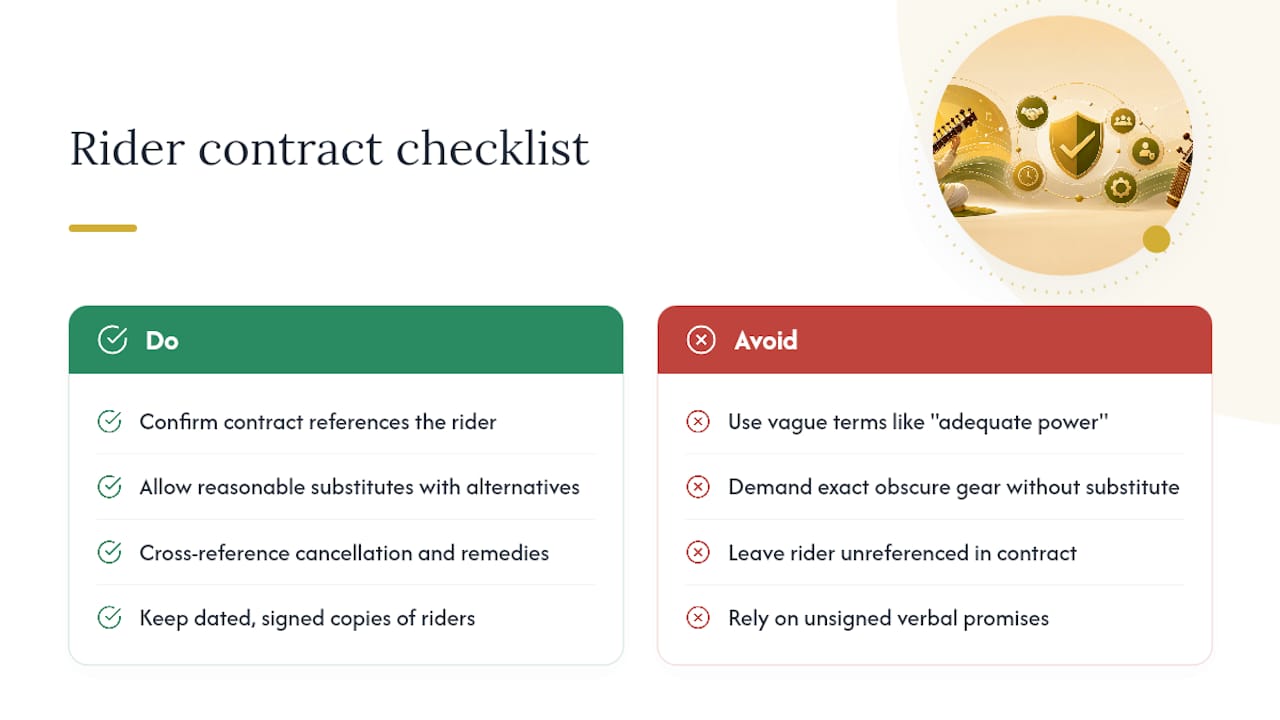
A rider is only enforceable when the contract actually references it. If your agreement doesn’t say “subject to attached technical and hospitality rider,” the venue can treat the rider as a suggestion rather than a binding term. Always confirm that language exists before you sign.
Riders also need to stay reasonable to hold up. A clause demanding an obscure amp model with no substitution language gives a venue no way to comply in good faith, and courts or arbitrators tend to side against demands that can’t reasonably be met. Building in a minimum acceptable alternative, as noted earlier, protects both sides.
Cancellation and force majeure language usually lives in the main contract, but riders should cross-reference it. If a venue fails to provide a contracted item (say, the promised backline never shows up), state in the rider or contract what remedy applies: a fee reduction, a delayed start with no penalty, or the right to rent equipment at the venue’s cost.
Keep signed versions of every rider you send. If a dispute arises over what was promised, a dated, signed document beats a memory of a phone call every time. Many acts store the signed rider alongside the contract itself so nothing gets misplaced between the booking agent and the production team. Finally, avoid vague language like “adequate power” or “sufficient monitors.” Specific numbers protect everyone, including the venue, from guessing wrong.
Unusual Rider Requests and What They Actually Mean
Rider history is full of requests that sound bizarre out of context. The most famous example, Van Halen’s demand for M&Ms with all brown candies removed, gets treated as a punchline, but it functioned as a compliance check. If the promoter skipped that tiny detail, the band assumed bigger technical items in the rider had been skipped too, and they’d inspect the rigging before soundcheck.
That’s the pattern behind most “funny” requests. A specific flag on a stage, a particular flower in a dressing room, an oddly specific snack order: these usually exist to test whether a venue actually read the document, not because the performer genuinely needs orange Fanta backstage. Understanding this changes how you should read a strange line item. It’s a canary, not a diva demand.
The implication for organizers is straightforward. Treat every small, oddly specific request as seriously as the big technical ones. A venue that quietly ignores a minor line item is telling you something about how carefully it handled the input list and power specs too.
Communication Tips Between Artist Management and Venue Technical Staff
Most rider failures aren’t caused by unreasonable requests. They’re caused by the rider landing in an inbox nobody checks. Send technical documents directly to the production manager or house engineer, not only to the promoter who booked the fee. Promoters handle money and marketing; they usually can’t tell you if a venue has enough 20 amp circuits near center stage.
Confirm receipt in writing, and ask the venue to reply with any items they can’t provide as written. A quiet inbox two weeks before the show isn’t a good sign. Follow up by phone if you haven’t heard back within a few business days.
Keep the technical rider and hospitality rider as separate attachments even when they’re part of one document, since different staff members handle each. An AV checklist built for venue handoff can help production teams track signal flow and stage plot details against what actually gets loaded in, which catches mismatches before they become show-day surprises.
A Tour Manager’s Take on Reading the Small Print
The item organizers miss most often isn’t the backline, it’s the power circuit count near the stage. Confirm it in writing before load in, not after cables are already run.
Pro Tip: A small, specific hospitality request, handled the way Van Halen’s candy clause worked, tells you fast whether a venue read the whole rider carefully or just skimmed the fee page.
— Rajib
Sources
- Rider definition | Tools4Music glossary
- Band stage plot & technical rider template — BeatzHire
- Artist rider template — Oh My Ears
FAQ
Can You Provide an Example of a Technical Rider?
Yes. A basic technical rider includes contact details, stage size, an attached stage plot, an input list with channel and mic assignments, monitor and FOH specs, backline responsibilities, power needs, lighting cues, and a soundcheck time, all dated with a single revision.
What Are Some Funny Rider Requests?
Van Halen’s famous no brown M&Ms clause is the best known example, and it worked as a hidden check on whether a venue read the rest of the technical rider carefully. Most unusual requests serve a similar compliance purpose rather than being purely personal preference.
What Is a Rider List?
A rider list, more accurately called a rider, is the addendum to a performance contract that lists everything a venue must provide, split between technical items (stage, sound, power) and hospitality items (dressing room, catering, comps).
What Are Celebrity Riders?
Celebrity riders are the same document structure as any performer’s rider, just scaled up with larger hospitality and security sections. The technical and hospitality logic behind them, contract binding, specific quantities, and substitution clauses, matches the template any working performer should use.