
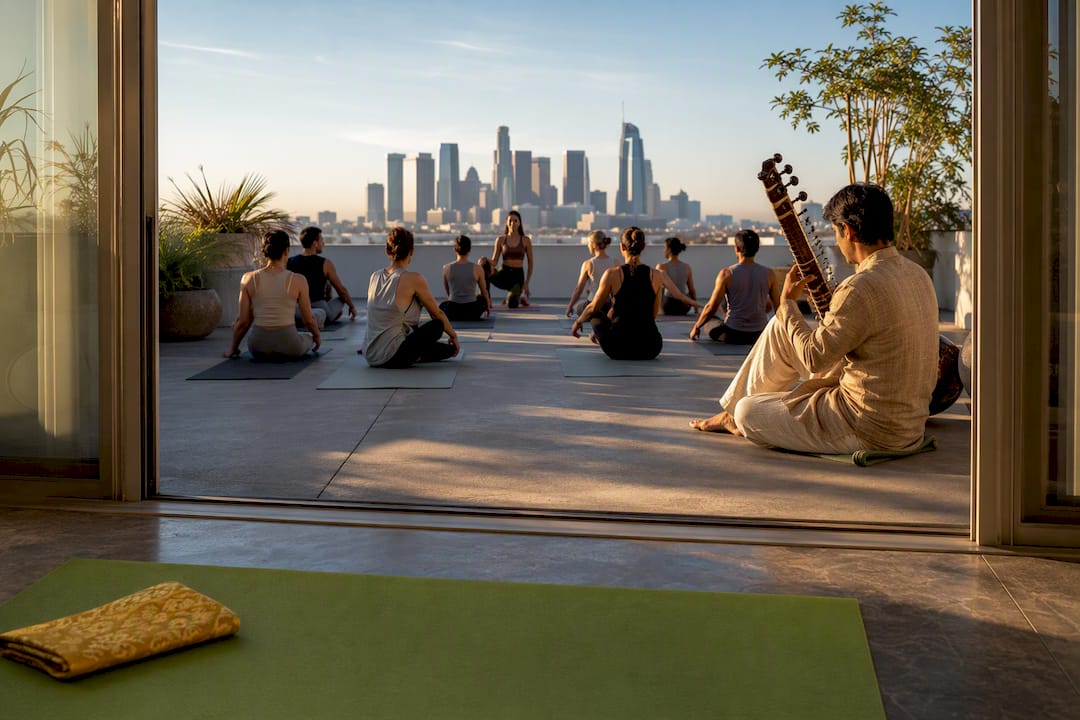
A yoga class with live music pairs your teacher’s guidance with a musician playing in the room or through a livestream, shaping the pacing, mood, and depth of the practice in real time. Want to try one this week? Search “live music yoga” on YouTube or Insight Timer for a sample, or check local studio and festival calendars for an in-person session. Listen for ambient guitar, sitar, or handpan. Those instruments are your quickest signal that a class is built around live sound, not a playlist.
TL;DR:
- Live-music yoga sessions typically feature solo acoustic instruments or small ensembles, offering more texture and responsiveness than playlists.
- Musicians should coordinate with instructors beforehand through brief rehearsals or sound checks to ensure smooth transitions and appropriate volume levels.
- For beginners, simpler arrangements with steady, moderate pacing are recommended, while experienced students can enjoy more complex musical textures.
- Live music enhances presence, emotion, and transitions, but can be disruptive if volume is too loud or timing mismatches occur without proper coordination.
- Booking sitar or other acoustic instruments requires planning for amplification, licensing, and rehearsal time, especially for events aiming to create memorable, shared experiences.
Table of Contents
- Common Live-Music Formats and Instruments for Yoga
- Where to Find Live-Music Yoga Classes
- How Live Music Changes the Practice
- What to Expect as a Student in a Live-Music Class
- How to Book Live Music for a Yoga Class or Event
- Sitar and Indian Acoustic Accompaniment: A Real Example
- Matching Live Music to Your Experience Level
- How Live Music Shapes Mindfulness and Meditation
- Common Challenges in Live-Music Yoga Sessions
- Live Music vs. Recorded Music: What Actually Changes
- Practical Steps to Book a Live-Music Session
- When Live Music Is Worth Booking
- Book Sitar Accompaniment for Your Next Yoga Session
- Sources
- FAQ
Common Live-Music Formats and Instruments for Yoga
Most live-music yoga sessions fall into a handful of recognizable setups, and knowing them helps you pick the right one for your mood or your event.
Solo acoustic setups are the most common starting point. A single guitarist, sitarist, or flutist sits near the front of the room and plays continuously through the class. This format is simple to book and easy on the budget, but it puts a lot of weight on one musician to read the room. A skilled solo player can shift from a driving rhythm during sun salutations to a near silent drone during Savasana without anyone noticing the transition happen.
Small ensembles show up more often at festivals and weekend workshops. A handpan and sitar pairing, sometimes joined by light percussion, gives a Vinyasa class more texture than one instrument alone can offer. The tradeoff is logistics. More musicians means more chairs, more cables, and more rehearsal time to get the cues right.
Ambient or electronic beds with live improvisation work well for teachers who want a consistent floor of sound with a human element layered on top. Think a soft synth pad running underneath while a flutist improvises over it. This format suits Yin and Restorative classes especially well, since the base track handles continuity while the live player responds to the room’s energy.
Vocals and chant deserve a separate note. A gentle chant can deepen a class opener or a closing Om, but sung lyrics during active flow tend to compete with verbal cues. Save vocals for:
- The opening centering or intention setting
- A closing chant or Om
- Extended Savasana, where there is no verbal instruction to compete with
Instrumental only tends to work best whenever the teacher is actively cueing movement.
Where to Find Live-Music Yoga Classes
Finding a genuine live-music yoga session, rather than a class that just plays a Spotify mix in the background, takes a slightly different search strategy than booking a standard class.
- Search video platforms with specific terms. Typing “live music yoga” or “yoga flow with live music” into YouTube or Insight Timer surfaces recorded sessions where you can hear the arrangement before committing. Watch for a musician visibly present in the frame, not a static screen with a stock audio track playing under it.
- Check event platforms and studio calendars. Eventbrite listings, Insight Timer’s live session tags, and individual studio websites regularly post one-off sessions billed as “yoga with live music” or “sound and flow.” Festival schedules are another reliable source. Yoga and wellness festivals almost always book at least one live-music session across a weekend.
- Look for musician-teacher pairings that are named and photographed. A 2026 workshop listing for a live devotional music and yoga session names both the musician and the teacher up front. That level of detail is a good sign the pairing has actually rehearsed together, not just been thrown together for the event flyer.
If you are joining online, confirm the time zone before you book and check whether it is a free livestream or a paid ticket. Free sessions are usually pre-recorded replays; paid tickets more often mean a live, interactive stream with real-time musician response. For in-person events, watch a sample video if one exists and read the musician’s bio. Someone who performs live regularly will typically have clips posted somewhere.
How Live Music Changes the Practice
Live music does something recorded playlists cannot: it responds to the room. A musician who can see the class breathing together will naturally slow a phrase or hold a note through a longer hold, and that responsiveness changes how the practice feels from the inside.
The benefits show up in a few consistent ways:
- Sharper presence. Students report paying closer attention when they know the sound is happening live, not looping in the background.
- Emotional resonance. A held note during a deep stretch or a swelling phrase moving into a peak pose adds a layer of feeling that a fixed track can’t replicate on demand.
- Cleaner transitions. A musician who knows the sequence can mark the shift from active flow to stillness with a musical cue instead of relying on the teacher’s voice alone.
- Longer, deeper Savasana. A sustained drone or slow fade tends to extend the final rest naturally, since there’s no track ending abruptly and breaking the mood.
The risks are just as real. A musician who plays too loudly can drown out cues, and one who isn’t watching the teacher can hit an emotional swell at the wrong moment, like a bright flourish during a quiet forward fold. The fix is coordination, not caution. The strongest sessions use a simple model: the musician follows the teacher’s pacing, not the other way around, and both agree on a few pre-arranged motifs, a particular chord or phrase, that signal upcoming transitions like the move into final rest.
Pro Tip: Ask the musician and teacher to run through just the transitions before class, not the whole sequence. Ten minutes on the handful of moments where music and cueing need to sync saves most of the awkward timing you’d otherwise hit live.
What to Expect as a Student in a Live-Music Class
Walking into a live-music session for the first time feels a little different from a standard studio class, mostly because there’s a musician and often gear occupying part of the room.
Expect the music to build gradually rather than start at full volume. Most teachers open with a few minutes of quiet centering before the musician settles into a rhythm for the warmup. As the class moves into active flow, the music typically becomes more rhythmic and present, then tapers again heading into cool down and Savasana, where it’s common for the room to go almost silent except for a low drone or single sustained tone.
A few practical habits make the experience smoother:
- Arrive a few minutes early if you want to choose a mat spot near or away from the musician, depending on your sound sensitivity.
- If the volume feels too loud once class starts, a quiet word to the teacher before or after, rather than mid-flow, is the right move.
- Don’t expect to chat with the musician during class. Save questions about the instrument or the set for after.
If you’re joining a livestream instead of an in-person class, headphones make a real difference. A wired or Bluetooth pair smooths out the audio mix far better than laptop speakers, especially if the stream layers a teacher’s mic over a musician playing acoustically in the same room.
How to Book Live Music for a Yoga Class or Event
Organizing live music for a class or retreat is mostly a matter of scoping the gig correctly before you ever call a musician.
- Decide the format up front. Is this a single in-person class, a recorded session for later distribution, or a livestream? Each answer changes what you need to arrange, especially around rights.
- Handle the technical basics. Confirm whether the room has a PA system or whether the musician needs to bring amplification. Sitar and acoustic guitar can often play unplugged in a small studio, but a room over roughly 20 to 30 students usually needs at least light amplification and a monitor so the musician can hear themselves clearly.
- Lock down rights before you record anything. A live in-person performance generally only requires the musician’s consent to play. The moment you record or stream that same class, you’re in different territory. Licensing guidance from music libraries draws a clear line between public performance rights and synchronization rights, and that distinction matters just as much when a live musician’s original composition ends up in a recorded video as when you’re using a licensed track.
- Negotiate the fee with the full picture in mind. A flat performance fee is standard, but ask about travel costs, setup and sound check time, and whether recording or streaming carries a separate licensing fee on top of the performance fee itself.
Pro Tip: Build in at least 30 minutes of setup and sound check time before any class with amplified instruments. Rushing this is the single most common reason live-music sessions start with muddy or too loud audio.
Sitar and Indian Acoustic Accompaniment: A Real Example
An internationally recognized sitarist and composer blends Indian classical music with contemporary and cinematic sound for concerts, festivals, and cultural programs. His work offers a useful reference point for what sitar accompaniment can bring to a yoga room specifically.
The sitar’s droning strings and sliding melodic phrases, or meend, create a sustained texture that suits restorative work and long holds especially well, and the same instrument can shift into livelier melodic runs for a Vinyasa warmup. Organizers considering sitar for a class or retreat should know that the instrument travels well but benefits from light amplification in rooms larger than a small studio, and that instrument care (temperature, humidity) matters for anyone booking outdoor or festival settings. A quick look at recorded live sitar performances gives a fair sense of tone and pacing before you commit to booking.
Matching Live Music to Your Experience Level
A brand new yoga student and a decade-long practitioner experience live music differently, and that’s worth planning around rather than ignoring.
If you’re newer to yoga, live music can actually be a distraction during the learning phase. When you’re still working out where your feet go in Warrior II, a rich musical arrangement competing for attention isn’t always helpful. Beginners often do better in classes where the music stays sparse and low in the mix until the postures feel familiar. If you’re trying a live-music class as a beginner, arrive with realistic expectations: focus on the teacher’s cues first, and let the music sit in the background of your attention rather than the foreground.
More experienced practitioners tend to get more out of a rich arrangement, because their attention isn’t consumed by figuring out alignment. A seasoned Ashtanga or Vinyasa student can track a musical phrase and sync their breath to it without losing the thread of the sequence.
Teachers organizing mixed-level classes should lean toward simpler arrangements. A single instrument with a steady, moderate pace serves a wider range of students than a complex ensemble piece that assumes the listener already has spare attention to give it. Save the more ambitious arrangements for workshops and retreats where the room is more experienced.
How Live Music Shapes Mindfulness and Meditation
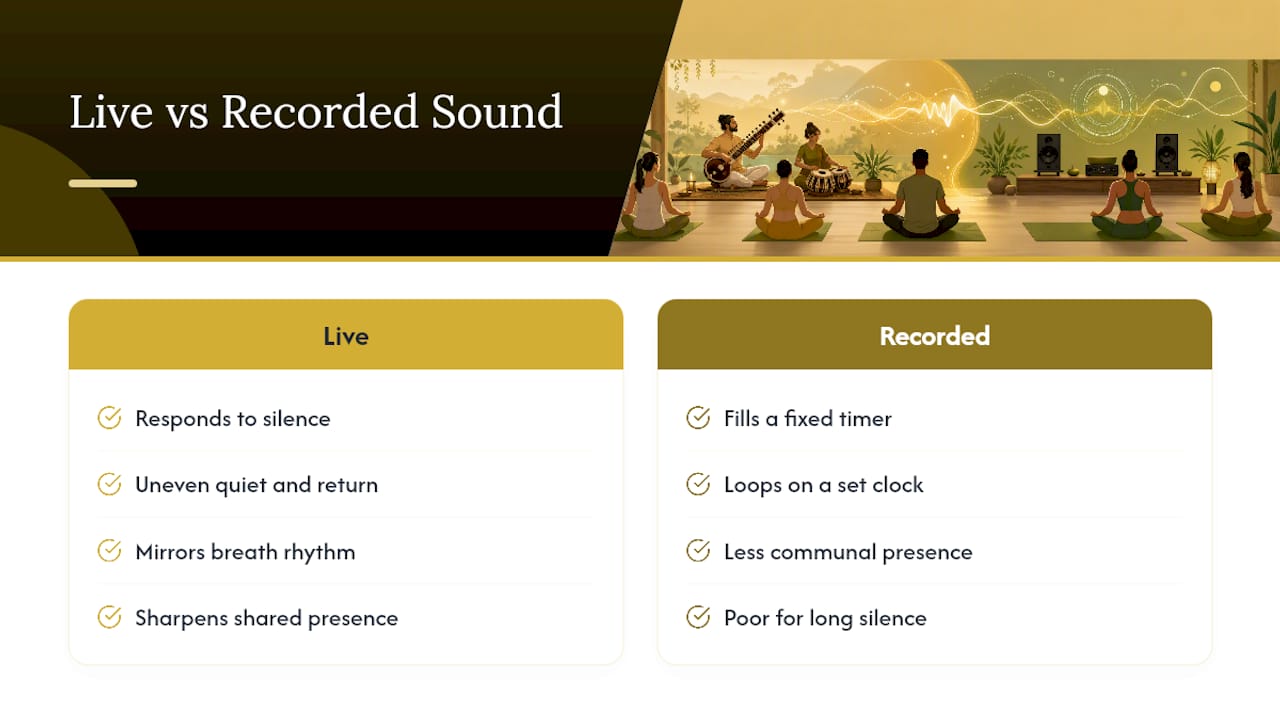
Live music changes the texture of attention during meditation and mindfulness segments in a way that recorded tracks generally can’t match, because a live player is responding to silence rather than filling it on a fixed timer.
During extended Savasana or seated meditation, a musician who can read the room will often let long stretches of near silence sit, only returning with a single sustained note or a slow phrase when the moment calls for it. That unevenness, quiet, then a soft return of sound, mirrors the natural rhythm of breath and attention far better than a track that loops on a fixed clock regardless of where the room actually is.
There’s also a subtler effect tied to shared presence. Knowing a real person is playing, in the room or on a livestream, tends to sharpen a practitioner’s sense of being part of something happening right now rather than consuming a recording. That shift alone can deepen the settling process that meditation depends on, since part of what pulls attention inward is the awareness that this exact moment, this exact sound, will not repeat.
The instrument choice matters here too. Sparse, sustained textures, a sitar drone, a single sustained flute tone, a soft handpan strike left to ring out, tend to support stillness better than anything with a strong beat. Save rhythmic material for the active portions of class and let the meditative segments breathe.
Common Challenges in Live-Music Yoga Sessions
The format has real friction points worth knowing before you book or attend one.
Volume control is the most frequent complaint. A musician playing at a comfortable performance level for themselves can easily be too loud for a room trying to hear soft-spoken cues, especially during quieter segments like restorative holds. This is almost always a rehearsal and communication problem rather than an equipment one; a five minute sound check where the teacher speaks at normal class volume while the musician plays solves most of it.
Timing mismatches come next. A musician unfamiliar with the specific sequence might hit a musical peak during a quiet stretch or stay quiet through an energetic flow, and that mismatch is jarring enough to pull students out of the practice. Pre-arranged motifs for major transitions, discussed earlier, are the standard fix.
Logistics can also limit where live music makes sense at all. Small studio rooms, shared building spaces with noise restrictions, and outdoor venues with wind or temperature concerns for acoustic instruments all narrow the realistic options. And cost is a genuine barrier for regular classes. Paying a musician for every weekly session adds up fast, which is part of why live music tends to concentrate around special events rather than daily practice.
Live Music vs. Recorded Music: What Actually Changes
The core difference is responsiveness. Recorded music, even a well-chosen royalty-free track matched to a class arc, follows a fixed structure that was set when it was recorded. Live music adjusts to what’s actually happening in the room, in real time, every single class.
That responsiveness shows up most clearly in transitions and holds. A recorded track ends its build whether or not the room is ready to move on; a live musician can stretch a phrase for the ten extra seconds a particularly stiff group needs before they’re ready to release a pose. Recorded tracks are also fixed in tone. A track chosen for a punchy 75 BPM Vinyasa segment stays punchy even if the mood in the room shifts toward something softer. A musician working from a recommended BPM range can adjust tempo mid-class based on how the group is actually breathing.
Recorded music has real advantages of its own, though. It’s dramatically cheaper, endlessly repeatable, and available at 6 AM on a Tuesday when no musician is available. It’s also the more practical choice for solo home practice or daily studio classes where booking a live player every session isn’t realistic. Live music earns its cost for the sessions where atmosphere and shared experience matter more than routine, retreats, workshops, and milestone classes, rather than for every single practice.
Practical Steps to Book a Live-Music Session
Turning the idea of a live-music class into a real, scheduled event comes down to a short sequence of decisions.
Start by defining the class itself: style (Vinyasa, Yin, Restorative), expected size, and room acoustics. This shapes everything downstream, including whether you need one musician or a small ensemble, and whether amplification is necessary. Next, reach out to musicians with specifics rather than a vague inquiry. Include the date, time, venue, expected class size, and whether the session will be recorded or streamed. That last detail changes the conversation from the first call, since recorded and streamed sessions carry licensing considerations that a purely live, in-person class doesn’t.
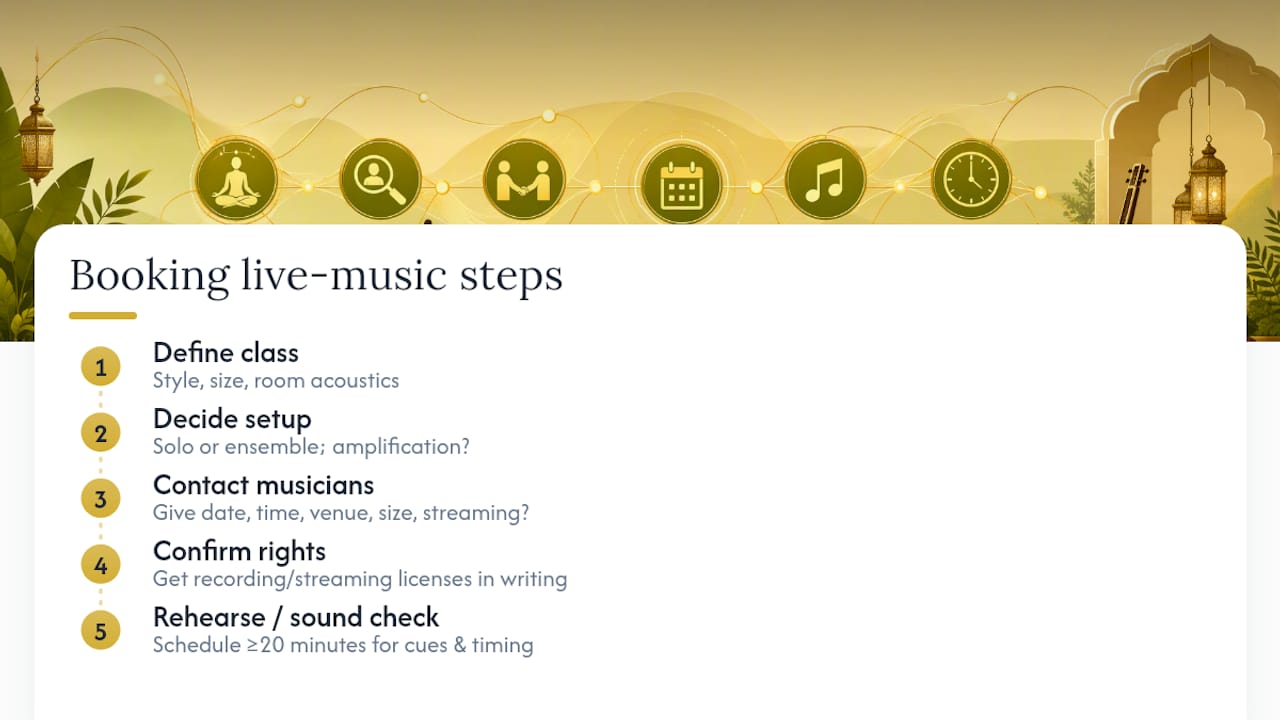
Confirm rights before you record anything. A verbal agreement covering the live performance itself doesn’t automatically cover distribution of a recording. Get licensing terms in writing if the session will be published anywhere afterward. Finally, schedule a short rehearsal or at minimum a sound check. Even 20 minutes spent aligning on the class sequence and a few transition cues prevents most of the timing issues that make a first live-music class feel rougher than it should.
When Live Music Is Worth Booking
Live music earns its cost for the sessions that are meant to be memorable: retreats, workshops, teacher trainings, and milestone events where the shared experience is part of the point. For a weekly drop-in class, a well-chosen recorded track does the job at a fraction of the cost and effort.
The simplest heuristic: ask whether the event is a routine or an occasion. Routine classes run fine on recorded music. Occasions, the ones students will talk about afterward, are where a live musician’s responsiveness pays for itself. Budget accordingly, and save the investment for the few sessions each season where it will actually be remembered.
— Rajib
Book Sitar Accompaniment for Your Next Yoga Session
If you’re planning a retreat, workshop, or milestone class and want something beyond a curated playlist, live sitar brings a texture that recorded tracks can’t replicate: real-time response to your room’s pacing, breath, and energy. A sitarist can perform for yoga sessions, retreats, and cultural events across formats, from a single sustained drone under Savasana to melodic phrasing that lifts a Vinyasa warmup.
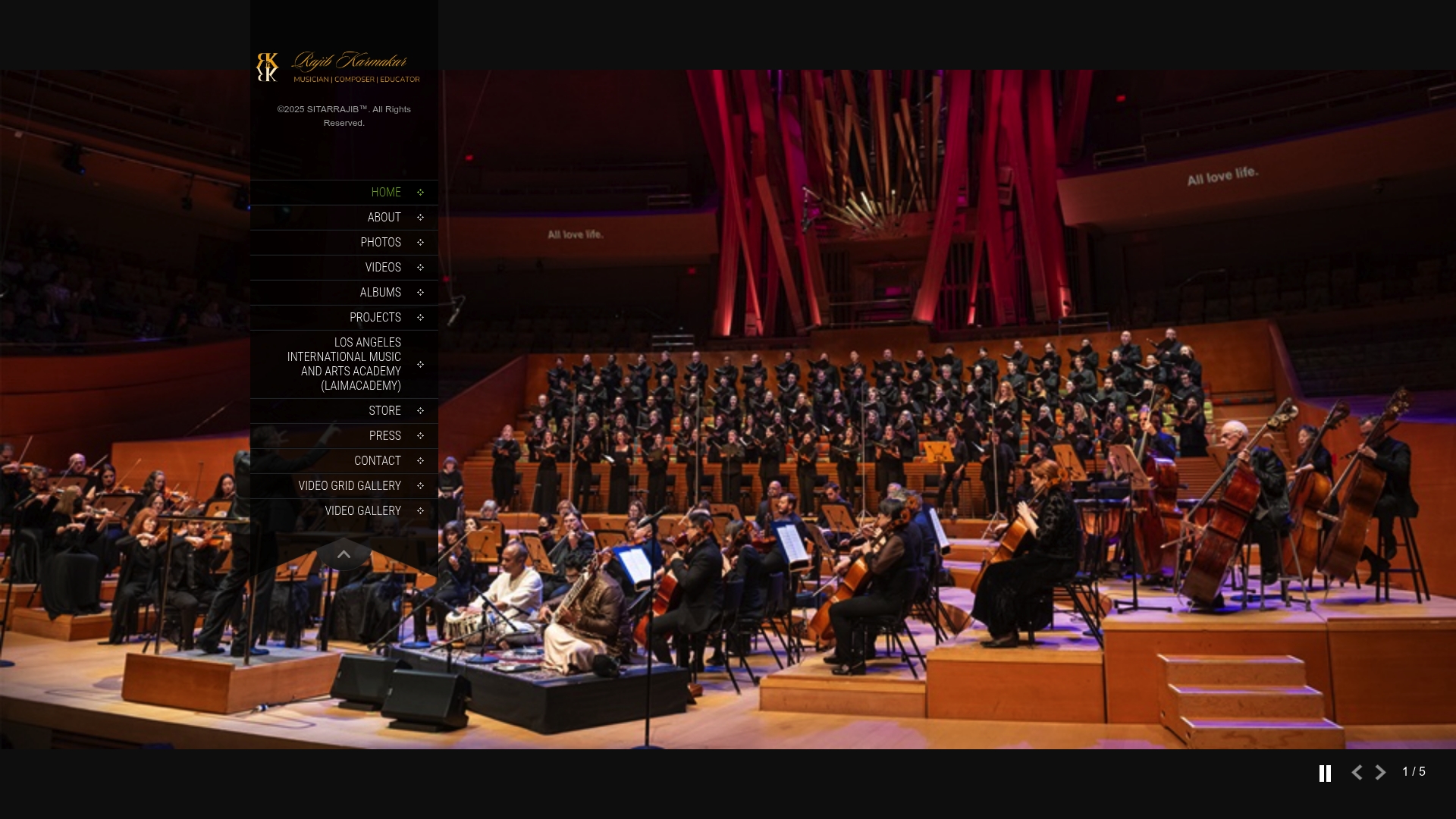
When you reach out, include the class style, expected group size, date and time, venue acoustics, and whether you’ll need amplification. If you’re unsure what a session sounds like first, watch a few clips from past sitar performances to get a sense of tone and pacing before you commit. Ready to plan your event? Reach out with your date and venue details to get a fee estimate for your session.
Sources
For recorded or streamed classes, Pixabay’s yoga music library and MelodyLoops both offer royalty-free tracks with clear licensing terms. For live-format examples, Insight Timer’s recorded live sessions show how sitar, handpan, and flute pair for Vinyasa flow, and event platforms like Eventbrite regularly list in-person live-music workshops worth watching for format ideas.
- Royalty Free Yoga Music Background MP3 Download — MelodyLoops
- Music for Yoga Videos & Classes — Artyfile
- Live Music & Yoga with Girish — Yoga Among Friends
FAQ
What Is the Best Music for a Yoga Class?
The best choice matches the segment: steady, moderate tempo instrumentals (roughly 60 to 80 BPM) for active flow, and sparse, sustained tones for restorative holds and Savasana. Instrumental tracks generally work better than lyrical ones since they don’t compete with spoken cues.
Do Yoga Classes Actually Play Music?
Most yoga classes use some form of music, whether a curated playlist or, less commonly, a live musician performing in the room or through a livestream. Live-music sessions tend to appear at retreats, workshops, and special events rather than routine drop-in classes.
Where Can I Find Live Yoga Classes Online?
Search platforms like YouTube and Insight Timer using terms like “live music yoga” or “yoga flow with live music” to find sample sessions, and check event platforms like Eventbrite or festival schedules for scheduled livestreams. Confirm the time zone and whether it’s a free replay or a paid live ticket before joining.
Which Instruments Work Best for Yoga Music?
Ambient guitar, sitar, flute, handpan, and soft piano are among the most common choices, each suited to different class styles. Sitar in particular offers a sustained, droning quality that works well for restorative and meditative segments.