

World music fusion is defined as the conscious integration of traditional global folk music with Western popular, jazz, or electronic genres to create hybrid musical forms. Known in industry terms as “global fusion” or “world fusion,” this genre spans subgenres like worldbeat, world jazz, and electronic world fusion, each blending cultural traditions in distinct ways. The terminology emerged in the 1980s as a marketing category, but the music itself reflects something far older: the human instinct to share sound across borders. If you are curious about what makes this genre tick, you are in the right place.
What is world music fusion, and how is it defined?
World music fusion is the deliberate blending of traditional music from non-Western cultures with contemporary or Western styles. The result is a new musical form that carries the DNA of both sources. Think of a sitar playing over a jazz rhythm section, or a West African kora layered with electronic beats. These are not accidents. They are the product of intentional cross-cultural collaboration.
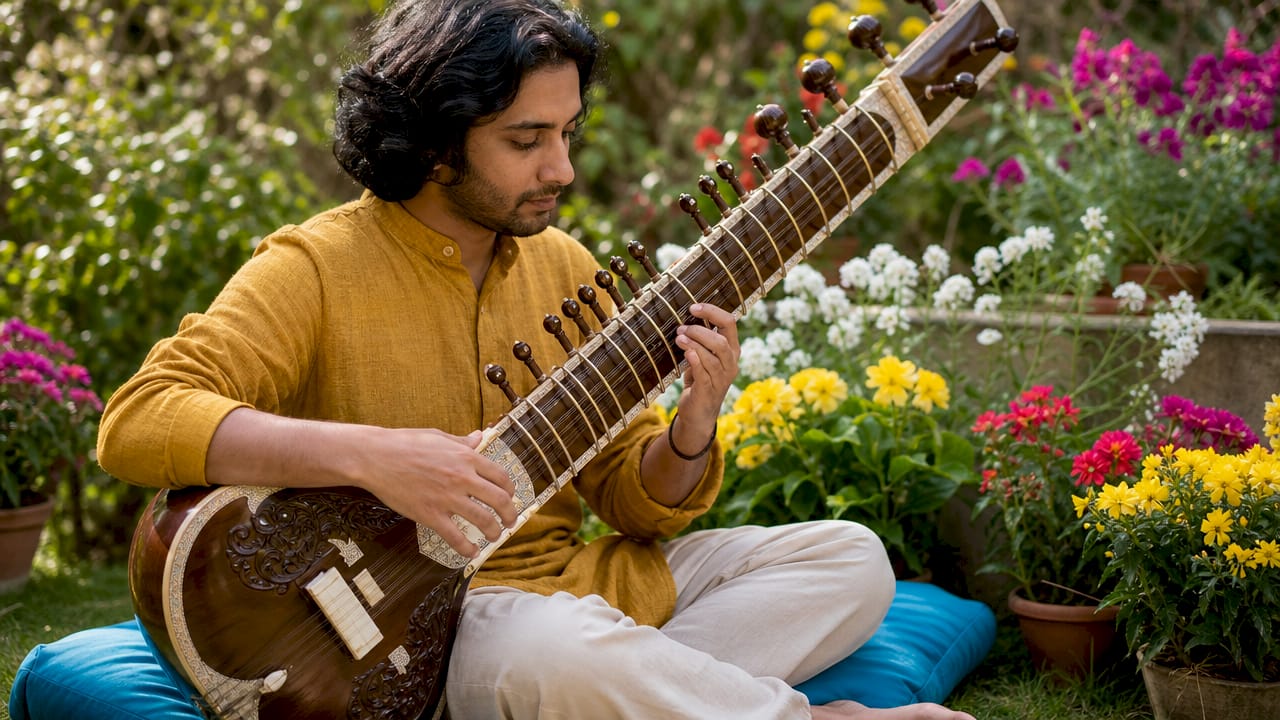
The genre sits at the intersection of ethnomusicology and popular music. Categorizing world music fusion is a balancing act between respecting traditional integrity and embracing innovation. That tension is exactly what makes it so compelling to listen to and study. Music enthusiasts who dig into this genre quickly discover that no two fusions sound alike, because no two cultural traditions share the same starting point.
Understanding the definition of world music fusion also means accepting some ambiguity. The label “world music” was a Western marketing invention, and authentic fusion emphasizes rooted cultural expression over commercial convenience. That distinction matters when you are trying to tell the real thing from a surface-level imitation.
What are the main subgenres and characteristics of world music fusion?
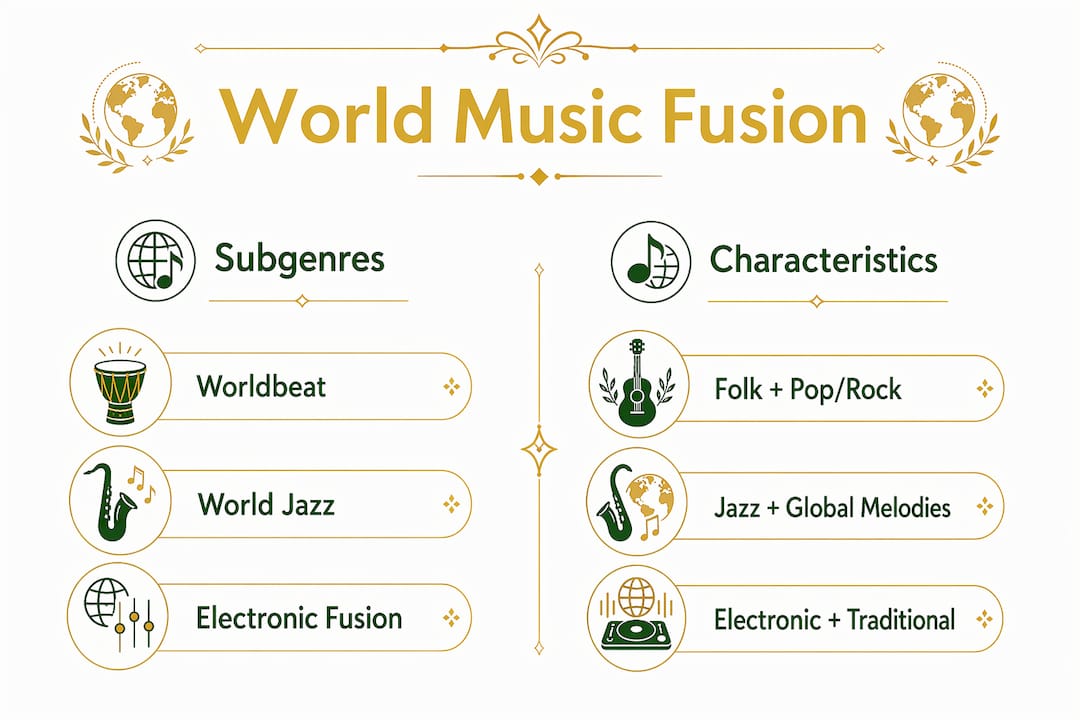
Three core subgenres define the field. Each has its own instrumentation, cultural sources, and sonic personality.
- Worldbeat blends global folk traditions with pop and rock structures. It tends to be rhythmically driven, accessible, and radio-friendly. Artists in this space often use African percussion, Latin guitar, or Caribbean rhythms alongside Western song formats.
- World jazz (also called ethno-jazz) pairs jazz improvisation with global melodic systems. Indian ragas, Middle Eastern maqam scales, and West African polyrhythms all appear in this subgenre. The improvisation is the bridge between traditions.
- Electronic world fusion uses digital production to merge folk instruments with downtempo, ambient, or dance music. Artists like Nitin Sawhney and Thievery Corporation blend Indian classical, Latin American, and Middle Eastern elements into urban electronic contexts.
| Subgenre | Primary blend | Typical instruments | Cultural sources |
|---|---|---|---|
| Worldbeat | Folk + pop/rock | Drums, bass, global percussion | Africa, Caribbean, Latin America |
| World jazz | Jazz + global melodic systems | Saxophone, sitar, kora, oud | India, Middle East, West Africa |
| Electronic world fusion | Folk + electronic production | Synthesizers, tabla, saz, kora | South Asia, Middle East, Africa |
One important note: these subgenre labels often overlap because the market created them, not the musicians. A single album can carry elements of all three. The fluidity enables vast creative range, but it also causes confusion when listeners try to categorize what they are hearing.
How did world music fusion develop historically?
World music fusion as a recognized category took shape in the 1980s, when Western record labels needed a way to market non-Western music to global audiences. The label was practical, not precise. But the actual musical experimentation predates that marketing moment by decades.
The most striking landmark in the genre’s history is the 1995 project Mumtaz Mahal. It brought together Narasimhan Ravikiran on chitravina, Vishwa Mohan Bhatt on mohan veena, and Taj Mahal on blues guitar for an improvisational dialogue between Carnatic raga and Delta blues. That project proved something important: two traditions separated by an ocean could find genuine common ground when musicians listened to each other rather than performing at each other.
Key developments that shaped the genre include:
- The global reach of 20th-century recording technology, which made non-Western music accessible to Western producers and audiences
- Cross-cultural touring circuits that put musicians from different traditions on the same stage
- Academic interest in ethnomusicology, which gave musicians a framework for understanding what they were borrowing and why
- The rise of independent labels willing to release music that did not fit existing commercial categories
Pro Tip: When exploring the history of world music fusion, start with live recordings rather than studio albums. Live sessions capture the real-time negotiation between musicians from different traditions, which is where the most honest fusion happens.
The role of music as a vehicle for cultural identity became central to how artists and scholars understood fusion projects. A collaboration was no longer just a novelty. It was a statement about whose music counted and how traditions could meet as equals.
How does authentic world music fusion differ from superficial blends?
Authentic fusion is rooted in music that serves a function in its community, whether spiritual practice, storytelling, or communal ritual. Superficial fusion treats those traditions as texture or decoration.
True fusion is a sonic dialogue where both cultures contribute equally and evolve together. When one tradition is used only as an exotic layer over another, the result is tourism music, not fusion. The difference is audible: one sounds like a conversation, the other sounds like a costume.
The markers of authentic fusion are clear once you know what to look for:
- Equal contribution. Both traditions shape the structure, not just the surface. The rhythm, melody, and form all carry influence from each source.
- Mutual listening. Musicians from different traditions respond to each other in real time, rather than recording separate parts that are later mixed together.
- Cultural function. The source music has a purpose in its original community. Authentic fusion respects that function rather than stripping it away.
- Shared structural DNA. The best fusions find genuine thematic or structural overlap between traditions, such as a shared pentatonic scale or a common call-and-response form.
A common pitfall is “tourism” music where Western producers add global sounds as exotic layers without equal cultural respect or participation. The result may sound interesting on first listen, but it does not hold up because there is no real dialogue underneath it.
Pro Tip: Before calling a project “fusion,” ask whether both traditions could describe the music as their own. If only one tradition would recognize itself in the result, it is decoration, not collaboration.
What are contemporary trends and examples in world music fusion today?
Modern world music fusion is more adventurous than ever. Artists are finding connections between traditions that seem unlikely on paper but make complete sense when you hear them.
Mo Sabri’s Tennessee Desi project is one of the most striking recent examples. Sabri blends Appalachian country music with Sufi qawwali, connecting the two through shared themes of folk storytelling and spiritual devotion. The project works because it does not force the combination. Both traditions already share a deep relationship between music and meaning.
Current trends shaping the genre include:
- Live spontaneous collaborations that prioritize organic interaction. The Bengali-Mexican EP Donde La Tierra Canta and live kora-sitar sessions are strong examples of this approach producing genuinely integrated results.
- Electronic world fusion as cultural translation. Technology now allows producers to place a Rajasthani folk singer alongside a Berlin electronic producer without either artist leaving home. The results can be extraordinary when both sides have creative control.
- Cross-genre sitar collaborations. The sitar has become one of the most versatile instruments in contemporary fusion. Its microtonal range and expressive capacity make it a natural partner for jazz, ambient, and cinematic music. Sitarrajib’s work in sitar crossover collaborations reflects exactly this kind of thoughtful, structured approach to cross-cultural work.
- Festival programming that centers fusion. Major world music festivals now dedicate entire stages to hybrid acts, giving fusion artists a platform that did not exist two decades ago.
Music storytelling across platforms has also expanded the reach of world music fusion. Streaming algorithms still struggle to categorize it accurately, but that has not slowed the audience. Listeners find fusion through live clips, short-form video, and word of mouth more than through genre tags.
Key Takeaways
World music fusion creates genuine cross-cultural dialogue when both traditions contribute equally to structure, form, and meaning, not just surface sound.
| Point | Details |
|---|---|
| Core definition | World music fusion consciously blends traditional global folk music with Western, jazz, or electronic genres. |
| Three main subgenres | Worldbeat, world jazz, and electronic world fusion each blend cultures in distinct ways. |
| Authenticity benchmark | Authentic fusion requires equal cultural contribution and shared structural DNA, not just layered sounds. |
| Historical landmark | The 1995 Mumtaz Mahal project set the standard for genuine improvisational dialogue between distant traditions. |
| Modern direction | Live collaboration and electronic production are the two most active frontiers in contemporary world music fusion. |
Why I think most “fusion” misses the point
I have spent years working at the intersection of Indian classical music and global contemporary sounds. The single biggest mistake I see in fusion projects is speed. Musicians meet, record something in two days, and call it a collaboration. Real fusion takes time. You need to understand the grammar of another tradition before you can speak it honestly.
The Mumtaz Mahal project worked because Ravikiran, Bhatt, and Taj Mahal were not just playing together. They were listening for the places where Carnatic raga and Delta blues already agreed. That kind of listening is rare. Most producers skip it because it is slow and does not fit a release schedule.
What I find most exciting right now is the return to live, unscripted collaboration. Live improvisational sessions strip away the safety net of post-production and force musicians to respond to each other in real time. That is where the most honest music happens. The sitar is particularly well-suited to this because its expressive range allows it to meet almost any tradition on its own terms.
My warning to anyone entering this space: respect the function of the music you are borrowing. A raga is not a mood. A qawwali is not a vibe. These are living traditions with communities behind them. Treat them that way, and the music will reflect it.
— Rajib
Sitarrajib and the art of authentic world music fusion
Sitarrajib brings the depth of Indian classical music into genuine cross-cultural collaboration. Whether you are programming a festival, producing a film score, or planning a cultural event, a live sitar performance adds a layer of authenticity that studio samples simply cannot replicate.
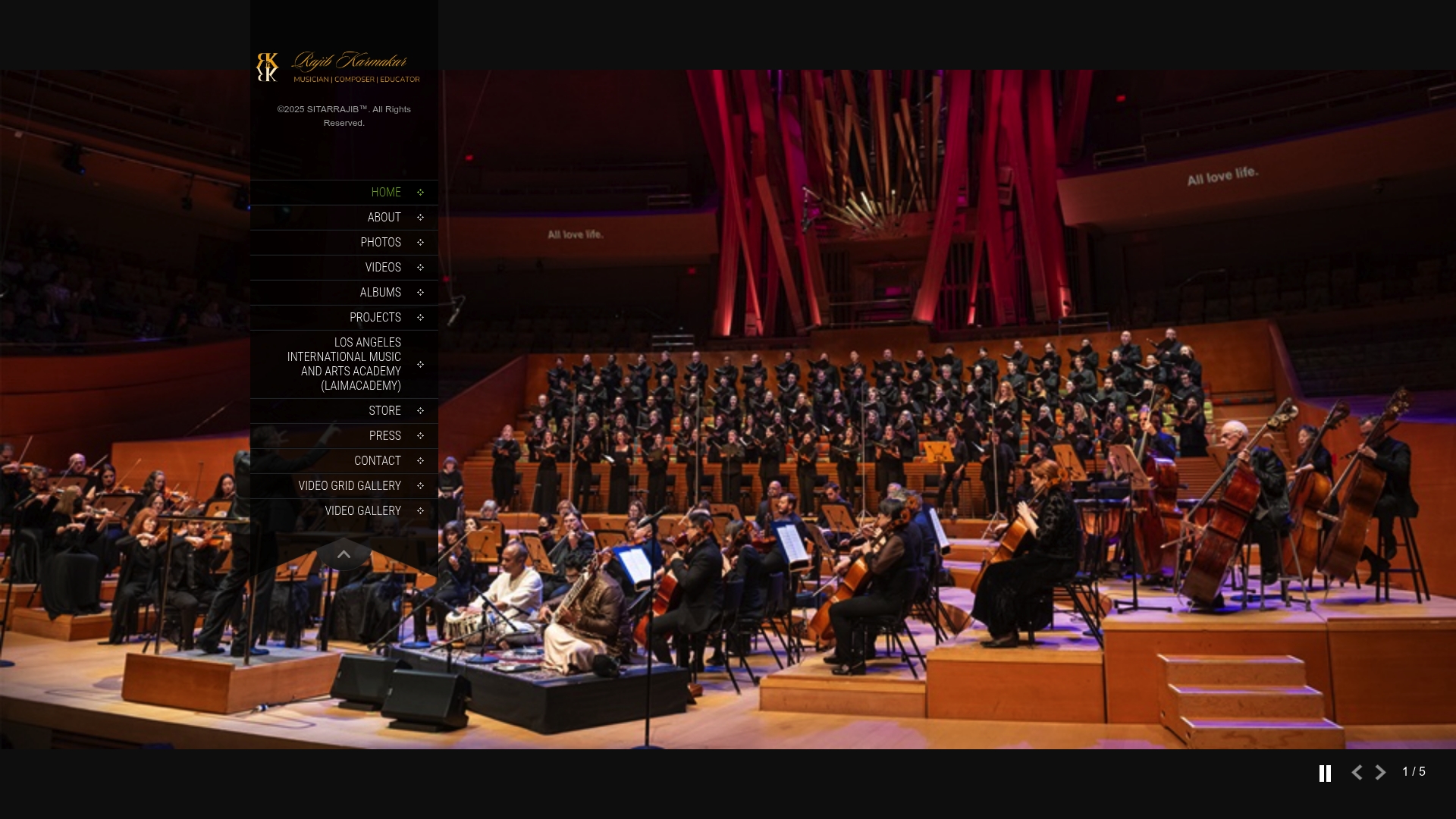
Rajib Karmakar’s work spans concert performances, studio recordings, and educational workshops, all grounded in the same principle: real fusion requires real listening. If you want to understand how a sitar fits into your next project or event, the sitar festival programming guide is a practical starting point. You can also explore what a cultural music experience looks like when it is built around genuine cross-cultural dialogue rather than surface-level novelty.
FAQ
What is the simplest definition of world music fusion?
World music fusion is the intentional blending of traditional global folk music with Western, jazz, or electronic genres to create a new hybrid musical form. The key word is intentional: both traditions actively shape the result.
What genres are in world music fusion?
The main subgenres are worldbeat (folk plus pop or rock), world jazz (jazz plus global melodic systems), and electronic world fusion (folk instruments plus digital production). These categories often overlap in practice.
What makes world music fusion authentic?
Authentic fusion requires equal cultural contribution from both traditions, shared structural or thematic DNA, and music that respects the original function of its source traditions. Tourism music, where one culture is used as decoration, does not qualify.
What are some well-known examples of world music fusion?
The 1995 Mumtaz Mahal project, which blended Carnatic raga with Delta blues, is a landmark example. Mo Sabri’s Tennessee Desi project, which connects Appalachian country with Sufi qawwali, is a strong contemporary example.
How does world music fusion benefit listeners?
World music fusion exposes listeners to musical traditions they would not otherwise encounter, deepens cultural understanding, and produces genuinely new sounds that neither source tradition could create alone.