
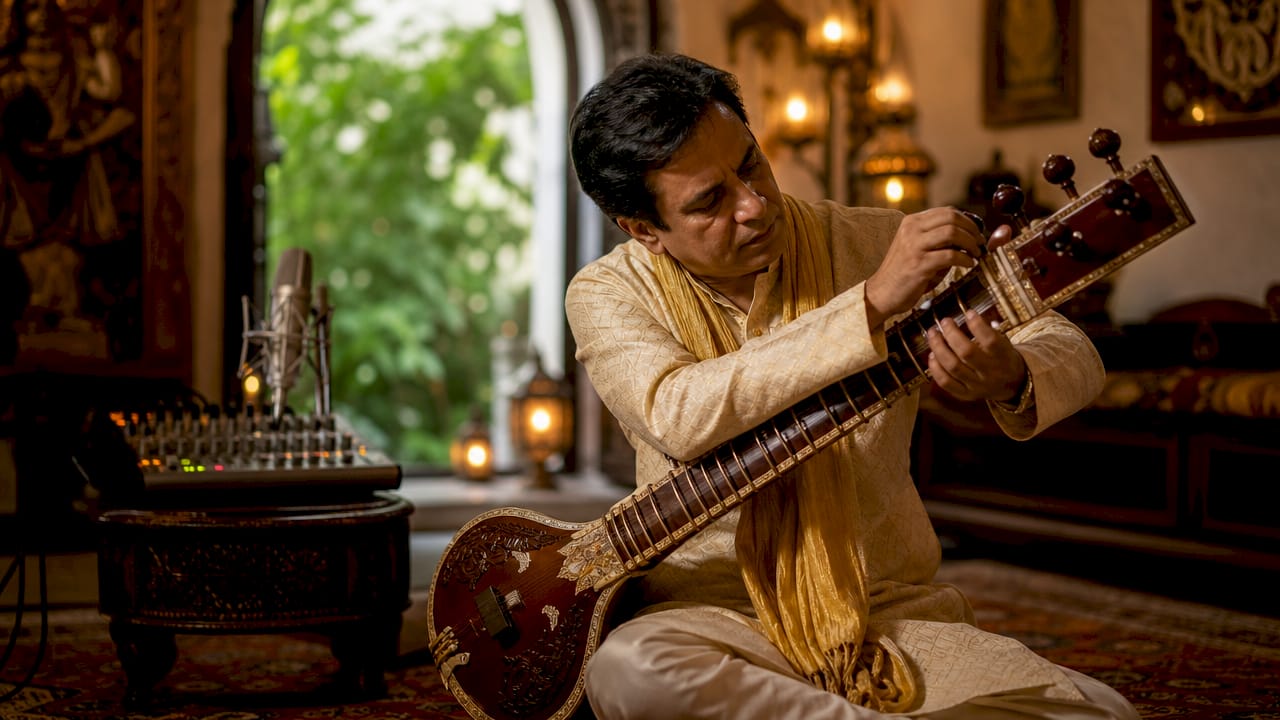
Sitar performance technical requirements are defined as the full set of stage, sound, environmental, and documentation specifications needed to present the instrument accurately in a live or recorded setting. These requirements go well beyond a standard band rider. The sitar is a living acoustic system with sympathetic strings, a curved jawari bridge, and a resonance chamber that responds to every shift in humidity, airflow, and ambient noise. Getting the setup right protects both the instrument and the performance. Sitarrajib has developed these guidelines through years of international concert work, and this guide gives musicians, educators, and event professionals a clear, practical framework to follow.
What are the essential sitar performance technical requirements?
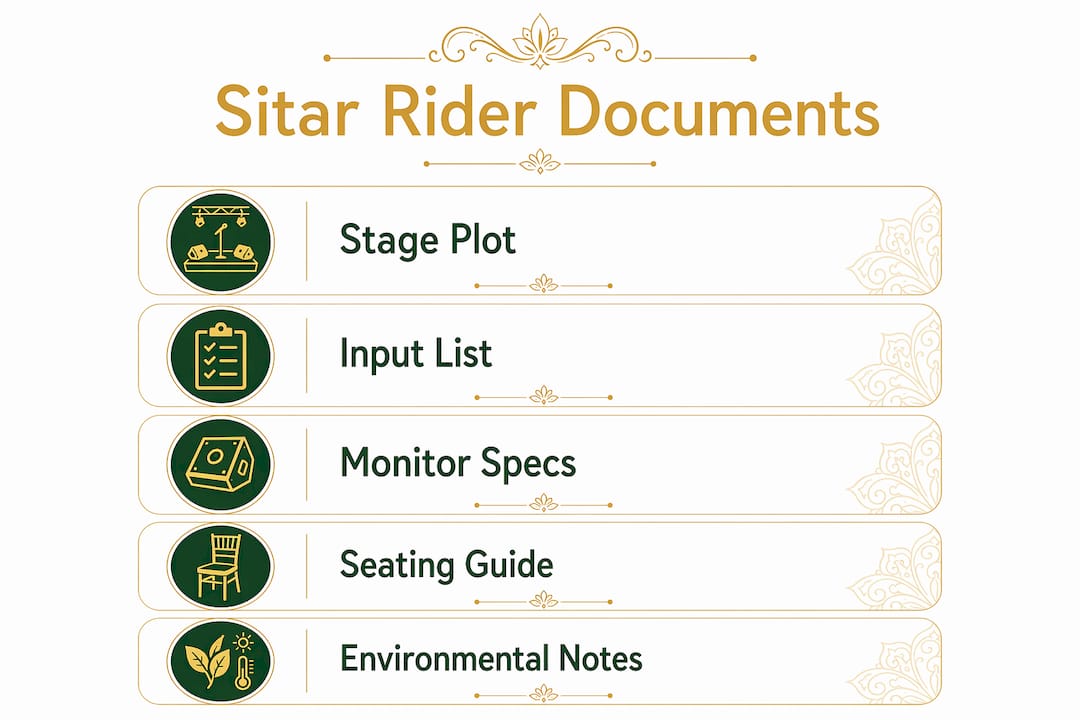
A professional sitar rider must include four core documents: a stage plot, an input list, monitor specifications, and a power requirements sheet. Each document serves a different member of the venue’s technical team, so keeping them separate and clearly labeled prevents confusion on the day of the show.
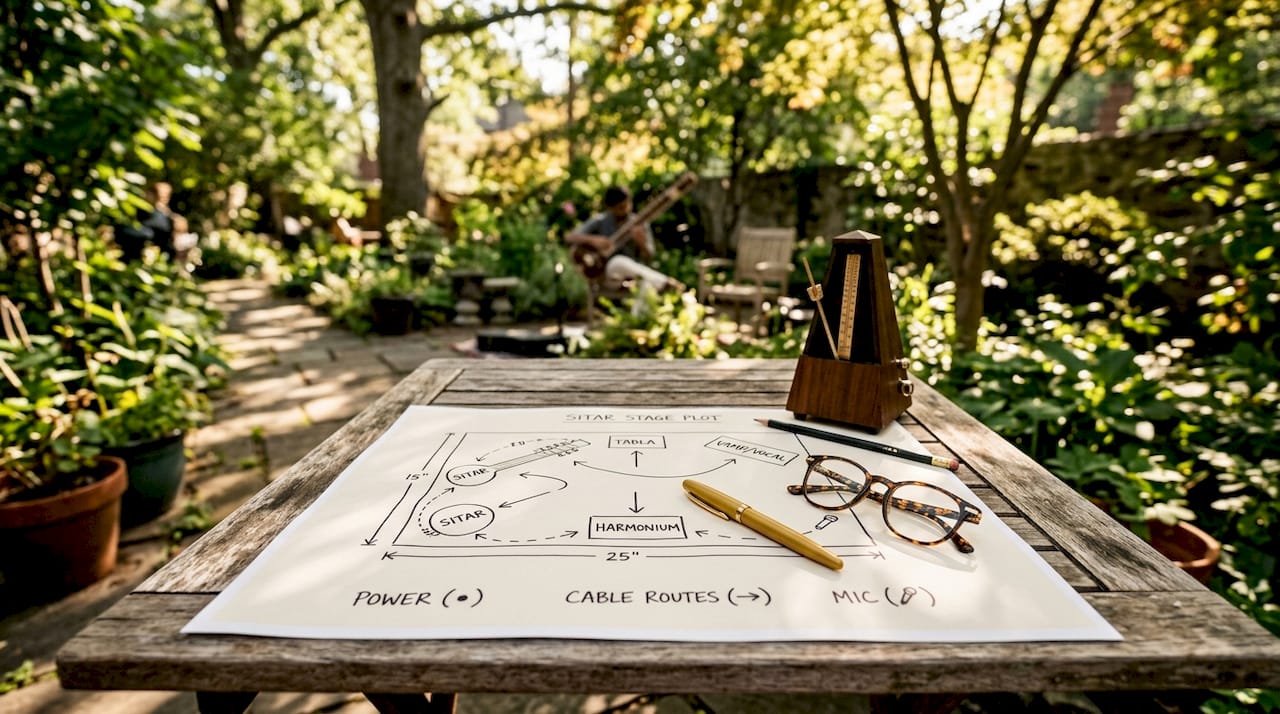
The stage plot is the most important single document. Visual stage plots showing space, power, and connectivity needs are far more effective for venue staff than text-heavy descriptions. A simple diagram with labeled positions for the performer, microphone stand, monitor wedge, and power outlet communicates in seconds what a paragraph cannot.
The input list must account for every audio source, including the main playing strings and the sympathetic strings. A well-crafted input list aligned with the number and type of strings is critical to calculating mixer channels and avoiding setup delays. For most sitar setups, this means one to two microphone channels plus a direct input channel.
Seating is a detail that many performers overlook in their riders. A standard chair is unsuitable for sitar playing. A solid gaddi or stool must be specified in the technical rider, with exact height and cushion dimensions included. Small details like cushion size or stool height can significantly improve posture and directly impact performance quality.
Pro Tip: Include a photo of your preferred seating setup in the rider PDF. Venue staff can match it visually without needing to interpret written measurements.
Key items to cover in every sitar technical rider:
- Stage plot with performer position, mic stand location, and monitor placement
- Input list specifying condenser or cardioid mic type, DI box channel, and total channel count
- Monitor mix requirements, including a separate mix for the performer if needed
- Seating specification: gaddi or stool with height and cushion details
- Power outlet location and any required surge protection
- Soundcheck duration of 60–90 minutes to allow for tuning, jawari checks, and level setting
How do acoustic and environmental factors affect sitar setup?
The sitar is one of the most environmentally sensitive instruments in any performance setting. Sympathetic strings require a noise-free environment with minimal high-frequency disturbances for optimal acoustic performance. HVAC air currents, loud stage monitors from neighboring performers, and even audience chatter during soundcheck can interfere with the natural shimmer those strings produce.
Temperature and humidity are equally critical. Sudden venue climate changes can cause the jawari to choke or lose its buzzing overtone, requiring on-site corrections. A jawari that sounded perfect in a warm green room can shift noticeably once the performer moves onto a cold or air-conditioned stage. Budget time in the soundcheck specifically for this adjustment.
The sitar’s sympathetic string resonance is highly sensitive to airflow and ambient sound frequencies. Authentic acoustic reproduction depends on specific room conditions that most venues do not automatically provide. Performers must request these conditions in writing, in advance.
Practical steps to protect the acoustic environment:
- Request that HVAC vents near the performance area be redirected or reduced during the set
- Ask for a quiet stage during soundcheck, with no other instruments playing simultaneously
- Arrive at the venue at least 30 minutes before soundcheck to let the instrument acclimate to room temperature
- Keep the sitar in its case until the stage temperature has stabilized
- Carry a small digital hygrometer to monitor humidity levels on-site
Which sound equipment best preserves the sitar’s tone?
Microphone selection is the single biggest variable in sitar amplification. Condenser microphones capture the high-frequency overtones and the delicate shimmer of the sympathetic strings far better than dynamic microphones for most concert settings. Placement matters as much as the mic type: positioning a small-diaphragm condenser approximately 12–18 inches from the main resonator, angled slightly toward the neck joint, captures both the body resonance and the string attack without excessive proximity effect.
Understanding audio signal flow from microphone to mixer to PA is worth reviewing before any large-venue soundcheck. Gain staging errors at the preamp stage are the most common cause of unwanted noise and feedback in acoustic instrument amplification. A clean signal chain from the mic through the console to the PA protects the sitar’s natural tone at every step.
A DI box serves a specific role in sitar reinforcement. If the performer uses a pickup system as a backup or for larger venues, running the pickup signal through a high-impedance DI box before the console preserves the instrument’s tonal character. The DI and the microphone channels can then be blended at the console for a fuller, more controlled sound.
Pro Tip: Specify your preferred mic type in the rider, such as small-diaphragm condenser or large-diaphragm condenser, but remain open to equivalent models the venue provides. Riders should specify mic types but accept high-quality alternatives to avoid last-minute conflicts.
Key sound reinforcement guidelines for sitar:
- Use a legendary dynamic microphone only as a backup option; condensers are preferred for acoustic detail
- Request a separate monitor mix for the performer to hear the sitar clearly on stage
- Set the PA EQ to preserve the 2–5 kHz range where the jawari overtones live
- Avoid heavy reverb or compression on the sitar channel during the performance
- Test for feedback at full performance volume before the audience enters
What is the typical timing structure of a sitar performance?
A traditional Hindustani sitar performance follows a defined arc that directly affects how you plan sound levels and monitor mixes throughout the show. Alap-Jod-Jhala occupies 30–40% of total performance time, with compositions ranging from 45–60 bpm in slow sections up to 150–300+ bpm in fast sections. That tempo range is wider than almost any other classical tradition, which means the sound engineer needs to understand the structure in advance.
| Performance Phase | Approximate Duration | Tempo Range | Technical Notes |
|---|---|---|---|
| Alap (slow exploration) | 15–25% of total set | Free rhythm | Very low stage volume; monitor mix critical |
| Jod and Jhala | 15–20% of total set | Moderate to fast | Gradual volume increase; watch for feedback |
| Composition with tabla | 60–70% of total set | 45–300+ bpm | Full PA levels; tabla channel added to mix |
| Encore or short piece | Variable | Variable | Pre-agreed with sound engineer |
The slow Alap phase is where most sound engineers make their biggest mistake. They set levels for the loud composition section and leave the Alap too quiet or too loud in the monitor. Brief the engineer before soundcheck on the phase structure so they can prepare separate gain settings or scene snapshots for each phase.
How to collaborate with venue technicians for sitar events?
Advance communication is the most effective tool a sitar performer has. Technical requirements should be finalized 1–2 months before the event to avoid equipment and production issues. Sending the rider late forces venue staff to improvise, and improvised solutions rarely serve a sensitive acoustic instrument well.
Follow these steps for effective technical collaboration:
- Submit the complete rider package, including stage plot, input list, and seating specs, 6–8 weeks before the event.
- Follow up with the venue’s production manager two weeks out to confirm receipt and answer any questions.
- Provide a direct contact number for the day of the show so the sound engineer can reach you quickly.
- Treat the rider as a starting point for a conversation, not a list of non-negotiable demands.
- Arrive at the venue with a printed copy of the rider in case digital files were not passed to the on-site crew.
- Walk the stage before soundcheck to verify seating, monitor placement, and mic stand positions match the plot.
Treating the tech rider as a collaborative tool rather than a checklist preserves the sitar’s natural sound and builds a better working relationship with the venue team. Sound engineers who understand the instrument’s needs will make better real-time decisions during the performance. That understanding starts with a clear, honest rider submitted well in advance.
Pro Tip: Include a one-paragraph “instrument notes” section at the top of your rider explaining what the sitar is and why it needs specific conditions. Most sound engineers have never worked with one before. A brief, friendly explanation gets better results than a long list of requirements.
For performers planning sitar integration into festival programming, the collaboration timeline becomes even more critical because festival production schedules lock in weeks ahead of the event.
Key Takeaways
A complete sitar performance setup requires a visual stage plot, a detailed input list, environmental controls, and a rider submitted at least 6–8 weeks before the event.
| Point | Details |
|---|---|
| Submit the rider early | Send the full rider package 6–8 weeks out to give venue staff time to prepare. |
| Specify seating precisely | Include gaddi or stool height and cushion dimensions to protect posture and playing technique. |
| Control the acoustic environment | Request HVAC redirection and a quiet stage to preserve sympathetic string resonance. |
| Brief the sound engineer on performance phases | Explain the Alap-to-composition arc so the engineer can set appropriate levels for each section. |
| Stay flexible on mic brands | Specify mic types such as condenser or cardioid, but accept equivalent models the venue provides. |
What I’ve learned from preparing riders for international stages
After performing on stages across the United States, Europe, and Asia, the single lesson that changed how I approach every gig is this: the rider is not about protecting yourself. It is about giving the sound engineer everything they need to do their job well.
Early in my career, I wrote riders that read like demands. Long lists, specific brand names, strict requirements. Venue staff would read them and immediately feel defensive. The setup would start with tension, and that tension showed up in the mix. When I shifted to writing riders that explained the “why” behind each request, everything changed. Engineers became curious about the instrument. They asked questions. They listened more carefully during soundcheck.
The jawari adjustment is the part that still surprises most engineers. When I explain that the bridge can shift with temperature and that I may need five minutes mid-soundcheck to correct it, they always appreciate the heads-up. Without that warning, a pause to adjust the bridge looks like a problem. With it, it looks like professionalism.
For educators preparing students for their first public performances, I recommend building rider preparation into the curriculum. Writing a rider forces a student to think through every technical aspect of the performance in advance. It is one of the most practical exercises in performance preparation that exists.
The sitar playing techniques that make the instrument beautiful, meend, gamak, and the shimmer of the tarab strings, only come through clearly when the technical setup supports them. The rider is where that support begins.
— Rajib
Sitarrajib’s resources for sitar event preparation
Sitarrajib offers professional sitar performance services built around the exact technical standards covered in this guide. Whether you are booking a live concert, planning a corporate event, or producing a studio session, the technical preparation starts well before the performance date.
Rajib Karmakar brings internationally tested stage and studio experience to every engagement. For producers, the live session recording process is designed around precise microphone placement and signal chain management to capture the sitar’s full acoustic range. For event planners, the corporate event performance service includes a complete rider package and direct coordination with your production team. Reach out through sitarrajib.com to discuss your event’s specific technical needs.
FAQ
What documents does a sitar rider need to include?
A complete sitar rider includes a visual stage plot, an input list with mic and DI channel counts, monitor specifications, seating requirements, and power outlet placement. Soundcheck duration should be listed as 60–90 minutes.
How far in advance should a sitar rider be submitted?
Submit the rider at least 6–8 weeks before the event. Technical requirements finalized 1–2 months prior give venue staff enough time to source equipment and prepare the stage correctly.
Why does the sitar need a special seating setup?
Standard chairs do not support the cross-legged or low-seated posture required for sitar technique. A gaddi or custom stool with specified height and cushion dimensions must be listed in the rider to protect both posture and playing accuracy.
How does venue temperature affect the sitar during a performance?
Sudden climate changes can cause the jawari bridge to choke or lose its buzzing overtone, requiring on-site tuning corrections. Arriving 30 minutes before soundcheck and letting the instrument acclimate to room temperature reduces this risk significantly.
What microphone type works best for amplifying a sitar?
Small-diaphragm or large-diaphragm condenser microphones capture the sitar’s high-frequency overtones and sympathetic string shimmer more accurately than dynamic microphones. Specify the type in the rider but remain open to equivalent models the venue provides.