
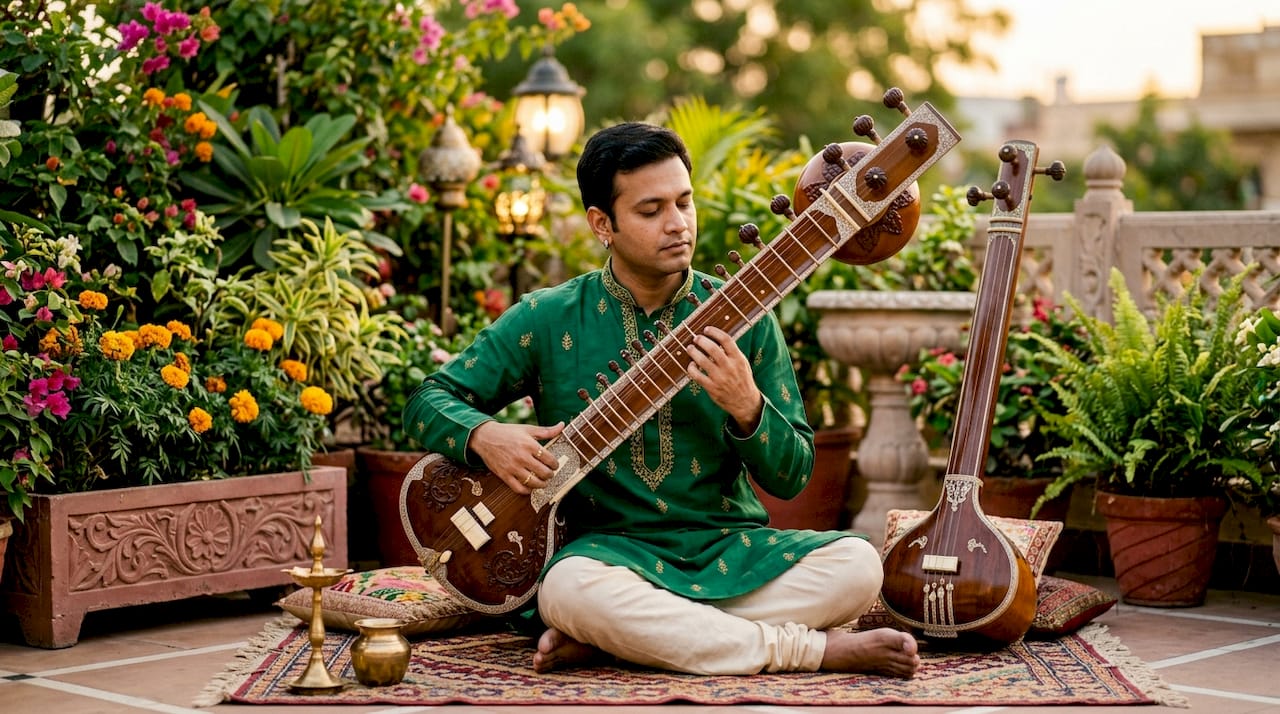
Alap is defined as the unmetered, rhythm-free opening section of a sitar performance that introduces the raga’s melodic identity and emotional character. It is performed solo with only the tanpura drone as accompaniment, making it the most intimate and focused part of the entire recital. Understanding what is alap in sitar performance means recognizing it as the foundation on which everything else is built. The raga’s mood, scale, and personality are all revealed here, before tabla or any rhythmic element enters the picture.
What is alap in sitar performance and how does it work?
Alap is the essential, unmetered opening section of North Indian classical music, where the performer introduces the raga’s melodic structure without any rhythmic accompaniment. Only the solo sitar and the tanpura drone are present. That setup strips away every distraction and forces both performer and listener to focus entirely on melody, tone, and mood.
The term “alap” comes from the Sanskrit root meaning “to speak” or “to converse.” That meaning is fitting. The performer is literally having a conversation with the raga, note by note, phrase by phrase. No beat marks time. No percussion rushes the moment. The raga unfolds at its own pace.
Standard sitar performance format moves through alap, then jor, then jhala, before the tabla enters for the main composition called gat. Each stage builds on the previous one. Alap sets the entire emotional and melodic context for everything that follows.
What are the structural phases of alap, jor, and jhala?
Alap does not stand alone as a single block. It is the first phase in a three-part progression that gradually introduces rhythm and energy into the performance.
Here is how the three phases compare:
| Phase | Rhythm | Tempo | Technique | Mood |
|---|---|---|---|---|
| Alap | None | Very slow | Sustained notes, meend, vistar | Meditative, introspective |
| Jor | Steady pulse | Moderate | Rhythmic strokes, melodic development | Focused, building |
| Jhala | Energetic drive | Fast | Rapid chikari strokes, rhythmic density | Exciting, climactic |
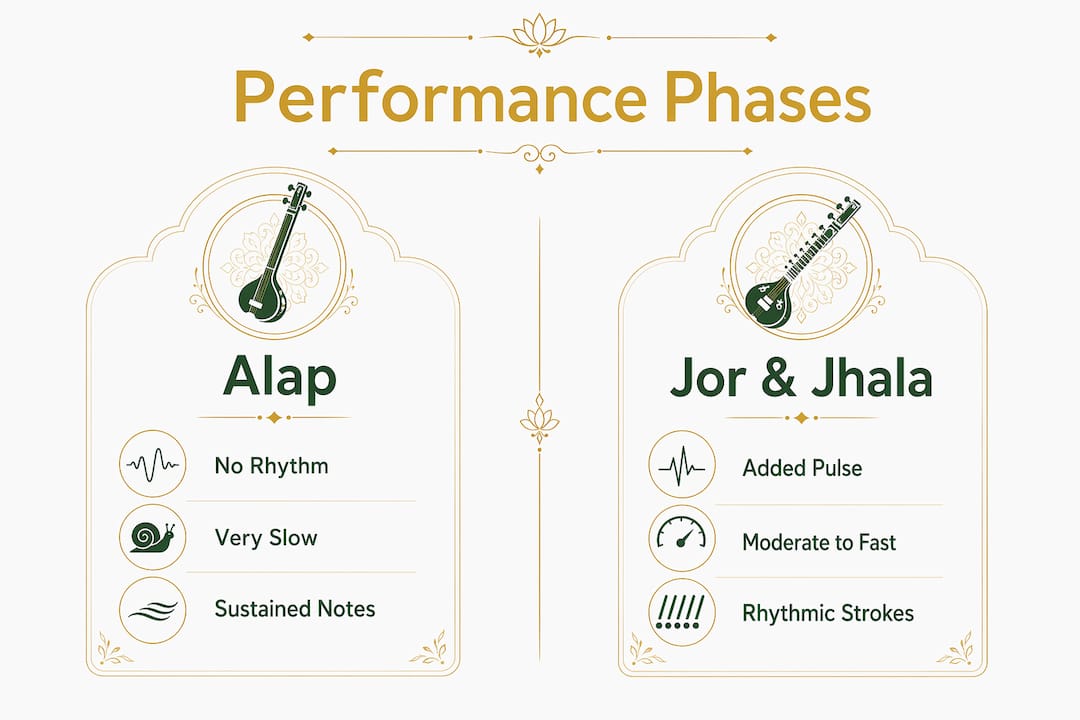
Alap, jor, and jhala function as a continuum rather than three separate sections with hard boundaries. The transition from alap to jor happens when a steady pulse begins to emerge naturally from the playing. The transition to jhala comes when rhythmic density increases sharply.
Within alap itself, performers use a method called vistar, which means gradual expansion. Vistar dictates progressive note introduction with careful melodic limits, making each new note or octave a significant musical event. You do not hear all the notes of the raga at once. Each note is introduced deliberately, tested, and explored before the next one arrives.
- Alap begins in the lower octave (mandra saptak) and slowly moves upward
- Each note is introduced with care, often surrounded by neighboring tones
- Phrases are repeated and varied to reveal the raga’s characteristic movements
- The performer controls silence as carefully as sound
Pro Tip: When listening to alap, track which notes the performer returns to most often. Those are the raga’s vadi (most important note) and samvadi (second most important note), and they reveal the raga’s core identity.
Alap is a family of techniques that varies across gharanas and instruments. Vocal Dhrupad alap and instrumental tantrakari styles differ significantly in approach, but both aim to unfold the raga organically and without haste.
How does the Maihar Seniya Gharana approach alap?
The Maihar Seniya Gharana represents one of the most influential schools of sitar playing, and its approach to alap is distinctive. Founded by Baba Allauddin Khan and carried forward by disciples including Ravi Shankar and Nikhil Banerjee, this gharana treats alap as a deeply meditative and expansive practice.
Maihar Seniya Gharana’s alap emphasizes meditative, expansive melodic development with precise intonation and sustained tones over surface ornamentation. The goal is purity of note and depth of expression, not speed or decoration. A single note held and shaped with intention carries more weight than a fast run of ornaments.
Key characteristics of this gharana’s alap style include:
- Heavy use of kharaj (bass) strings to extend the instrument’s sonic range downward
- Long, sustained tones that mirror the depth of vocal Dhrupad performance
- Minimal ornamentation in favor of clean, resonant note production
- Gradual, unhurried melodic expansion that can last 20 minutes or more
Structural adaptations like additional frets and hook systems help Maihar Seniya performers achieve extended meend and control bass resonance during alap. These modifications bring the sitar closer in tonal quality to the surbahar or Rudra Veena, instruments traditionally associated with the deepest forms of alap. You can read more about meend technique on sitar to understand how this glide technique shapes the alap’s character.
Pro Tip: In the Maihar Seniya tradition, performers prioritize the space between notes as much as the notes themselves. Silence is treated as an active musical element, not an absence of music.
What is the musical and emotional purpose of alap?
Musicians regard alap as introducing the raga’s “personality” in an unhurried setting, similar to introducing a person before telling their story. That framing captures something real about how alap functions. The raga has a mood, a time of day, a season, and an emotional quality. Alap is where all of that gets revealed, slowly and completely.
“Alap demands extraordinary patience from the listener since it is entirely arhythmic, focusing attention on tone and smooth transitions between notes. Listeners are encouraged to notice melodic flow over rhythm, as alap unfolds slowly.” — Bansuri Bliss, Alap Structure
This demand for patience is not a flaw. It is the point. Alap trains the ear to hear music differently. You stop waiting for a beat and start listening to color, texture, and movement within a single note. That shift in listening is what Indian classical music asks of its audience.
The emotional experience of alap differs sharply from the rhythmic sections that follow:
- Alap creates a meditative, inward-focused atmosphere
- Jor and jhala build outward energy and rhythmic excitement
- Gat with tabla brings dialogue, tension, and release
- Alap alone establishes the emotional baseline for the entire performance
The performer is not just playing notes during alap. They are making a series of decisions about which notes to emphasize, how long to hold each phrase, and when to move forward. That process is a form of real-time composition. The raga provides the grammar, and the performer writes the sentence. This connection between Indian classical music and ceremony explains why alap sections create such a strong emotional atmosphere in live settings.
How is alap performed technically on the sitar?
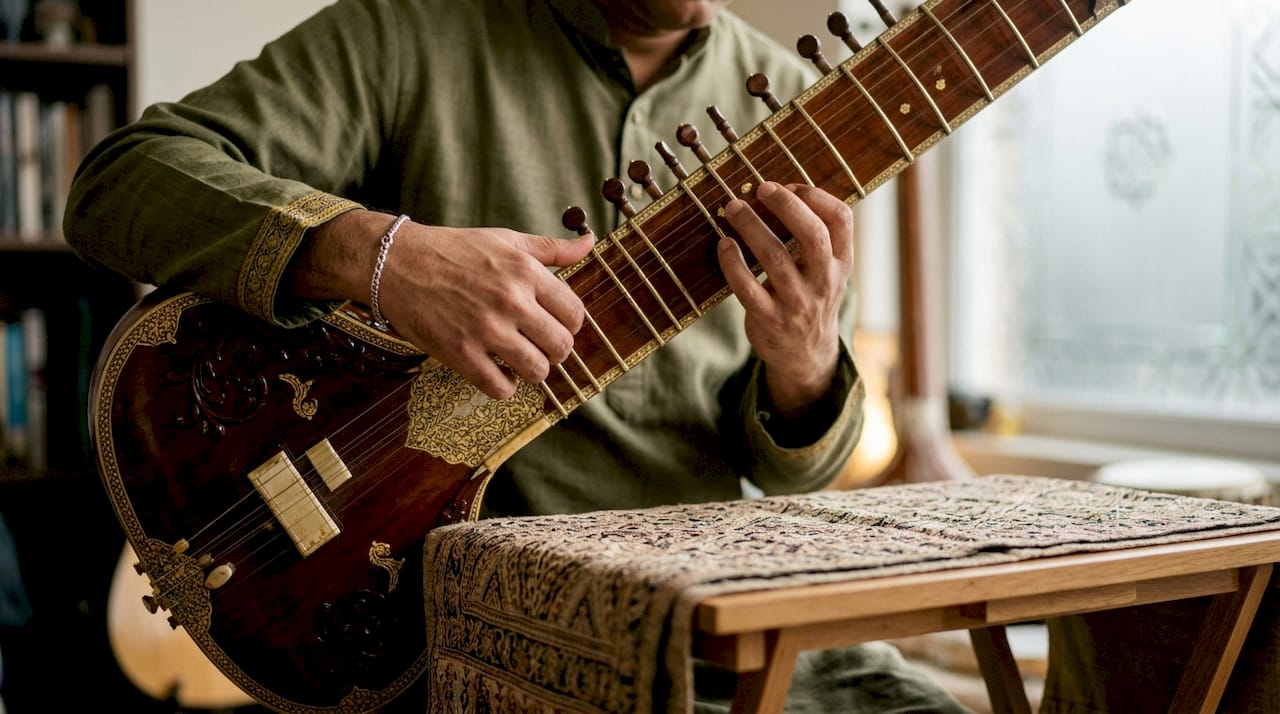
The technical setup for alap is simple but demanding. The sitarist sits cross-legged, the sitar resting on the left foot and right knee. The tanpura drone plays continuously in the background, providing the tonal reference against which every note is measured.
Here is the sequence of technical priorities during alap:
- Establish the drone relationship. The performer tunes their ear to the tanpura before playing a single note. Every note in alap is heard against that drone.
- Begin in the lower octave. The mandra saptak (lower register) is explored first, using sustained notes and slow meend glides.
- Introduce notes one at a time via vistar. Each new note is approached carefully, often from above or below using a glide, not a direct attack.
- Expand to the middle octave. Once the lower register is fully explored, the performer moves into the madhya saptak (middle register).
- Reach the upper octave. The tar saptak (upper register) is the final destination, often reached just as alap transitions toward jor.
Meend, the technique of gliding between notes by pulling the string across the fret, is the defining ornament of alap. It connects notes smoothly and reveals the microtonal relationships that give each raga its unique sound. Microtonal shifts, called shrutis, are especially important in alap because there is no rhythm to distract from them. Every pitch nuance is fully exposed.
Pro Tip: Practice alap by recording yourself and listening back without watching your hands. Your ear will catch pitch and timing issues that your hands never notice in the moment.
The difference between gharanas shows up most clearly in alap technique. Some traditions favor heavy ornamentation with gamak (forceful oscillations) and taan (fast runs). Others, like the Maihar Seniya Gharana, favor sustained tones and minimal decoration. Both approaches are valid. They reflect different philosophies about what alap is meant to communicate. Sitarrajib’s work as a performer and educator draws on this depth of tradition, bringing sitar performance techniques to concert and festival audiences worldwide.
Key Takeaways
Alap is the rhythm-free, tanpura-accompanied opening of a sitar performance that introduces the raga’s full melodic and emotional identity before any rhythmic element enters.
| Point | Details |
|---|---|
| Alap definition | The unmetered opening section of sitar performance, using only sitar and tanpura drone. |
| Vistar method | Notes are introduced one at a time, gradually expanding across octaves to reveal the raga. |
| Maihar Seniya style | Emphasizes sustained tones, kharaj bass strings, and meditative depth over ornamentation. |
| Emotional purpose | Alap establishes the raga’s mood and personality before jor, jhala, and gat begin. |
| Key technique | Meend (string glides) and microtonal shifts define alap’s expressive character on sitar. |
Alap as the heart of the performance
Every time I sit down to perform alap, I feel the weight of the decision I am about to make. Which note do I start with? How long do I hold it? The raga gives me a framework, but alap is where my individual voice either shows up or disappears into habit.
What I have noticed over years of performing is that audiences who have never heard Indian classical music often connect most deeply with alap. Not jor, not jhala, not the fast gat. Alap. Because it is slow enough for anyone to follow. You do not need to understand the theory. You just need to listen to the sound.
The hardest part of alap is not technical. It is the discipline of not rushing. Western musical training often rewards speed and complexity. Alap rewards restraint. The performer who can hold a single note for four seconds and make it feel complete is doing something more difficult than playing a fast run.
I also think alap is where the performer’s relationship with the raga becomes visible. You can hear whether someone truly knows a raga or is just executing it. The choices made in alap, which notes to linger on, which phrases to repeat, reveal the depth of that relationship. That is what makes alap the most honest part of any sitar performance.
— Rajib
Hear alap in action with Sitarrajib
Sitarrajib offers a direct way to experience alap beyond reading about it.
Rajib Karmakar’s live session sitar recordings capture full alap sections with studio clarity, giving you a reference point for everything covered here. Whether you are a musician studying the form or an enthusiast building your ear, hearing alap performed at a professional level accelerates your understanding faster than any written explanation. Sitarrajib also offers private lessons and workshops where alap structure, vistar, and meend technique are taught directly. Visit sitarrajib.com to explore performance videos, educational resources, and booking options.
FAQ
What does alap mean in Indian classical music?
Alap is the rhythm-free opening section of a North Indian classical performance that introduces the raga’s melodic structure and mood using only the solo instrument and tanpura drone.
How long does alap last in a sitar performance?
Alap length varies by gharana, raga, and performer. It can last anywhere from a few minutes in a short recital to 30 minutes or more in a full Dhrupad-style concert.
What is the difference between alap and jor?
Alap is completely free of rhythm, while jor introduces a steady pulse through rhythmic strokes on the sitar. Jor follows alap and begins the gradual transition toward the rhythmic sections of the performance.
What is vistar in alap?
Vistar is the method of progressive note introduction used in alap, where each note or octave is introduced carefully and deliberately, making every new pitch a significant musical event.
Why is alap important in sitar performance?
Alap establishes the raga’s full emotional and melodic identity before any rhythmic element enters. Without alap, the audience has no context for the mood or character of the raga being performed.