
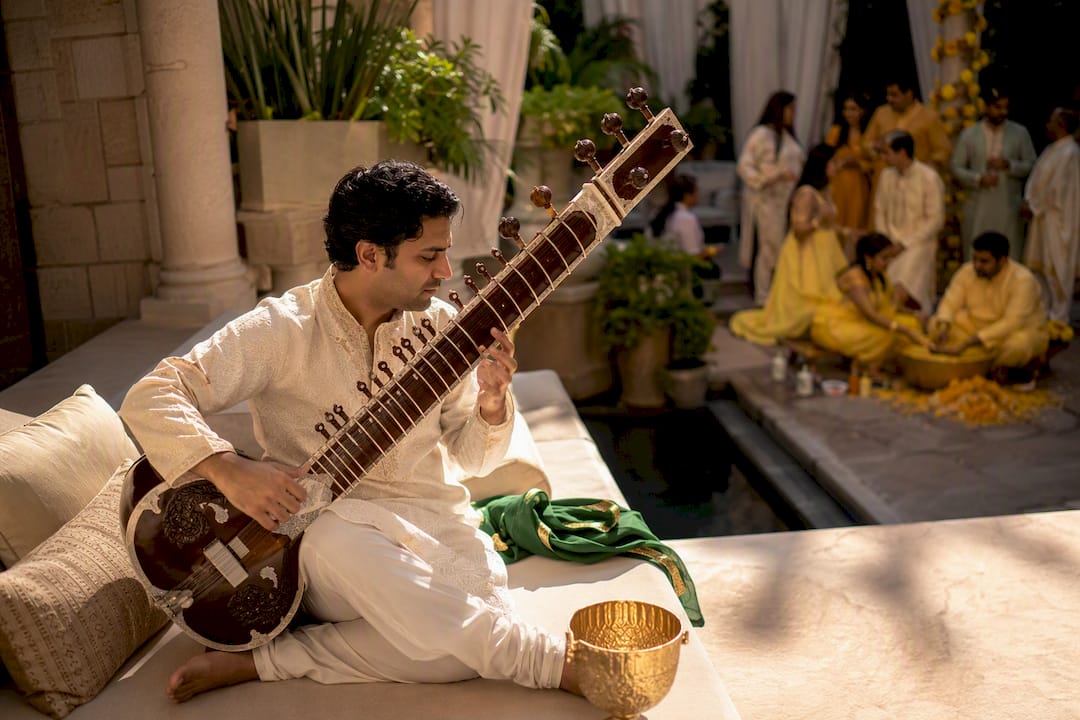
Yes, sitar music works beautifully for a Haldi. It brings a melodic, festive tone without competing with the ritual itself. Live sitar with tabla is the strongest choice for authenticity and mood, especially outdoors during daytime. Recorded sitar tracks work fine on a tighter budget or a noisy venue. A performing sitarist is one resource worth checking before you decide.
TL;DR:
- Live sitar enhances the ritual ambience during guest arrival, the lead-up to the turmeric application, and key moments for couple entry, with minimal distraction.
- Recording sitar tracks are suitable for tight budgets or noisy venues, offering predictable sound and no scheduling risks, but lack real-time responsiveness.
- Request light ragas like Yaman, Pilu, and Behag in short segments for cue-specific moments, and build a longer ambient set for the event’s early stages.
- Ensure technical setup includes a microphone, shade protection, and the ability to tune strings, while confirming the performer’s familiarity with outdoor daytime event needs.
- Prioritize booking a performer who can adapt repertoire and timing cues live, with clear briefs on specific ragas and ritual moments for better musical fit.
Table of Contents
- Why Sitar Fits a Haldi Ceremony So Well
- Live Sitar vs. Recorded Sitar: What Actually Changes
- What to Ask For: Repertoire, Ragas, and Set Length
- Booking Checklist: Sound, Scheduling, and Contracts
- Playlists, Albums, and Visual Ideas for a Sitar-Themed Haldi
- How Sitarists Actually Adapt a Set for Haldi
- What Actually Matters When Planning This
- Booking a Sitar Performance for Your Haldi
- Sources
Why Sitar Fits a Haldi Ceremony So Well
A Haldi runs on a different energy than a sangeet or reception. It’s slower, more intimate, and built around ritual rather than dancing. Sitar matches that pace. Its tone is warm and unhurried, which gives guests something pleasant to settle into instead of a wall of Bollywood bass.
The instrument works best at specific moments rather than as constant background noise:
- Guest arrival, while people are getting seated and greeting the family
- The lead up to the actual turmeric ritual, when the mood should feel calm and celebratory at once
- Photography and entry moments for the couple, where a melodic line adds warmth without pulling focus
Paired with light tabla, sitar sits in that sweet spot between festive and reverent. It fills the room without turning into a distraction from the ritual happening in the middle of it, an approach outlined in how Indian classical music suits ceremonies.
Live Sitar vs. Recorded Sitar: What Actually Changes
Live music reads the room in ways a playlist can’t, illustrating the betydningen af live performance for events. A sitarist can stretch a phrase, apply meend (the pitch-bending slide characteristic of the instrument), and slow down or speed up based on how the ritual is actually moving that day. That kind of real-time adjustment is a documented part of how sitar performance technique works, and it’s exactly what a recording can’t offer.
Recorded sitar has its own case:
- Lower cost, since there’s no performer fee, travel, or setup time
- Predictable sound quality regardless of venue acoustics
- Zero scheduling risk if timelines shift last minute
Price for live sitar shifts based on set length and other factors. A hybrid approach often works best: book a live sitarist for the arrival and ritual window, then switch to a curated playlist once the crowd moves into open celebration.
Pro Tip: If budget only stretches to an hour of live music, spend it on the arrival and ritual window, not the after party. That’s where sitar earns its place.
What to Ask For: Repertoire, Ragas, and Set Length
Briefing a sitarist (or building your own playlist) gets easier once you know what to actually request. Concert programs typically move from alap through jor and jhala before settling into lighter, shorter pieces, a structure documented in recorded performances by artists like Krishna Mohan Bhatt. For a Haldi, you want the lighter end of that spectrum, not a full-length classical recital.
- Ask for light ragas. Yaman, Pilu, and Behag are common choices for their gentle, approachable mood rather than heavier, more meditative ragas.
- Request short pieces for cues. Three to five minute segments work well for the actual turmeric application, timed to specific ritual moments.
- Build a longer ambient set for arrival. A 10 to 20 minute stretch as guests filter in gives the room a settled, welcoming tone.
- Ask about Bollywood-adapted transitions. Many sitarists can bridge from a classical phrase into a recognizable film melody, which eases the shift into higher-energy celebration later.
Write these requests down and hand them to the performer ahead of time. A vague “play something traditional” leaves too much room for mismatch on the day.
Booking Checklist: Sound, Scheduling, and Contracts
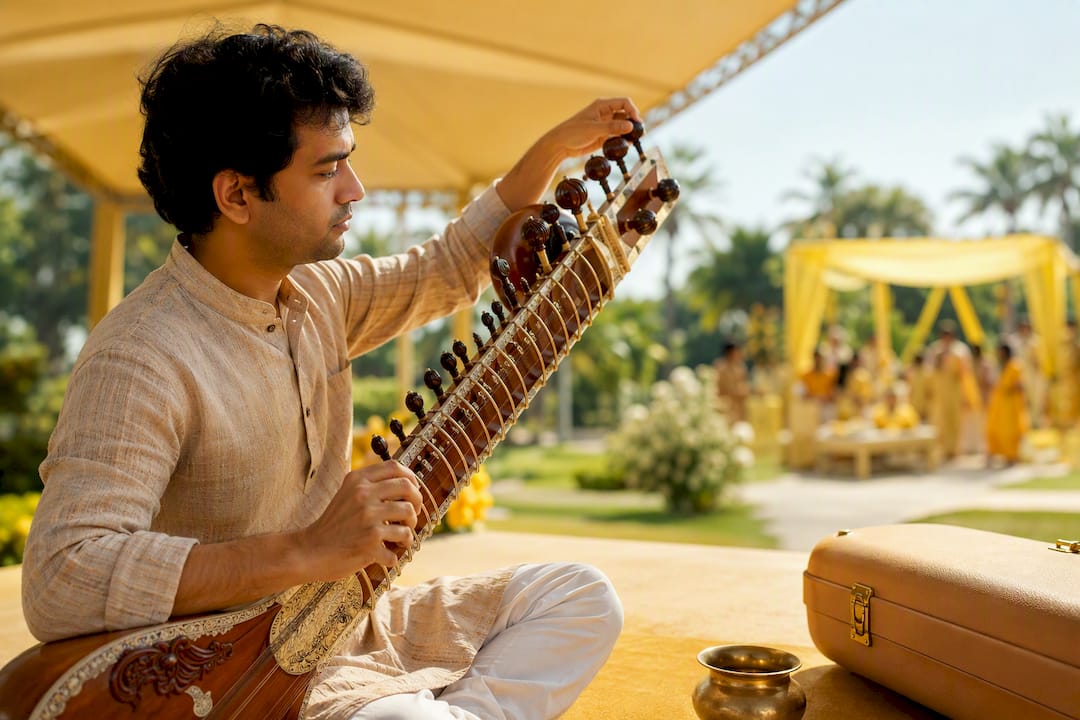
Haldi ceremonies are often outdoors and in daylight, which changes what a sitarist needs compared to an evening reception. Confirm the technical basics first: a microphone or direct input for the sitar, a small PA system if the space is large, shaded seating, and some protection against sun or unexpected rain. Instruments like the sitar are sensitive to humidity, so ask whether the performer needs a specific setup window to tune sympathetic strings before starting, a detail experienced sitar and tabla performers for wedding events will usually flag themselves.
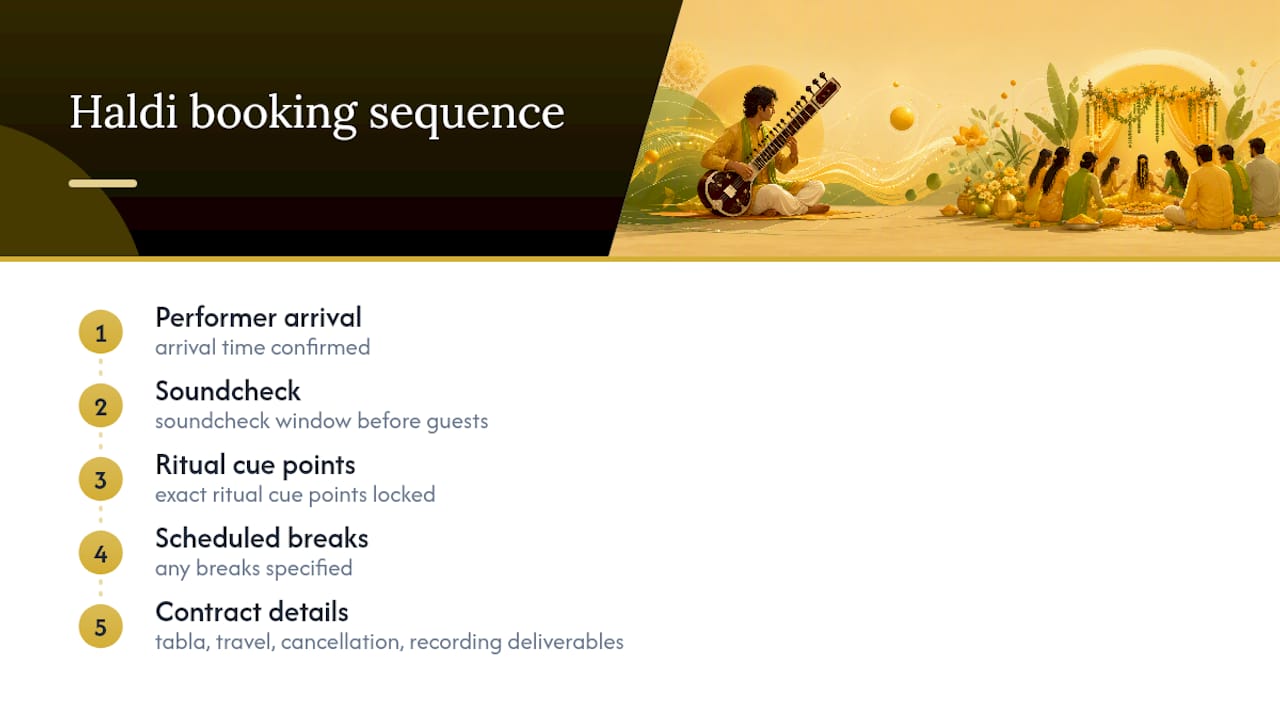
On scheduling, lock down arrival time, the exact ritual cue points, any breaks, and a soundcheck window well before guests show up. Contracts should spell out whether a tabla accompanist is included, who covers travel costs, the cancellation policy, and what deliverables you get if it’s also being recorded. For a full breakdown of rider items and setup logistics, this planner’s guide walks through what to expect before signing anything.
Watch for a few warning signs when vetting performers: no soundcheck offered, a repertoire agreement that’s vague on song count or length, or a missing technical rider entirely.
Pro Tip: A performer who can’t tell you their rider needs off the top of their head probably hasn’t played many outdoor daytime events. Ask directly, and expect a specific answer.
Playlists, Albums, and Visual Ideas for a Sitar-Themed Haldi
If you’re leaning recorded, or building a bridge playlist for the hours a live sitarist isn’t performing, start with something purpose-built rather than a generic instrumental mix. Albums like Wedding Music, Vol. 4: Sitar and Tabla pair the instrument with tabla in arrangements designed for exactly this kind of event. Broader Haldi playlist guides, including WedMeGood’s roundup of Bollywood and traditional Haldi songs, show how planners commonly layer light-classical instrumentation alongside film hits.
A workable sequence: sitar-led ambient tracks during arrival, quieter thumri-style pieces through the ritual itself, then a gradual shift into Bollywood as celebration opens up.
Beyond audio, the sitar has visual value too. Its curved body and long neck photograph well against marigold and mustard color palettes common at Haldi events, so a few ideas worth considering:
- Position a live performer where natural light hits during golden hour for photos
- Use the instrument itself as a decor accent near the seating area when not being played
- Coordinate performer attire with the event’s color scheme for consistent photos
How Sitarists Actually Adapt a Set for Haldi
Most of the adjustment happens in real time, not on paper. A performer will lean on meend and slower tempo control to keep a piece feeling light rather than dense, softening ornamentation that would otherwise read as too serious for a daytime celebration.
A typical arrival set might open on a gentle Yaman-based improvisation, ease into a Pilu-inspired melody as guests settle, then shift to shorter, cue-timed phrases once the ritual begins. For the actual turmeric application, many performers keep phrases under five minutes so the music doesn’t outlast the moment.
On the technical side, expect requests for shaded seating, a stable platform rather than an uneven surface, and a short window to tune sympathetic strings before starting. These are practical, common asks, not special treatment, and sample scripts for scripting these moments can help planners brief a performer clearly ahead of time.
What Actually Matters When Planning This
Most Haldi planning guides treat music as an afterthought, something you sort out after the decor and the menu. That’s backwards for sitar specifically, because the instrument’s biggest value is timing, not volume. A recording of any quality does the same job as a live set once the crowd is dancing. The real difference shows up in the ten minutes before the ritual starts, when a live player can read the room and shape the mood in ways a fixed track never will.
The other overlooked point: repertoire briefing matters more than most planners assume. Handing a performer a vague request for “something traditional” wastes the flexibility that live sitar offers in the first place. Specific ragas, specific timing cues, and a clear sense of when Bollywood should take over will get you a far better result than trusting a stranger’s improvisation to match your family’s taste.
Prioritize the arrival and ritual window first. Everything after that, whether it’s a live musician continuing or a playlist taking over, matters less than getting those first thirty minutes right.
— Rajib
Booking a Sitar Performance for Your Haldi
One can find performers who compose and adapt repertoire for the moment you’re planning, rather than using a fixed catalog of stock wedding songs. These performers bring live sitar sets with optional tabla accompaniment, tailored repertoire, and support for technical rider preparation to avoid surprises on the day.
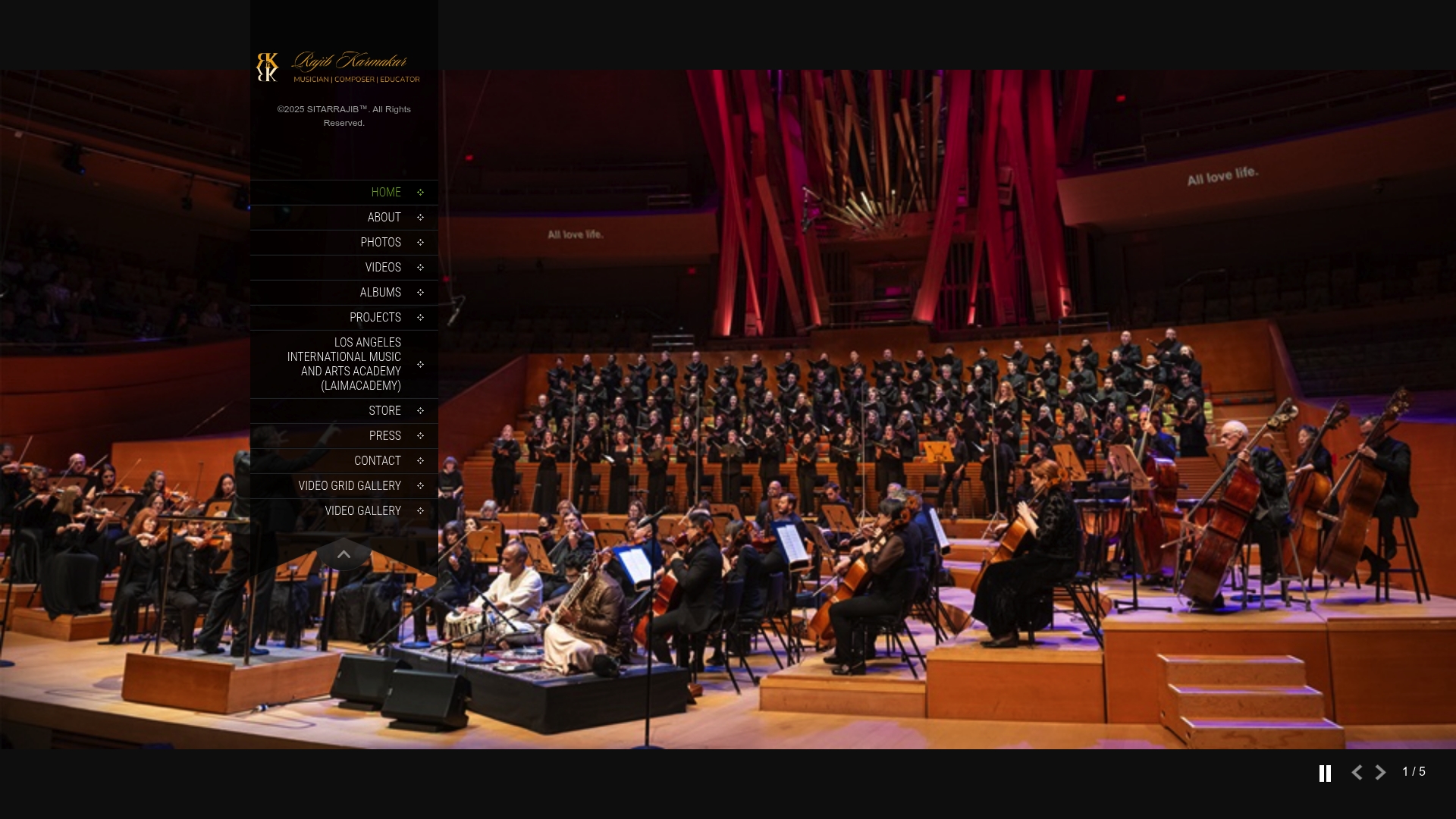
Booking starts with a simple conversation about your date, venue, and what part of the Haldi you want covered, arrival, ritual, or both. You can review sample performance videos first to get a feel for tone and pacing before committing. When you’re ready, head over to the logistics and booking page to check availability for your date and start the conversation.
Sources
- The Sitar from different angles (Pt. 1): Instrument basics, past masters — Darbar
- North Indian Classical Music: Krishna Mohan Bhatt, sitar; Anindo Chatterjee, tabla — Smithsonian / Asia Archive
- Wedding Music, Vol. 4: Sitar and Tabla — Spotify
- Professional sitar & tabla player for wedding and corporate events — Udaipur Event Management