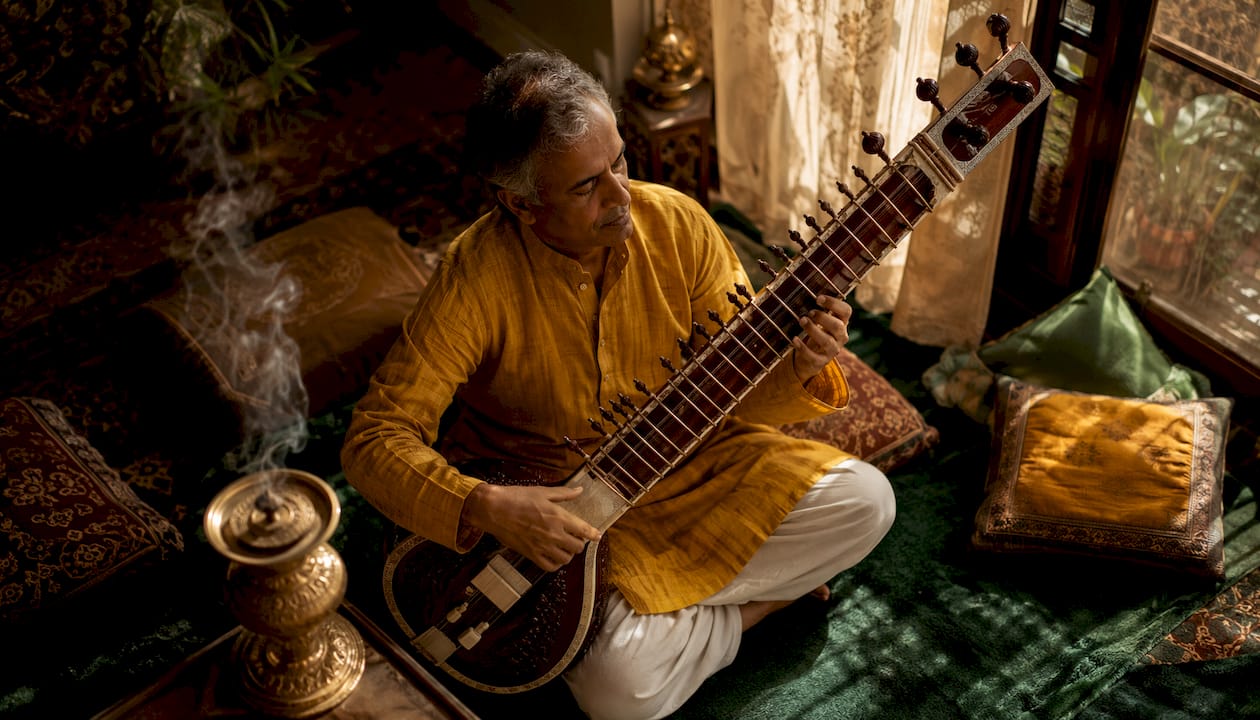
The sitar is one of the most effective instruments for meditation music. Its drone-based resonance, layered sympathetic strings, and melodic ragas work together to slow your breathing, quiet mental chatter, and open a path to spiritual awareness. The role of sitar in meditation content goes well beyond background music. It actively shapes how your nervous system responds to sound.
Here is what the sitar brings to a meditation session:
- Stress reduction through lower cortisol and heart rate
- Emotional balance by stimulating dopamine and serotonin release
- Spiritual insight via ragas tied to specific states of consciousness
- Mindfulness support through sustained tones that anchor attention
- Breath regulation as flowing melodic lines naturally slow your inhale and exhale
No other string instrument combines drone, melody, and harmonic overtone in quite this way. That combination is why sitar music for meditation has been central to Indian classical tradition for centuries and why it is gaining ground in Western wellness spaces today.
Table of Contents
- How the sitar connects to spiritual and cultural traditions
- Which ragas and techniques make sitar music meditative?
- What mental health benefits does sitar music offer?
- What experts say about the sitar’s role in modern healing
- How to use sitar music in your meditation practice
- What the research says about sitar and relaxation
- Key Takeaways
How the sitar connects to spiritual and cultural traditions
The sitar’s spiritual roots run deep. The instrument took its present form in India during the 18th century, evolving from long-necked lutes brought through Central Asia. From the start, it was tied to devotional practice, not just performance.
In Hindu and Sufi traditions, the sitar appears in bhajans and kirtans, where its tones are understood to connect both player and listener to something larger than themselves. The instrument’s ability to convey subtle emotional shifts within a raga makes it ideal for expressing devotion, from quiet contemplation to intense spiritual feeling.
- Ragas are not just scales. Each one carries a specific emotional and spiritual identity.
- Certain ragas are performed only at dawn, others at dusk, aligning music with natural cycles.
- The sitar’s microtonal variations allow it to express states that Western scales cannot reach.
- Generations of Indian classical musicians have treated the sitar as a vehicle for inner exploration, not entertainment alone.
Pro Tip: Before your next meditation session, look up the cultural meaning of the raga you are listening to. Knowing that Raga Yaman is associated with evening calm and longing changes how you receive it.
Which ragas and techniques make sitar music meditative?
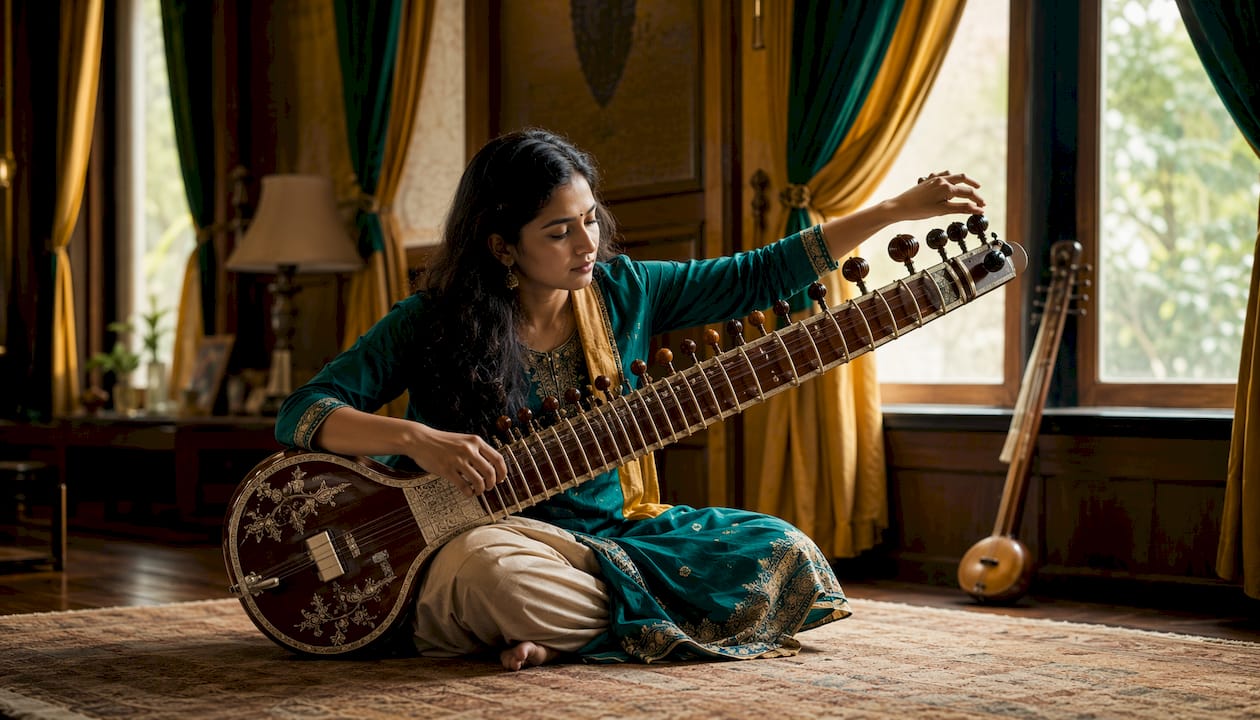
The structure of a classical sitar performance is itself a meditation tool. It moves through three stages: alap, jod, and jhala. The alap section is slow, rhythm-free, and deeply exploratory. It sets the emotional tone before any pulse enters the music.
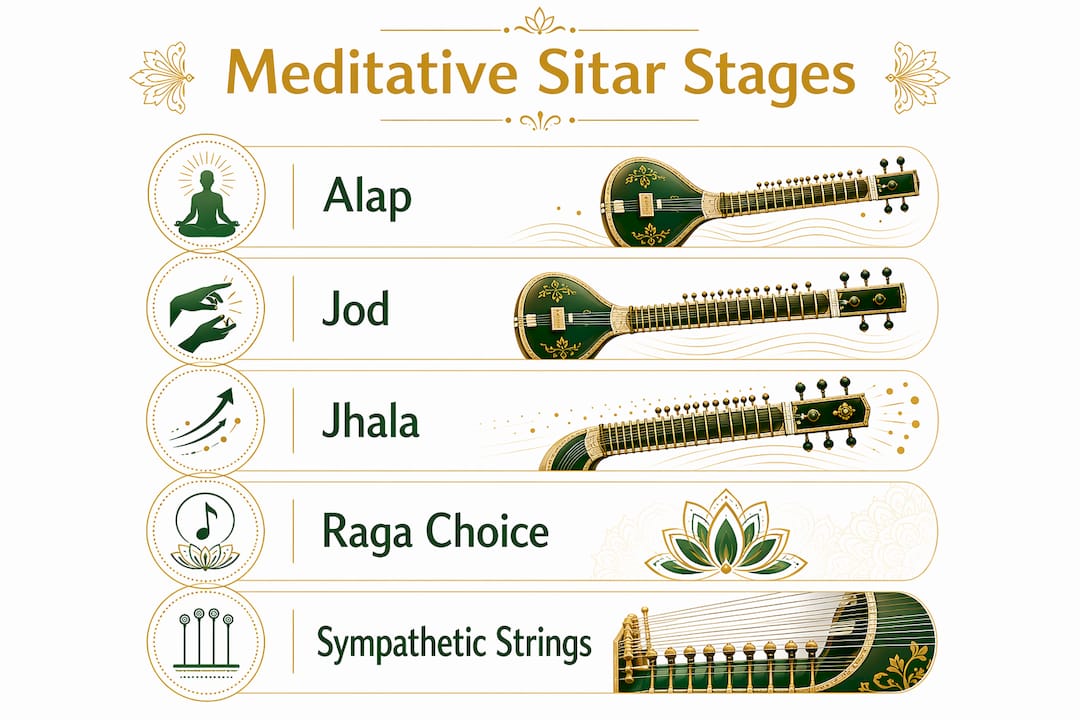
Specific ragas are chosen to match the meditation goal. Raga Yaman promotes peace and relaxation, while Ragas Bageshri and Bhimpalasi foster introspection and spiritual connection.
| Raga | Best time | Emotional effect | Meditation use |
|---|---|---|---|
| Yaman | Evening | Calm, longing, peace | General relaxation, breath work |
| Bageshri | Late night | Introspection, tenderness | Deep inward focus |
| Bhimpalasi | Afternoon | Devotion, spiritual warmth | Spiritual connection, emotional release |
| Todi | Morning | Serious, contemplative | Anxiety reduction, focused awareness |
| Bhairav | Dawn | Serenity, reverence | Opening meditation, grounding |
The sitar’s sympathetic strings vibrate automatically in response to the main notes, creating a layered resonance that helps regulate the nervous system. Focusing on that interplay during meditation is more effective than passive listening.
What mental health benefits does sitar music offer?
Sitar music reduces cortisol and heart rate, which puts your body into a genuine rest state. The sound patterns also stimulate dopamine and serotonin, the neurochemicals behind mood stability and a sense of well-being.
The sitar’s sound waves relax the nervous system, reduce anxiety, and balance emotional neurochemicals. Studies show that daily listening to ragas like Todi reduces state anxiety over the course of a week.
- Anxiety and stress relief through neurochemical balance
- Lower blood pressure and heart rate during active listening
- Improved concentration from engaging with complex melodic patterns
- Emotional processing supported by raga-specific mood frameworks
- Cognitive benefits from active sitar learning, including better memory and focus
Playing the sitar yourself adds another layer. The intricate finger patterns required to produce clean notes provide a cognitive challenge that builds concentration over time.
What experts say about the sitar’s role in modern healing
Sitarist Rishab Rikhiram Sharma has built an entire performance model around the sitar’s therapeutic potential. His shows open with breathing exercises, move into meditation, and then progress through alap, jod, and jhala before transitioning to other material.
Sharma describes his concerts as an antidote to digital overload, built around what he calls “taking a pause.” Controlled slowness, he argues, is itself a form of healing in a culture built on noise and constant stimulation.
Live sitar performance also creates something digital playlists cannot: natural, unpredictable variation in tone. That live uncertainty forces both performer and listener into the present moment, which is a core principle of mindfulness practice.
Rajib Karmakar, the sitarist and composer behind Sitarrajib, brings this same philosophy to his work in Los Angeles. His approach blends Indian classical depth with cinematic and contemporary sounds, making the sitar’s meditative qualities accessible across cultural contexts and modern wellness settings.
Pro Tip: If you can attend a live sitar performance, do it. The tonal variations you hear in person engage your attention in a way a recording simply cannot replicate.
How to use sitar music in your meditation practice
Getting the most from sitar music in meditation comes down to a few practical choices.
Start with raga selection. Match the raga to your goal. Use Yaman for evening wind-down, Bhairav for a grounding morning session, or Todi when anxiety is high. You can find curated sitar playlists on platforms like Hot Mic Radio’s chillout archive, which features ambient and meditative music well suited to this purpose.
Keep volume modest. Improper volume or an unsuitable raga choice can distract beginners. A correct ambient level turns the sitar into a sonic anchor rather than a distraction. Aim for a level where you hear the music clearly but could still hold a quiet conversation.
Try Yoga Nidra with sitar. Sitar music deepens the Yoga Nidra experience by enhancing the sensory transportation that the practice depends on. The calming effect of the right raga maximizes the quiet inner environment Yoga Nidra creates.
Allow 20–30 minutes per session. Sit comfortably, close your eyes, and focus on the resonance of the sympathetic strings. Let your breath follow the pace of the melody rather than forcing a rhythm.
What the research says about sitar and relaxation
The science behind sitar music and meditation is still developing, but the early findings are consistent. Performance structures like alap, jod, and jhala create slow-paced environments that directly counteract burnout. The sitar serves as a tool for collective emotional processing, blending traditional music with mental health therapies.
Research into brainwave and ECG responses to sitar music is currently underway, with results expected in the coming years. What practitioners already report aligns with broader music therapy findings: slow, structured music reduces cortisol, lowers heart rate, and activates brain regions tied to emotional regulation.
The sitar’s therapeutic potential includes stress relief, mood improvement, and cognitive benefits from active engagement. These effects are not limited to Indian classical music listeners. They show up across cultural backgrounds, which is part of why sitar music for meditation is finding a wider audience in the United States.
Key Takeaways
The sitar’s combination of drone resonance, sympathetic strings, and raga-based melodic structure makes it one of the most effective instruments for meditation and mental well-being.
| Point | Details |
|---|---|
| Ragas target specific states | Yaman, Bageshri, and Bhimpalasi each serve distinct meditation goals from relaxation to introspection. |
| Cortisol and heart rate drop | Sitar music reduces stress hormones and lowers heart rate, supporting genuine physical relaxation. |
| Sympathetic strings aid focus | The automatic resonance of sympathetic strings helps regulate the nervous system beyond passive listening. |
| Live performance deepens presence | Unpredictable tonal variation in live sitar keeps listeners anchored in the present moment. |
| Active learning adds cognitive benefit | Playing the sitar improves concentration and memory through the challenge of intricate finger patterns. |
Ready to experience the sitar’s meditative qualities firsthand? Sitarrajib offers live sitar recording sessions and cultural music experiences that bring the depth of Indian classical music into wellness, media, and event settings. Explore what Rajib Karmakar can bring to your next project at sitarrajib.com.