
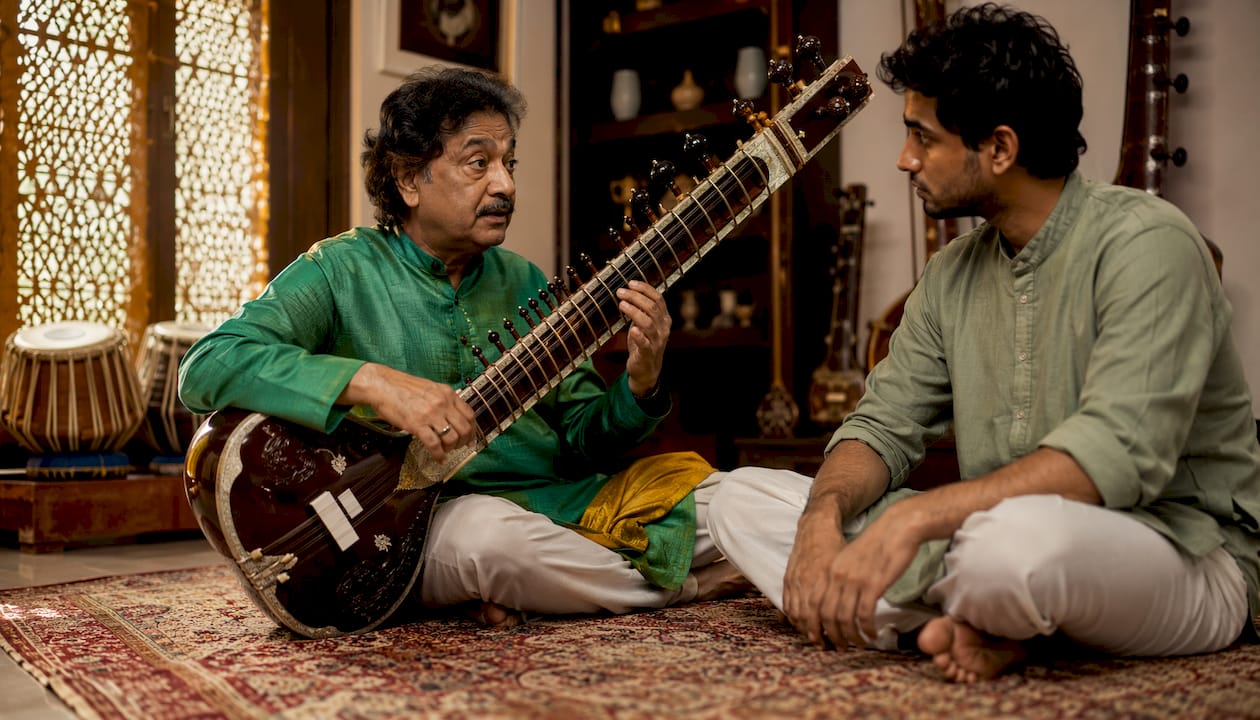
A guru in Indian classical music is far more than a teacher. The guru is the living conduit of lineage, technique, style, and ethical formation — a role that no textbook or curriculum can fully replace.
Here is what you need to know right away:
- The guru transmits the tradition itself. Because Indian classical music has no single fixed written canon, the guru carries the nuance, phrasing, and improvisational logic that notation cannot capture.
- The relationship is long-term. Serious study typically spans years, not semesters, and involves personal mentorship alongside musical instruction.
- Lineage matters. A guru teaches within a specific gharana (stylistic school), and that lineage shapes everything from ornament choices to repertoire priorities.
- Rituals are part of the process. Practices like pranama (bowing) and the Ganda Bandhan initiation ceremony formalize the relationship and signal reciprocal commitment.
- Modern formats exist. In the United States, non-residential and online mentorship models preserve the core of the guru–shishya relationship without requiring you to relocate.
- Sitarrajib (Rajib Karmakar), based in Los Angeles, and the Ali Akbar College of Music are two named examples of how this tradition operates in a U.S. context today.
Table of Contents
- What is the role of the guru in Indian music, historically?
- What does a guru actually teach beyond technique?
- How does knowledge pass from guru to shishya?
- What rituals and etiquette define the guru–shishya relationship?
- What are the four types of gurus, and how does the relationship develop?
- How does the guru model compare to Western conservatory training?
- How does the guru model work in the United States today?
- What ethical issues should you watch for in a guru relationship?
- How do you find and evaluate a guru in the United States?
- How Sitarrajib frames mentorship in a U.S. context
- What does serious study actually cost and require?
- Key Takeaways
- The guru relationship is worth taking seriously
- Start learning sitar with Sitarrajib in Los Angeles
- Useful sources and further reading
What is the role of the guru in Indian music, historically?
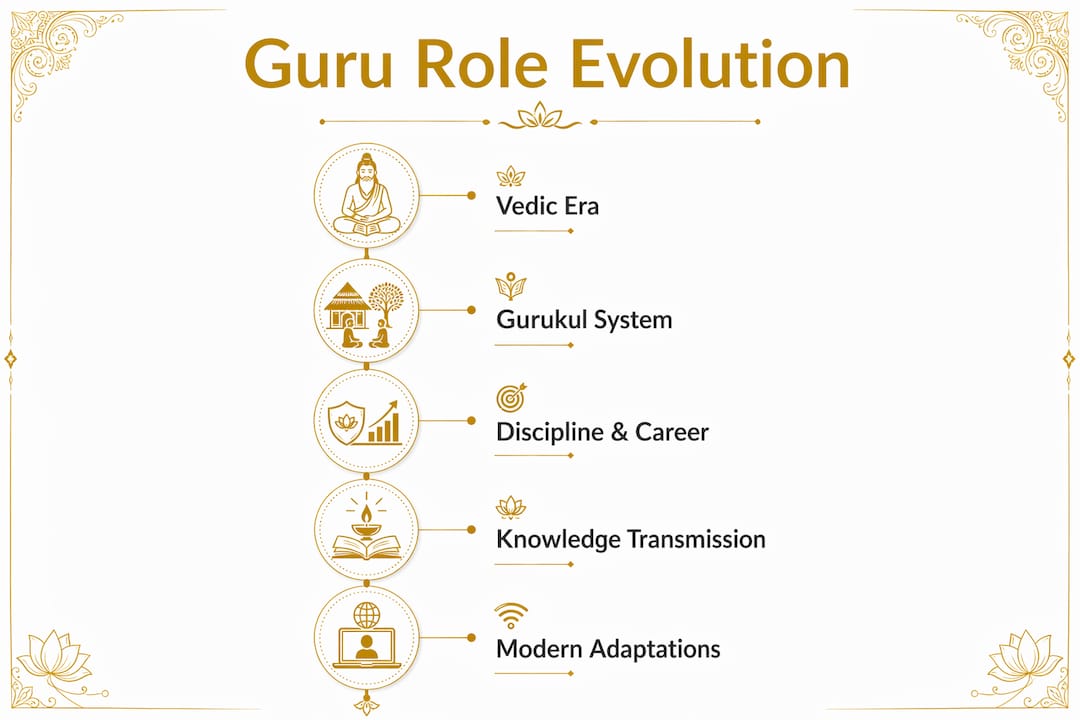
The guru–shishya parampara (the tradition of teacher-to-disciple transmission) traces back to Vedic India, where music was considered a sacred art and the Samaveda codified chants passed orally from teacher to student. The gurukul model formalized this: a shishya would live in the guru’s household, serve the family, and absorb music through constant proximity rather than scheduled lessons.
| Era | Model | Key Feature |
|---|---|---|
| Vedic period | Ashrama/gurukul residence | Full household immersion; music as spiritual practice |
| Medieval period | Gharana formation | Stylistic lineage; ustad–shagird (Muslim tradition) and guru–shishya (Hindu tradition) |
| Colonial/modern era | Sangeet Vidyalaya (music schools) | Classroom instruction alongside private mentorship |
| Contemporary | Hybrid/non-residential | Weekly lessons, online formats, periodic intensives |
Why did oral transmission dominate for so long? Because Indian classical music lacks a fixed written canon, so the guru became the primary repository of style, repertoire, and nuance. Notation records the skeleton; the guru provides everything else.
Key terms you will encounter:
- Gurukul: The guru’s household or school; literally “guru-family”
- Gharana / Bani: A stylistic lineage or school of thought (e.g., Imdadkhani gharana for sitar)
- Shishya: The disciple or student
- Ustad / Pandit: Honorific titles for a Muslim or Hindu master musician, respectively
What does a guru actually teach beyond technique?
The scope is wider than most students expect. A guru’s responsibilities cover musical technique, artistic approach, spiritual direction, and ethical formation — and historically, the guru’s authority often exceeded that of the student’s own parents.
On the musical side, a guru teaches:
- Sargam and alaap: Scale exercises and slow melodic exploration that build raga grammar
- Meend, gamak, and ornamentation: The subtle slides, oscillations, and embellishments that define a gharana’s sound; see the meend technique guide for a detailed breakdown
- Repertoire and composition: Specific bandishes (fixed compositions), gats, and raga-based forms that belong to the lineage
- Performance etiquette and stagecraft: How to present a raga, manage time, read an audience, and carry oneself on stage
Beyond music, the guru shapes discipline (saadhana), provides career introductions, and in traditional settings offered cultural immersion through household life. That last element is rarely possible in the U.S., but the mentorship dimension remains.
Pro Tip: When evaluating a potential guru’s lineage claims, ask for recordings of their own performances, the names of their guru and grand-guru, and the names of students they have trained to a professional level. Lineage that cannot be traced through real people and documented performances is a red flag.
How does knowledge pass from guru to shishya?
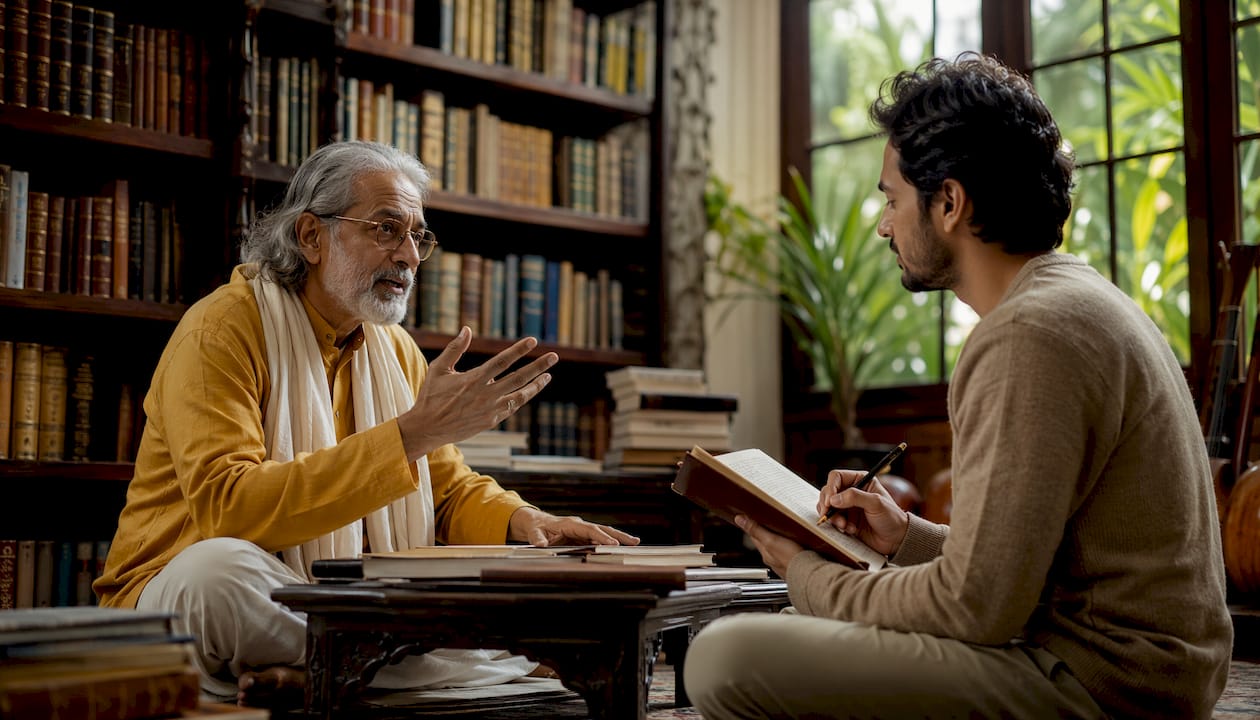
The core learning loop is: listen → imitate → internalize → refine. That cycle repeats across years, with the guru adjusting the challenge level as the student’s ear and hands develop.
Traditional methods included:
- Call-and-response: The guru plays or sings a phrase; the student repeats it immediately
- Silent observation: Watching the guru perform without explanation, then attempting to reproduce what was heard
- Improvisation instruction: The guru composes variations on the spot, and the student must follow in real time
- Riyaz (daily practice): Structured solo practice, often several hours per day, covering slow tala cycles, speed development, and specific technical drills
“Some methods of traditional training discouraged direct questioning from students; learning often emphasized silent observation and imitation as a pathway to internalizing subtleties.” — Darbar, Guru-Shishya Parampara
This can feel unfamiliar to U.S. students trained in Western classrooms where questions are encouraged. The logic behind it is that certain musical knowledge only becomes accessible after the body and ear have already absorbed it through repetition. Asking “why” too early can short-circuit the internalization process.
Understanding Indian music notation helps clarify why aural transmission carries so much weight: notation in Indian classical music records pitch and rhythm outlines, not the micro-inflections that define a style.
What rituals and etiquette define the guru–shishya relationship?
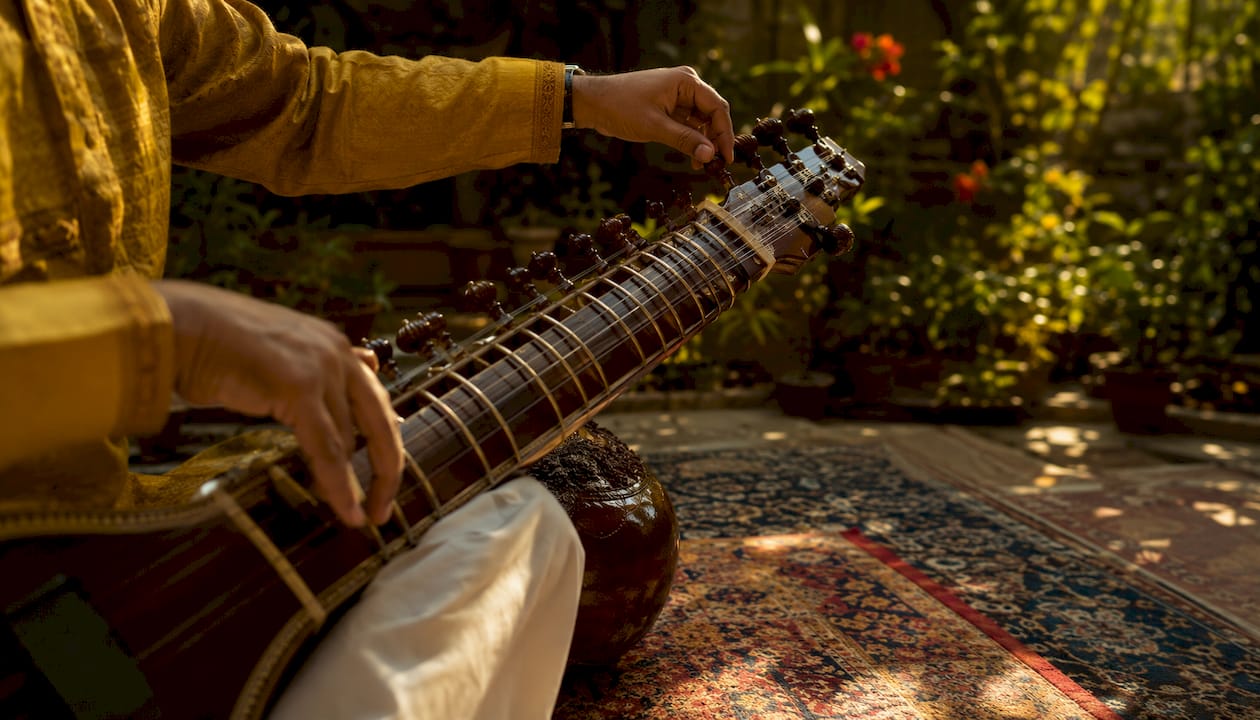
These practices are not ceremonial extras. They carry real psychological and social functions within the tradition.
Common rituals and their meanings:
- Pranama (touching the guru’s feet): A gesture of ego reduction. Touching the guru’s feet signals that the student is ready to receive non-verbal and embodied knowledge, not just information.
- Guru’s blessing (ashirvad): The guru places a hand on the student’s head or offers verbal acknowledgment; this marks the student as part of the lineage.
- Dakshina: An offering to the guru, historically in kind (food, service, money), now more commonly a fee or gift. It acknowledges that the knowledge given has value beyond a market transaction.
- Ganda Bandhan: A formal initiation ceremony in which a thread is tied around the student’s wrist, marking a permanent disciple relationship with reciprocal obligations on both sides.
| Practice | Traditional context | U.S. adaptation |
|---|---|---|
| Pranama | Performed at every lesson and public meeting | Optional; many U.S.-based gurus accept a respectful bow or namaste |
| Dakshina | Seasonal offerings; household service | Monthly tuition or a gift at significant milestones |
| Ganda Bandhan | Formal ceremony with family witnesses | Rare; reserved for students with multi-year commitment |
| Guru Purnima | Annual day of honoring the guru | Observed in Indian-American communities; concerts and gatherings |
If you are not from a South Asian background, you do not need to perform every ritual to be a respectful student. What matters is understanding what each gesture communicates and not dismissing it as superstition. The spiritual role of the guru in Hindu tradition runs deep, and even secular musical contexts carry traces of that framework.
What are the four types of gurus, and how does the relationship develop?
Not every guru relationship looks the same. Here are four practical types, each suited to different students and goals:
- Familial lineage guru: A master within your own family or community who begins teaching you as a child. Rare outside South Asian families, but produces some of the deepest stylistic immersion.
- Formal institutional guru: A master affiliated with a conservatory or college of music (such as the Ali Akbar College of Music in San Rafael, California) who teaches within a structured program while preserving one-to-one mentorship.
- Visiting master: A senior artist who gives periodic masterclasses or intensives. Common in the U.S. for students who cannot relocate; supplements regular weekly lessons.
- Online or distance mentor: A guru who teaches via video call, often combined with recorded feedback. Growing in acceptance since 2020 and now a legitimate path for committed students.
The relationship typically moves through these stages:
- Initial study: Regular lessons, basic technique, and raga grammar. No formal commitment yet.
- Dedicated discipleship: The student commits to one primary guru, reduces study with others, and begins learning the guru’s specific repertoire and style.
- Formal initiation (Ganda Bandhan): Reserved for students who have demonstrated years of commitment. The Ganda Bandhan ceremony formalizes a lifelong relationship with reciprocal obligations.
- Independent artist: The student performs publicly, teaches their own students, and maintains a peer relationship with the guru.
Hybrid models work well in the U.S.: weekly lessons with a local or online guru, combined with annual intensives when a visiting master comes through your city.
How does the guru model compare to Western conservatory training?
The differences are real and practical, not just philosophical.
| Dimension | Guru–shishya model | Western conservatory model |
|---|---|---|
| Duration | Open-ended; often 10+ years for serious study | Fixed degree programs (2–4 years typical) |
| Assessment | Guru’s judgment; performance readiness | Exams, juries, committee review |
| Learning emphasis | Aural; notation secondary | Notation primary; aural skills supplementary |
| Teacher authority | High; personal and artistic guidance included | Bounded by institutional policy |
| Cultural/ethical formation | Explicit; part of the relationship | Implicit at best; not a stated goal |
| Performance exposure | Early and frequent; concerts as learning | Recitals at program milestones |
Hybrid models in Western institutions — where guru-like mentorship coexists with formal assessment — show that the two systems are not mutually exclusive. The Rotterdam Conservatoire is one documented example. In the U.S., some university world music programs adopt a similar approach.
Who benefits most from each path?
- Guru model: Students aiming for stylistic depth, performance careers in Indian classical music, or authentic lineage transmission.
- Conservatory model: Students who need credentialed qualifications, want structured timelines, or are combining Indian classical study with Western music careers.
Pro Tip: If you are enrolled in a U.S. university music program, look for faculty who trained under named Indian masters. A professor with a documented guru lineage can offer both institutional structure and authentic mentorship.
The academic research on recontextualization confirms that practitioners recreate the core features of the guru–shishya relationship even in non-residential or digital formats — the form changes, but the function persists.
How does the guru model work in the United States today?
The guru–shishya system faces real pressures from mobility, modern working lives, and changing expectations. But it has adapted rather than disappeared.
Common formats available to U.S. students:
- Private weekly lessons with a local or online guru (most accessible entry point)
- Visiting masterclasses from touring artists (typically one to three days; intensive and focused)
- Conservatory modules at institutions like the Ali Akbar College of Music, which offers courses in North Indian classical music and has maintained a U.S. presence since 1967
- Online mentorship via video call, with recorded practice submissions for feedback
- Periodic residential intensives at summer programs or music festivals
| Format | Typical cost range (estimate) | Time commitment |
|---|---|---|
| Weekly private lessons | $80–$200 per hour | 1–2 hours/week plus daily riyaz |
| Visiting masterclass | — | 1–3 days |
| Conservatory semester course | — | 3–5 hours/week in class |
| Multi-year mentorship (dedicated) | Varies widely; often negotiated | years for full discipleship |
These are general market estimates, not published rates from any specific institution.
Sitarrajib (Rajib Karmakar), based in Los Angeles, represents this hybrid model in practice: private sitar lessons, workshops, and cultural music experiences that preserve the depth of traditional mentorship while fitting the realities of U.S. student life. The Ali Akbar College of Music offers a more institutional path, with structured courses taught by faculty trained in the Maihar gharana tradition.
What ethical issues should you watch for in a guru relationship?
The power imbalance in a traditional guru–shishya relationship is real. Most gurus are trustworthy and deeply committed to their students. But the structure can be misused, and you should know the warning signs.
Red flags to watch for:
- Demands for personal control outside of music (relationships, finances, daily schedule)
- Financial requests beyond agreed tuition, especially with pressure attached
- Isolation from other teachers, musicians, or community members
- Refusal to name their own guru or provide references from former students
- No clear lesson structure or documented teaching format
- Dismissing questions about boundaries as disrespect for tradition
Safeguards that protect you:
- Get a written agreement covering fees, lesson format, cancellation policy, and expectations
- Verify lineage by asking for the names of the guru’s own teachers and checking those names against public records or recordings
- Seek references from current and former students before committing
- Choose teachers affiliated with institutions that have accessible grievance channels
- Know that cultural respect and personal safety are not in conflict
Pro Tip: Setting a boundary in a cross-cultural mentorship does not have to feel confrontational. A simple “I want to make sure I understand the expectations clearly” opens the conversation without implying distrust. If a guru responds to that with anger or withdrawal, that response itself is informative.
The concept of brahmacharya and self-discipline in the guru tradition is about the student’s own practice and focus, not about surrendering personal autonomy to another person.
How do you find and evaluate a guru in the United States?
Start with these evaluation steps before committing to any teacher:
- Verify lineage. Ask who their guru was, and their guru’s guru. A teacher who cannot name their lineage clearly has not been through a traditional mentorship themselves.
- Check recordings. Listen to the teacher perform. A guru should be an active or documented performer, not only a teacher.
- Ask for student references. Talk to current or former students about their experience, progress, and how the teacher handled disagreements.
- Confirm the teaching format. How often do lessons happen? Are they structured? Is there a documented curriculum or is it entirely improvised?
- Ask about fees and expectations upfront. Ambiguity about money is a common source of friction; a good teacher will be clear.
- Inquire about initiation rituals. If Ganda Bandhan is expected, understand what it commits you to before agreeing.
Sample questions to ask a potential guru:
- “Who did you study with, and for how long?”
- “What does a typical lesson look like for a student at my level?”
- “How do you handle it if a student needs to pause or reduce lessons?”
- “Do you have students who have gone on to perform or teach professionally?”
- “What are your expectations outside of lesson time?”
A trial period of four to eight weeks is reasonable before any formal commitment. Many U.S.-based teachers offer this without hesitation. If a teacher pressures you to commit immediately, slow down.
How Sitarrajib frames mentorship in a U.S. context
Rajib Karmakar, the sitarist and educator behind Sitarrajib, trained in the North Indian classical tradition and now teaches and performs from Los Angeles. His approach reflects what contemporary non-residential mentorship looks like when it is done with integrity: structured private lessons, workshop intensives, and a teaching philosophy grounded in lineage without demanding the student’s entire life.
A typical student pathway with Sitarrajib looks like this:
- Beginner (months 1–12): Raga grammar, basic sargam, right-hand technique, introduction to tala cycles
- Intermediate (years 1–3): Alaap development, meend and ornamentation, first full raga presentations, introduction to composition
- Advanced mentorship (years 3+): Repertoire deepening, performance preparation, stylistic refinement, and guidance on professional pathways including sitar in commercial music and film scoring
You can see Rajib’s performance record and teaching credentials through his concert videos, which serve as direct evidence of the stylistic depth he brings to lessons.
What does serious study actually cost and require?
Committed study in Indian classical music in the U.S. typically means weekly private lessons plus substantial daily practice. Most serious students practice between one and three hours per day during the early years, increasing as technique develops.
For a student aiming at genuine proficiency, a realistic timeline is five to ten years of consistent study before independent performance is appropriate. Ganda Bandhan, if pursued, usually comes after at least three to five years with a single guru.
Cost-wise, weekly private lessons at current U.S. market rates run roughly $80–$200 per hour. An annual budget for lessons alone, at one lesson per week, falls in the range of $4,000–$10,000. Masterclasses and intensives add to that. Some students supplement with institutional courses, which carry their own tuition.
The investment is significant. What you get in return is not just technical skill but membership in a living tradition with a documented lineage stretching back centuries.
Key Takeaways
The guru in Indian classical music is the irreplaceable human link between a living tradition and the next generation of artists, and in the United States that role now takes forms that are accessible without relocating to India.
| Point | Details |
|---|---|
| Guru as living tradition | The guru carries nuance, style, and repertoire that notation cannot record; person-to-person transmission remains central. |
| Long-term commitment | Serious study spans years, not semesters; expect five to ten years before independent performance readiness. |
| U.S. formats are real | Private lessons, online mentorship, and institutional programs like Ali Akbar College of Music make authentic study accessible in America. |
| Vet before committing | Check lineage, recordings, and student references; ask about fees and expectations before any formal agreement. |
| Sitarrajib in Los Angeles | Rajib Karmakar offers private sitar lessons, workshops, and cultural experiences that model hybrid, non-residential mentorship with documented lineage. |
The guru relationship is worth taking seriously
The word “guru” gets used loosely in American culture, applied to fitness coaches and productivity bloggers. In Indian classical music, it means something specific and demanding. The guru holds the student’s artistic development as a personal responsibility, not a service transaction. That weight runs in both directions: the student owes consistent effort and respect; the guru owes honest, lineage-grounded teaching.
What often gets missed in Western discussions of this tradition is that the guru’s authority is not about control. It is about transmission. The goal, as the tradition frames it, is to produce artists who eventually need no external guide because they have internalized the tradition deeply enough to extend it themselves. A guru who keeps students dependent has misunderstood the job.
In the United States, the most honest version of this relationship looks like a committed teacher who knows their lineage, teaches with structure and transparency, and genuinely wants to see you perform. That is achievable here, without moving to Mumbai.
Start learning sitar with Sitarrajib in Los Angeles
If you are ready to study Indian classical music with a teacher who brings documented lineage, performance experience, and a clear teaching structure, Sitarrajib is a direct option. Rajib Karmakar offers private sitar lessons, workshops, and cultural music experiences from Los Angeles, with formats designed for U.S. students who want authentic mentorship without relocating.
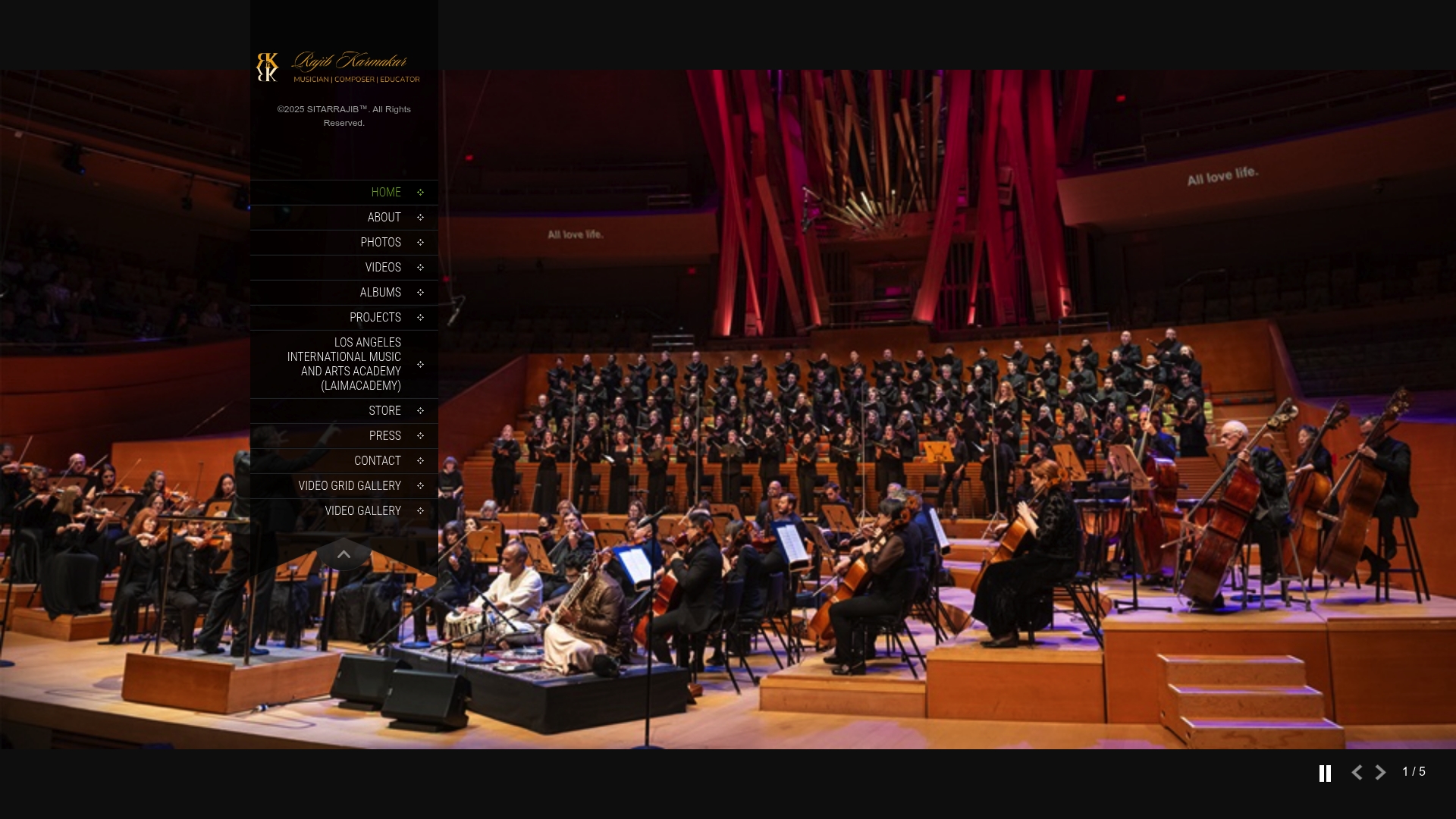
Whether you are a complete beginner or an intermediate player looking to deepen your gharana understanding, lessons are structured around your pace and goals. Rajib also performs at corporate events and cultural programs, so advanced students get a direct view of professional performance practice.
Visit sitarrajib.com to learn more about private lessons, upcoming workshops, and how to book a first session.
Useful sources and further reading
These are the strongest references for deeper study on the guru–shishya tradition and Indian classical music education:
- Guru-Shishya Parampara — South Asian Arts (SAA-UK): Clear overview of the tradition, Ganda Bandhan ceremony, and oral transmission; good starting point for newcomers.
- Guru-Shishya Parampara: Master and Disciple — Darbar: Practitioner-informed explanation of the guru’s full responsibilities, pranama, and the psychology of surrender in learning.
- Gurū-Śiṣhya Paramparā Analysis — Griffith Research Repository: Academic analysis of oral transmission, hybrid Western models, and why notation cannot replace the guru.
- The Virtual Guru and Beyond — Dominican University Thesis: Research on how technology and non-residential formats are reshaping transmission in the U.S. and globally.
- The Guru Recontextualized — Academia.edu: Fieldwork-based study of North Indian classical music teaching in Western professional training environments.
- Performing the “Classical”: The Gurukula System in Karnatic Music — UNT Digital Library: Ethnomusicology thesis on how the gurukul system functions as a performance of classicalness in South Indian music society.
- Sitarrajib — Rajib Karmakar, Sitarist and Educator, Los Angeles: Primary resource for private lessons, workshops, and performance information from a U.S.-based practitioner with documented lineage.