
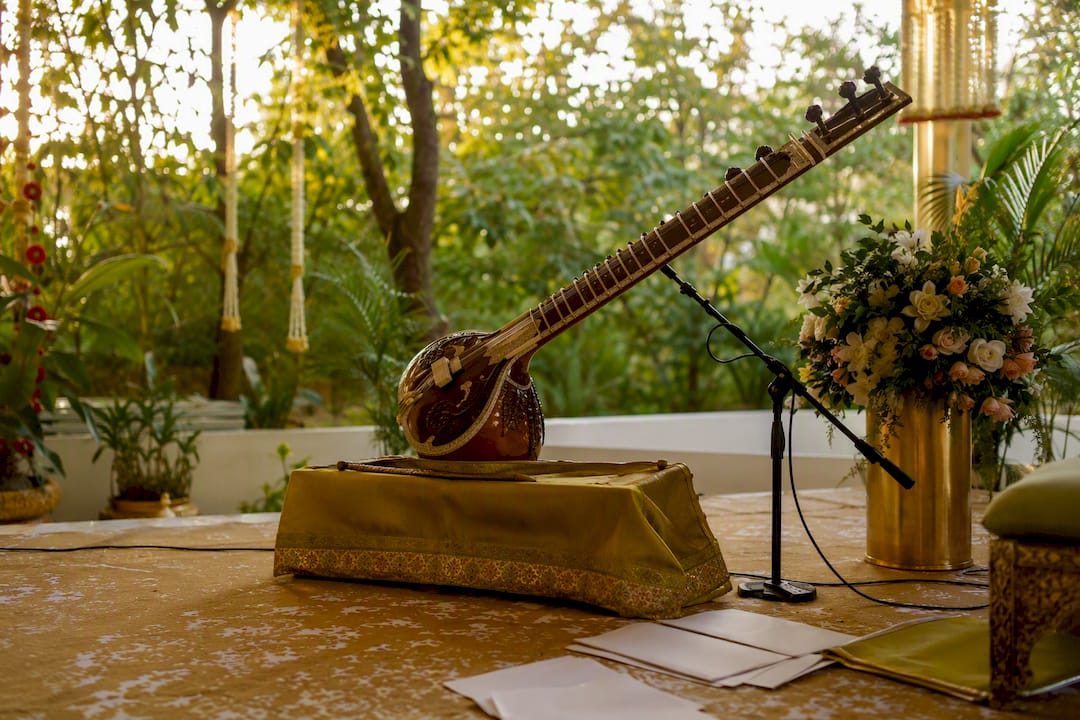
Use short, triumphant cues (fanfare or cinematic stings) for winner reveals, and ambient strings or a live instrumental set for background and dinner segments. Cinematic orchestral swells work best for openings and montages, while big band or electronic motifs suit contemporary award shows. For premium or culturally themed events, a live sitar set from Sitarrajib gives the ceremony a texture stock tracks can’t replicate.
TL;DR:
- Most ceremony music uses a combination of fanfares, orchestral swells, ambient strings, and live-themed instrumentation, depending on the event’s tone.
- Planning involves mapping specific tracks to each segment and preparing backup copies, with an emphasis on matching tempo and cue timing to the ceremony’s rhythm.
- Licensing requires clear, written permissions detailing usage scope, and stock music platforms often list licensing info, but live performances often involve additional costs.
- Using stock music is efficient for most events, but a live performance or custom composition adds unique cultural or branded significance that stock tracks cannot replicate.
- Proper audio setup, rehearsal, and communication with hosts and performers are vital to prevent technical failures and ensure seamless music transitions.
Table of Contents
- Award Ceremony Music: Six Types and Where They Fit
- How to Choose and Prepare Tracks for Each Ceremony Segment
- Licensing Award Show Instrumental Tracks the Right Way
- Where to Source Ceremony-Ready Music (and When to Hire Live)
- AV and Staging Tips That Prevent Music Mishaps
- Cost Considerations and Typical Licensing Terms
- Customizing Music for Your Ceremony’s Brand
- Technical Requirements for Music Playback and Sound Setup
- Coordinating Music Cues With Hosts and Presenters
- Why a Sitar Motif Can Make an Award Moment Unforgettable
- Book a Custom Sitar Set for Your Next Ceremony
- Sources
Award Ceremony Music: Six Types and Where They Fit
Picking the right award ceremony music starts with matching mood to moment, not scrolling a library and hoping something sounds right. Each segment of a ceremony has a job to do, and the music should reinforce it rather than compete with it.
- Fanfare or brass stings: Short bursts of horns and percussion for winner reveals and stage entrances. They last seconds, not minutes, and cue applause almost automatically.
- Cinematic orchestral swells: Sweeping strings and brass for ceremony openings and highlight reels, where you want emotional buildup rather than a quick jolt.
- Uplifting ambient strings: Soft, sustained instrumental beds for background music during dinner service or lulls between segments.
- Big band or jazz stings: Brass-heavy, swing-tempo cuts for gala entertainment or lighter recognition awards with a retro or upscale feel.
- Electronic or pop motifs: Synth-driven, rhythmic tracks for contemporary award shows aimed at younger or digital audiences.
- Live sitar or themed instrumentation: A distinct, culturally resonant sound for premium ceremonies, cultural galas, or any event where the organizers want the music itself to be memorable.
None of these categories is exclusive. Most ceremonies blend two or three, using fanfare for reveals and ambient strings everywhere else, then reserving something distinctive, like a live sitar interlude, for the moment they want people to remember.
How to Choose and Prepare Tracks for Each Ceremony Segment
Building a ceremony music plan is less about taste and more about mapping tracks to a timeline. Every ceremony has a rhythm: entrance, host remarks, presenter walk-ons, winner reveal, acceptance, transition, montage, exit. Music should follow that rhythm, not fight it.
- Build a music map first. List every program segment and assign one track or cue to each before you touch a playlist. This prevents the common mistake of picking great songs that don’t actually fit anywhere.
- Size your cues correctly. Stings for reveals typically run 6 to 12 seconds. Reveal tracks with buildup run 20 to 90 seconds. Background loops for dinner or mingling should run 2 to 4 minutes, looped or crossfaded.
- Match tempo to pacing. Higher BPM tracks (100 to 130) energize entrances and reveals; lower BPM (60 to 90) tracks work better for background segments where you want conversation, not attention.
- Prepare cue sheets and stems. AudioJungle track pages list tempo, length, and included edits, which makes it easier to request the exact stem or short version you need for AV.
- Confirm backup playback. Load every cue onto two devices minimum, and keep an offline copy in case venue WiFi or streaming access fails.
Pro Tip: Give your AV operator a printed cue sheet with track names, exact timings, and fade points, not just a shared playlist link. A phone losing signal mid-ceremony should never be able to derail your show.
Coordinate this map with your host early. A presenter who knows a sting is coming can pause for it instead of talking over it, which is the difference between a polished reveal and an awkward overlap.
Licensing Award Show Instrumental Tracks the Right Way
Royalty-free doesn’t mean rights-free, and that distinction causes more ceremony music headaches than anything else. A royalty-free stock track means you pay once, or subscribe, instead of paying per play. It does not automatically clear you for every use case, especially large public events with paid attendance or broadcast components.
P.R.O.-administered works, meaning music registered with a performing rights organization, may require a public-performance license depending on the venue, audience size, and whether the event is recorded or streamed. Audiohub’s award ceremony collections note that many providers include licenses covering both online and offline distribution, along with P.R.O.-exemption language for certain tracks, which is worth confirming before you build a whole show around one piece.
Before you commit to any track, collect:
- A written license document (PDF or on-page terms), not just a purchase receipt.
- The exact usage scope: event type, audience size limits, and whether recording or streaming is covered.
- Confirmation of P.R.O. exemption or an indemnity statement from the provider.
- Composer or publisher contact information, in case you need proof of rights later.
- A cue sheet and any venue performance agreement, filed together for easy retrieval.
Statistic Callout: AudioJungle and similar platforms list track metadata, including P.R.O. affiliation where applicable, directly on the product page, so this information is often available before purchase, not something you have to request separately. Keeping these documents accessible mirrors how platforms like Microsoft handle policy transparency: visible, retrievable, and ready if anyone asks.
Where to Source Ceremony-Ready Music (and When to Hire Live)
Stock music libraries remain the fastest route for most ceremonies. Licensing terms are predictable, tracks come in multiple edits, and you can filter by mood tags like “triumphant” or “ceremony” to narrow choices quickly.
Curated streaming playlists, like this Spotify collection of cinematic and triumphant tracks, are excellent for inspiration but not a substitute for licensing. Streaming a playlist at a public event doesn’t grant you the rights to use those specific recordings commercially.
Live performers change the equation entirely. A sitar set or themed instrumental performance adds something no stock library offers: a live, contextual moment tied specifically to your event. Consider hiring live when:
- The ceremony is premium, cultural, or branded around a distinct identity.
- Budget allows for a performer fee beyond stock licensing costs.
- You want a signature moment attendees will talk about afterward, not just functional background sound.
For a large-scale, budget-conscious ceremony, stock tracks make sense. For a gala meant to feel unforgettable, live music, including a set from Sitarrajib, does something a preset track simply can’t.
AV and Staging Tips That Prevent Music Mishaps
Most award ceremony music failures aren’t about song choice. They’re about playback breaking down mid-show, and that’s almost always preventable with a proper rehearsal.
- Run a full tech rehearsal with exact cue timings, not a casual walkthrough. Test every fade, every stem, and every backup device before doors open.
- Label every track and cue point clearly, and keep a printed cue sheet with exact times as a physical backup to any digital system.
- Coordinate silent cues between your MC and AV operator. A simple hand signal or earpiece cue prevents dead air or overlap during transitions.
- Test speech intelligibility over music. Run the host’s microphone against your background track at actual venue volume; if you can’t understand every word, lower the music bed before the event, not during it.
- Check room acoustics ahead of time. A quick EQ adjustment can fix muddiness in a large hall that would otherwise mask speech.
- Keep an emergency playlist ready, along with a standby performer option if a live element is part of your program.
Pro Tip: Test your reveal stings at the exact volume you’ll use live, not through laptop speakers during planning. What sounds punchy on headphones can feel jarring or weak through a full PA system.
Cost Considerations and Typical Licensing Terms
Award ceremony music budgets vary widely depending on route. Stock libraries typically price individual tracks anywhere from a few dollars to several hundred, depending on usage scope, broadcast rights, and exclusivity. Subscription models offer unlimited downloads within a licensing tier, which can be more economical if you need a dozen or more cues across a single event.

Licensing terms generally scale with three factors: audience size, whether the event is recorded or streamed, and whether the music will be used beyond the single event (in marketing clips or highlight reels, for example). A track licensed for a private, unrecorded ceremony typically costs less than the same track cleared for broadcast or online distribution afterward.
Live performance costs work differently. You’re paying for a fee tied to performance length, travel, and any custom arrangement work, not a per-use license. For many organizers, this ends up simplifying the budget conversation: one negotiated fee covers the performance outright, with no ongoing royalty tracking or usage-scope questions after the event.
Whichever route you choose, get every licensing term in writing before the event, not after. Verbal assurances from a vendor or platform don’t hold up if a rights question comes up months later, and it’s far easier to confirm terms during planning than to untangle them retroactively.
Customizing Music for Your Ceremony’s Brand
Stock tracks work well when you need something functional fast. But if your ceremony has a distinct identity, a film festival with a cultural theme, a corporate gala tied to a specific brand story, generic cues can feel disconnected from everything else you’ve built.
Custom composition solves that gap. A composer working directly with your event can create a signature motif, a short musical phrase that repeats across the reveal, the opening, and the closing, tying the whole ceremony together sonically. This is the same principle used in film scoring, where a leitmotif recurs to build recognition and emotional weight over time.
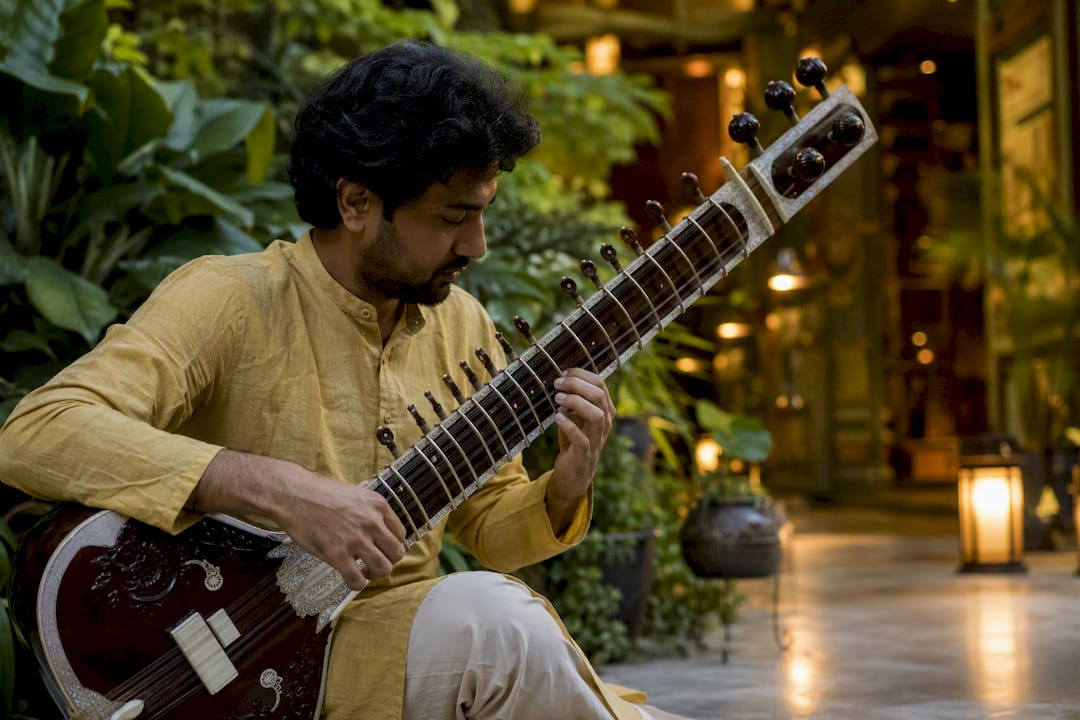
For ceremonies rooted in a particular cultural identity, working with a performer who can build original material around traditional instrumentation, sitar-based motifs, for instance, gives the event a sound nobody else has. Sitarrajib approaches this by composing short, ceremony-specific pieces rather than adapting generic catalog music, which means the entrance cue, the reveal sting, and the closing piece can all share a recognizable musical identity unique to that event.
If a full custom score isn’t in the budget, even a single custom-arranged opening or closing piece, paired with stock tracks for the rest of the program, gives the ceremony a distinctive signature without requiring an entirely bespoke soundtrack.
Technical Requirements for Music Playback and Sound Setup
Great award ceremony music falls flat without the right equipment behind it. Start with a playback source that supports instant cueing, ideally a dedicated audio software setup or a hardware player with clearly labeled tracks, rather than a phone running a streaming app.
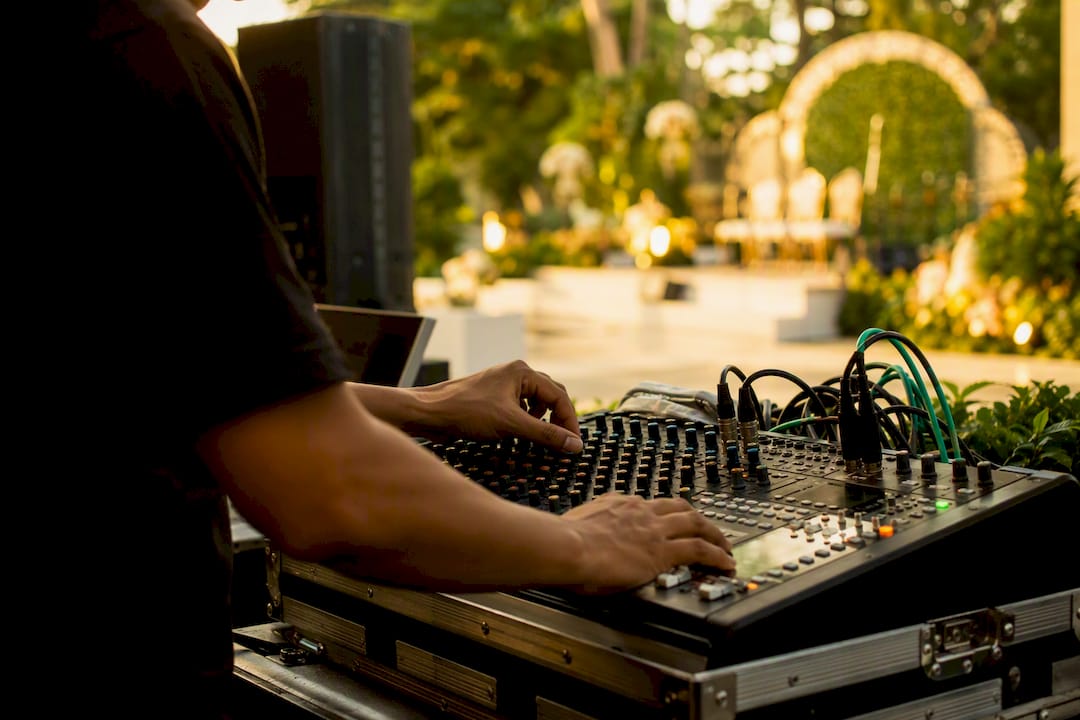
Route your playback through the venue’s main PA system, not a standalone speaker, so music and microphone audio share the same sound reinforcement and mix cleanly together. Confirm the venue’s system includes at least one channel dedicated to music separate from the host’s microphone, so your AV operator can adjust music volume independently during speech.
For live performers, work out power access, stage monitor needs, and microphone requirements well ahead of the event; acoustic instruments like the sitar often need a dedicated pickup or microphone setup distinct from a standard vocal mic. Sitarrajib’s technical requirements guide covers the specifics organizers typically overlook, like stage footprint and amplification needs for a traditional instrument in a modern PA setup.
Whatever the source, test the full signal chain, from playback device through the mixing board to the speakers, during your tech rehearsal, not on show day. A cable issue or output setting caught in rehearsal is a non-event; the same issue caught live is a visible failure in front of your entire audience.
Coordinating Music Cues With Hosts and Presenters
The best cue sheet in the world fails if your host doesn’t know it exists. Music cues need to be communicated as clearly as any other part of the program, not left as a surprise the AV team handles quietly in the background.
Share the full music map with your host and presenters during rehearsal, including exact moments where music will swell, fade, or cut. A host who knows a sting is coming after “and the winner is” can time their pause for maximum effect instead of talking over the reveal.
Establish a simple signal system between the stage and your AV booth: a hand cue, a light change, or an earpiece call. This matters most during unscripted moments, like an emotional acceptance speech that runs longer than planned, where your AV operator needs a clear signal for when to fade background music in or out.
Walk through transition points specifically. The moment between “please welcome our next presenter” and their actual walk-on is where music timing most often breaks down, either starting too early and stepping on the introduction, or starting late and leaving dead air. A ten-minute conversation with your host about these handoffs prevents most of the awkward pauses that make a ceremony feel unrehearsed.
Why a Sitar Motif Can Make an Award Moment Unforgettable
A single sitar phrase placed at the right reveal does something a brass sting can’t: it makes the audience lean in rather than simply react. That texture carries cultural weight and emotional specificity that generic cinematic cues, however well produced, tend to smooth over. Sitarrajib’s event examples and planning guides show how a well-placed motif can anchor a ceremony’s most memorable minute rather than just filling silence.
— Rajib
Book a Custom Sitar Set for Your Next Ceremony
If you want your ceremony to sound like nobody else’s, hiring a live performer solves what stock libraries can’t: a signature sound built for your specific event. Sitarrajib composes ready-to-amplify sets with custom cues for entrances, reveals, and closings, giving award ceremonies a culturally resonant sound that stock tracks and generic playlists simply don’t offer.
Every performance is planned around your venue’s technical setup and program timing, not adapted after the fact. The sitar performance logistics guide walks through exactly what organizers need to prepare, from stage requirements to cue coordination with your host. Learn more about the artist behind the sound on the About Rajib Karmakar page, then reach out to check availability for your ceremony date.
Sources
- Music for Award Ceremonies • audiohub
- Grand Award Ceremony, Music | AudioJungle
- Award Ceremony Music – playlist by Alec Koff Label