
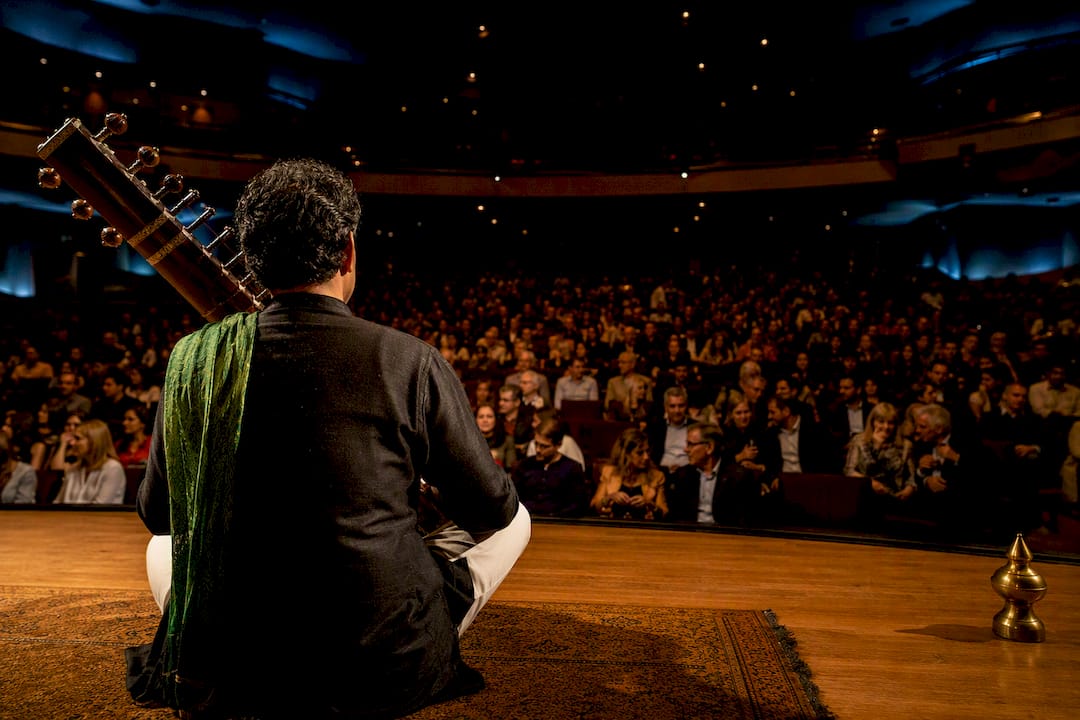
The most effective way to boost audience engagement in concerts is combining performer-led connection (clear communication, storytelling, eye contact) with pre-concert priming (talks, workshops) and multisensory staging cues. Research supports this: preparatory workshops raise participatory engagement, live shows produce stronger physiological synchrony than livestreams, and real-time mobile feedback tightens the loop between crowd and stage. You’ll find the full checklist below.
TL;DR:
- Engaging audiences is most effective when combining performer connection, pre-concert talks or workshops, and multisensory staging cues that enhance physiological synchrony.
- Building a concert setlist with strategic peaks, recovery moments, and controlled participation timing sustains audience engagement and emotional intensity.
- Pre-concert framing, such as short talks or demos, significantly boosts participation, especially among newcomers, by shifting focus and expectations.
- Real-time audience cues like applause, posture, and phone use allow performers to adapt pacing and interaction levels, maintaining energy throughout the show.
- Simple, well-coordinated tech tools, combined with thoughtful staging and audience monitoring, can deepen involvement without technical failures or privacy concerns.
Table of Contents
- Core Strategies for Programming and Performance
- How Do Pre-Concert Talks Improve Engagement?
- Reading the Crowd and Adapting in Real Time
- What Tech Actually Helps With Audience Interaction?
- Designing Staging and Lighting for Deeper Immersion
- VIP Experiences and Meet-and-Greets as Engagement Strategy
- Measuring Engagement: What to Track and Why
- How Sitarrajib Has Applied These Tactics Onstage
- A Concert-Ready Planning Checklist
- What I’ve Learned About Reading a Room
- Booking Sitarrajib for Programming That Prioritizes Connection
- Sources
Core Strategies for Programming and Performance
You can’t fake a connection with an audience that doesn’t know who you are yet, and you can’t read a room you haven’t looked at. Before you touch your instrument, spend five minutes reading the room: ticket type (subscription vs. single sale), age spread, and whether people are chatting with strangers or staring at phones. That single scan changes how much you explain, how long you talk between pieces, and whether you open with something familiar or something bold.
Stagecraft matters more than most performers admit. Long, meandering stage talk kills momentum. Short, specific remarks (30 to 45 seconds, one idea per piece) hold attention without turning the concert into a lecture. Eye contact with different sections of the room, not just the front row, spreads the feeling of being seen. Physical movement, even subtle, gives visual anchors for people who process music better with something to watch.
Setlist structure is where most organizers underinvest. A concert that peaks too early leaves the back half feeling flat; a program with no peak until the encore loses people at minute forty. Build in recovery moments (a quieter piece, a story, a pause) right after your most intense passage, and place participatory moments during those recovery windows rather than during your most demanding musical material.
Participation works best when it doesn’t compete with the music itself. Here’s a practical order of operations for weaving it in:
- Open with observation, not instruction. Watch the first five minutes before deciding how interactive to go.
- Introduce one low-stakes participatory element early (a guided clap, a short call-and-response) so people learn the “rules” before you ask for more.
- Reserve full audience singalongs or extended interaction for the second half, once trust and familiarity have built.
- Debrief the participatory moment briefly, thanking the crowd, before moving into the next piece.
- Close on a musical high point, not a participatory one, so the emotional peak stays tied to the performance rather than the gimmick.
Format experiments involving over 800 participants found that audience participation and moderation shift emotional alignment measurably, and the formats that depart furthest from a standard concert produce the strongest physiological response. That’s a strong argument for at least one genuinely different moment per set, not a whole show built around novelty.
How Do Pre-Concert Talks Improve Engagement?
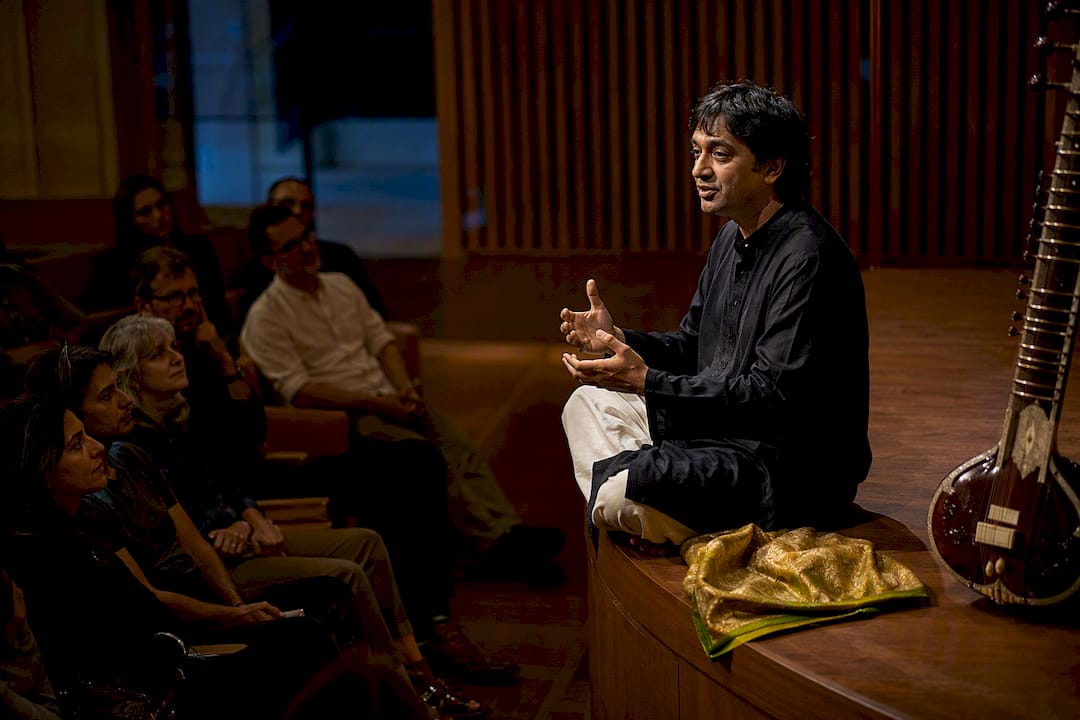
Pre-concert framing works because it changes what the ear listens for before a single note plays. A study of 273 participants found that participatory music elements increased engagement most among audiences who attended a preparatory workshop beforehand, more than demographics or prior musical training predicted. Framing beats familiarity.
You don’t need an hour-long lecture to get this benefit. Consider these format options:
- A 10 to 20 minute talk covering the piece’s origin, structure, or cultural context
- A short instrument demo showing a technique the audience will hear later in the set
- A hands-on mini workshop (10 minutes, no experience needed) teaching a rhythm or phrase the audience will hear echoed onstage
- Printed program notes or a short audio guide for people who arrive late or prefer to read
Major orchestras typically schedule pre-concert conversations 30 to 60 minutes before curtain, often free to ticket holders, in a lobby or side room close to the main hall. That timing window matters: too early and people haven’t arrived; too close to showtime and it competes with settling into seats. Juilliard’s long-running Prelude series follows a similar model, keeping sessions brief, free, and physically near the performance space.
The trick with newcomers is framing without condescension. Explain context, not basics. Assume curiosity, not ignorance, and regulars will stay engaged too.
Reading the Crowd and Adapting in Real Time
Every performer develops a private vocabulary for reading a room, but the signals are learnable. Watch for these:
- Applause length and timing. Early, tentative claps after a movement often signal confusion about concert etiquette, not lack of enthusiasm.
- Posture shifts. Leaning forward means engagement; slumping or checking a watch means you’re losing the room.
- Phone use. Occasional photos are fine; sustained scrolling mid-piece is a signal to shorten your next spoken segment.
- Facial expression clusters. A few visible smiles or closed eyes in the front rows often predict the wider room’s mood.
Micro-adjustments should be small and reversible. If energy is dropping, shorten your next spoken intro by half, pick up the tempo slightly on the next piece, or drop in one unscripted, friendly line to reset attention. If the room is already locked in, resist the urge to over-explain. Let the music carry the moment.
There’s a judgment call every performer eventually faces: prioritize the social experience (talking more, inviting participation) or the musical intensity (letting a difficult passage breathe without interruption). Neither is universally correct. A late-set encore slot favors social warmth; a technically demanding centerpiece usually favors silence and focus.
Pro Tip: Keep two or three “filler” lines memorized and ready for exactly this situation (“This next piece always changes depending on the room, so let’s see where it goes tonight”) so you’re never caught improvising cold in front of a thousand people.
What Tech Actually Helps With Audience Interaction?
Mobile interaction tools can genuinely strengthen the connection between stage and seats, but only when they’re simple enough to survive bad venue Wi-Fi and impatient thumbs. The realistic options include:
- In-app voting for setlist order or encore choice
- Timed push notifications inviting a singalong moment or Q&A submission
- Location-based lighting or visual cues triggered by audience movement, similar to experimental installations like the Audience Responsive Canopy
A proposed multimodal real-time feedback model combining mobile interaction with physiological cues showed that closed-loop systems, where measured audience response automatically triggers a lighting or content adjustment, can meaningfully increase participation. The catch is that this only works when the feedback loop is tuned to the performance’s actual rhythm, not bolted on as a gimmick.
Before you commit to any of it, plan for the failure modes:
- Privacy: Be explicit about what data you’re collecting and why; nobody wants a facial-recognition surprise at a concert.
- Connectivity: Venue Wi-Fi fails more often than vendors admit. Always have a non-digital fallback (a raised-hand vote, a paper card) ready.
- Friction: If downloading an app takes longer than 90 seconds, most people will give up before the moment passes.
Build interaction triggers directly into your cue sheet so lighting or mobile prompts fire during musically low-risk transitions, not mid-phrase, and define in advance what happens if latency spikes.
Designing Staging and Lighting for Deeper Immersion
Lighting and visual staging do more than decorate a stage. They direct where attention goes, and that has measurable physiological consequences. Live, in-person audiences show stronger heart-rate synchrony than livestream viewers, and design choices that emphasize shared presence (seating arrangement, shared visual focus, a unifying lighting cue) appear to amplify that effect.
Practical staging guidance:
- Run a full dry run with lighting and sound cues timed to the actual setlist, not a placeholder track.
- Coordinate with your technician using a written cue sheet with time codes, not verbal shorthand during soundcheck.
- Low-cost options (a single color wash shift, a spotlight narrowing during a solo) often outperform elaborate visual effects that pull focus from the musicianship.
- Avoid competing visual noise. If the lighting design changes more often than the music does, it’s working against you, not for you.
VIP Experiences and Meet-and-Greets as Engagement Strategy
A well-run VIP add-on does two things at once: it deepens the connection for your most invested attendees and creates a revenue line that doesn’t require selling more general tickets. The strongest versions typically include brief one-on-one time with the artist, a photo opportunity, a signed item, and early venue access.
Running it well is mostly a scheduling and communication problem:
- Send confirmation details and arrival windows 5 to 7 days before the show, not the morning of.
- Assign one staff member solely to VIP check-in so the artist isn’t managing logistics.
- Cap group size and time per interaction so the performer has recovery time before going onstage.
- Set expectations clearly in advance (photo only vs. extended conversation) so nobody feels shortchanged in the moment.
Measuring Engagement: What to Track and Why
You don’t need a research lab to measure whether your engagement tactics are working, but you do need more than gut feeling. A few low-effort metrics tell you most of what you need:
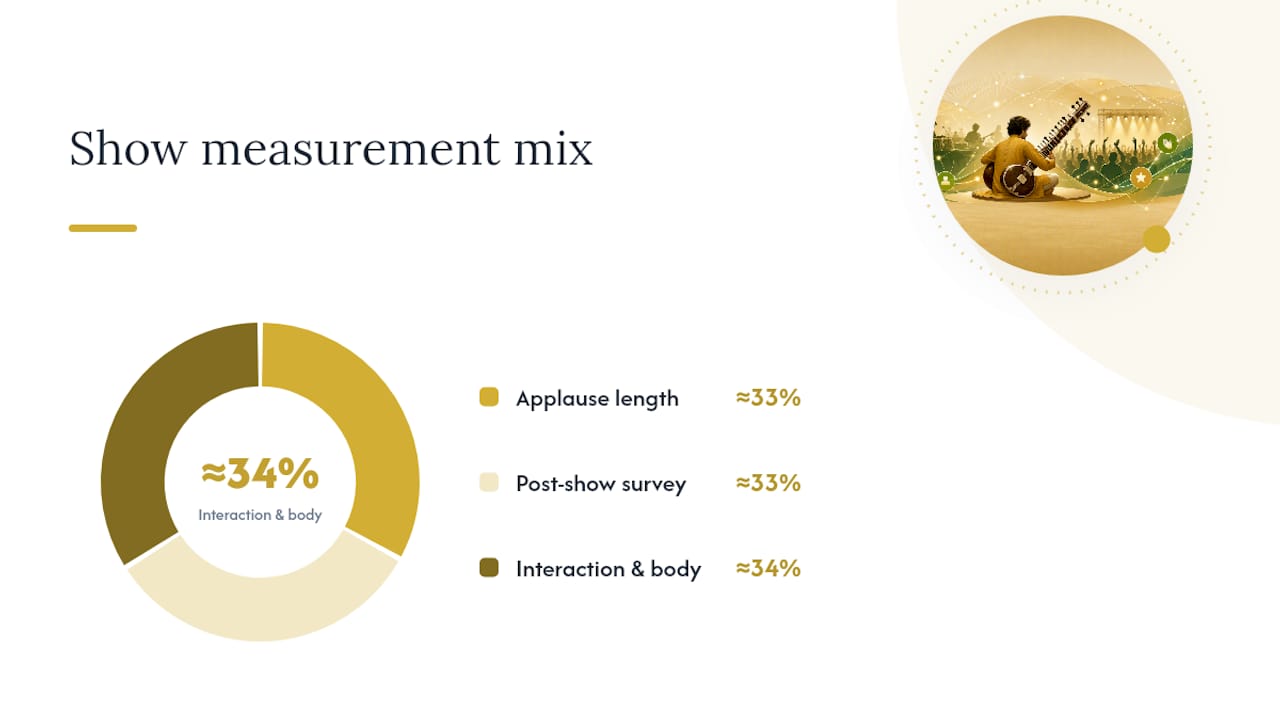
- Applause length and placement, tracked informally by staff, signals which moments actually landed.
- Short post-show surveys (three to five questions, distributed digitally or on paper) capture self-reported emotional response while it’s still fresh.
- Interaction rates on any mobile tool you deployed (vote participation, prompt response rate) show whether the tech added value or just sat unused.
Controlled research comparing live and livestreamed audiences found stronger physiological synchrony among in-person attendees, a reminder that self-report surveys only capture part of the picture; the body often registers engagement before the brain reports it. You won’t have access to heart-rate monitors for a typical booking, but you can treat visible physical response (movement, stillness, collective breath) as a rough proxy.
Combine the behavioral numbers with the survey data in a single lightweight spreadsheet after each show. Even three data points per event, tracked consistently across a season, will show you which tactics are earning their place in your set.
How Sitarrajib Has Applied These Tactics Onstage
These aren’t abstract tactics for us. A short pre-show briefing, five to ten minutes with the house team, covering where the sitar’s tuning pauses fall and where a quiet passage needs the room dimmed, has repeatedly turned a good performance into a memorable one. A few specifics from that practice:
- Scripted intimate moments (a short explanation of raga structure before a piece) consistently deepen audience focus during the longer improvisational sections.
- FOH notes matter more for sitar than for most Western instruments. Sympathetic string resonance needs specific microphone placement, and a rushed soundcheck shows up immediately in tone.
- VIP fulfillment works best when kept brief and specific: a short conversation about the instrument itself, rather than generic small talk, tends to leave a stronger impression.
- Post-show conversations, even informal ones near the stage, often surface which moments in the set resonated most, feedback that shapes the next program.
Organizers who’ve booked repeat performances tend to report that the pre-show briefing alone changes how smoothly the night runs, since technical surprises during a raga performance are far costlier than during a standard band set.
A Concert-Ready Planning Checklist
- Pre-show: Profile the audience, schedule a pre-concert talk or workshop, run a full technical test, and brief all staff on cues and fallback plans.
- During the show: Watch for applause, posture, and phone behavior; adjust pacing and spoken segments in real time; trigger any tech interactions at pre-planned low-risk moments.
- Post-show: Distribute a short survey, follow through on VIP commitments promptly, and log behavioral and survey data before the next booking.
- Fallbacks: Have a non-digital backup for every tech-dependent moment, and know your Plan B if the schedule runs long.
For more on integrating this kind of planning into a full event, see this guide on planning a music experience that resonates.
What I’ve Learned About Reading a Room
The biggest mistake I see performers make isn’t playing too safe or too experimental. It’s deciding in advance, before ever looking at the room, exactly how much talking or participation the night will involve. The audiences that respond best are the ones you actually watched first. If you’re planning a concert and want to think through where framing and participation fit into your specific program, reach out and let’s talk.
— Rajib
Booking Sitarrajib for Programming That Prioritizes Connection
Organizers can build the exact tactics covered above, pre-concert framing, storytelling, real audience read and response, directly into a booking, without having to train a performer on any of it from scratch. Live sitar performances can come with the option of a short pre-concert talk or demo built into the program, with tailored explanations designed to introduce Indian classical structure.
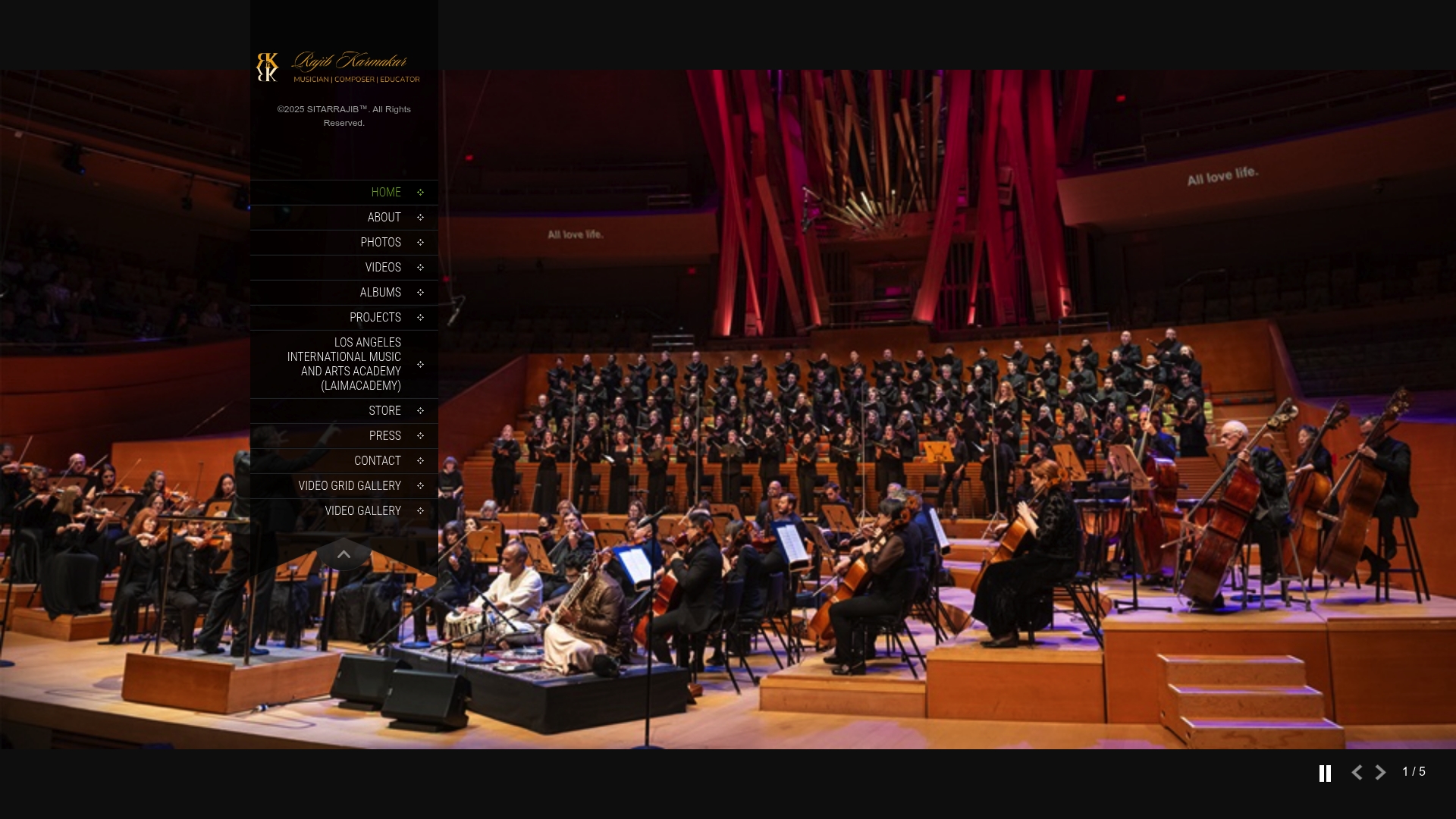
Bookings include clear technical requirements upfront (microphone placement, stage layout, timing needs) and programming input on where a short workshop or talk fits best in the run of show. That kind of coordination matters most for festivals and multi-act lineups, where a mistimed talk or rushed soundcheck can throw off an entire evening. Full details on how the sitar integrates into festival programming, including talk formats and timing, are laid out in this festival programming guide. If you’re planning a season or a single date and want to build audience framing into the booking from day one, check available dates and start the conversation.
Sources
For deeper background, see the peer-reviewed studies on participatory music engagement, physiological synchrony in live audiences, and concert format experiments, along with practical programming ideas from Ocean Theatre Co.’s past shows.
- The audience as artist? The audience’s experience of participatory music – Jutta Toelle, John A Sloboda, 2021
- Live music enhances self-reported audience immersion and physiological synchrony compared to live-streaming | Scientific Reports
- Concert formats influence how audiences experience live classical music | Humanities and Social Sciences Communications
- Real-Time Feedback and Audience Engagement Optimization in Music Performance through Interactive Mobile Technologies