
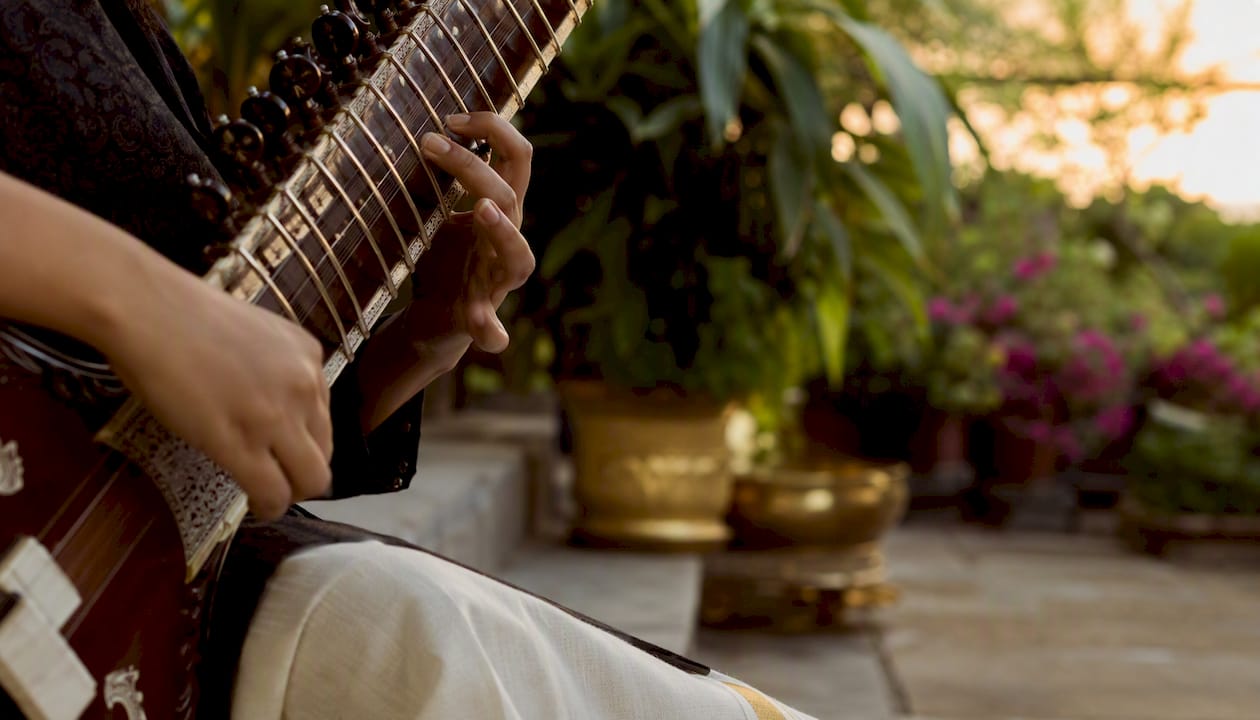
“Saami Ninne” (also written “Saami Ninne Kori”) is the definitive sree ragam varnam in the Carnatic repertoire, composed by Karur Devudu Iyer and set to Adi tala. If you need the score right now, Patantara has printable notation images and Shivkumar.org has the full lyrics with swara groupings. For listening, start with the Hyderabad Brothers or Bombay Sisters recordings on YouTube or Spotify.
Quick orientation before you dive in:
- Raga: Sree (Carnatic Sree ragam, not Hindustani Shree)
- Tala: Adi tala, typically sung in 2-kalai
- Composer: Karur Devudu Iyer
- Level: Intermediate varnam, taught after foundational pieces
- Notation sources: Patantara (printable images), Shivkumar.org (lyrics + swaras)
- Canonical recordings: Hyderabad Brothers, Bombay Sisters, T.M. Krishna, G Sreevidya
Table of Contents
- What are the quick facts for the Sree ragam varnam?
- Which recordings should you study first?
- How do you practice Saami Ninne step by step?
- How does mastering Saami Ninne build your raga fluency?
- Where do you get scores, tools, and tutorials for this varnam?
- Key Takeaways
- Why varnams are the work that actually matters
- Ready to learn Saami Ninne with guided instruction?
- Useful sources
What are the quick facts for the Sree ragam varnam?
| Detail | Value |
|---|---|
| Composition name | Saami Ninne (Saami Ninne Kori) |
| Raga | Sree (Carnatic Sree ragam) |
| Tala | Adi tala (2-kalai practice standard) |
| Composer | Karur Devudu Iyer |
| Language | Telugu |
| Arohanam | S R2 M1 P N2 S |
| Avarohanam | S N2 P D2 N2 P M1 R2 G2 R2 S |
| Classification | Audava-vakra-sampurna; one of the five Ghana ragams |
| Typical performance length | Varies depending on speed and chittai swarams |
Sree is classified as audava-vakra-sampurna) and derived from the 22nd melakarta, Kharaharapriya. The ascent omits Ga and Da, while the descent uses a vakra (zigzag) pattern, which is what makes accurate phrasing so demanding.
For tala practice, Adi tala runs 8 beats (4+2+2). In 2-kalai, each akshara doubles, giving you more space to place swaras cleanly. Most teachers start students at a comfortable madhyama-kalam and only add speed once the swara groupings are secure.
Which recordings should you study first?
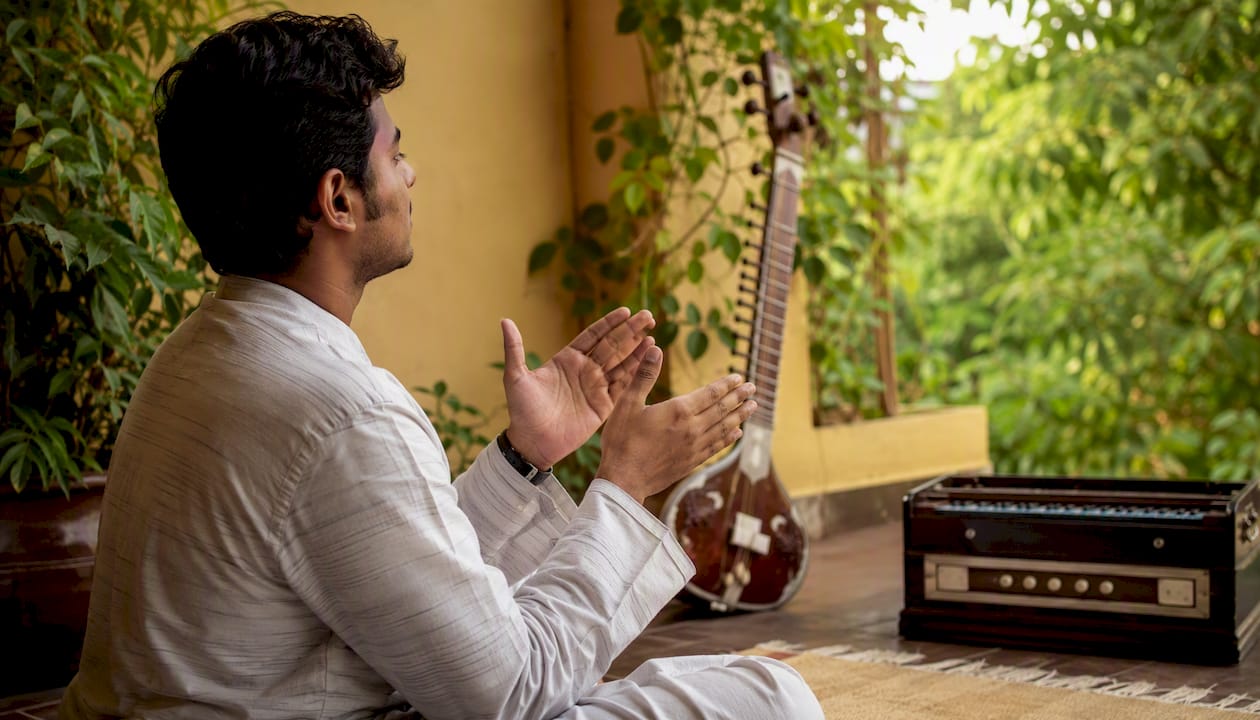
Start with these four performances, each of which highlights something different about the varnam.
- Hyderabad Brothers — Their rendition is widely considered a reference recording for this varnam. The pallavi phrasing is clean and unhurried, making it ideal for notation-matching. Find it on Spotify and YouTube by searching “Samininne Varnam Sree Raagam Adi Hyderabad Brothers.”
- Bombay Sisters — Their version emphasizes the vocal gamaka shapes in the mukthayi swaram. Listen specifically to how they handle the vakra descent in the avarohanam passages.
- T.M. Krishna — A more concert-oriented rendition with a faster chittai swaram section. Use this once you have the pallavi and anupallavi memorized; it shows you where the piece can go at full speed.
- G Sreevidya — Available on YouTube; her version is slower and pedagogically clear, which makes it useful for beginners working through the charanam for the first time.
Listening priorities, in order:
- First, learn the pallavi melody by ear before you open the score. Sing it back without looking.
- Next, focus on the mukthayi swaram. This is where tala alignment gets tested. Clap the tala while listening and note where each swara group lands.
- Then move to the charanam. The chittai swarams accelerate; listen for how each artist handles the speed transition.
Raga Surabhi also offers audio demonstrations of Sree ragam’s signature phrases, which helps you recognize the raga’s identity before you study the full varnam.
Pro Tip: Loop a 30-second segment of the mukthayi swaram on repeat for 10 minutes. Sing along each time. That repetition builds muscle memory faster than running through the whole piece once.
How do you practice Saami Ninne step by step?
Follow this progression. Do not rush to the next stage until the current one feels steady.
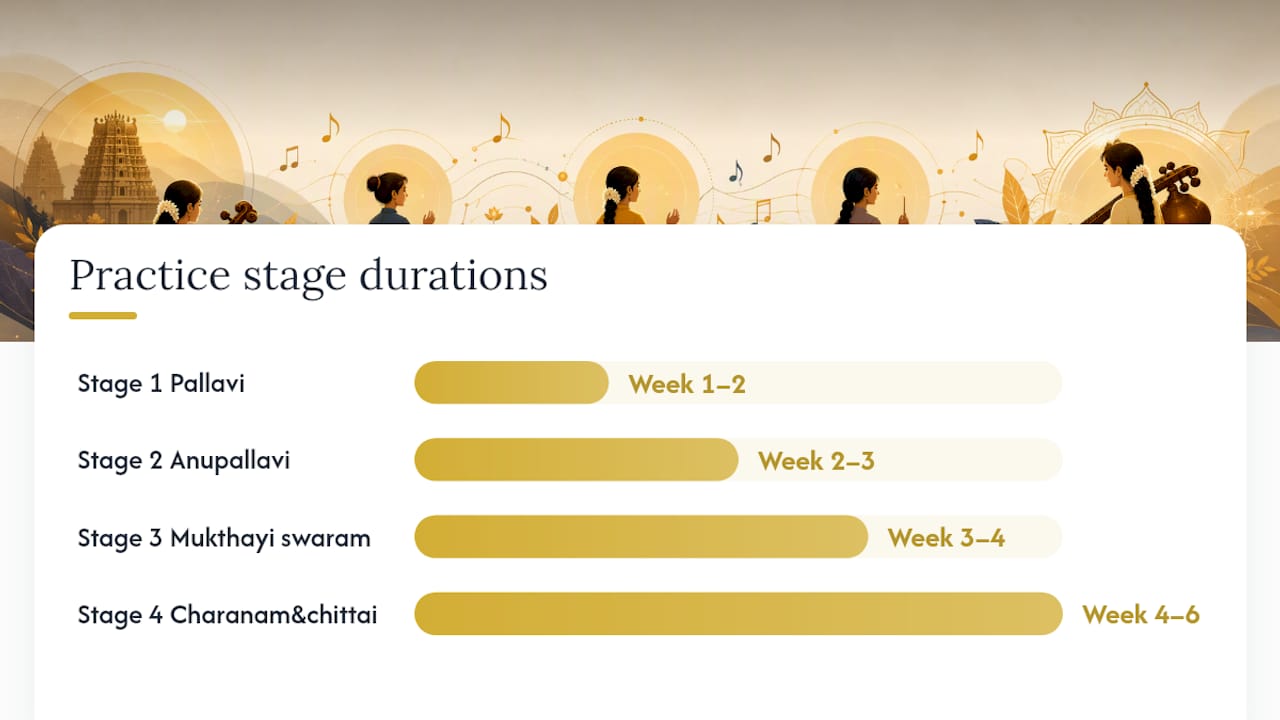
Stage 1: Pallavi only (Week 1–2)
- Sing the pallavi slowly with a drone (Sa on your tonic)
- Clap Adi tala while singing; confirm the eduppu lands on beat 1
- Repeat until you can sing it without looking at the score
Stage 2: Anupallavi (Week 2–3)
- Add the anupallavi; connect it to the pallavi without a pause
- Focus on the upper-register phrases; Sree ragam’s Ni and Pa in ascent need clean intonation
Stage 3: Mukthayi swaram (Week 3–4)
- This swara passage is the first real tala test. Use a metronome set to your comfortable madhyama-kalam.
- Sing each swara group slowly, then at tempo. Check that the final swara of each group lands on the correct akshara.
Stage 4: Charanam and chittai swarams (Week 4–6)
- Learn the charanam sahityam first, then add the chittai swarams
- Practice the chittai swarams at half speed before building up
Stage 5: Full piece at two-kalai (Week 6+)
- Run the complete varnam in 2-kalai. This is where breath control and finger coordination become critical.
- Record yourself and compare against one of the canonical recordings.
Common pitfalls to watch for:
- Losing the vakra contour in descent: The avarohanam is not a straight scale. Students often flatten it into a simple descending run. Practice the descent phrase (S N2 P D2 N2 P M1 R2 G2 R2 S) slowly and in isolation.
- Incorrect nyasa points: Sree ragam resolves on specific swaras (Pa and Ri are strong nyasa points). Landing on the wrong swara at a phrase ending sounds out of raga.
- Rushing the chittai swarams: Speed comes from clarity, not from hurrying. Keep each swara distinct even at fast tempo.
Understanding microtonal intonation and gamaka execution helps you shape the subtle oscillations that define Sree ragam’s character.
How does mastering Saami Ninne build your raga fluency?
Varnams function as a raga’s blueprint, according to established Carnatic pedagogy. Every gamaka idiom, every characteristic prayoga, and every tala-control skill you need for improvisation (kalpana swaras, neraval) is embedded in the varnam structure. Mastering Saami Ninne means you have internalized Sree ragam’s melodic grammar, not just memorized a piece.
For teachers using this varnam in class or workshop settings:
- Voice culture focus: — The varnam’s range and gamaka density make it excellent for developing breath control and vocal flexibility, consistent with Dr. Rose Muralikrishnan’s guidance on using varnams for voice culture and rhythmic discipline.
Pro Tip: Assign the mukthayi swaram as a standalone homework exercise. Students who can sing it accurately in isolation, without the pallavi as a crutch, have genuinely internalized the tala structure.
If you are exploring the role of a guru in Indian music learning, the varnam is exactly the kind of foundational piece where teacher guidance makes the biggest difference.
Where do you get scores, tools, and tutorials for this varnam?
- Patantara: Printable notation images with svara scripts; best for students who want a clean, formatted score to practice from
- Shivkumar.org: Full lyrics and swara groupings in text format; useful for cross-referencing sahityam against notation
- Raga Surabhi: Audio demonstrations of Sree ragam’s arohanam, avarohanam, and signature prayogas; use this to train your ear before practicing the varnam
— Search “Saami Ninne Sree ragam varnam” for performances by G Sreevidya (slower, pedagogical) and T.M. Krishna (concert speed)
The devotional context of this varnam connects to a broader tradition of Hindu iconography and sacred music that informs how bhava is expressed in Carnatic compositions.
Key Takeaways
Saami Ninne is the standard Sree ragam varnam in Carnatic music, composed by Karur Devudu Iyer in Adi tala, and mastering it gives you the full melodic and rhythmic vocabulary of this Ghana ragam.
| Point | Details |
|---|---|
| Composer and tala | Karur Devudu Iyer; Adi tala, typically practiced in 2-kalai |
| Notation sources | Patantara for printable scores; Shivkumar.org for lyrics and swara groupings |
| Raga identity | Sree is audava-vakra-sampurna; avarohanam has a vakra descent distinct from Hindustani Shree |
| Practice sequence | Learn pallavi first, then anupallavi, mukthayi swaram, charanam, and chittai swarams in order |
| Sitarrajib lessons | Rajib Karmakar offers private lessons and workshops covering notation, gamaka practice, and performance-ready varnams |
Why varnams are the work that actually matters
Students often want to skip ahead to krithis or concert pieces. That impulse is understandable, but varnams are where real raga fluency gets built. Saami Ninne covers every characteristic phrase of Sree ragam in a single, structured piece. By the time you can sing it cleanly at two-kalai, you have already internalized the gamaka shapes, the vakra descent, and the tala discipline that improvisation requires.
The students who progress fastest are the ones who treat the varnam as a daily practice item, not a milestone to check off. Sing the pallavi every day, even after you know the full piece. It keeps the raga alive in your voice.
Ready to learn Saami Ninne with guided instruction?
Private lessons with Sitarrajib give you direct, structured guidance through every section of this varnam, from reading the Patantara score to performing the chittai swarams at concert speed. Rajib Karmakar works with students at all levels, whether you are learning the pallavi for the first time or refining gamaka shapes for a performance.
Lessons are available remotely, so location is not a barrier. A typical student reaches a performance-ready version of Saami Ninne within 8–12 weeks of focused weekly sessions. Workshops are also available for groups and cultural programs. If you are planning an event that includes Indian classical music, Sitarrajib’s Indian classical music for ceremonies page covers how live performance fits different occasions.
To book a lesson or workshop, visit Rajib Karmakar’s artist page and reach out directly.
Useful sources
- Nama — Keerthana details
- Shree (Carnatic raga) — Wikipedia
- Varnam guide and introduction — Dr. Rose Muralikrishnan
- Saami Ninne Varnam — Shivkumar.org
- Patantara — notation page for Sami Ninne (Sree / Adi)
- Raga Shri Ragam — Raga Surabhi
- Raga Shree: Close Encounters — Rajan Parrikar Music Archive