

For broadcast, film, or high-end commercial work, commission a bespoke recording or live sitar performance with negotiated rights from a vetted artist. For social or web-only projects, a curated royalty-free subscription can work fine. The difference matters legally and sonically. Authentic world music sounds for media production require clear rights, professional delivery specs, and a musician who understands both the tradition and the production workflow.
Here’s what to lock in before you commit to anything:
- Confirm usage scope: territory, platform, and duration
- Request 24-bit WAV stems (44.1kHz or 48kHz), dry and processed
- Clarify sync and master rights, plus exclusivity if needed
- Schedule a short audition or ask for a reference clip
Pro Tip: When you need cultural authenticity plus cinematic polish, ask for a short hybrid demo — live sitar recorded dry, plus a produced mix — before booking a full session.
Table of Contents
- Which world music sounds work best for your project?
- What licensing model do you actually need?
- What recording specs should you require?
- Should you hire a live musician or use a sample library?
- What does it cost and how long does it take?
- How do you commission the right artist?
- Key Takeaways
- Why authentic sitar still matters in media
- Useful resources and next steps
- Sitarrajib: live sitar and bespoke compositions for U.S. media
Which world music sounds work best for your project?
The sitar is the most versatile lead instrument for media. Its melodic range and microtonal character make it ideal for protagonist themes, cultural identity cues, and luxury brand spots. The bansuri flute works well for pastoral scenes, nostalgic montages, and quiet documentary underscoring. Tabla brings rhythmic drive and cultural grounding to action sequences or corporate event openers. The tanpura or shruti box provides a drone foundation for meditative or transitional beds. Wordless vocal textures, whether classical alaap-style or choral pads, add emotional depth without lyrical distraction.
Matching the instrument to the scene matters:
- Sitar: protagonist themes, cultural identity, luxury brand campaigns
- Bansuri: pastoral visuals, nostalgic flashbacks, interview underscoring
- Tabla: action sequences, rhythmic montages, live event openers
- Tanpura: meditative transitions, ambient documentary beds
- Vocal textures: emotional peaks, ceremonial scenes, wordless narrative support
Music supervisors prioritize cultural accuracy and authentic performances over sheer volume of options, especially for narrative and documentary work. A single well-recorded sitar take carries more weight than a library of generic loops.
For processing, you have two main approaches. A dry live take preserves the instrument’s natural character and gives your sound designer full control. A hybrid approach — close-mic live recording combined with cinematic reverb and orchestration — suits modern scoring where the ethnic element needs to sit alongside strings or electronics.
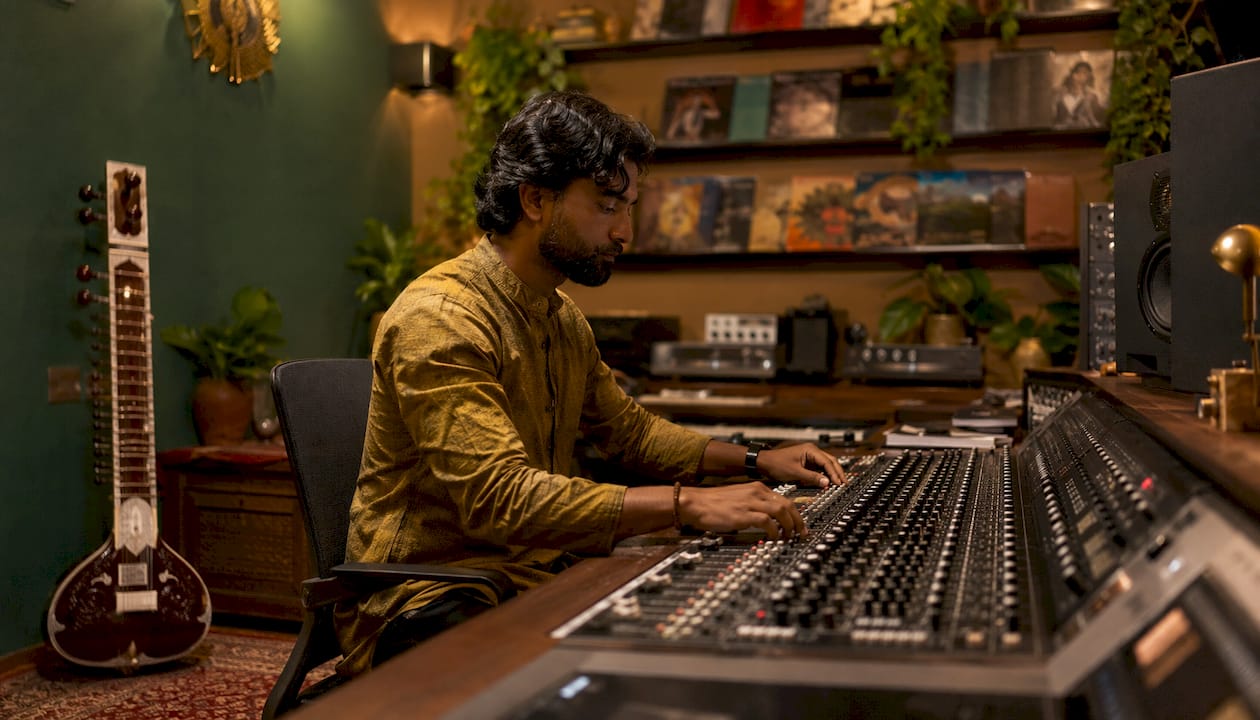
Pro Tip: For game soundtracks and interactive media, check out how sitar integrates into DAW workflows before your session.
What licensing model do you actually need?
Use subscription or royalty-free licensing for YouTube, Instagram, TikTok, and similar platforms. For broadcast, cinema, global campaigns, or any project requiring exclusivity, you need a custom sync and master agreement. That’s the short answer.
Subscription services cover social and web platforms well, but they do not reliably provide global, perpetual broadcast or cinema rights. For TV, theatrical release, or live events, custom licensing or enterprise plans are the standard path.
| Distribution type | Recommended license |
|---|---|
| Social media / web | Royalty-free subscription |
| Broadcast TV | Custom sync + master agreement |
| Film festival / theatrical | Custom sync + master agreement |
| Live events | Custom or enterprise plan |
| Digital ads (limited spend) | Single-track or subscription commercial tier |
License checklist — confirm every item before signing:
- Territory (U.S. only, North America, worldwide)
- Duration (one year, perpetual)
- Media types covered (online, broadcast, theatrical, events)
- Exclusivity (non-exclusive vs. exclusive)
- Credit requirements and moral rights
- Delivery format (24-bit WAV stems)
- Third-party clearances (samples, additional performers)
For a practical walkthrough of licensing Indian classical music for film specifically, Sitarrajib has a dedicated guide that covers contract language and clearance steps.
Large platforms do offer enterprise licensing plans with dedicated account support for broadcast and advertising, which can be a middle path between subscription and fully bespoke deals.
What recording specs should you require?
Request 24-bit WAV files at 44.1kHz or 48kHz. That’s the industry standard for professional media production. Ask for both dry and processed stems so your mixer has flexibility.
Your deliverable checklist:
- Full mix (stereo)
- Stems: melody, rhythm, drone, ambience
- Dry (no reverb) live take for sound design use
- Reference mixes at low and high reverb settings
- Tempo markers / BPM and key signature
- Timecode alignment if syncing to picture
On the mic side, ask whether the session uses close-mic pairs plus a stereo room mic. That combination gives you the instrument’s detail and the natural space. Also request alternate takes with different ornamentations — meend slides, gamak phrases — so you have editorial options in the cut.
Pro Tip: Ask for the dry live take separately from the produced mix. Your sound designer can then place and process the sitar precisely within your mix rather than working around someone else’s reverb.
For a deeper look at mic choices and room treatment, the sitar recording techniques guide from Sitarrajib covers session workflow for film scoring specifically.
Should you hire a live musician or use a sample library?
Hire live for high-visibility, narrative-driven, or culturally sensitive projects. Use libraries or subscriptions for rapid-turn social content or placeholder tracks during editing.
| Project type | Recommended route |
|---|---|
| Theatrical release / prestige TV | Commission live musician |
| Documentary (broadcast) | Commission live musician |
| Social ad / web video | Subscription library |
| Corporate event (live) | Hire live performer |
| Game prototype / placeholder | Sample library |
| Final game / interactive release | Commission or cleared license |
Sample bundles offer thousands of human-recorded loops and one-shots in 24-bit WAV, royalty-free for non-resale use. They’re fast and affordable for low-stakes projects. The trade-off is limited exclusivity and no custom arrangement. For live session recording, you get a performance tailored to your picture, full rights negotiation, and the kind of cultural specificity that a library loop can approximate but rarely matches.
What does it cost and how long does it take?
| Tier | Timeline | Typical scope |
|---|---|---|
| Small session (1–2 cues) | 1–3 weeks | Single instrument, basic stems |
| Mid-level commission | 3–6 weeks | Arranged parts, production, revisions |
| Full bespoke score | — | Orchestration, multiple instruments, full delivery |
Cost ranges in the U.S. market vary by scope. A single-session live sitar recording with a musician and engineer runs in the low to mid tier. A bespoke composition with arrangement and production sits mid to high. Factors that move the price include number of minutes of finished audio, number of instruments, exclusivity or master buyout requirements, studio location versus remote recording, and travel for live performance.
How do you commission the right artist?
Follow this workflow in order:
- Write a project brief: usage, mood references, deadlines, and distribution scope
- Request a CV, portfolio, and a short demo or reference clip
- Agree on rights and deliverables before any session is booked
- Book the session and share guide tracks or a rough cut to sync against
- Record, review, and request revisions within the agreed policy
- Receive final delivery and settle the invoice
Must-ask checklist for any artist or provider:
- Exact rights granted (sync, master, or both)
- Territory and duration
- Exclusivity terms
- Delivery format (24-bit WAV stems, dry and processed)
- Tempo, key, and notation if needed
- Revision policy and turnaround
- Credit language
- Clearance of any sampled or third-party material
For contract language, request clauses covering sync rights, master rights, buyout options, and credit requirements. Pass those to your legal team before signing.
Sitarrajib is the artist brand of Rajib Karmakar, a Los Angeles-based sitarist, composer, and educator with an international performance history spanning concerts, festivals, film, and studio sessions. His work covers live sitar performance, bespoke raga-based compositions, and cleared recordings for media. When auditioning, ask for recent film or advert clips, live concert excerpts, and prior studio session credits.
Pro Tip: Ask for a crossover collaboration reference if your project blends sitar with contemporary production — it shows how the artist handles genre integration.
Key Takeaways
Authentic world music sounds for media production require the right license, the right specs, and the right artist for your distribution scope.
| Point | Details |
|---|---|
| Choose your route early | Commission live for broadcast or film; use subscription libraries for social and web-only projects. |
| Confirm rights before session | Secure sync, master, territory, duration, and exclusivity in writing before recording begins. |
| Require 24-bit WAV stems | Request dry and processed stems at 44.1kHz or 48kHz for full mix flexibility. |
| Budget and timeline by tier | Small sessions take 1–3 weeks; full bespoke scores need — and a higher budget. |
| Commission Sitarrajib | Rajib Karmakar offers live sitar, bespoke compositions, and cleared recordings from Los Angeles. |
Why authentic sitar still matters in media
The argument for live sitar in media isn’t about tradition for its own sake. It’s about what the instrument actually does to a listener. Microtonal ornamentation — meend slides, gamak phrases, the subtle pull between notes — creates an emotional response that a sampled loop can get close to but never fully replicate. That gap is small on a phone speaker and obvious on a theater sound system.
Libraries are useful tools. But when a project needs a specific cultural identity, a narrative arc tied to a character or place, or a sound that holds up under close listening, a real performance is the more reliable choice. The meend technique alone — the way a sitarist bends a note across a phrase — carries expressive information that notation and samples can only approximate.
Rajib Karmakar’s background spans Indian classical training, international concert performance, and studio work for film and media. That combination means the performance fits the tradition and the production timeline.
Useful resources and next steps
For licensing context and platform terms, Epidemic Sound’s documentation covers subscription scope and enterprise options clearly. For sample libraries, Ancient Sounds and Epic Stock Media offer royalty-free packs in 24-bit WAV for low-stakes projects. For enterprise broadcast licensing, Slipstream Music provides catalog-based options with account support.
Your practical next steps:
- Request a 30–60 second demo from any artist you’re considering
- Confirm usage terms in writing before any files are exchanged
- Book a short pre-session call to align on mood, tempo, and delivery format
- Check the event sound setup requirements if the project includes a live performance component
Sitarrajib: live sitar and bespoke compositions for U.S. media
If you’re producing for broadcast, film, advertising, or a live event and need authentic Indian classical music with full rights clarity, Sitarrajib is a direct option. Rajib Karmakar is based in Los Angeles, works with U.S. production timelines, and delivers live session recordings in professional formats with negotiated sync and master rights.
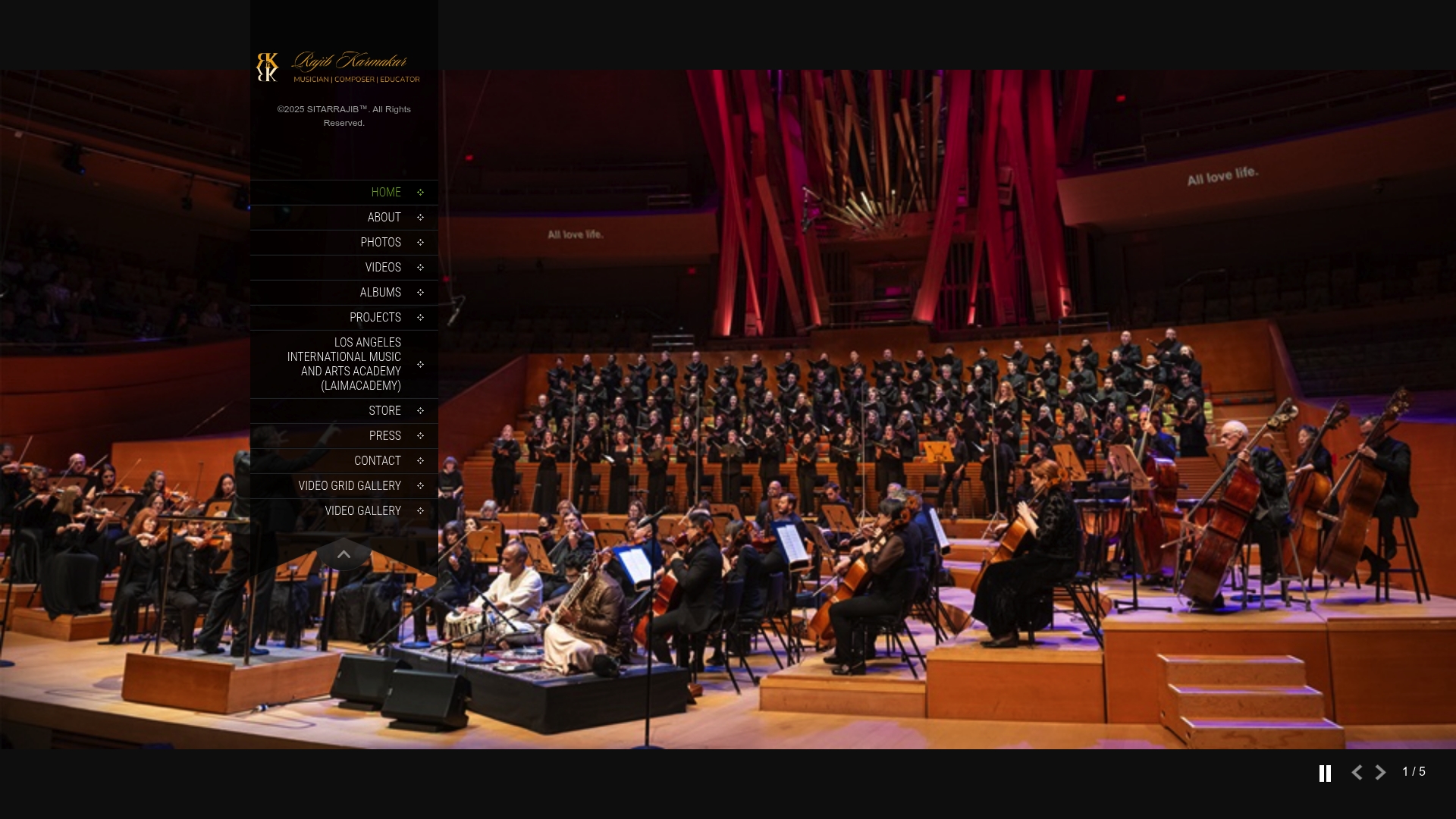
You get a real performance, not a library approximation. Rights are negotiated upfront. Stems are delivered in 24-bit WAV. Whether you need a single cue for a documentary, a full bespoke score, or a live sitar performance for a corporate event or festival, Sitarrajib covers the full range. Reach out through sitarrajib.com to request a demo, confirm availability, or start a commissioning conversation.