
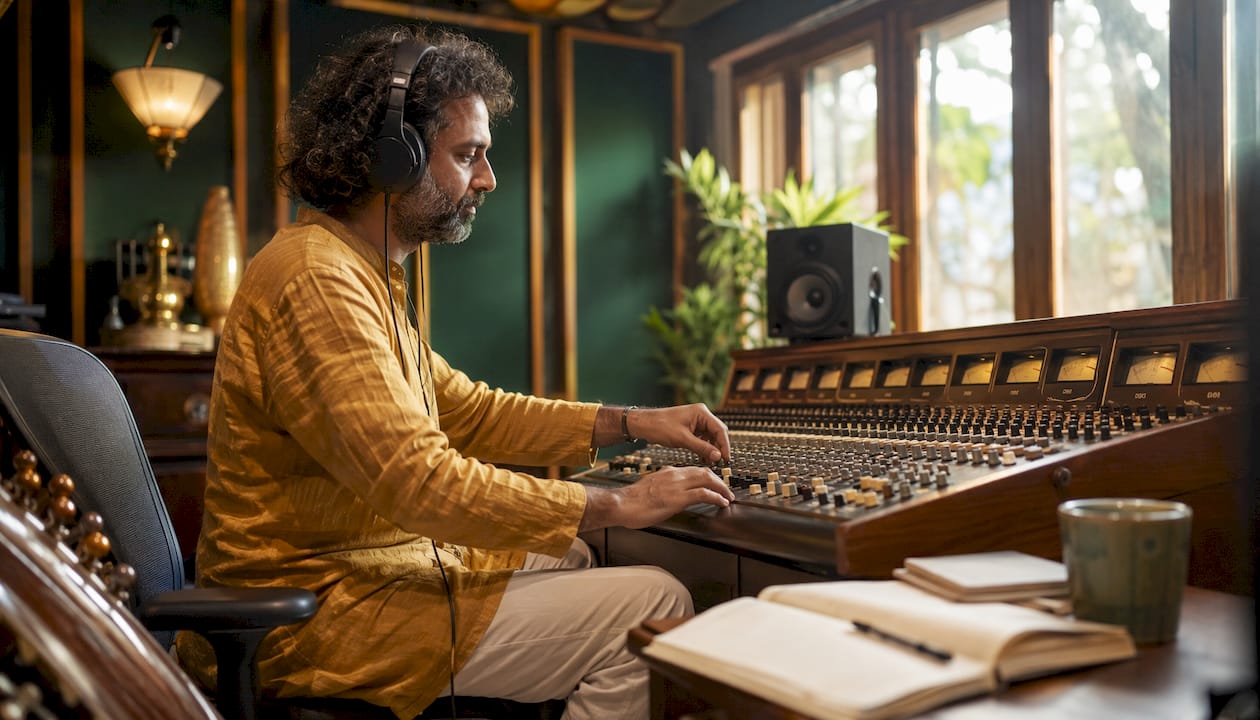
Sitar recording techniques for film scoring are defined as the specialized microphone placement, signal chain, and workflow methods used to capture the instrument’s acoustic character for cinematic use. The sitar produces a dense, layered sound built from melodic strings, drone strings, and sympathetic resonators called tarabtar, which act as built-in reverb. Recording this instrument well requires more than pointing a microphone at it. You need a deliberate process that preserves microtonal nuance, emotional delivery, and natural resonance before any digital processing touches the signal. This guide covers every step, from mic selection to final mix placement, with input from Sitarrajib’s Rajib Karmakar.
1. Sitar recording techniques for film scoring: why they differ from standard sessions
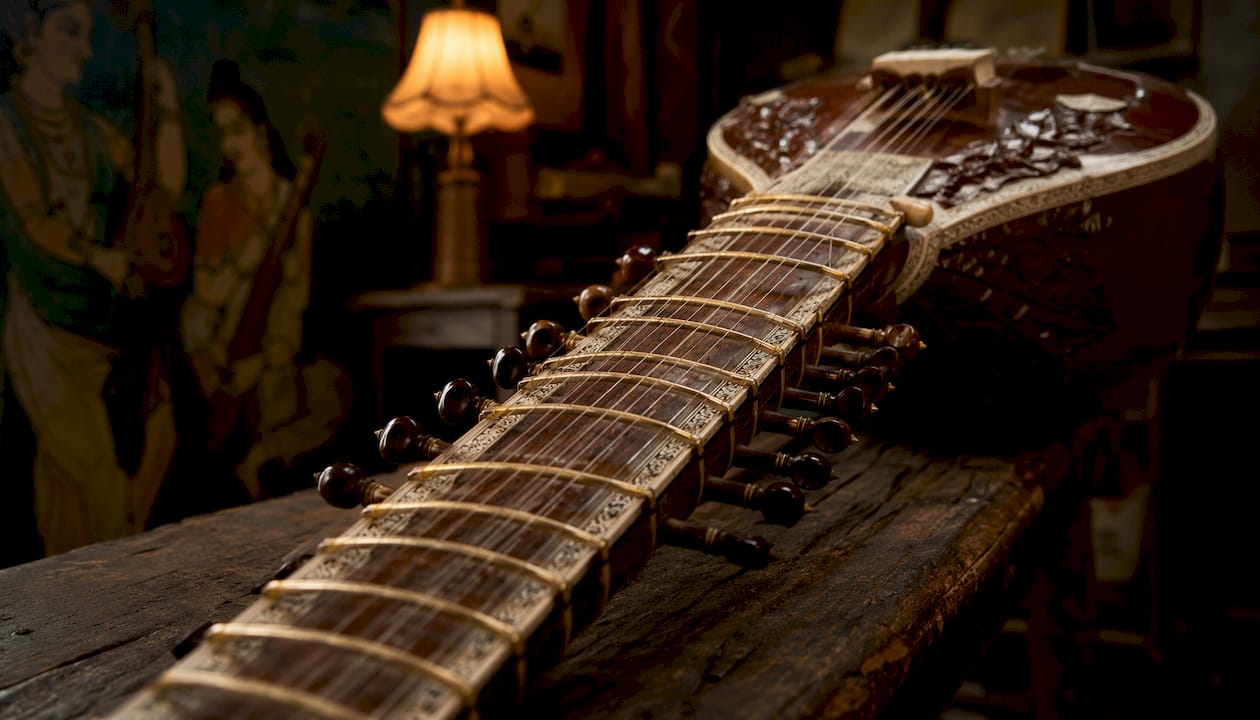
The sitar does not behave like a guitar or a violin in the studio. Its dynamic range is quiet compared to orchestral instruments, and its resonance comes from multiple string systems vibrating simultaneously. Standard recording approaches built for Western instruments will miss much of what makes the sitar cinematic.
The instrument’s tarabtar strings resonate sympathetically with the played notes, creating a natural bloom that functions like reverb. Over-processing with external reverb washes out the delicate microtonal nuances that give the sitar its emotional identity. Capturing this bloom cleanly is the first technical priority in any film session.
2. Microphone types and placement for cinematic sitar capture
The most effective approach combines two capture sources: a high-end condenser microphone for acoustic resonance and a transducer pickup for direct signal control. Dual capture with condensers and pickups lets you blend traditional warmth with modern mix flexibility. Neither source alone gives you the full picture.
Placement decisions matter more with sitar than with most instruments. Key positions to test:
- Bridge area: Captures the attack and string definition. Position the condenser 12–18 inches from the bridge at a slight angle to avoid direct pressure waves.
- Neck sustain zone: A second mic placed toward the upper neck catches the sustain and the tarabtar bloom separately, giving you mix options.
- Room position: A room mic placed 6–10 feet back captures natural space without adding artificial reverb. Use this sparingly in the mix.
- Direct pickup: Run the transducer pickup through a quality preamp for a clean, controllable signal that anchors the low-mid frequencies.
Bleed control is a real challenge. The sitar’s quiet dynamic range compared to orchestral sections means any nearby instrument will bleed into the sitar mics. Record sitar in isolation whenever possible. If you must track it alongside other musicians, use directional cardioid condensers and position them away from brass and string sections.
Pro Tip: Angle the bridge mic slightly off-axis to reduce harsh string attack while keeping the tonal body intact. A few degrees of adjustment changes the character significantly.
3. Recording workflow protocols for authentic sitar performance
A disciplined tracking sequence protects the sitar’s emotional delivery. Professional film recording workflows for Indian instruments use a tiered process: record percussion first to lock the rhythmic foundation, then track sitar and strings on top for clarity and arrangement control. This sequence prevents the sitar player from competing with an undefined rhythmic bed.
The workflow steps that produce the best results:
- Set the rhythmic foundation first. Record tabla or percussion tracks before the sitar enters. The sitar player needs a clear rhythmic reference to deliver accurate microtonal phrasing.
- Use an isolation booth or treated room. The sitar’s quiet dynamics require a low-noise environment. Even HVAC rumble can contaminate a take.
- Record at 24-bit/96kHz. High-resolution recording captures the full harmonic detail of the tarabtar strings. Lower sample rates compress the upper harmonic content that defines the sitar’s shimmer.
- Run analog preamps in the signal chain. Preamps with analog transformers add subtle saturation that complements the sitar’s natural warmth. Avoid clean digital preamps that strip the harmonic texture.
- Plan for multiple takes. Microtonal accuracy and emotional delivery rarely peak on the first take. Budget time for the performer to settle into the musical context of the scene.
- Preserve improvisation windows. Sitar players trained in raga tradition bring spontaneous phrasing that no score notation captures. Build space in the session for unscripted passages.
Pro Tip: Send the sitar player a rough cut of the scene before the session. When the performer understands the visual context, the emotional delivery aligns with the story without direction.
4. Mixing sitar within orchestral and electronic film scores
Mixing sitar into a cinematic score requires restraint. Hybrid scoring typically balances orchestral and ethnic elements at roughly 60% orchestral to 40% electronic or ethnic texture. The sitar sits in the ethnic layer, which means it competes with synth pads, electronic beats, and string sections for space.
Practical mixing decisions that protect the sitar’s presence:
- Compression: Use a Manley Vari Mu compressor set to gentle ratios (2:1 or 3:1) to control dynamic peaks without squashing the natural resonance. Hard compression kills the tarabtar bloom.
- EQ: Apply an API 5500 EQ to gently roll off low-end mud below 120Hz and add air above 10kHz. Avoid aggressive mid-range cuts that remove the sitar’s characteristic nasal tone.
- Reverb: Use the natural tarabtar bloom as your primary reverb source. Add a Bricasti M1 reverb at low wet levels only if the scene demands a larger acoustic space.
- Placement in the mix: Position the sitar melody slightly forward in the stereo field during emotional close-up moments. Pull it back into the texture during action or ensemble scenes.
- Contrast with synth layers: The sitar’s acoustic character creates natural contrast against synthesizer pads. Use this contrast intentionally. Place the sitar in scenes where the score needs organic warmth against electronic texture.
You can find a detailed breakdown of mixing sitar with electronics in cinematic contexts, including game soundtrack applications, on the Sitarrajib site.
5. Sitar vs. orchestral textures: when to feature each
The choice between sitar melody and full orchestral texture is a scoring decision, not just a sonic one. Sitar scores interior character moments most effectively, including mourning, doubt, memory, and longing. Orchestral density works better for external action, conflict, and spectacle.
The sitar melody film soundtrack tradition uses the instrument as a voice for interiority. A single sitar line over a sparse string pad communicates psychological depth that a full orchestra cannot replicate. The distinction between memorable and forgettable scores often comes down to this restraint. Composers who deploy the sitar constantly lose the contrast that makes it powerful.
When comparing sitar vs. orchestral approaches for a given scene, ask one question: is the camera inside the character’s experience or outside it? Inside calls for sitar. Outside calls for orchestra. Hybrid scenes can layer both, but the sitar should lead emotionally even when the orchestra surrounds it.
6. Cultural and artistic sensitivities in sitar film scoring
The sitar carries a musical language built from raga, microtonality, and improvisation. Forcing it into Western harmonic frameworks strips the instrument of its expressive identity. Rajib Karmakar, whose work spans Indian classical performance and cinematic collaboration, emphasizes preserving raga and improvisational aspects rather than bending the sitar to fit Western chord progressions.
“The sitar is not just a sound. It carries a specific emotional and spiritual identity rooted in centuries of raga tradition. When you record it for film, you are working with that entire history. The goal is to let that identity speak within the cinematic context, not to erase it for the sake of convenience.”
— Rajib Karmakar
Composers should work with sitar artists as collaborators, not session players executing notation. The cross-cultural collaboration process requires open communication about the scene’s emotional intent, the raga or scale being used, and the boundaries of the musical context. Compelling film soundtracks juxtapose classical training with modern production in ways that let listeners interpret the music independently.
7. Sitar sound design techniques for post-production
After the recording session, the sitar signal offers real sound design potential. The tarabtar resonance responds well to subtle pitch shifting, creating ghostly harmonic layers that work in horror, thriller, and psychological drama contexts. Keep pitch shifts within a semitone to preserve the microtonal character.
Granular processing applied to sitar sustain tones produces textural beds that blend with synthesizer pads. This technique works best when the original recording is clean and the tarabtar bloom is fully captured. A muddy source recording limits your sound design options significantly. The technical requirements for sitar sessions directly affect what you can do in post.
Time-stretching sitar phrases at slow rates creates ambient textures useful for scene transitions and underscore. The instrument’s harmonic complexity means stretched material retains musical interest longer than a simple guitar or piano note would.
8. Sitar vs. tabla for cinematic rhythm tracks
The choice between sitar and tabla in a cinematic recording session depends on the scene’s function. Tabla provides rhythmic drive and pulse. Sitar provides melodic and emotional narrative. They serve different storytelling roles and are not interchangeable.
For sitar vs. tabla in cinematic recordings, the practical answer is to use both when the scene calls for a complete Indian classical texture, and to use each alone when the scene needs a specific function. A chase sequence benefits from tabla’s rhythmic precision. A grief scene benefits from sitar’s melodic expression. Mixing both in a single cue requires careful level management, since tabla’s transient attack can mask the sitar’s quieter melodic lines.
The audio mixing step by step process for Indian classical instruments in film differs from standard orchestral mixing precisely because of these dynamic range differences between melodic and percussive sources.
Key takeaways
Effective sitar recording for film scoring depends on capturing the instrument’s natural tarabtar resonance cleanly before any processing is applied, then integrating it with restraint into the cinematic mix.
| Point | Details |
|---|---|
| Capture tarabtar first | Record the sitar’s natural sympathetic resonance before adding any external reverb or effects. |
| Use dual capture | Combine a condenser mic and a transducer pickup to balance acoustic warmth with mix control. |
| Record at 24-bit/96kHz | High-resolution recording preserves the full harmonic detail of the sitar’s upper string content. |
| Mix with restraint | Deploy sitar for interior character moments and pull back during orchestral or action sequences. |
| Respect the musical language | Work with the raga tradition rather than forcing the sitar into Western harmonic frameworks. |
What I’ve learned recording sitar for film over the years
The biggest mistake I see composers make is treating the sitar like a texture rather than a voice. You would not bury a lead vocalist in reverb and call it a mix. The sitar deserves the same respect.
The sessions that produce the best results are the ones where the composer and the sitar player talk before the microphones go up. When I understand the scene, the character, and the emotional arc, I can bring something to the recording that no score notation can specify. That spontaneous phrasing is often what makes the cue memorable.
Technically, the lesson I keep relearning is to trust the instrument. The tarabtar does the work if you capture it cleanly. Your job as the recording engineer or composer is to stay out of the way until the mix stage, and even then, to use processing as a light hand rather than a heavy one. The sitar already has everything it needs acoustically. You are just helping it fit the picture. If you want to see how this approach works in practice, the collaboration guide for sitar artists covers the communication process in detail.
— Rajib
Sitarrajib’s studio recording services for film composers
Film composers working with sitar need more than a capable player. They need someone who understands both the instrument’s classical roots and the demands of a professional cinematic session.
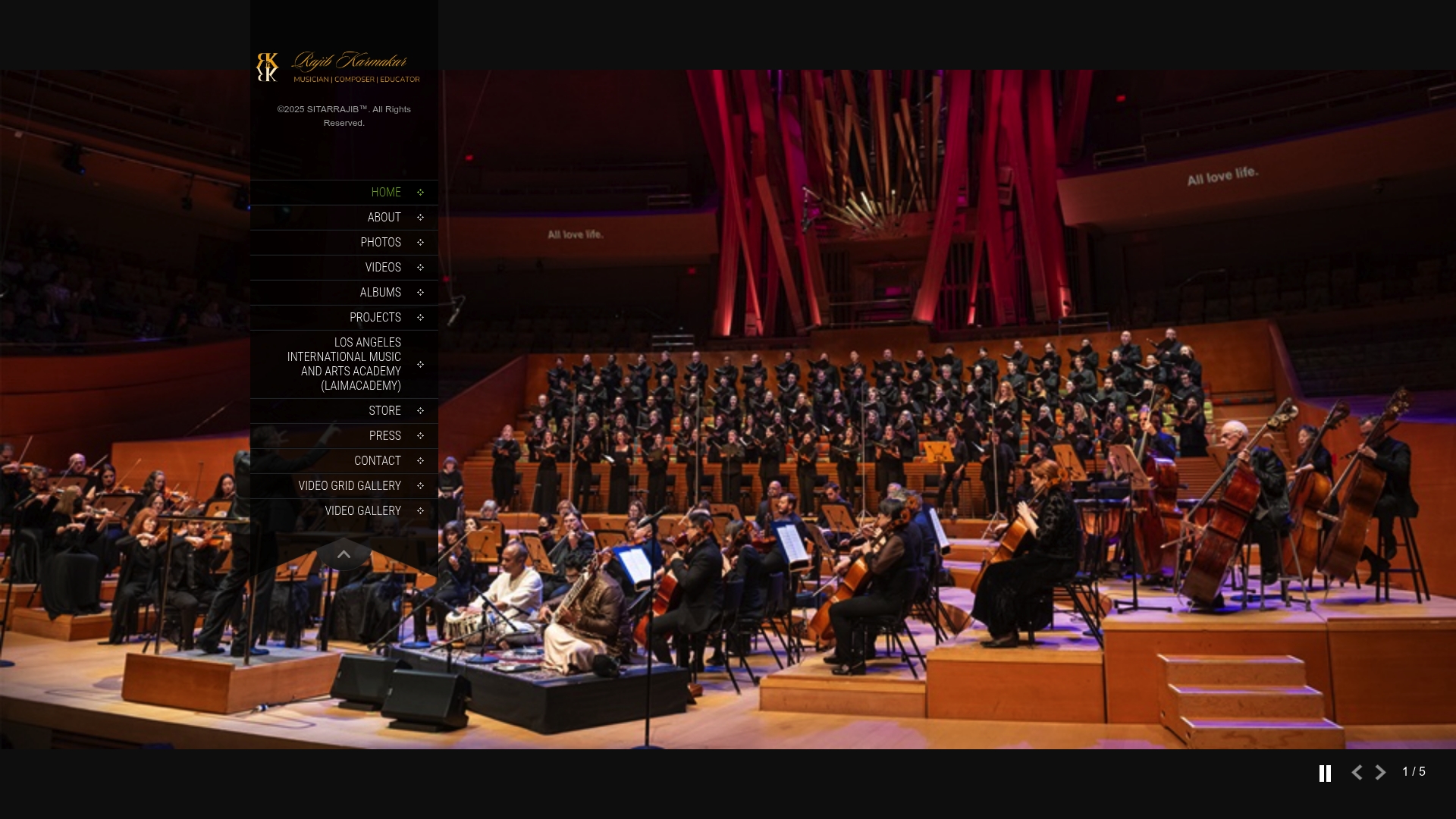
Sitarrajib offers live session sitar recording for film, television, and media projects, with experience in hybrid cinematic scoring environments. Rajib Karmakar brings both technical studio fluency and deep classical training to every session. Whether you need a single melodic line for a scene or a full sitar arrangement integrated with your orchestral score, Sitarrajib works directly with your production team. You can also review the technical requirements for sitar sessions before booking to make sure your studio setup is ready. Reach out through the Sitarrajib website to discuss your project.
FAQ
What microphones work best for recording sitar in film sessions?
High-end large-diaphragm condenser microphones placed near the bridge and neck sustain areas capture the sitar’s full acoustic range. Pairing a condenser with a transducer pickup gives you both warmth and mix control.
What sample rate should I use for cinematic sitar recording?
Record at 24-bit/96kHz to preserve the harmonic detail of the tarabtar sympathetic strings. Lower sample rates compress the upper harmonic content that defines the sitar’s cinematic character.
How do I prevent bleed when recording sitar alongside an orchestra?
Record sitar in an isolation booth or separate room. The sitar’s quiet dynamic range makes it vulnerable to bleed from louder orchestral sections, and isolation is the most reliable solution.
Should I add reverb to sitar in the mix?
Use the sitar’s natural tarabtar bloom as the primary reverb source. Add a high-quality algorithmic reverb like the Bricasti M1 only at low wet levels when the scene requires a larger acoustic space.
How does sitar fit into a hybrid film score with electronic elements?
Sitar works best as the organic, emotional layer in a hybrid score, contrasting against synthesizer pads and electronic textures. A 60% orchestral to 40% ethnic or electronic ratio is a common starting point for hybrid cinematic scoring.