

What every event planner needs to know about sitar performance logistics
Getting a live sitar performance right comes down to preparation. The logistics are specific, and the details matter more than most planners expect. You’re working with a delicate, acoustically sensitive instrument that has its own environmental needs, seating requirements, and sound setup demands. Get those right, and the performance lands beautifully. Miss them, and even a world-class sitarist can’t fully deliver.
Here’s a quick checklist of the core logistical elements you need to lock in before event day:
- Transportation and handling: Confirm the artist or agency uses specialized instrument cases and has a clear transit protocol. Damage during transport is the most preventable risk.
- Performance space: Reserve a dedicated, draft-free performance space large enough to prevent detuning caused by humidity and temperature changes.
- Seating: Arrange an armless, backless chair or culturally appropriate floor-level seating. Standard banquet chairs don’t work.
- Amplification: Plan for 2–4 wireless microphones placed specifically for the sitar’s resonance range.
- Soundcheck: Schedule a dedicated soundcheck window, separate from general venue setup, with a sound engineer briefed on the sitar’s frequency range.
- Artist rider: Collect the full rider early. Temperature, humidity, water, and warm-up space are all standard requests.
- Scheduling: Build buffer time before and after the performance slot. Sitar tuning is sensitive and takes longer than most Western instruments.
- Coordination contacts: Identify one point of contact between the artist, your production team, and the venue’s technical staff.
These eight elements form the foundation of solid sitar event planning. The sections below go deeper on each one.
How to set up the stage and production infrastructure for a sitar performance
The sitar is not a plug-and-play instrument. Its acoustic properties require a thoughtful stage setup, and skipping any step in the technical chain creates problems that are hard to fix mid-event.
Stage environment
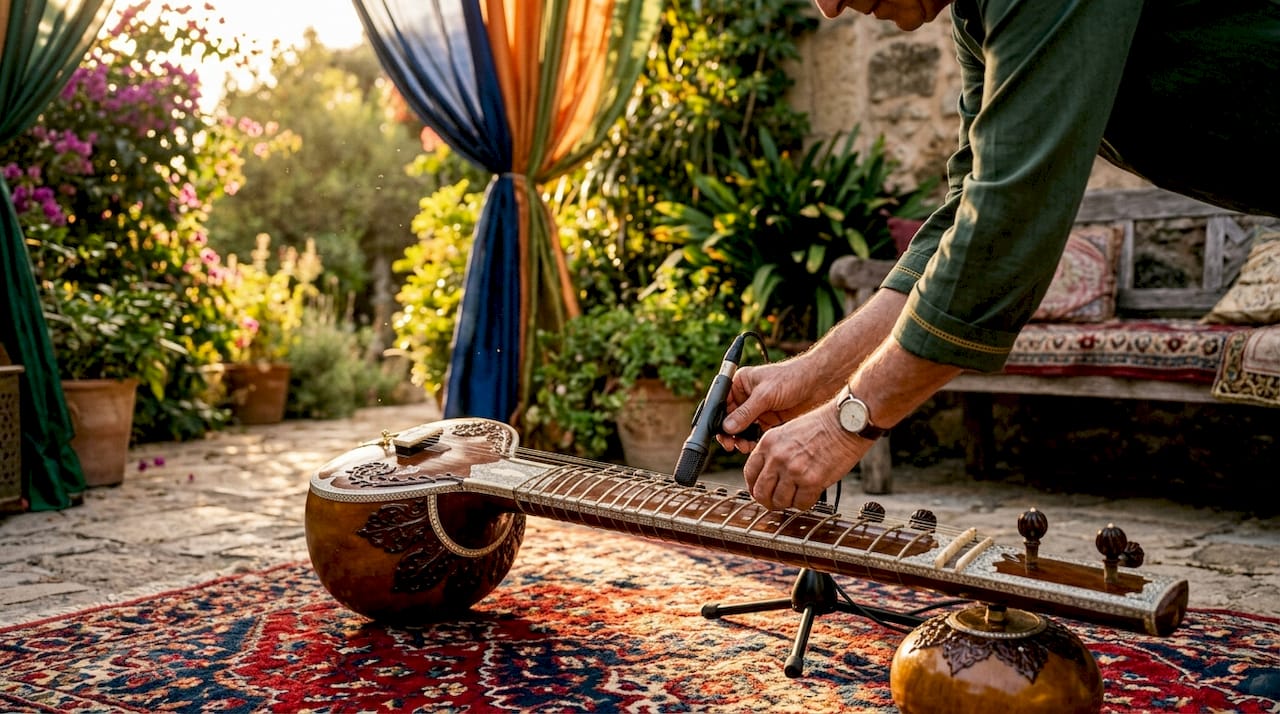
The sitar requires a draft-free performance space of approximately 8×10 feet. Temperature and humidity changes cause the instrument to detune, sometimes mid-performance. Keep the performance area away from HVAC vents, exterior doors, and any area with inconsistent airflow. For outdoor events, a covered stage with side panels is the minimum standard.
Microphone placement and amplification
The sitar’s frequency range differs significantly from Western acoustic guitars, so your sound engineer needs a specific briefing before the event. A setup of 2–4 wireless microphones is standard, with placement targeting both the main resonating gourd and the secondary resonator. Avoid dynamic microphones for this application; condenser or small-diaphragm microphones capture the instrument’s delicate overtones far better.
Seating
Artist seating is a detail that catches many planners off guard. Sitarists play cross-legged, which means a standard chair with armrests or a low seat creates real posture problems and affects performance stamina. Provide a sturdy, armless, backless stool or a raised platform with a cushion. Confirm the preference with the artist during pre-event coordination.
Soundcheck protocol
- Schedule the sitar soundcheck after the main PA system is calibrated but before other performers check their levels.
- Allow sufficient time for the sitarist to tune, warm up, and test the amplification balance.
- Have the sound engineer adjust EQ specifically for the sitar’s mid-range resonance and sympathetic string frequencies.
- Test at the volume level planned for the actual performance, not just a quick pass.
Pro Tip: Ask the artist’s team to share a recent live recording before the event. Your sound engineer can use it to pre-set EQ curves and save significant time during soundcheck.
How do you design a sitar performance that guests actually engage with?
A sitar performance works best when it’s designed as an experience, not just background music. Leading performers now structure concerts as guided experiences rather than passive recitals, and that shift changes what you need to plan for.
Build a narrative arc into the program
New sitar concert formats use defined narrative structures rather than pure improvisation. Work with the artist to map out a clear emotional progression: a slower, meditative opening that builds toward more energetic or familiar material. This gives guests a journey to follow, even if they have no background in Indian classical music.
Incorporate pre-performance elements
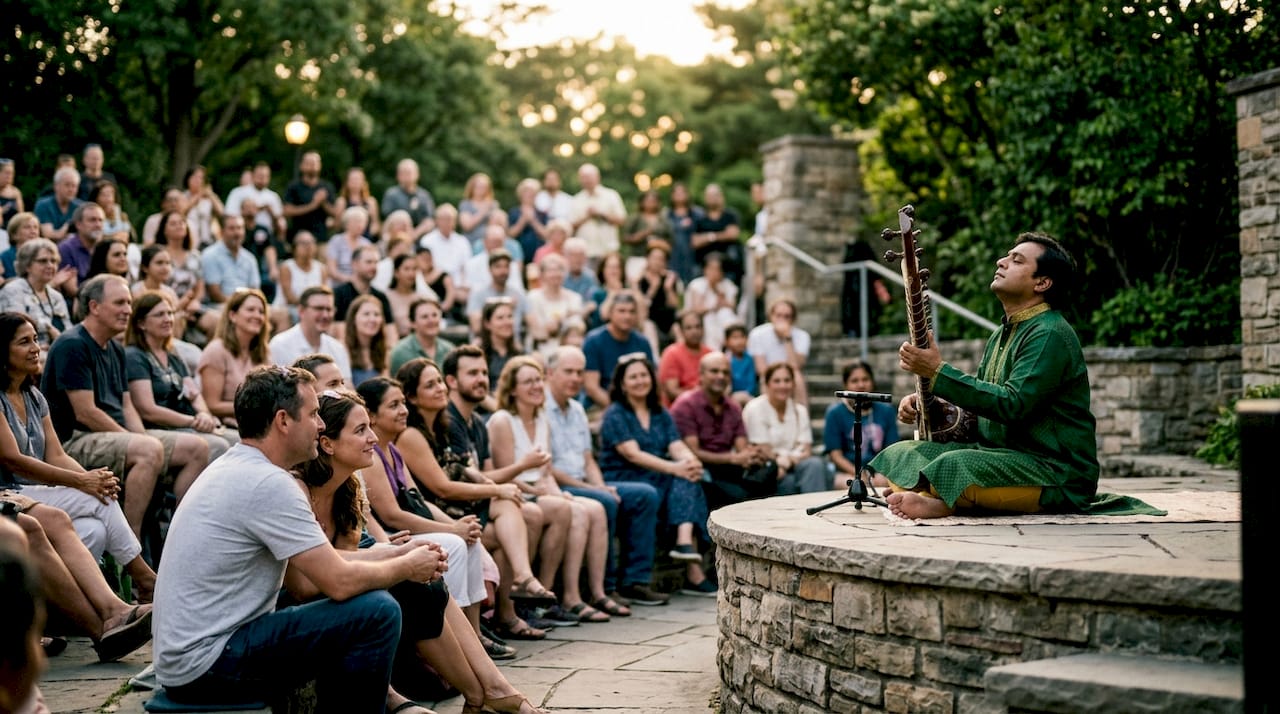
Guided breathing or a short meditation before the music begins primes the audience for deeper listening. Rishab Rikhiram Sharma’s “Sitar for Mental Health” concerts open with exactly this approach, and the format has drawn crowds of over 10,000 attendees in a single city. You don’t need that scale to apply the principle. Even a 90-second guided pause before the first note shifts the room’s energy noticeably.
Use fusion repertoire to widen accessibility
Fusion repertoire mixing pop, Bollywood, and traditional music increases accessibility for mixed audiences. At a Carmel Valley wedding, sitarist Ronobir Lahiri played a sitar rendition of Clean Bandit’s “Rather Be” for the processional, weaving familiar music into a culturally rich format. That kind of programming works equally well at corporate galas and private receptions.
Adapt pacing to the event format
- For wedding ceremony processions, keep pieces short (2–4 minutes) and melodically clear.
- For dinner receptions, longer improvisational passages work well as ambient texture.
- For corporate events, curated 20–30 minute sets with a brief artist introduction tend to hold attention best.
- For dedicated concert-style programming, build toward a high-energy finale after a slower opening.
How do you manage sound quality and volume for a live sitar performance?
The sitar produces a wide dynamic range, from very soft sympathetic string resonance to sharp, bright melodic attacks. Managing that range in a live event setting takes more care than most planners budget for.
Balance acoustic sound with amplification
The instrument’s natural volume is relatively low compared to a drum kit or electric guitar. In most event venues, you’ll need amplification, but the goal is to reinforce the sound, not overpower it. Set the PA level so the sitar sits clearly above ambient room noise without dominating conversation at dinner events. For cocktail hours and receptions, a lower mix level works well. For dedicated performance segments, bring the level up.
Microphone configuration to reduce noise
Stage vibrations and low-frequency rumble from nearby speakers can bleed into the sitar microphones and muddy the sound. Use directional cardioid or hypercardioid microphones to reduce off-axis pickup. Place microphones on short boom stands rather than floor stands to minimize vibration transfer. If the venue has a loud HVAC system, address that with the venue manager before the event, not during it.
Venue-specific acoustic considerations
Hard-surfaced rooms (marble floors, glass walls, concrete ceilings) create excessive reverb that blurs the sitar’s melodic detail. In those spaces, reduce the reverb in the PA mix and consider adding soft furnishings or draping near the performance area. Carpeted ballrooms and tented outdoor spaces are naturally more forgiving.
Pro Tip: Brief your sound engineer on the sitar’s sympathetic strings. Those strings resonate in response to the main melody strings and create the instrument’s characteristic shimmer. If the engineer doesn’t know they exist, they may try to EQ them out, which strips the sound of its character.
How do you fit a sitar performance into your event timeline without disruptions?
Timing a sitar performance within a larger event program requires more coordination than booking a DJ or a string quartet. The instrument’s tuning sensitivity and the artist’s warm-up needs mean you can’t treat it as a drop-in element.
Schedule the right performance slots
- Wedding ceremony processions: sitar works well as guests arrive and during the processional itself.
- Cocktail hour: a 45–60 minute ambient set pairs naturally with the social energy of a drinks reception.
- Dinner service: a dedicated 20–30 minute performance during a natural pause in service (between courses) keeps the program moving.
- Corporate galas: a featured performance slot after dinner and before any awards or speeches gives the music the attention it deserves.
Coordinate soundcheck with the full event timetable
Timed transitions and clear communication with the production team prevent delays and awkward pauses. Build the soundcheck into your master run-of-show document, not as a footnote but as a named slot with a start time and a responsible contact. If the venue has multiple performers, sequence the sitar soundcheck first so the engineer can use it as the baseline for the room’s acoustic calibration.
Manage artist arrivals and hospitality
- Confirm arrival time at least 3 hours before the performance, allowing time for setup, tuning, and warm-up.
- Provide a private warm-up space away from guest areas.
- Include water (room temperature, not ice cold) and any rider items in the hospitality setup.
- Assign a dedicated point of contact from your team to the artist for the full event day.
Synchronize transitions between segments
When the sitar performance ends and another event segment begins (speeches, dinner service, dancing), the transition needs a clear cue system. Agree on a visual or audio signal with the artist and the MC or stage manager. A cold stop with no transition plan creates an awkward gap that breaks the event’s momentum.
Expert advice from Rajib Karmakar and Sitarrajib on planning sitar events
Rajib Karmakar, the Los Angeles-based sitarist and composer behind Sitarrajib, works across corporate events, weddings, festivals, and cultural programs throughout the United States. The practical guidance below reflects what his team has learned from coordinating these performances at a professional level.
Environmental controls are non-negotiable
The sitar detunes in response to temperature swings and drafts. Rajib’s team confirms venue conditions in advance and requests that HVAC systems in the performance area be stabilized at least one hour before setup begins. For outdoor events, a covered stage with wind protection is a firm requirement, not a preference.
Seating and rider details affect the performance directly
Incorrect seating isn’t just uncomfortable. It changes the angle of the instrument and affects the player’s ability to execute certain techniques. Sitarrajib’s rider specifies the exact seating type, and planners who address it early avoid a last-minute scramble. The same applies to lighting: harsh overhead spotlights aimed directly at the instrument can cause glare on the strings and affect the performer’s sight lines.
Outsource the technical logistics to the artist’s team
Delegating technical logistics to the artist or a specialized partner reduces risk. Rajib’s team handles amplification recommendations, microphone placement guidance, and sound engineer briefings as part of their pre-event coordination. Planners who try to manage those details without that input frequently encounter sound quality issues that are difficult to fix on the day. When you’re evaluating entertainment vendors for a corporate event, ask specifically whether the artist’s team provides technical coordination support.
Soundcheck is where the performance is built
A solid soundcheck is where the actual work happens. Rajib’s pre-show protocol includes instrument tuning, microphone level testing, EQ adjustment, and a full run-through of at least one piece at performance volume. Planners who protect that time in the schedule get a noticeably better result than those who treat soundcheck as optional.
Pro Tip: Plan a brief pre-performance introduction by the artist or your MC to orient guests who may be unfamiliar with the sitar. Even 60 seconds of context, covering what the instrument is and what they’re about to hear, increases audience attention and emotional connection during the performance.
Collaborate on the guest experience from the start
The most effective sitar events happen when the planner and artist work together on the program design, not just the logistics. Sitarrajib offers sitar event planning services that include repertoire consultation, timeline planning, and technical coordination. That kind of collaboration turns a good performance into a genuinely memorable event moment. You can explore Sitarrajib’s full range of corporate event performance options and technical requirements directly on the Sitarrajib website.
Key Takeaways
Successful sitar performance logistics depend on environmental control, specialized sound setup, and close coordination between the planner and the artist’s team from the start.
| Point | Details |
|---|---|
| Protect the performance environment | Reserve a draft-free 8×10 ft space with stable temperature and humidity to prevent detuning. |
| Use the right microphone setup | Plan for 2–4 wireless microphones and brief your sound engineer on the sitar’s unique frequency range. |
| Confirm artist seating early | Provide an armless, backless chair or floor-level seating to support the sitarist’s cross-legged playing posture. |
| Build soundcheck into the run-of-show | Schedule a dedicated soundcheck slot and treat it as a fixed production milestone, not an afterthought. |
| Design for audience engagement | Structure the program with a narrative arc and consider fusion repertoire to make the performance accessible to all guests. |