
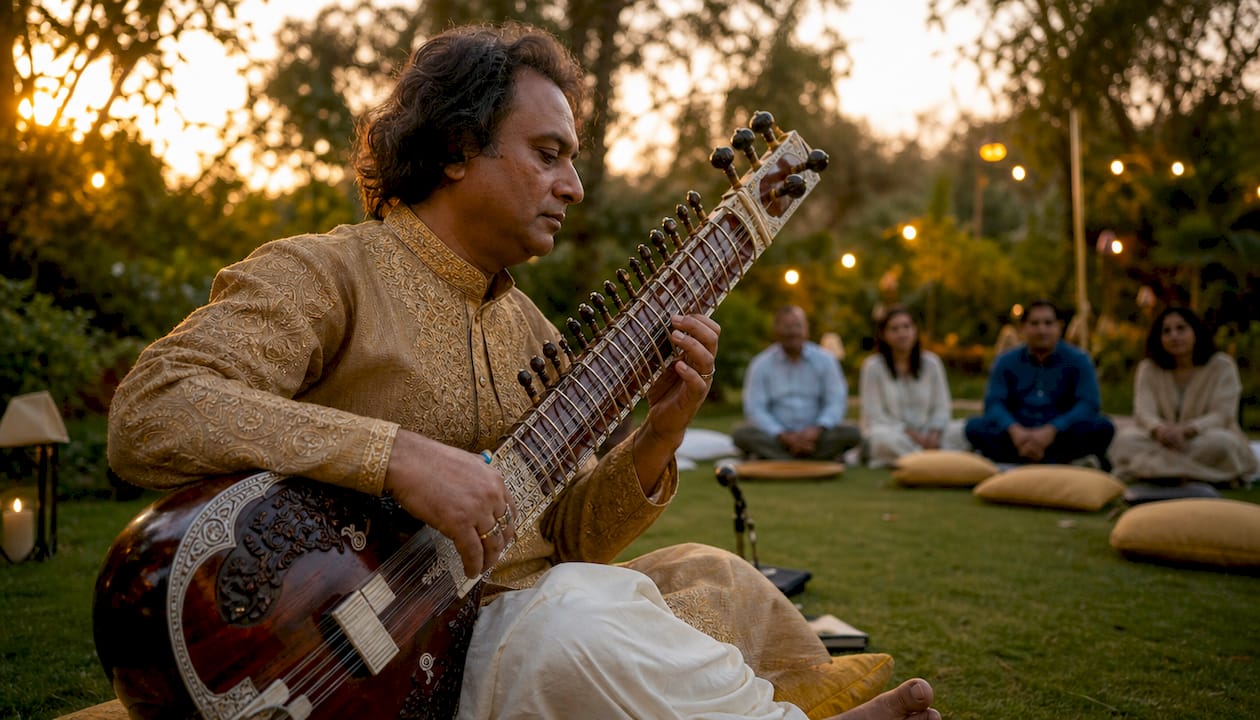
The sitar is defined as a long-necked plucked string instrument central to Hindustani classical music, and it is one of the most effective tools festival organizers have for adding genuine cultural depth to a lineup. Understanding how sitar fits festival programming means knowing that it delivers something most instruments cannot: a meditative, emotionally layered experience that holds audiences still. Large-scale sitar concerts have drawn crowds of over 20,000 attendees when framed as a shared meditative event. That number tells you the instrument’s appeal is not niche. Sitarrajib, the artist brand of Los Angeles-based sitarist and educator Rajib Karmakar, works directly with festival programmers to build these kinds of experiences from the ground up.
How sitar fits festival programming: formats and durations
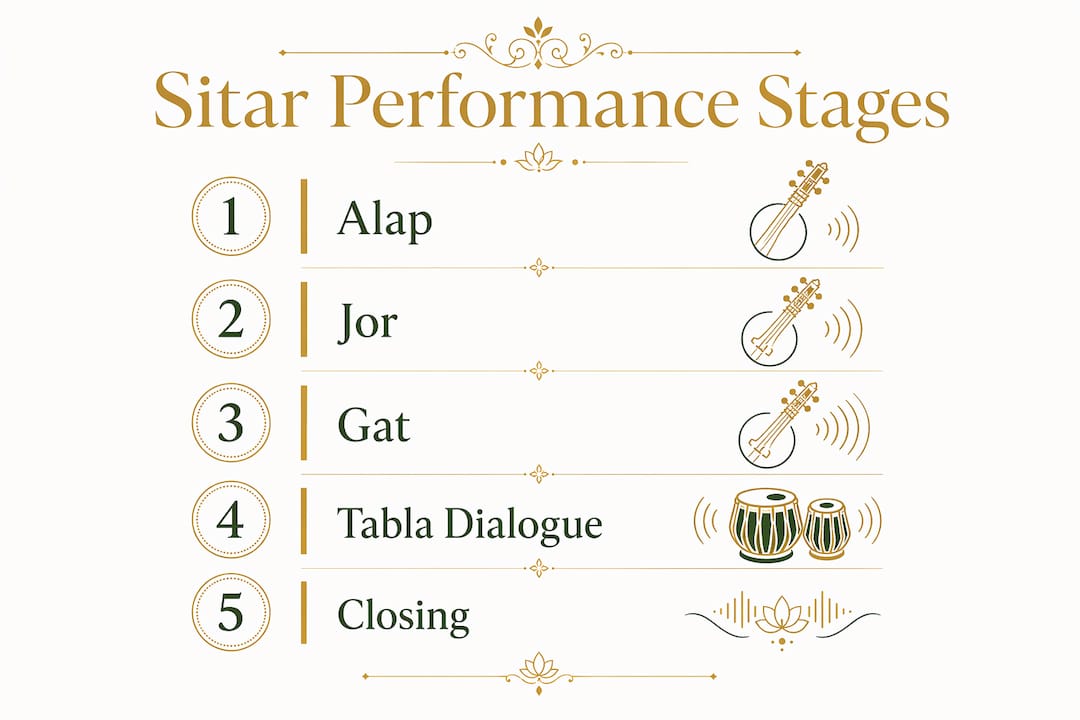
The first decision every programmer faces is how long a sitar set should run. Sitar concert durations typically range from 60 to 90 minutes, and that window exists for a reason. A raga, the melodic framework at the heart of Hindustani performance, needs time to develop through its opening alap (slow, unmetered exploration), jor (rhythmic development), and gat (composed section with tabla). Cutting a set to 30 minutes produces an incomplete musical statement, the equivalent of screening only the first act of a film.
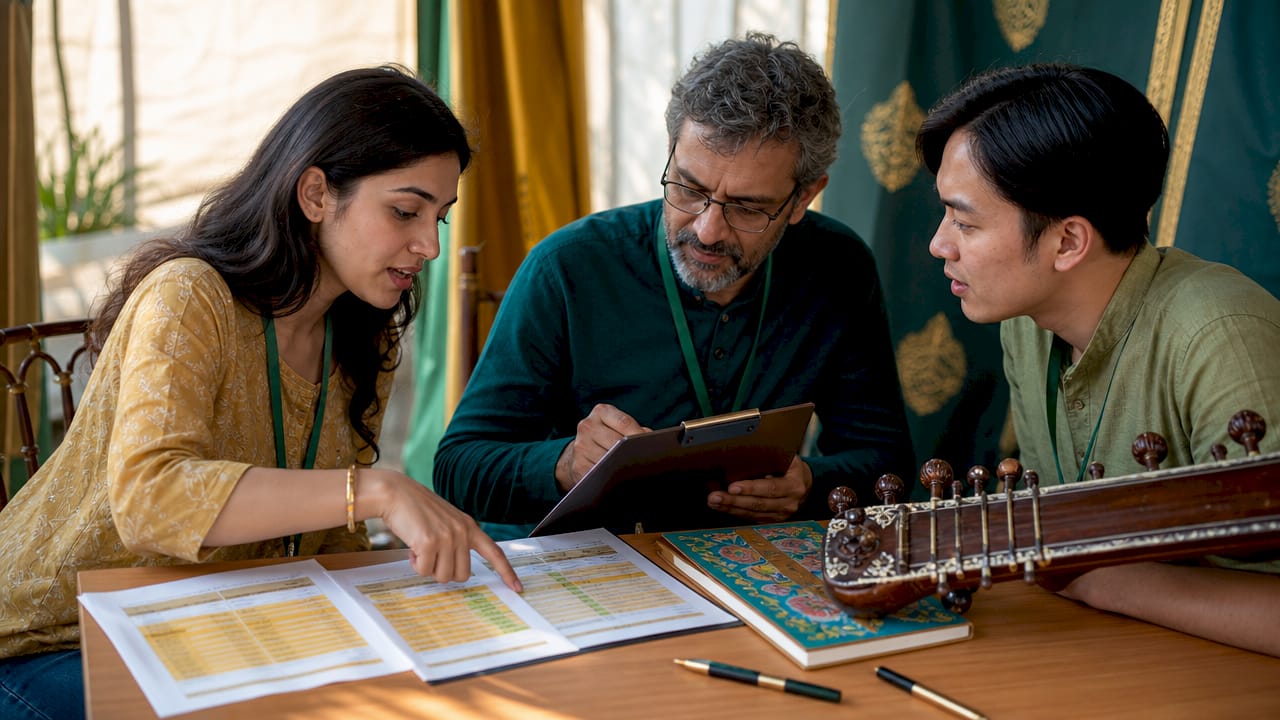
Hindustani-style sitar performances require long, uninterrupted sets because the music is built on deep improvisation. This is a structural fact, not a preference. Programmers who schedule sitar between two high-energy acts with short changeover windows will undercut the performance before it begins.
The table below maps the three most common programming formats for sitar at festivals:
| Format | Ideal duration | Best time slot | Accompaniment needed |
|---|---|---|---|
| Solo recital | 60–90 minutes | Morning or late evening | Tabla player required |
| Fusion set | 45–60 minutes | Afternoon or main stage | Tabla plus additional instruments |
| Workshop or talk | 30–45 minutes | Midday | Artist only, optional tabla |
Festival sitar performances align naturally with time-of-day thematic blocks, with morning sessions starting around 8:30 AM and evening sessions running from 4:00 PM to 6:30 PM. This reflects the classical tradition of assigning specific ragas to specific times of day. A morning raga like Bhairav carries a calm, introspective quality. An evening raga like Yaman feels warmer and more expansive. Scheduling with this in mind gives your program an internal logic that audiences feel even if they cannot name it.
A high-caliber tabla accompanist is not optional for an authentic sitar performance. The rhythmic dialogue between sitar and tabla is where the music comes alive for audiences. Budget for both artists from the start.
How can organizers balance tradition and innovation in sitar programming?
The most common mistake programmers make is treating Indian classical music as a fixed museum piece. Treating sitar tradition as flexible and evolving produces programming that respects the instrument’s roots while pulling in audiences who might otherwise skip the set. The tradition is alive. It has always absorbed outside influences, from Persian music to contemporary global sounds.
Practical ways to balance tradition and innovation include:
- Fusion pairings. Pairing sitar with non-traditional percussion, electronic elements, or instruments from other world music traditions creates a point of entry for audiences unfamiliar with Indian classical music. The sitar’s tone cuts through these combinations without losing its identity.
- Mixed billing. Successful sitar festival programming balances master performers and emerging artists. Established masters provide cultural credibility. Emerging talent brings energy and often more experimental approaches that attract younger audiences.
- Pre-concert education. Including pre-concert talks or workshops about ragas and talas (rhythmic cycles) measurably increases audience engagement. A five-minute explanation of what a raga is and how it develops transforms passive listeners into active participants.
Music serves as a vehicle for cultural identity, and sitar programming gives festivals a direct way to honor that function. The instrument carries centuries of cultural meaning. Presenting it with context makes that meaning accessible.
Pro Tip: Schedule the pre-concert talk 20 minutes before the performance, not the day before. Audiences retain context better when it is immediately followed by the music it describes.
What acoustic and logistical factors make or break a sitar performance?
Acoustic environment is the single most controllable factor in sitar performance quality. Optimal sitar performances depend on venues that favor natural resonance and minimize ambient noise. The sitar produces a wide frequency range with delicate overtones from its sympathetic strings. Those overtones disappear in a noisy outdoor space with inadequate sound reinforcement.
Here is a practical checklist for acoustic and logistical planning:
- Choose the right venue type. Enclosed or semi-enclosed spaces with good natural acoustics work best. If you use an outdoor stage, invest in a high-quality PA system with a sound engineer who has experience with acoustic string instruments.
- Isolate the sitar stage from competing audio. Do not place the sitar stage within earshot of a DJ tent or a high-volume rock stage. The meditative quality of the music requires a quiet perimeter.
- Budget for two artists, not one. The tabla accompanist is a co-performer, not a backup musician. Their fee should reflect that. Underpaying for tabla leads to mismatched skill levels, and audiences notice.
- Place the sitar set strategically in the schedule. Classical sitar music thrives when audiences are prepared for slow, meditative intensity. Avoid scheduling it immediately after a high-energy headliner. A short break or a quieter transitional act between sets helps audiences shift their listening mode.
- Confirm technical requirements in advance. Sitar players typically need a low stage monitor, a condenser microphone positioned near the instrument’s resonator, and a separate channel for the tabla. Get the rider early and review it with your audio team.
Pro Tip: Ask the sitar artist for a brief soundcheck video from a previous festival. It shows you exactly how their setup sounds in a live environment and helps your audio team prepare.
What audience engagement techniques work best for sitar performances?
Audience engagement for sitar is not about spectacle. It is about preparation and atmosphere. Artist-led educational programming bridges cultural gaps and turns passive listening into an engaged cultural experience. When audiences understand what they are hearing, they stay longer and respond more deeply.
Specific techniques that work:
- Thematic time-of-day blocks. Morning and evening slots tied to specific ragas give your program a narrative arc. Audiences who attend both sessions experience the contrast between a morning raga’s stillness and an evening raga’s warmth. That contrast is memorable.
- Lighting and staging that supports the music. Warm, low lighting during a sitar set signals to the audience that this is a listening experience. Avoid rapid visual changes or busy LED displays. The music should lead; the visuals should follow.
- Artist interaction. Brief spoken introductions from the sitar artist before each piece dramatically increase audience connection. A 60-second explanation of what raga is being performed and why it was chosen gives listeners a frame for what they are about to hear.
- Familiar and spiritual compositions. Programming pieces that draw on widely recognized melodic ideas or devotional traditions gives audiences an emotional anchor. Listeners who feel something familiar are more likely to stay engaged through unfamiliar passages.
The goal is an emotional and meditative response. Sitar music is not background sound. When the environment and preparation are right, audiences leave a sitar performance talking about it. That word-of-mouth is exactly what festival programmers want.
Key Takeaways
Sitar fits festival programming best when organizers plan for 60–90 minute sets, pair the artist with a skilled tabla player, and build acoustic conditions that let the instrument’s full range come through.
| Point | Details |
|---|---|
| Set duration matters | Schedule 60–90 minute uninterrupted sets to allow full raga development. |
| Tabla is non-negotiable | Budget for a high-caliber tabla accompanist as a co-performer, not an add-on. |
| Acoustics determine quality | Choose quiet, controlled venues or invest in professional sound reinforcement. |
| Education drives engagement | Pre-concert talks about ragas and talas turn passive listeners into active participants. |
| Balance tradition with innovation | Mix master performers with emerging artists and consider fusion formats to broaden appeal. |
What I have learned from programming sitar at festivals
Most programmers I talk to underestimate one thing: the sitar does not need help being interesting. It needs help being heard correctly. I have performed at festivals where the acoustic setup was an afterthought, and I have performed in spaces where the organizer spent real time on sound design. The difference in audience response is not subtle. It is the difference between polite applause and a standing ovation.
The other thing I push back on is the idea that sitar programming is only for culturally specific festivals. That framing limits the instrument. I have played for audiences at world music festivals, wellness events, and film screenings, and the response is consistently strong when the context is set up right. The sitar carries emotional weight that crosses cultural lines. You do not need to be familiar with Indian classical music to feel a Yaman raga at dusk.
What I would tell any programmer considering sitar for their lineup: do not treat it as a checkbox for diversity. Treat it as a programming choice that delivers a specific, high-quality audience experience. Pair it with education, give it the right acoustic environment, and book a tabla player who matches the sitar artist’s level. Those three decisions determine whether your audience walks away moved or merely informed. You can explore Rajib’s cross-cultural projects to see how these principles translate into real festival contexts.
— Rajib
Sitarrajib’s festival programming services
Rajib Karmakar, performing and teaching under the Sitarrajib brand, brings internationally recognized sitar performance and music education to festivals across the United States and beyond.
Sitarrajib offers live concert performances, pre-concert workshops, and cross-cultural collaborations designed specifically for festival contexts. Rajib’s work spans Indian classical recitals, fusion projects, and educational programming that gives audiences real context for what they are hearing. Festival organizers can review his full background and artist profile to assess fit, or visit sitarrajib.com to discuss programming options directly. His concert videos also give you a clear picture of how his performances land with live audiences.
FAQ
What is the ideal length for a sitar performance at a festival?
Sitar concert durations typically run 60–90 minutes to allow proper raga progression through alap, jor, and gat sections. Shorter sets interrupt the musical development that makes Hindustani performance compelling.
Does a sitar performance require a tabla player?
A tabla accompanist is required for an authentic and engaging sitar recital. The rhythmic interplay between sitar and tabla is central to the performance, and the quality of that pairing directly affects audience perception.
What time of day works best for sitar at a festival?
Morning slots around 8:30 AM and evening slots between 4:00 PM and 6:30 PM align with the classical tradition of time-specific ragas. These windows also tend to offer quieter ambient conditions that suit the instrument’s meditative qualities.
How do you make a sitar performance accessible to unfamiliar audiences?
Pre-concert talks explaining ragas and talas increase audience engagement and comprehension. Brief spoken introductions from the artist before each piece also help listeners follow the music in real time.
Can sitar work in a fusion or contemporary festival context?
Sitar pairs effectively with non-traditional percussion and instruments from other world music traditions. Fusion programming that respects the instrument’s core qualities while adding contemporary elements broadens its appeal without compromising its integrity.