
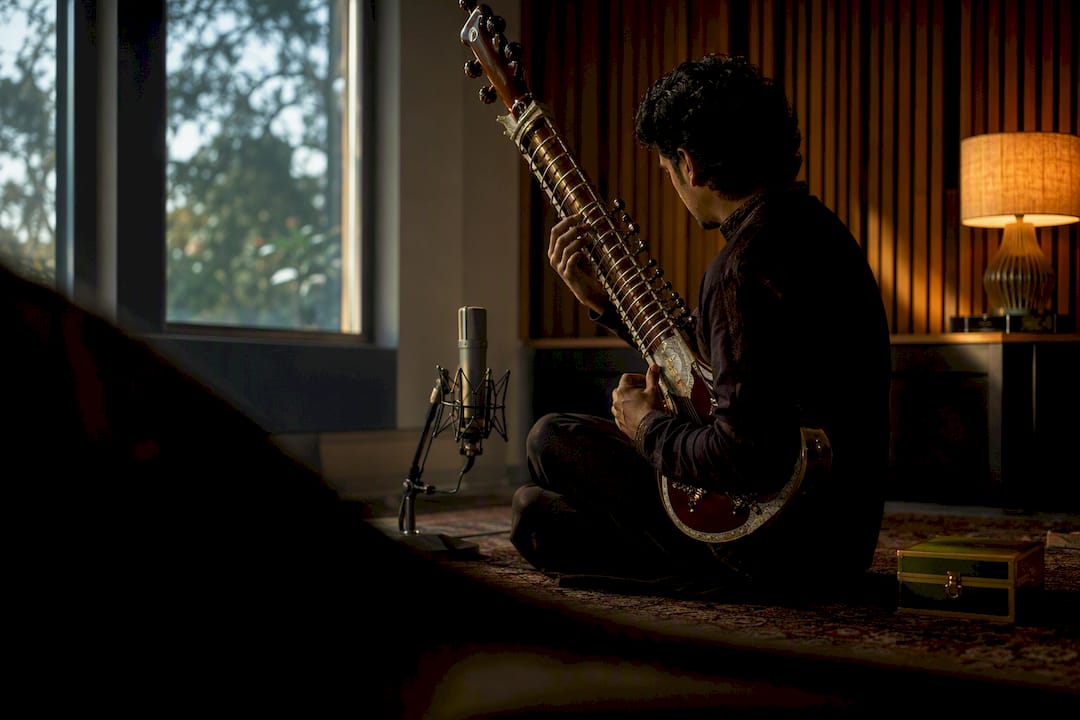
Brand launch music is a custom composed or live piece created specifically for your event, not a stock track pulled from a library. The main reason to commission it: you get an exclusive sonic asset that reinforces your identity everywhere it plays, from the launch stage to the recap video months later. Commission it when your launch needs a moment people remember, or when you want an asset you can reuse across the whole campaign.
TL;DR:
- Custom music provides a unique sonic identity that can be reused across multiple campaigns, turning a single investment into long-term brand assets.
- Commissioning a full campaign suite, including stems and multiple cutdowns, will cost more but offers greater flexibility and value for future use.
- Clear, detailed briefs outlining media platforms, territory, exclusivity, lengths, deadlines, and rights are essential for accurate, timely quotes.
- Approving a piano sketch early in the process drastically reduces the risk of costly revisions, making it a key step to meet deadlines and stay within budget.
- Ownership of the music depends on negotiated rights, with explicit clauses needed for exclusivity, territory, media, term, and publishing rights.
Table of Contents
- What Counts as Commissioned Brand Launch Music?
- Does Custom Music Actually Improve a Brand Launch?
- Who Should You Hire: Composer, Agency, Artist, or Studio?
- How Do You Write a Brief That Gets You a Fast, Accurate Quote?
- What Deliverables and Rights Should You Ask For?
- How Do You Integrate Live Music Into Your Launch Run-of-Show?
- What Should You Budget for Brand Launch Music?
- What Composers Wish Brand Teams Understood About Briefing
- Ready to Commission Live or Recorded Sitar for Your Launch?
- Where to Go Deeper on Rights, Briefs, and Production
- Sources
- FAQ
What Counts as Commissioned Brand Launch Music?
Commissioned music covers a range of assets: a theme that anchors your brand sound, an anthem for the big reveal, short stingers for transitions, underscore beds for booth areas, and live setlists built around your actual run-of-show. None of this comes off a shelf. It’s written for you, which means you own it and can shape it around your event minute by minute.
The practical upside is modularity. A well-scoped commission gives you stems, loop points, and cutdowns you can pull apart and reassemble for a launch film, an executive walk-on, an awards moment, or a six-month campaign push. You’re not licensing a track that a competitor could use next week. You’re building a sound library that belongs only to your brand, and that reuse value is often what makes the investment in custom music worth it in the first place.
Does Custom Music Actually Improve a Brand Launch?
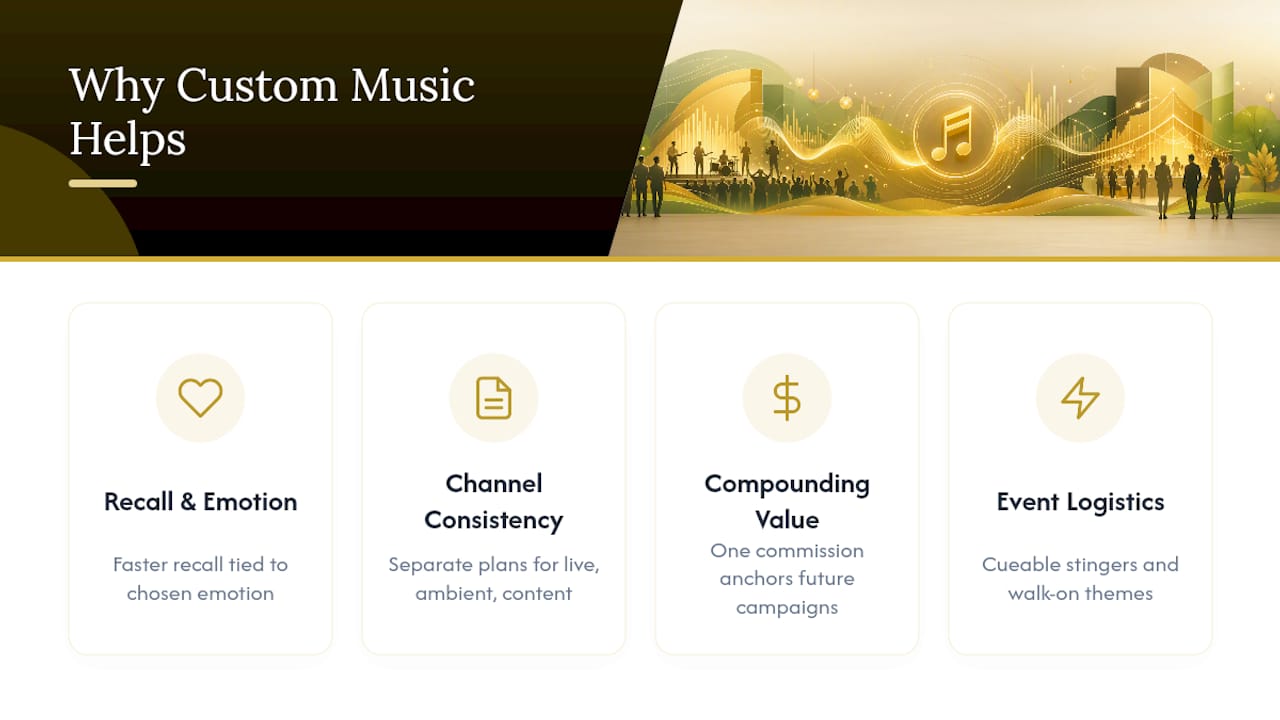
Yes, and the reasons go beyond “it sounds nice.” A distinct sonic identity helps audiences recall your brand faster and links that recall to the specific emotion you want tied to the launch, whether that’s excitement, gravitas, or warmth. Consistency matters here: the strongest branding strategies treat live-event sound, ambient programming, and content music as related but separate problems, each needing its own plan rather than one generic playlist stretched across all three.
There’s also a compounding effect. Music you commission once can anchor next year’s launch, your anniversary campaign, or a regional rollout, turning a single fee into years of ownable content. On measurable brand engagement, a custom sonic layer works alongside other brand engagement tactics rather than replacing them.
On the event floor itself, custom music solves logistics problems too. A cueable stinger tells your AV team exactly when to trigger a light change. A live walk-on theme gives your CEO a clean, rehearsed entrance instead of an awkward silence while the room waits.
Who Should You Hire: Composer, Agency, Artist, or Studio?
Four provider models cover most brand launch needs, and each fits a different scope.
- Composer: best for original scoring work. You get a custom composition and final masters, ideal when you need a theme built from scratch around your brand story.
- Music agency: best when you want a shortlist of composer options, contract and legal handling, and full production management bundled together.
- Solo artist or performer: best for a live centerpiece moment, plus studio-recorded versions of the same material for later use.
- Boutique studio: best when your piece needs orchestration or layered production beyond what one composer delivers alone.
Match the model to the job. A single fifteen-second stinger doesn’t need an agency’s full production apparatus, but a campaign suite spanning video, live event, and social cutdowns probably does. Whatever model you choose, look for a portfolio with actual brand work, evidence of live-event awareness, clear rights-handling practices, and a track record of hitting deadlines. If you want a sitar-led theme or a hybrid piece that works both live and recorded, Sitarrajib commissions directly with clients on exactly that kind of project.
How Do You Write a Brief That Gets You a Fast, Accurate Quote?
Start by locking your hard constraints before you contact anyone. A strong brief extracts these details up front instead of leaving them for negotiation later:
- Media and platforms the music will run on (live event, video, social, broadcast)
- Territory and term (where it plays, and for how long)
- Exclusivity needs (does a competitor get blocked from similar use?)
- Required lengths and cutdowns (full theme, 30 seconds, 15 seconds, 6 seconds)
- Hard deadline and key milestone dates
- Budget posture (fixed ceiling or open to scoped proposals)
- Lyric policy (instrumental only, vocal, or brand name integration)
- Technical specs (file formats, stem separation, sample rate)
- Temp references (existing tracks that capture the mood you want)
Once that’s written down, triage it in about ten minutes to flag deal-breakers, then shortlist no more than three composers or providers. Request a piano sketch first rather than a full production. A sketch locks the emotional direction cheaply, and revisions after that point cost far less than reworking a finished master.
Typical milestone timeline:
- Week 1: Brief finalized, shortlist contacted, references shared
- Week 2: Sketch delivered and approved (the single most important checkpoint)
- Weeks 3 to 4: Full recording and production
- Week 5: Masters, stems, and cutdowns delivered
Approving the sketch fast is the single biggest lever for hitting your deadline. Appoint one decision owner on your side and cap revisions at two rounds. Committee feedback is what actually blows up timelines, not the composer’s schedule.
What Deliverables and Rights Should You Ask For?
Requesting the wrong list of files, or vague rights language, is how brands end up paying twice for the same piece of music. Ask for these deliverables by name:
- Mixed masters in WAV format
- Separated stems (drums, melody, bass, pads, and any live instrument tracks)
- Cutdowns at 30, 15, and 6 seconds
- Full metadata (title, composer, ISRC if applicable)
- Alternate mixes (instrumental, vocal, stripped)
On the rights side, commissioning original music means you should walk away owning something specific, not a vague license. Nail down exclusivity (does it block competitors in your category?), territory, which media types are covered, the term length, whether renewals are built in, and whether publishing rights are included or held separately by the composer.
Rights breadth is what moves price the most. A tight, one-event, one-territory license costs less than a multi-year, multi-territory exclusive buyout. If budget is tight, negotiate a shorter initial term with a renewal option rather than trying to buy everything outright on day one.
How Do You Integrate Live Music Into Your Launch Run-of-Show?
A live performer or ensemble only works smoothly at your launch if the technical groundwork happens well before doors open. Supply your show caller and AV team with a full cue sheet and exact run-order timings, not a rough estimate. Live-event success depends heavily on performers who can read the room and adjust in real time, rather than acts that simply run a pre-made set regardless of what’s happening on stage.
Cover these basics in your technical rider:
- DI boxes and a complete mic list for every instrument
- A monitor plan so performers can hear cues clearly
- Power access and confirmed stage footprint
- A full rehearsal or soundcheck slot, not a rushed line check
- Backup stems and a spare DI box in case of equipment failure
- A timeline buffer in case the run-of-show slips
Pro Tip: Ask your performers directly whether they can adjust energy and timing on the fly if the show runs long or short. That situational awareness is the real difference between a polished launch moment and an awkward pause on stage.
If your launch blends a recorded bed with live players, give your front-of-house engineer a performance mix that mirrors the recorded master closely, so the transition between the two feels seamless rather than jarring.
What Should You Budget for Brand Launch Music?
Cost swings on a handful of clear factors: how many separate cues you need, whether the production uses live players or programmed instruments, how broad your exclusivity and territory terms are, how many revision rounds are built in, and how many deliverable formats you’re requesting.
Rough tiers to think in:
- A single brand cue with basic programmed production sits at the lower end of most commission budgets.
- A full campaign suite with stems, multiple cutdowns, and broader usage rights costs meaningfully more.
- Adding a live performance element on top of a recorded package raises cost further, driven by rehearsal time, travel, and event-day logistics.
Modular packages that scale with reuse frequency tend to deliver better long-term value than a one-off purchase, especially if you’ll reuse the theme across future campaigns. When you send out an RFP, give every bidder the identical brief and constraint list so quotes are actually comparable, and specify a fixed number of revision rounds up front to prevent scope creep from inflating the final invoice.
What Composers Wish Brand Teams Understood About Briefing
Musicians want a clear story before they want a mood board. Give a composer the emotional arc of your launch, one decision owner who can approve or reject work, a realistic timeline, and room to interpret creatively rather than a note-for-note temp track to copy.
A few habits from working directly on brand commissions: ask for the longer full-length master before the short cutdowns, request stems from the start rather than after the fact, and build in a reasonable revision allowance rather than an open-ended one. Each of these choices tends to shorten the timeline and lower the final cost, because rework almost always costs more than getting the brief right the first time.
— Rajib
Ready to Commission Live or Recorded Sitar for Your Launch?
A distinctive sonic signature built around the sitar, layered with contemporary and cinematic production, can help your brand launch stand out.
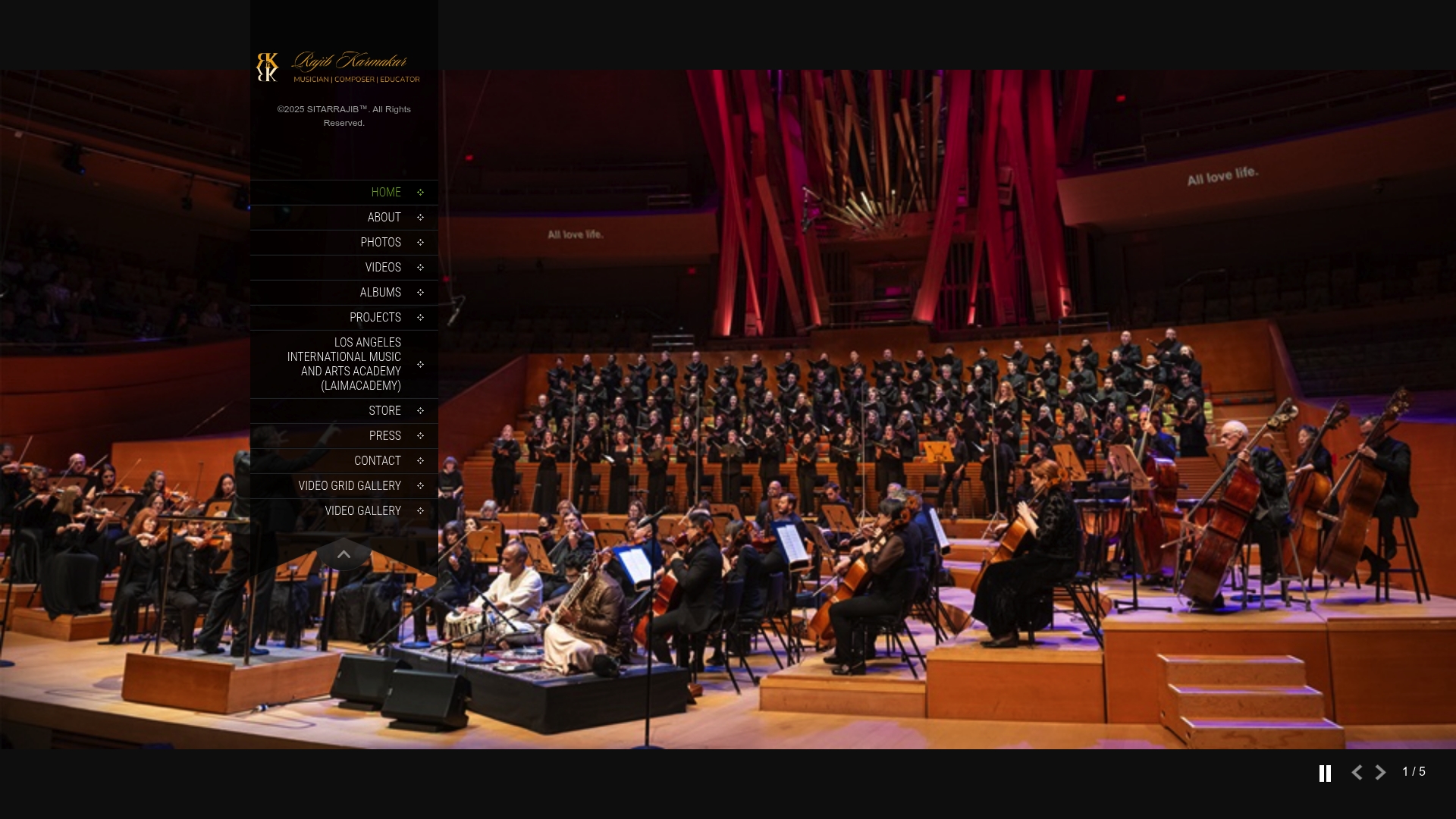
Some solo artists compose original themes, record studio sessions with full stems and cutdowns, and perform live at corporate launches with the situational awareness this guide recommends. This provides one point of contact for both recorded campaign assets and live launch moments, with rights conversations handled directly.
When you reach out, include your brief (lengths, territory, deadline, exclusivity needs), any reference tracks that capture your desired mood, and your event date. Start the conversation through Sitarrajib’s live sitar performance page or check studio recording options on the live session recording page to get a scoped quote for your launch.
Where to Go Deeper on Rights, Briefs, and Production
For readers who want templates and more granular guidance beyond this guide, start with the complete commissioning guide from Kaspar Noé for a full walkthrough of the process and rights language. The branded content execution guide covers the “longest master first” workflow in more detail. For brief-writing specifically, Plugg Supply’s guide to reading a brand music brief breaks down hard constraints and quote structure. Open the Kaspar Noé guide first if you only have time for one.
Sources
- How to Commission Custom Music: Complete Guide | Kaspar Noé
- The No BS Guide to Custom Music as Branded Content: Execution
- How to Read a Brand Music Brief for Commercials | Plugg Supply
FAQ
How Long Does It Take To Commission Brand Launch Music?
A single brand cue typically takes one to three weeks depending on production complexity, while a full campaign suite with live elements can run five weeks or more from brief to final masters.
Do I Own the Music After I Commission It?
Ownership depends entirely on the rights terms you negotiate. Confirm exclusivity, territory, term, and whether publishing rights are included before signing, rather than assuming a commission means full ownership by default.
What’s the Fastest Way To Avoid Costly Revisions?
Approve a piano sketch before full production begins. Locking the emotional direction early is the single biggest factor in keeping a project on budget and on schedule.
Can Sitarrajib Provide Both Live Performance and Studio Recording for the Same Launch?
Certain artists offer live sitar performance for launch events alongside studio-recorded sitar compositions delivered as masters, stems, and cutdowns for campaign reuse.
Should I Request Stems Even if I Only Need One Final Mix?
Yes. Stems let you create alternate mixes, cutdowns, and future edits without going back to the composer, which saves both time and money down the line.