

Licensing Indian classical music for film is a legal and creative process that requires securing sync rights, master rights, and performance royalties before a single note plays on screen. Most filmmakers underestimate the complexity. The raga system is public domain, but specific compositions and recordings are fully protected under Indian copyright law. Getting this wrong can cost you years in court. Getting it right gives your film a soundscape that no synthesizer can replicate.
What legal rights must you secure to license Indian classical music for film?
Two separate copyrights govern every piece of recorded Indian classical music. The first covers the musical composition, meaning the melody and arrangement created by the composer. The second covers the sound recording, meaning the specific performance captured on tape or in a digital file. You need licenses for both before using any track in your film.
Sync licensing is mandatory for any simultaneous use of audio with video, including films, trailers, and advertisements. A sync license comes from the composition rights holder, typically the composer or their publisher. A master license comes from whoever owns the recording, usually a label or the artist directly. You need both, and neither automatically includes the other.

The 2012 Copyright Amendment changed the rules significantly. Sections 19(9) and 19(10) now protect composers and lyricists, giving them the right to collect royalties for uses outside cinemas, including OTT platforms and streaming services. This means even if a composer previously assigned rights to a label, they still retain royalty entitlements for digital use. Any contract you sign must reflect this reality.
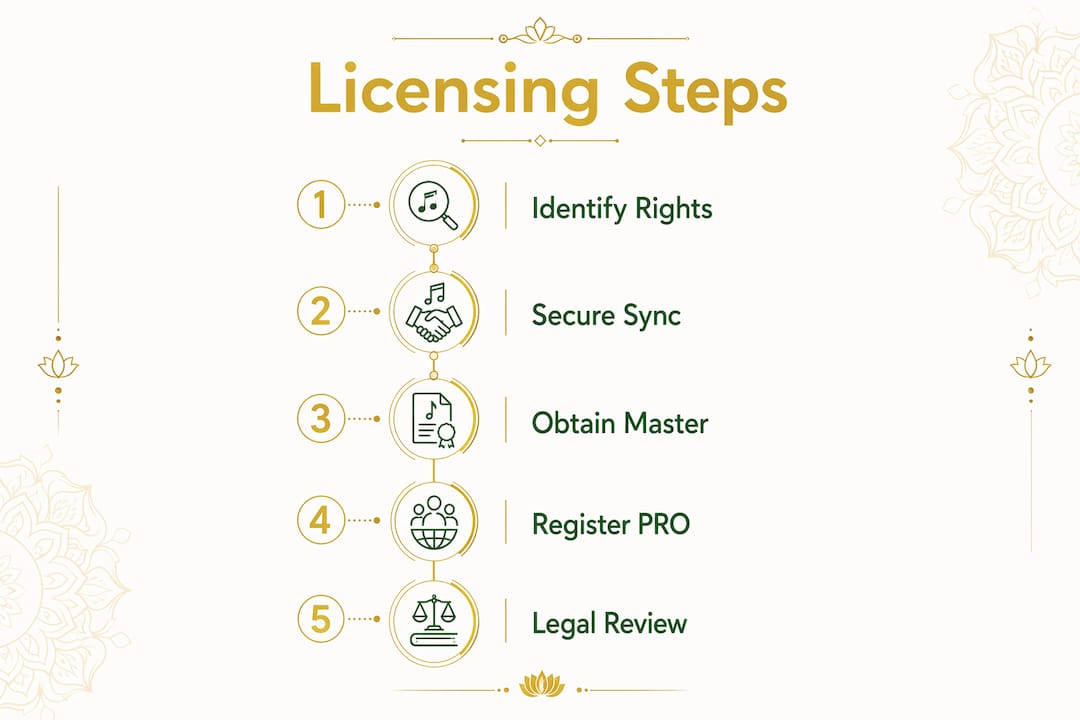
Performing Rights Organizations like IPRS manage public performance royalties in India. After you secure sync and master licenses, IPRS handles the royalty flow back to composers and lyricists when your film screens publicly. Skipping this step creates legal exposure, even if your sync deal looks clean on paper.
One common misconception is that ragas are free to use because they belong to the public domain. The raga system itself is not owned by anyone. But specific melodic phrases and performances can be protected. A notable case required A.R. Rahman to credit original dhrupad exponents after a three-year legal dispute ending in 2026. That case is a clear signal: even classical-sounding music can carry protected elements.
| License type | Rights holder | What it covers |
|---|---|---|
| Sync license | Composer or publisher | Use of composition in audiovisual content |
| Master license | Label or recording artist | Use of the specific recorded performance |
| Public performance royalty | IPRS (via cue sheets) | Royalties when film screens publicly |
| Digital streaming rights | Label or artist | OTT, streaming, and social media use |
Pro Tip: Hire a copyright attorney who specializes in Indian music law before signing any license agreement. The Ilaiyaraaja case, where a Delhi High Court injunction blocked him from licensing songs from over 134 films, shows how quickly contested rights can shut down a project.
How to identify the right recordings and compositions for your film
Start with recordings that have clear, documented ownership. Legacy catalogs are the riskiest category. The Ilaiyaraaja injunction covering over 134 films demonstrates how disputed rights in older catalogs can make licensing practically impossible, even when the music is widely known and commercially available.
Traditional ragas sit in the public domain as a system. But the moment a musician composes a specific piece within that system, or records a unique interpretation, copyright protection applies. Knowing the difference between public domain ragas and protected compositional works saves you from expensive mistakes. A raga-based composition recorded by a living artist is almost certainly protected.
Before you approach any rights holder, complete these due diligence steps:
- Identify the original composer and confirm whether they are living or deceased (copyright terms vary).
- Trace the chain of title from composer to current rights holder, including any label assignments.
- Check for active litigation or injunctions on the catalog you want to use.
- Confirm the recording date and whether pre-2012 contracts cover digital and streaming platforms.
- Request a rights clearance letter from the rights holder before negotiating fees.
Pro Tip: Digital catalogs from established Indian classical music labels often include rights documentation. Working with a trusted music supervisor or rights clearance firm who knows the Indian market cuts your research time significantly and reduces the risk of missing a contested claim.
What are best practices for collaborating with Indian classical musicians?
Collaboration with Indian classical musicians works best when you treat the music as emotionally alive, not decorative. Sitarist Purbayan Chatterjee emphasizes trusting the tradition’s emotional depth rather than approaching it as exotic texture. That distinction matters. Filmmakers who hire classical musicians purely for “Indian flavor” tend to get surface-level results. Filmmakers who engage with the music’s emotional logic get something that resonates across cultures.
Padma Vibhushan awardee N. Rajam highlights that translating vocal styles like “gayaki ang” to instruments demands years of dedicated work. This is not music you can replicate with a sample library. Authentic Indian classical music in film requires a musician who has internalized the tradition, not just learned the technical patterns. Choosing the right artist is as important as clearing the rights.
Practical collaboration steps that work:
- Share your film’s emotional arc and scene context before the first session, not just a temp track.
- Allow the musician creative input on which raga or compositional approach fits the scene’s mood.
- Schedule recording sessions with enough time for improvisation within the agreed structure.
- Use a remote collaboration workflow if the artist is based in a different city or country.
- Agree on usage rights, credit, and royalty terms in writing before recording begins.
Sitarrajib, the artist brand of Los Angeles-based sitarist Rajib Karmakar, offers exactly this kind of collaborative approach. Working with a musician who bridges Indian classical tradition and cinematic sound means you get both cultural depth and practical film-scoring experience. You can explore sitar collaboration approaches to understand how this process works in practice.
Step-by-step process to legally license Indian classical music
Follow these steps in order. Skipping any one of them creates gaps that can surface as legal problems after your film releases.
- Identify the music and rights holders. Confirm who owns the composition and who owns the master recording. These are often different parties.
- Negotiate sync and master licenses. Contact the composition rights holder and the recording rights holder separately. Agree on territory, duration, and media (theatrical, streaming, social media).
- Engage IPRS for public performance royalties. Once sync and master licenses are signed, register your film with IPRS so royalties flow correctly when the film screens publicly.
- Draft contracts that cover all platforms. Modern contracts must explicitly cover OTT, digital streaming, and social media. Many pre-2000 legacy contracts omit these platforms entirely, creating legal gaps.
- Prepare and submit cue sheets. Cue sheets submitted by production companies enable IPRS and other PROs to distribute royalties accurately to composers and performers.
| Step | Required parties | Common pitfall |
|---|---|---|
| Identify rights holders | Composer, label, artist | Assuming one party holds all rights |
| Negotiate sync license | Composer or publisher | Forgetting digital platform coverage |
| Negotiate master license | Label or recording artist | Overlooking post-2012 royalty clauses |
| Register with IPRS | Production company, IPRS | Skipping PRO registration entirely |
| Submit cue sheets | Production company | Incomplete or late submission |
Pro Tip: Have a copyright-specialized attorney review every license agreement before you sign. Pay particular attention to the scope of rights clauses. A contract that covers theatrical release but omits streaming will require a separate negotiation the moment your film lands on a platform.
Key takeaways
Licensing Indian classical music for film requires securing sync licenses, master licenses, and PRO registration as three separate, non-negotiable steps.
| Point | Details |
|---|---|
| Two copyrights, not one | Always secure both the composition license and the master recording license separately. |
| Public domain ragas ≠ free music | Specific compositions and recordings built on ragas are fully protected under Indian copyright law. |
| Post-2012 royalty rights matter | Contracts must cover OTT and streaming platforms or they create legal gaps after release. |
| Due diligence on legacy catalogs | Legacy recordings carry disputed ownership risks; verify chain of title before negotiating. |
| Collaboration requires cultural respect | Authentic film soundtracks come from treating Indian classical music as emotionally alive, not decorative. |
What I’ve learned from working at the intersection of classical music and film
Filmmakers often come to me after they’ve already made a mistake. They’ve used a recording without clearing the master, or they’ve signed a sync deal that doesn’t mention streaming, or they’ve hired a musician without putting usage rights in writing. These are fixable problems, but they’re expensive to fix after the fact.
The thing I keep telling producers is this: start the rights conversation early, before you fall in love with a specific recording. Once you’ve built your edit around a particular performance, your negotiating position weakens. Rights holders know when you need their music more than they need your project.
On the creative side, I’ve found that filmmakers get the best results when they share the emotional story of a scene, not just a tempo or a mood board. Indian classical music is built around emotional states called rasas. When you tell a musician what feeling you want the audience to experience, you give them something to work with that goes far beyond a temp track reference. That conversation produces music that actually belongs in your film.
The legal and creative sides of this process are not separate. A musician who understands both the rights landscape and the artistic tradition is the most valuable collaborator you can find. Transparency, respect, and early engagement with the right artist make everything else easier.
— Rajib
Sitarrajib: authentic sitar recordings for your film
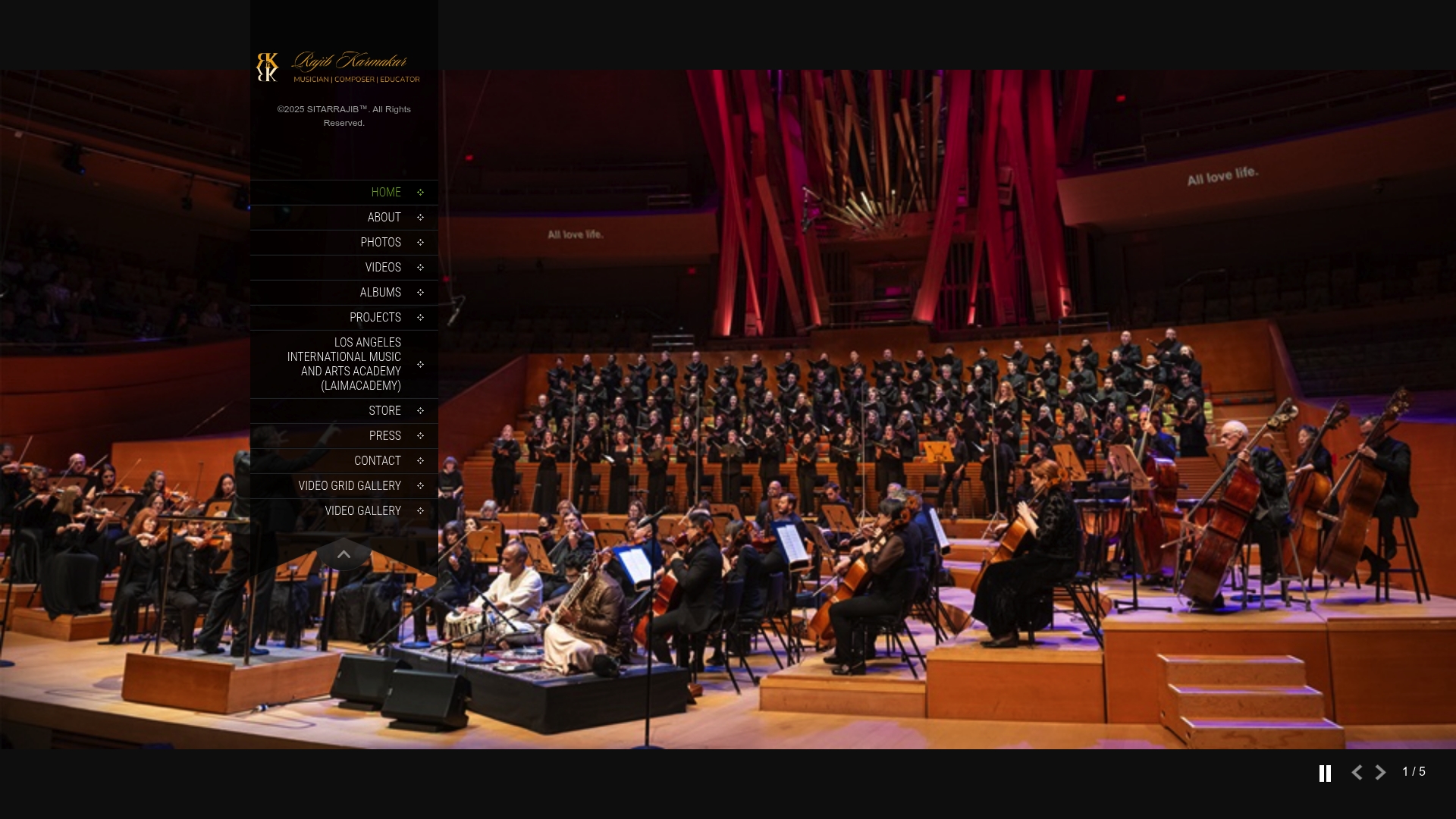
Rajib Karmakar is a Los Angeles-based sitarist, composer, and educator with an international performance record across concerts, festivals, and film projects. His work sits at the intersection of Indian classical tradition and contemporary cinematic sound.
Producers working on film projects can book live session sitar recordings that deliver culturally authentic soundscapes with full rights documentation from the start. Every collaboration includes clear usage agreements, so your licensing process stays clean. Visit Sitarrajib to learn more about film and media music services, or reach out directly to discuss your project’s needs.
FAQ
What licenses do I need to use Indian classical music in a film?
You need a sync license from the composition rights holder and a master license from the recording rights holder. You also need to register with a Performing Rights Organization like IPRS for public performance royalties.
Are ragas free to use in film without a license?
The raga system is public domain, but specific compositions and recorded performances built on ragas are protected under Indian copyright law and require licensing for film use.
How does the 2012 Copyright Amendment affect film music licensing?
Sections 19(9) and 19(10) of the 2012 amendment give composers and lyricists the right to collect royalties for OTT and streaming uses, even if they previously assigned rights to a label.
What is a cue sheet and why does it matter?
A cue sheet is a document submitted by the production company that lists every piece of music used in a film. Performing Rights Organizations like IPRS use cue sheets to distribute royalties accurately to composers and performers.
How do I find Indian classical musicians to collaborate with for film scoring?
Work with established artists who have experience in both classical performance and film or media music. Sitarrajib, the artist brand of Rajib Karmakar, specializes in film and media collaborations that combine authentic Indian classical music with practical production workflows.